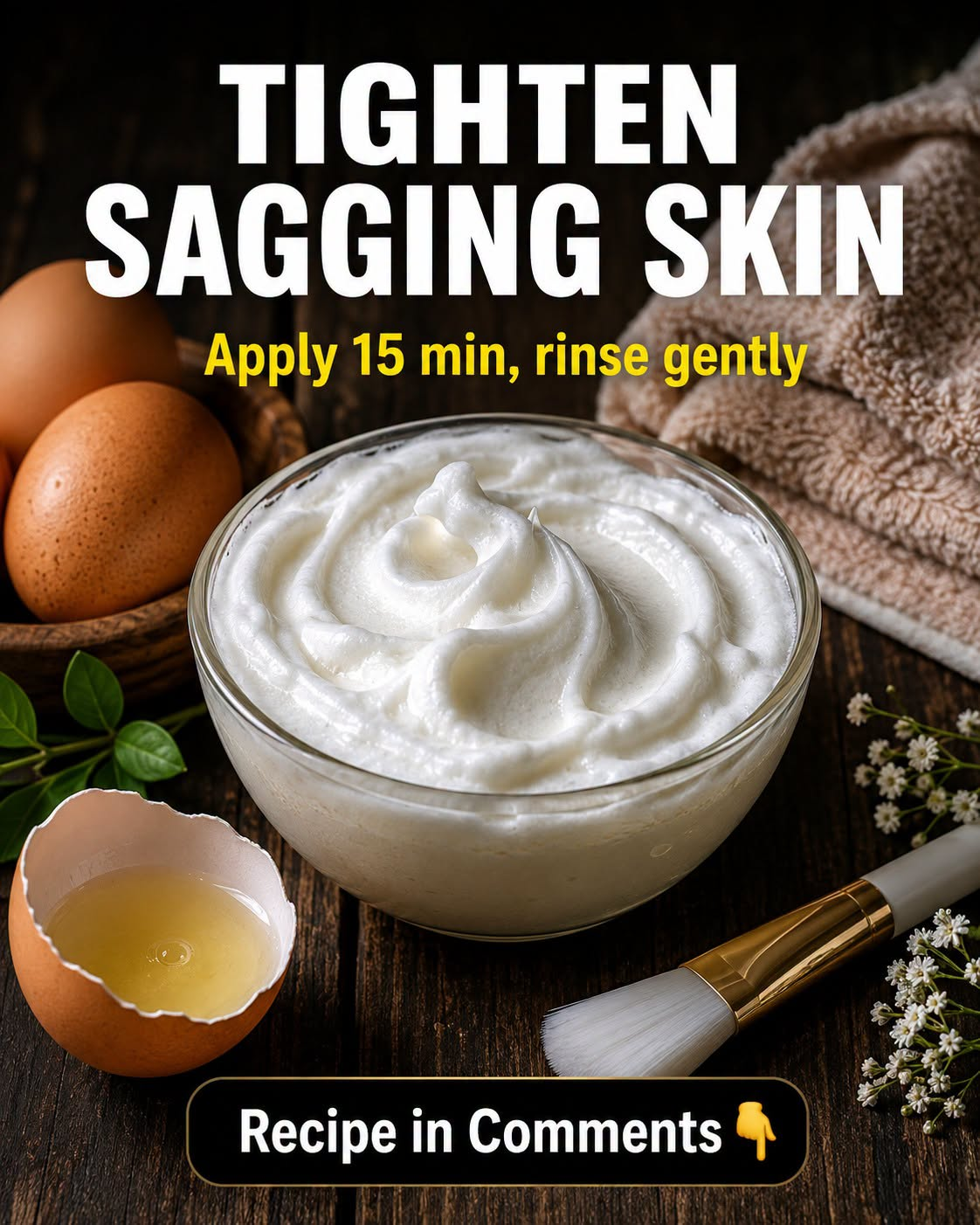
Sagging skin usually appears when collagen, elastin, facial fat support, hydration, and skin barrier strength begin to weaken with age, sun exposure, weight changes, stress, and dryness. A home mask cannot lift the skin like a medical treatment, but it can make the face look temporarily firmer, smoother, and fresher by improving surface hydration and creating a gentle tightening film. Egg white is popular because it dries into a thin layer that gives an instant firm feeling, but it should be used carefully. Always choose pasteurized egg white, avoid broken or irritated skin, and never use it if you have an egg allergy. The remedies below combine egg white with safer, research-supported natural ingredients such as aloe vera, honey, oatmeal, green tea, yogurt, glycerin, and sunflower seed oil to support different skin types.
Remedy 1: For Normal Skin
Ingredients
Pasteurized egg white: 1 tablespoon
Creates a temporary tightening film and gives the skin a smoother look.
Aloe vera gel: 1 teaspoon
Hydrates the skin and helps reduce dry, tired texture.
Raw honey: ½ teaspoon
Acts as a humectant and keeps the mask from feeling too tight.
Cooled green tea: 1 teaspoon
Provides antioxidant support for dull and stressed skin.
Plain yogurt: ½ teaspoon
Contains lactic acid, which gently smooths dead surface cells.
Fine oat powder: ½ teaspoon
Calms the skin and makes the mask more comfortable.
Scientific Working of Each Ingredient
Egg white works mainly on the surface. As it dries, its proteins form a light film that makes the skin feel tighter for a short time. Aloe vera adds water-based hydration, so the face does not look dry after rinsing. Honey attracts moisture and supports softness. Green tea contains polyphenols that help defend the skin against oxidative stress. Yogurt’s lactic acid gently improves texture, while oat powder supports the skin barrier and reduces irritation.
Procedure
Whisk the pasteurized egg white until slightly foamy. Add aloe vera gel, honey, green tea, yogurt, and oat powder. Mix into a smooth mask. Apply a thin layer on clean skin, especially on cheeks, jawline, and forehead. Leave for 12–15 minutes. Rinse gently with cool water and pat dry. Apply a light moisturizer afterward.
How Often to Apply
Use once daily for 3 days, then 2–3 times weekly.
Initial Results
Within 1–3 days, the skin may feel firmer, smoother, and fresher. The tightening effect is temporary, but hydration and smoother texture can improve with regular use.
Remedy 2: For Combination Skin
Ingredients
Pasteurized egg white: 1 tablespoon
Helps the oily areas feel tighter and cleaner.
Cucumber juice: 1 teaspoon
Adds light hydration and a cooling effect.
Aloe vera gel: 1 teaspoon
Balances moisture without making the face greasy.
Plain yogurt: ½ teaspoon
Gently smooths rough patches.
Honey: ¼ teaspoon
Softens dry areas around the cheeks.
Green tea: 1 teaspoon
Supports oily and dull areas with antioxidant care.
Scientific Working of Each Ingredient
Combination skin needs firming without drying the cheeks or increasing oiliness on the T-zone. Egg white gives a temporary lifted feel, especially around the chin and forehead. Cucumber and aloe vera provide lightweight hydration. Yogurt helps polish dull surface cells gently. Honey protects dry patches from tightness, and green tea helps the skin look calmer and less tired.
Procedure
Mix egg white, cucumber juice, aloe vera gel, yogurt, honey, and green tea. Apply a slightly thicker layer on the forehead, nose, chin, and jawline. Apply a thinner layer on the cheeks. Leave for 10–12 minutes. Rinse gently and moisturize.
How Often to Apply
Apply every alternate night for 5 days. Continue twice weekly after that.
Initial Results
In 2–3 days, the T-zone may look less shiny and the cheeks may feel smoother. The jawline and cheek area may appear temporarily firmer after each use.
Remedy 3: For Oily Skin
Ingredients
Pasteurized egg white: 1 tablespoon
Gives a firm, matte surface effect.
Cooled green tea: 1 tablespoon
Provides antioxidant support and a fresh feel.
Aloe vera gel: 1 teaspoon
Hydrates without heaviness.
Fuller’s earth clay: ½ teaspoon
Absorbs excess oil from the skin surface.
Turmeric powder: 1 tiny pinch
Supports a calmer, healthier-looking complexion.
Fine oat powder: ½ teaspoon
Reduces dryness risk and keeps the mask gentle.
Scientific Working of Each Ingredient
Oily skin can make sagging and pores look more noticeable because shine highlights texture. Egg white gives a temporary tightening effect, while Fuller’s earth absorbs excess surface oil. Aloe vera prevents the skin from becoming overly dry. Green tea and turmeric provide antioxidant and anti-inflammatory support. Oat powder makes the mask less harsh and helps protect the barrier.
Procedure
Mix Fuller’s earth, turmeric, and oat powder first. Add green tea, aloe vera gel, and egg white. Stir well. Apply a very thin layer on the face, focusing on the jawline, chin, cheeks, and forehead. Leave for 8–10 minutes only. Do not let the mask crack completely. Rinse gently and apply a lightweight moisturizer.
How Often to Apply
Use every other day for 5 days, then once or twice weekly.
Initial Results
The skin may look less oily after the first use. Within 2–3 days, the face may appear cleaner, tighter, and more refreshed.
Remedy 4: For Dry Skin
Ingredients
Pasteurized egg white: 1 teaspoon
Gives mild temporary tightening without excessive dryness.
Aloe vera gel: 1 tablespoon
Provides water-based hydration.
Raw honey: 1 teaspoon
Helps hold moisture on the skin surface.
Vegetable glycerin: 1 drop
Improves moisture retention when diluted.
Colloidal oatmeal: 1 teaspoon
Soothes rough, dry skin and supports the barrier.
Sunflower seed oil: 2 drops
Helps reduce moisture loss and softens the skin.
Scientific Working of Each Ingredient
Dry skin often looks more saggy because dehydration makes fine lines, folds, and shadows more visible. This remedy uses only a small amount of egg white to avoid a harsh pulling effect. Aloe vera, honey, and glycerin improve hydration. Oatmeal helps calm dryness and roughness. Sunflower seed oil supports the skin barrier, helping the face look smoother and more supple.
Procedure
Mix aloe vera gel, honey, glycerin, oatmeal, sunflower seed oil, and egg white. Apply to clean, slightly damp skin. Leave for 8–10 minutes, not longer. Rinse gently with cool water. Apply moisturizer immediately while the skin is slightly damp.
How Often to Apply
Use daily for 3 days, then 2 times weekly.
Initial Results
Dry tightness may reduce after the first use. Within 1–3 days, the skin may look softer, plumper, and less tired.
Remedy 5: For Sensitive Skin
Ingredients
Aloe vera gel: 1 tablespoon
Calms and hydrates sensitive skin.
Colloidal oatmeal: 1 tablespoon
Supports the skin barrier and reduces irritation.
Honey: ¼ teaspoon
Softens the skin if tolerated.
Cucumber juice: 1 teaspoon
Adds a cooling, gentle effect.
Vegetable glycerin: 1 drop
Helps prevent dryness when diluted.
Cooled green tea: ½ teaspoon
Provides mild antioxidant support.
Scientific Working of Each Ingredient
Sensitive skin should avoid egg white because egg proteins can trigger itching, redness, or allergy in some people. This remedy tightens the look of the skin through hydration and barrier support rather than a strong drying film. Aloe vera and cucumber calm the skin. Oatmeal supports the protective barrier. Honey and glycerin help retain moisture. Green tea adds gentle antioxidant support, helping the skin look fresher without aggressive exfoliation.
Procedure
Mix aloe vera gel, oatmeal, honey, cucumber juice, glycerin, and cooled green tea into a soft paste. Apply a thin layer on clean skin. Leave for 5–7 minutes. Do not scrub or massage hard. Rinse with cool water and apply a gentle moisturizer.
How Often to Apply
Use every other day for 5 days. Continue twice weekly if there is no redness or stinging.
Initial Results
Within 1–3 days, sensitive skin may feel calmer, smoother, and less tight. The face may look more refreshed because dryness and irritation are reduced.
Final Tips
Always do a 24-hour patch test before applying any remedy to your face. Use pasteurized egg white only, and avoid egg masks if you have an egg allergy, eczema flare, cuts, active acne wounds, or very reactive skin. Do not leave tightening masks on for too long because over-drying can make fine lines look worse. Rinse gently instead of rubbing. Keep your bowls, brushes, towels, and hands clean. Use sunscreen every morning because sun damage is one of the biggest causes of sagging, wrinkles, and age spots. Drink enough water, sleep 7–8 hours, avoid smoking, and do gentle upward facial massage instead of pulling the skin downward. Visible freshness may begin within 2–3 days, while better firmness and wrinkle softening usually need consistent care for 4–8 weeks.
Diet Plan
Continue the home remedy for 5 days first. If your skin tolerates it well, use the mask 2–3 times weekly for one month. Diet should continue daily because collagen, hydration, and skin repair depend on nutrition.
Morning: Drink water after waking. Eat eggs, oats, yogurt, lentils, beans, or nuts for protein.
Midday: Add vitamin C foods such as guava, orange, amla, strawberries, kiwi, bell pepper, or lemon water. Vitamin C supports normal collagen formation.
Lunch: Eat leafy greens, carrots, tomatoes, cucumber, lentils, chickpeas, fish, chicken, tofu, or beans.
Evening: Choose green tea, fruit, almonds, walnuts, pumpkin seeds, chia seeds, or flaxseeds instead of sugary snacks.
Dinner: Keep dinner light with vegetables, protein, and healthy fats from avocado, olive oil, sunflower seeds, or nuts.
Avoid too much sugar, fried food, smoking, and late-night salty meals because they can worsen puffiness, dullness, and collagen damage. If sagging is sudden, severe, linked with swelling, facial weakness, rapid weight loss, thyroid symptoms, or does not improve after 4–6 weeks of care, see a doctor or dermatologist.
References for the above remedy
- U.S. Food and Drug Administration. “What You Need to Know About Egg Safety.” Supports caution about raw eggs and Salmonella risk. URL: https://www.fda.gov/food/buy-store-serve-safe-food/what-you-need-know-about-egg-safety (U.S. Food and Drug Administration)
- Dal’Belo SE, Gaspar LR, Maia Campos PMBG. “Moisturizing effect of cosmetic formulations containing Aloe vera extract.” Skin Research and Technology, 2006. URL: https://pubmed.ncbi.nlm.nih.gov/17026654/ (PubMed)
- Smith WP. “Epidermal and dermal effects of topical lactic acid.” Journal of the American Academy of Dermatology, 1996. URL: https://pubmed.ncbi.nlm.nih.gov/8784274/ (PubMed)
- U.S. FDA OTC Monograph M016. “Skin Protectant Drug Products for OTC Human Use,” including colloidal oatmeal. URL: https://www.accessdata.fda.gov/drugsatfda_docs/omuf/monographs/OTCMonograph_M016SkinProtectantDrugProductsforOTCHumanUse09242021.pdf (FDA Access Data)
- Katiyar SK, Elmets CA. “Green tea polyphenolic antioxidants and skin photoprotection.” International Journal of Oncology, 2001. URL: https://pubmed.ncbi.nlm.nih.gov/11351267/ (PubMed)
- Yaghoobi R, Kazerouni A, Kazerouni O. “Evidence for Clinical Use of Honey in Wound Healing as an Antibacterial, Anti-inflammatory and Antioxidant Agent.” URL: https://pmc.ncbi.nlm.nih.gov/articles/PMC3941901/ (PMC)
- Fluhr JW, Darlenski R, Surber C. “Glycerol and the skin: holistic approach to its origin and functions.” British Journal of Dermatology, 2008. URL: https://pubmed.ncbi.nlm.nih.gov/18510666/ (PubMed)
- Danby SG, AlEnezi T, Sultan A, et al. “Effect of olive and sunflower seed oil on the adult skin barrier.” Pediatric Dermatology, 2013. URL: https://pubmed.ncbi.nlm.nih.gov/22995032/ (PubMed)
- Alam M, Walter AJ, Geisler A, et al. “Association of Facial Exercise With the Appearance of Aging.” JAMA Dermatology, 2018. URL: https://jamanetwork.com/journals/jamadermatology/fullarticle/2666801 (JAMA Network)
- American Academy of Dermatology Association. “Sun protection.” Supports sun protection for reducing premature aging, sagging, wrinkles, and age spots. URL: https://www.aad.org/public/everyday-care/sun-protection (aad.org)