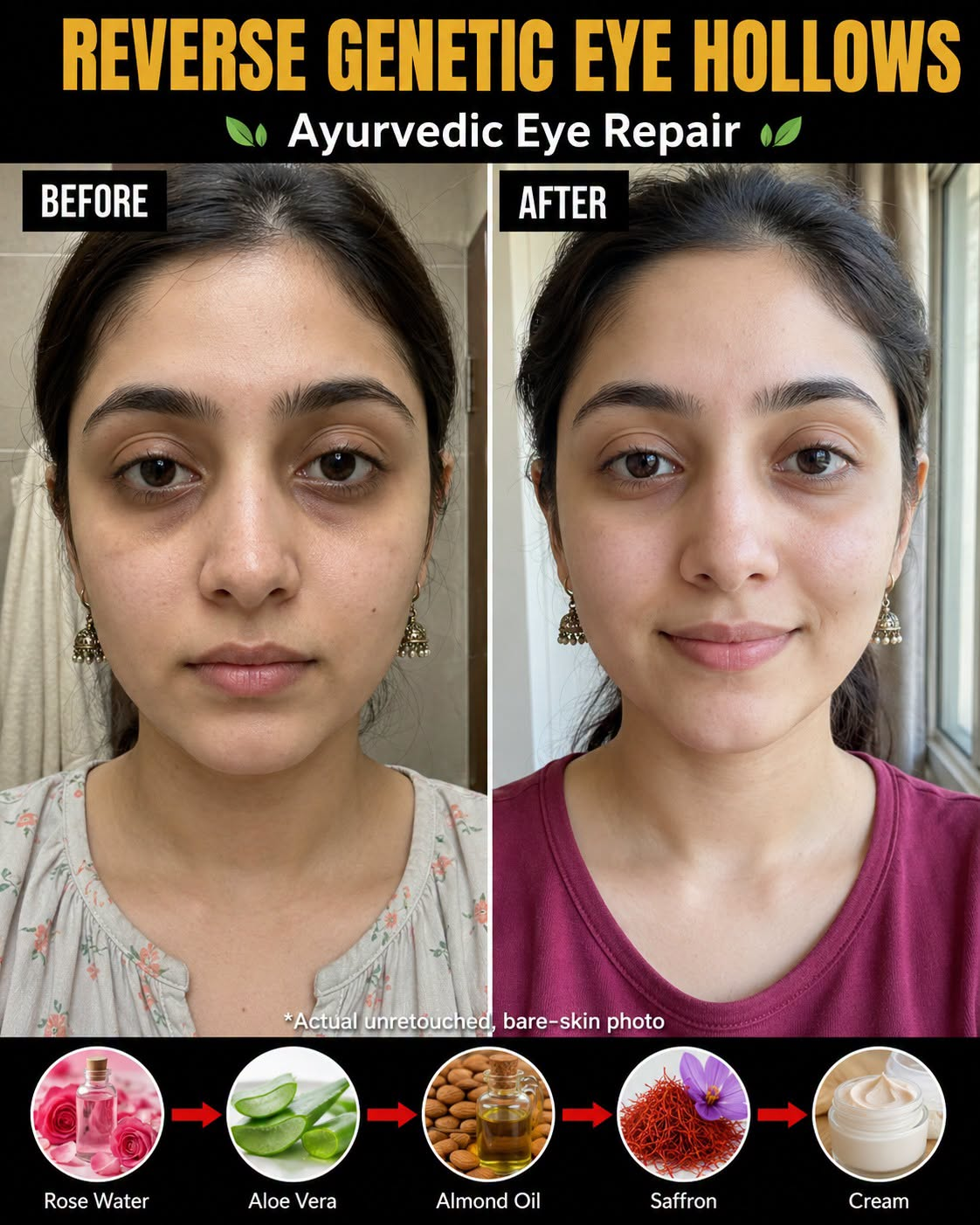
Deep under-eye hollows can make a person look tired, older, or stressed even after a full night’s sleep. While genetics play a major role in the appearance of tear troughs and hollow eyes, dehydration, poor sleep, sun exposure, nutritional deficiencies, and loss of skin elasticity can make them appear more prominent. Although no home remedy can permanently reverse genetically caused volume loss, scientifically supported natural ingredients can improve hydration, strengthen the skin barrier, reduce pigmentation, and enhance the overall appearance of the under-eye area. The following remedies are designed according to different skin types using gentle ingredients with evidence supporting their skin benefits.
Important: If under-eye hollows are mainly caused by inherited facial structure or significant fat loss, natural remedies can improve skin quality but cannot replace lost volume like medical treatments.
Remedy 1: For Normal Skin
Ingredients
- 1 teaspoon pure aloe vera gel
- ½ teaspoon cold rose water
- 3 drops sweet almond oil
- 2 saffron strands (soaked for 20 minutes)
- ¼ teaspoon plain unscented moisturizer
Scientific Working of the Ingredients
Aloe vera contains polysaccharides that improve skin hydration and support wound healing. Rose water provides antioxidant compounds that soothe delicate skin. Almond oil is rich in vitamin E and essential fatty acids that strengthen the skin barrier and reduce dryness. Saffron contains crocin and crocetin, antioxidants that may help reduce oxidative stress and improve skin brightness. A fragrance-free moisturizer helps seal moisture into the thin under-eye skin.
Procedure
- Soak saffron in rose water for 20 minutes.
- Mix aloe vera, almond oil, and moisturizer.
- Add the saffron-infused rose water.
- Apply a very thin layer around the orbital bone using the ring finger.
- Leave overnight.
How Often to Apply
Apply every night for 5 consecutive days.
Initial Results
Within 2–3 days, the skin usually feels more hydrated, smoother, and slightly brighter. Improvement in hollows is limited because natural remedies cannot restore lost fat volume.
Remedy 2: For Combination Skin
Ingredients
- 1 teaspoon cucumber juice
- ½ teaspoon aloe vera gel
- 2 drops almond oil
- ½ teaspoon rose water
- ¼ teaspoon oat gel
- 2 saffron strands
Scientific Working of the Ingredients
Cucumber provides hydration and a cooling effect that temporarily reduces puffiness. Oats contain beta-glucans that calm inflammation while improving moisture retention. Aloe vera hydrates without making the skin greasy. Almond oil supplies vitamin E, while saffron contributes antioxidant protection.
Procedure
- Mix cucumber juice with aloe vera.
- Stir in oat gel.
- Add almond oil and saffron-infused rose water.
- Apply gently around the eyes.
- Leave for 20 minutes before rinsing.
How Often to Apply
Use on alternate evenings for one week.
Initial Results
The under-eye area may appear fresher and less dry within a few days, with mild improvement in skin texture.
Remedy 3: For Oily Skin
Ingredients
- 1 teaspoon chilled aloe vera gel
- ½ teaspoon green tea infusion
- ½ teaspoon rose water
- 2 saffron strands
- 1 drop almond oil
Scientific Working of the Ingredients
Green tea contains catechins and caffeine that temporarily reduce puffiness by constricting superficial blood vessels. Aloe vera hydrates without clogging pores. Rose water calms irritation, while saffron provides antioxidant protection. A very small amount of almond oil prevents excessive dryness.
Procedure
- Brew green tea and cool completely.
- Mix with aloe vera and rose water.
- Add saffron infusion and one drop of almond oil.
- Refrigerate for 15 minutes.
- Apply with cotton pads for 15 minutes.
How Often to Apply
Use once daily for 5 days.
Initial Results
Cooling and hydration may reduce the appearance of tired eyes and improve skin freshness.
Remedy 4: For Dry Skin
Ingredients
- ½ teaspoon shea butter
- ½ teaspoon aloe vera gel
- 4 drops almond oil
- ½ teaspoon rose water
- 2 saffron strands
- ¼ teaspoon plain moisturizer
Scientific Working of the Ingredients
Dry skin around the eyes loses water quickly. Shea butter contains fatty acids that reinforce the skin barrier. Almond oil improves moisture retention through vitamin E and lipids. Aloe vera hydrates, while saffron supplies antioxidant compounds. The moisturizer reduces overnight water loss.
Procedure
- Whip shea butter until soft.
- Blend with aloe vera and moisturizer.
- Add almond oil and saffron-infused rose water.
- Massage gently for one minute.
- Leave overnight.
How Often to Apply
Apply nightly for one week.
Initial Results
Within several days, the under-eye area often feels softer, smoother, and better hydrated, reducing the appearance of fine dehydration lines.
Remedy 5: For Sensitive Skin
Ingredients
- 1 teaspoon pure aloe vera gel
- ½ teaspoon sterile rose water
- ¼ teaspoon colloidal oat gel
- 1 drop almond oil
- 2 saffron strands (optional if previously patch-tested)
Scientific Working of the Ingredients
Sensitive skin benefits from soothing ingredients. Colloidal oats reduce irritation and support the skin barrier. Aloe vera hydrates while rose water refreshes the skin. Almond oil supplies emollients, but only a small amount should be used to minimize irritation risk.
Procedure
- Mix aloe vera with oat gel.
- Add rose water.
- Stir in one drop of almond oil.
- Apply gently using clean fingertips.
- Wash after 15 minutes if preferred.
How Often to Apply
Three to four times weekly.
Initial Results
Skin usually feels calmer, more comfortable, and better moisturized within a few applications.
Final Tips
- Sleep 7–9 hours every night.
- Drink enough water throughout the day.
- Protect the eye area from sunlight by wearing sunglasses and applying sunscreen to surrounding skin.
- Avoid rubbing your eyes.
- Perform a patch test before trying any new ingredient.
- Use only clean hands and applicators.
- Manage allergies if they contribute to dark circles.
- Remember that genetic eye hollows cannot be permanently corrected with home remedies; these remedies mainly improve hydration, skin quality, and the appearance of the under-eye area.
Visible improvements in skin hydration and brightness may begin within 2–3 days, while healthier-looking skin generally develops over 4–8 weeks of consistent care.
Diet Plan
A nutrient-rich diet supports collagen production and healthy skin around the eyes.
Morning
- Warm water
- Handful of soaked almonds
- One boiled egg or Greek yogurt
- Seasonal fruit rich in vitamin C
Lunch
- Grilled fish or lentils
- Brown rice or whole wheat chapati
- Mixed green vegetables
- Cucumber and tomato salad
Evening Snack
- Green tea
- Mixed berries or citrus fruit
Dinner
- Lean chicken, beans, or tofu
- Steamed vegetables
- Sweet potato or quinoa
Daily Nutrients
- Vitamin C-rich fruits
- Protein for collagen production
- Iron-rich foods
- Omega-3 fatty acids
- Plenty of water
Continue these home remedies and dietary habits for 6–8 weeks. If your eye hollows become suddenly worse, occur only on one side, are associated with swelling, pain, vision changes, or if you remain concerned about inherited tear troughs, consult a dermatologist or ophthalmologist for proper evaluation.
References for the above remedy
- Healthline. How to Get Rid of Dark Circles Permanently.
URL: https://www.healthline.com/health/how-to-get-rid-of-dark-circles-permanently - Verywell Health. How to Get Rid of Dark Under-Eye Circles.
URL: https://www.verywellhealth.com/how-to-get-rid-of-dark-circles-8410260 - National Center for Complementary and Integrative Health. Aloe Vera.
URL: https://www.nccih.nih.gov/health/aloe-vera - PubMed. Colloidal Oatmeal: History, Chemistry and Clinical Properties.
URL: https://pubmed.ncbi.nlm.nih.gov/17373175/ - PubMed. The Uses and Properties of Almond Oil.
URL: https://pubmed.ncbi.nlm.nih.gov/20129403/ - Healthline. Benefits of Rose Water for Skin.
URL: https://www.healthline.com/health/beauty-skin-care/rose-water-benefits - PubMed. Saffron (Crocus sativus L.) and Its Active Constituents.
URL: https://pubmed.ncbi.nlm.nih.gov/27335251/ - American Academy of Dermatology. Dark Circles Under the Eyes: Causes and Treatment.
URL: https://www.aad.org/public/everyday-care/skin-care-basics/care/dark-circles-under-eyes