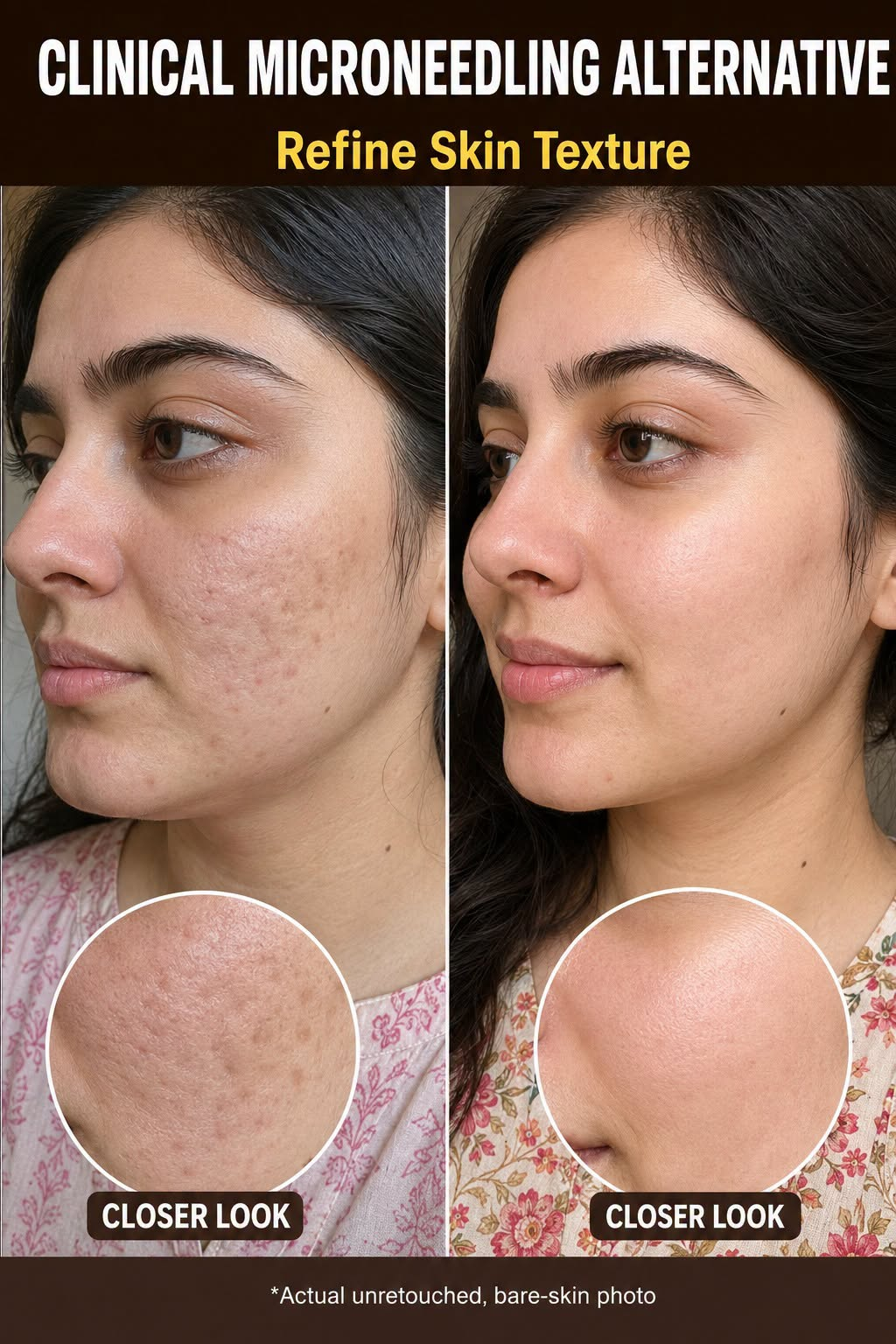
Uneven skin texture, enlarged pores, mild acne scars, and rough patches can make the skin appear older and less radiant. While clinical microneedling is an effective dermatological procedure for stimulating collagen production, not everyone is ready for needles, downtime, or the cost of repeated treatments. Fortunately, several evidence-supported natural ingredients can help support the skin barrier, improve hydration, reduce inflammation, and gradually refine skin texture when used consistently. Although these remedies cannot replicate the collagen remodeling achieved by professional microneedling, they can complement a healthy skincare routine and improve the appearance of the skin over time.
Important: These remedies are intended for mild texture concerns and healthy skin. They are not a replacement for professional treatment of deep acne scars or severe skin conditions.
Remedy 1: For Normal Skin
Ingredients
- 1 tablespoon fresh aloe vera gel
- 1 teaspoon raw honey
- 1 teaspoon plain yogurt
- ½ teaspoon finely ground oats
- 2 drops rosehip oil
Why This Remedy Works Scientifically
Aloe vera contains polysaccharides such as acemannan that help maintain hydration and support wound healing. Honey acts as a natural humectant, drawing moisture into the skin while providing antibacterial activity. Yogurt contains lactic acid, a gentle alpha-hydroxy acid that encourages the removal of dead skin cells. Oatmeal contains beta-glucans and avenanthramides that soothe inflammation, while rosehip oil supplies essential fatty acids and provitamin A compounds that help improve skin texture and support collagen maintenance. (PMC)
Procedure
- Mix all ingredients into a smooth paste.
- Cleanse your face thoroughly.
- Apply an even layer over the face.
- Leave on for 15 minutes.
- Rinse with lukewarm water and pat dry.
- Follow with a fragrance-free moisturizer.
How Often to Apply
Use 3 times per week for at least one week.
Initial Results
Within 2–3 applications, the skin may feel softer, more hydrated, and appear smoother.
Remedy 2: For Combination Skin
Ingredients
- 1 tablespoon brewed green tea (cooled)
- 1 teaspoon aloe vera gel
- 1 teaspoon cucumber puree
- ½ teaspoon oatmeal powder
- 3 drops jojoba oil
Why This Remedy Works Scientifically
Green tea is rich in catechins (especially EGCG), powerful antioxidants that help reduce inflammation and oxidative stress. Aloe vera hydrates without clogging pores. Cucumber provides hydration and antioxidant compounds. Oatmeal calms irritation, while jojoba oil closely resembles human sebum, helping balance oil production without leaving a greasy residue. (PMC)
Procedure
- Blend all ingredients thoroughly.
- Apply to freshly cleansed skin.
- Leave for 15–20 minutes.
- Rinse with cool water.
- Finish with a lightweight moisturizer.
How Often to Apply
Apply every other day for 5–7 days.
Initial Results
The skin often feels fresher, with improved hydration and reduced surface roughness.
Remedy 3: For Oily Skin
Ingredients
- 1 tablespoon cooled green tea
- 1 teaspoon multani mitti (Fuller’s earth)
- 1 teaspoon aloe vera gel
- ½ teaspoon raw honey
- 2 drops tea tree oil (properly diluted)
Why This Remedy Works Scientifically
Green tea polyphenols help reduce inflammation and may decrease excess oil production. Aloe vera hydrates while soothing irritated skin. Honey has antimicrobial properties that support acne-prone skin. Tea tree oil has demonstrated antibacterial activity against acne-causing bacteria when appropriately diluted. Multani mitti absorbs excess surface oil without harsh scrubbing. (Allied Academies)
Procedure
- Combine ingredients into a creamy paste.
- Apply evenly, avoiding the eye area.
- Allow to dry for 10–12 minutes.
- Rinse gently.
- Apply a lightweight moisturizer afterward.
How Often to Apply
Use twice weekly.
Initial Results
The skin may appear less oily, cleaner, and smoother within several applications.
Remedy 4: For Dry Skin
Ingredients
- 1 tablespoon mashed ripe avocado
- 1 teaspoon raw honey
- 1 teaspoon aloe vera gel
- 1 teaspoon plain yogurt
- 3 drops rosehip oil
Why This Remedy Works Scientifically
Avocado provides healthy lipids and vitamin E that support the skin barrier. Honey increases moisture retention. Aloe vera delivers hydration. Yogurt provides gentle exfoliation through lactic acid, while rosehip oil supplies essential fatty acids and antioxidants that improve skin elasticity and overall texture. (Clinikally)
Procedure
- Mash avocado until smooth.
- Mix in the remaining ingredients.
- Apply generously.
- Leave on for 20 minutes.
- Wash off with lukewarm water.
- Seal in moisture with a fragrance-free cream.
How Often to Apply
Use three times weekly.
Initial Results
The skin usually feels softer, more comfortable, and less flaky after a few treatments.
Remedy 5: For Sensitive Skin
Ingredients
- 1 tablespoon colloidal oatmeal
- 1 tablespoon aloe vera gel
- 1 teaspoon cucumber juice
- 1 teaspoon chamomile tea (cooled)
- ½ teaspoon raw honey
Why This Remedy Works Scientifically
Colloidal oatmeal has FDA-recognized skin-protectant properties and helps calm irritation through beta-glucans and avenanthramides. Aloe vera supports hydration, chamomile provides soothing antioxidant compounds, cucumber cools irritated skin, and honey helps maintain moisture while supporting the skin barrier. (Allied Academies)
Procedure
- Blend all ingredients into a smooth paste.
- Apply gently without rubbing.
- Leave on for 15 minutes.
- Rinse with cool water.
- Apply a gentle moisturizer.
How Often to Apply
Use every other day for one week.
Initial Results
Many people notice calmer, better-hydrated skin with reduced redness after several applications.
Final Tips
- Always wear a broad-spectrum sunscreen during the day.
- Stay well hydrated.
- Avoid aggressive scrubs that may worsen skin texture.
- Remove makeup before sleeping.
- Clean makeup brushes regularly.
- Perform a patch test before using any new ingredient.
- Get 7–8 hours of quality sleep.
- Eat antioxidant-rich foods daily.
Visible improvements in hydration and smoothness often begin within 2–3 days, while gradual texture refinement may require 6–12 weeks of consistent skincare. Deep acne scars usually require professional dermatological procedures for significant improvement.
Diet Plan for Healthier Skin Texture
Breakfast
- Oats with berries and walnuts
- Green tea
Mid-Morning
- Orange or kiwi
- Handful of almonds
Lunch
- Grilled fish or lentils
- Brown rice
- Mixed vegetables
- Cucumber salad
Evening Snack
- Plain yogurt with flaxseed
- Green tea
Dinner
- Grilled chicken, tofu, or beans
- Steamed vegetables
- Sweet potato
Daily Hydration
- Drink 2–3 liters of water.
- Include fruits rich in vitamin C and vegetables high in antioxidants.
Continue these dietary habits for 8–12 weeks for the best support of overall skin health.
If acne scars, rough texture, persistent redness, or other skin concerns continue despite several weeks of appropriate skincare, consult a board-certified dermatologist for proper evaluation and treatment.
References for the above remedy
- Green tea as a cosmetic agent for skin aging (2025). PubMed Central. https://pmc.ncbi.nlm.nih.gov/articles/PMC12441187/
- American Academy of Dermatology – Skin care recommendations. https://www.aad.org
- National Center for Complementary and Integrative Health – Aloe Vera. https://www.nccih.nih.gov/health/aloe-vera
- Mayo Clinic – Skin care basics. https://www.mayoclinic.org/healthy-lifestyle/adult-health/in-depth/skin-care/art-20048237
- National Eczema Association – Colloidal Oatmeal. https://nationaleczema.org
- Embracing Nature with Natural Remedies for Beautiful Skin. Allied Academies. https://www.alliedacademies.org/articles/embracing-nature-with-natural-remedies-for-beautiful-skin-28276.html
- Benefits of Plant Extracts in Skincare. https://www.clinikally.com/blogs/news/benefits-of-plant-extracts-in-skincare
- NIH Office of Dietary Supplements – Vitamin C Fact Sheet. https://ods.od.nih.gov/factsheets/VitaminC-HealthProfessional/
- DermNet NZ – Tea Tree Oil. https://dermnetnz.org/topics/tea-tree-oil
- American Academy of Dermatology – Acne scars and treatment options. https://www.aad.org/public/diseases/acne/skin-care/scars