Large-looking pores, uneven cheek texture, roughness, and oily shine can make the face look tired even when the skin is clean. A silicone primer gives temporary smoothness by filling surface gaps, but natural remedies can create a similar soft-focus effect by hydrating the top skin layer, calming inflammation, absorbing extra oil, and improving the skin barrier. These remedies will not permanently “close” pores because pores are normal skin openings, but they can make them look smaller and smoother within 1–3 days when used correctly according to skin type.
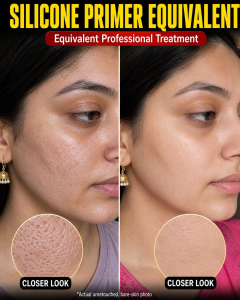
Remedy 1: For Normal Skin
Aloe, Oat, Rice, and Green Tea Smooth-Blur Mask
Ingredients
Aloe vera gel, 1 teaspoon: Hydrates the upper skin layer and gives a plump, smoother look.
Finely ground oatmeal, 1 teaspoon: Soothes the skin barrier and reduces rough surface dryness.
Rice flour or rice starch, 1 teaspoon: Gives a soft, powdery smoothing effect and helps absorb mild oil.
Raw honey, ½ teaspoon: Works as a natural humectant to hold water on the skin.
Cooled green tea, 1 teaspoon: Provides antioxidant support and helps control mild sebum.
Fresh cucumber juice, 1 teaspoon: Adds water-based freshness and cooling comfort.
Procedure
Mix all ingredients into a smooth paste. Apply a thin layer on clean skin, especially over cheeks, nose sides, and forehead. Keep it for 10–12 minutes. Do not let it become too dry or tight. Massage with wet fingers for 20 seconds, then rinse with cool water and pat dry.
How Often to Apply
Use once daily for 3 days, then continue 2–3 times weekly.
Initial Results
Within 1–3 days, the skin may look fresher, less shiny, and more even. Makeup or sunscreen may sit more smoothly because the skin surface feels hydrated and calm.
How This Remedy Works Scientifically
Aloe and honey increase surface hydration, which makes tiny lines and pores look softer. Oatmeal supports the skin barrier and reduces irritation-related roughness. Rice starch gives a temporary mattifying and smoothing layer, while green tea helps reduce oiliness that can make pores appear larger.
Remedy 2: For Combination Skin
Balanced T-Zone Primer Mask
Ingredients
Cooled green tea, 1 tablespoon: Helps reduce excess oil in the T-zone.
Kaolin clay, ½ teaspoon: Absorbs extra sebum without being too harsh.
Aloe vera gel, 1 teaspoon: Keeps dry areas comfortable.
Finely ground oatmeal, ½ teaspoon: Calms cheek dryness and supports barrier repair.
Rice starch, 1 teaspoon: Helps blur uneven texture.
Raw honey, ½ teaspoon: Prevents over-drying and adds a soft glow.
Procedure
Mix everything into a creamy paste. Apply a slightly thicker layer on the nose, forehead, and chin. Apply a very thin layer on the cheeks. Leave for 8–10 minutes only. Rinse before the mask cracks fully. Pat dry and apply a light, non-greasy moisturizer.
How Often to Apply
Use on alternate days for 5 days. After that, use twice weekly.
Initial Results
The T-zone may look less greasy within 24–48 hours, while the cheeks should feel smoother instead of tight.
How This Remedy Works Scientifically
Combination skin needs oil control and hydration at the same time. Clay and rice starch reduce shine on oily areas. Aloe, honey, and oats protect the drier parts from becoming flaky. Green tea supports sebum balance, which can make pores on the nose and forehead look less obvious.
Remedy 3: For Oily Skin
Green Tea Clay Matte-Finish Pore Mask
Ingredients
Cooled strong green tea, 1 tablespoon: Supports oil control and antioxidant defense.
Bentonite or kaolin clay, 1 teaspoon: Absorbs excess sebum and surface impurities.
Rice starch, 1 teaspoon: Gives a natural soft-focus matte finish.
Aloe vera gel, 1 teaspoon: Hydrates without heaviness.
Raw honey, ½ teaspoon: Helps keep the mask from stripping the skin.
Turmeric powder, a very tiny pinch: Provides anti-inflammatory support; use very little to avoid staining.
Procedure
Mix the ingredients into a smooth paste. Apply only a thin layer on oily areas. Leave for 7–10 minutes. Rinse while the mask is still slightly damp. Do not scrub aggressively. Use a clean towel and avoid touching the face afterward.
How Often to Apply
Apply every other day for 5 days, then 1–2 times weekly.
Initial Results
Oiliness may reduce within the first 1–2 applications. Pores may look less dark and less stretched because surface oil and dead-cell buildup are reduced.
How This Remedy Works Scientifically
Oily skin often makes pores look larger because sebum collects around follicle openings. Clay and rice starch absorb oil, while green tea supports sebum reduction. Aloe prevents dehydration, because over-drying oily skin can trigger more shine. Turmeric is used in a tiny amount for its calming effect on redness and inflammation.
Remedy 4: For Dry Skin
Moisture-Cushion Smoothing Mask
Ingredients
Aloe vera gel, 1 teaspoon: Adds light hydration.
Finely ground oatmeal, 1½ teaspoons: Softens rough, dry texture.
Raw honey, 1 teaspoon: Pulls moisture into the skin surface.
Rice starch, ½ teaspoon: Smooths the look of uneven areas without drying too much.
Cold-pressed sunflower seed oil, 3–4 drops: Helps support the lipid barrier.
Cucumber juice, 1 teaspoon: Adds cooling water content.
Procedure
Mix well until the paste feels creamy. Apply on clean skin for 10–12 minutes. Before rinsing, wet your hands and gently press the mask into the skin. Rinse with cool water. Pat dry and apply 1–2 drops of sunflower seed oil or a gentle moisturizer while the skin is slightly damp.
How Often to Apply
Use daily for 3 days, then 3 times weekly.
Initial Results
Dry tightness may reduce within 1–2 days. The skin may look more padded and less creased, making pores and fine lines appear softer.
How This Remedy Works Scientifically
Dry skin makes texture look worse because the outer layer becomes uneven and reflective. Honey and aloe hydrate, oatmeal soothes, and sunflower seed oil supports the barrier. Rice starch gives light smoothing without the strong drying effect of clay.
Remedy 5: For Sensitive Skin
Calm Oat and Rice Skin-Smoothing Pack
Ingredients
Finely ground oatmeal, 1½ teaspoons: Helps calm irritation and dryness.
Rice starch, 1 teaspoon: Gives a gentle smoothing effect.
Pure aloe vera gel, 1 teaspoon: Hydrates and cools the skin.
Cucumber juice, 1 teaspoon: Soothes heat and redness.
Raw honey, ¼ teaspoon: Adds mild humectant comfort, only if you are not allergic.
Weak cooled green tea, 1 teaspoon: Provides gentle antioxidant support.
Procedure
Mix into a soft paste. Patch test first behind the ear or on the jawline for 24 hours. Apply a thin layer for only 6–8 minutes. Rinse with cool water. Do not massage, scrub, or use hot water.
How Often to Apply
Use every other day for 5 days. If the skin feels calm, continue twice weekly.
Initial Results
The skin may feel cooler and less irritated within 1–2 uses. Texture may look smoother because redness, dryness, and rough patches become less noticeable.
How This Remedy Works Scientifically
Sensitive skin needs barrier repair, not aggressive exfoliation. Oatmeal is the main calming ingredient. Rice starch smooths without friction. Aloe and cucumber support hydration and comfort. Weak green tea adds antioxidant benefit without making the remedy too active.
Final Tips
Always patch test every remedy before applying it to the full face. Keep bowls, spoons, towels, and brushes clean to avoid bacterial contamination. Avoid lemon juice, baking soda, toothpaste, harsh scrubs, and very hot water because they can damage the skin barrier and make pores look worse. Drink enough water, sleep 7–8 hours, and change pillow covers regularly. Visible smoothness often begins within 2–3 days, but a healthier glow and softer texture usually need 3–4 weeks of steady care.
If you have painful acne, pus-filled pimples, sudden rash, burning, severe pigmentation, or deep pitted acne scars, home remedies may not be enough. Continue these remedies for 3–5 days for initial smoothing and 4 weeks for better texture support. If the problem persists, see a dermatologist or doctor.
Diet Plan
Follow this diet plan for at least 4–6 weeks along with the home remedies.
Morning: Start with water, then eat a vitamin C-rich fruit such as orange, guava, kiwi, or berries.
Breakfast: Choose oats, plain yogurt, boiled eggs, whole-grain toast, or a smoothie with fruit and seeds.
Lunch: Eat lentils, beans, fish, chicken, paneer, or tofu with vegetables and whole grains such as brown rice or whole-wheat roti.
Evening snack: Take green tea, cucumber slices, roasted chickpeas, walnuts, or almonds. Avoid sugary tea, bakery snacks, and fried foods.
Dinner: Keep it light with soup, vegetables, protein, and a small portion of whole grains.
Avoid frequent high-sugar foods, soft drinks, deep-fried snacks, and excessive processed foods because they may worsen oiliness and acne tendency in some people. If acne, skin inflammation, or texture does not improve after 4–6 weeks, consult a doctor.
References for the above remedy
- Lee, S. J., et al. “Facial Pores: Definition, Causes, and Treatment Options.” Dermatologic Surgery. URL: https://pubmed.ncbi.nlm.nih.gov/26918966/ (PubMed)
- American Academy of Dermatology. “What Can Treat Large Facial Pores?” URL: https://www.aad.org/public/everyday-care/skin-care-secrets/face/treat-large-pores (American Academy of Dermatology)
- Dal’Belo, S. E., et al. “Moisturizing Effect of Cosmetic Formulations Containing Aloe Vera Extract.” Skin Research and Technology. URL: https://pubmed.ncbi.nlm.nih.gov/17026654/ (PubMed)
- Reynertson, K. A., et al. “Anti-inflammatory Activities of Colloidal Oatmeal.” Journal of Drugs in Dermatology. URL: https://pubmed.ncbi.nlm.nih.gov/25607907/ (PubMed)
- De Paepe, K., et al. “Effect of Rice Starch as a Bath Additive on the Barrier Function of Skin.” Acta Dermato-Venereologica. URL: https://pubmed.ncbi.nlm.nih.gov/12353708/ (PubMed)
- Mahmood, T., et al. “A Comparison of the Effects of Topical Green Tea and Lotus on Facial Sebum Control.” URL: https://pubmed.ncbi.nlm.nih.gov/23935347/ (PubMed)
- Burlando, B., and Cornara, L. “Honey in Dermatology and Skin Care: A Review.” Journal of Cosmetic Dermatology. URL: https://pubmed.ncbi.nlm.nih.gov/24305429/ (PubMed)
- Vaughn, A. R., et al. “Effects of Turmeric on Skin Health: A Systematic Review.” Phytotherapy Research. URL: https://pubmed.ncbi.nlm.nih.gov/27213821/ (PubMed)
- Zhang, X., et al. “Comprehensive Assessment of the Efficacy and Safety of a Clay Mask in Oily and Acne-Prone Skin.” URL: https://pubmed.ncbi.nlm.nih.gov/38009030/ (PubMed)
- Vaughn, A. R., et al. “Natural Oils for Skin-Barrier Repair: Ancient Compounds Now Backed by Modern Science.” American Journal of Clinical Dermatology. URL: https://pubmed.ncbi.nlm.nih.gov/28707186/