
Soft, smooth feet can make you feel cleaner, more confident, and more comfortable in sandals, slippers, or bare feet. Rough heels, dry patches, dull soles, and thick dead skin usually happen because the feet carry body weight, face friction from shoes, and often receive less moisture than the face or hands. The best natural foot-care routine should do three things: soften hardened skin with a warm soak, gently loosen dead cells without harsh rubbing, and seal moisture overnight. Dermatology guidance supports soaking, gentle exfoliation, and moisturizing soon after washing for dry or cracked heels, while clinical studies support ingredients such as colloidal oatmeal, aloe vera, glycerin, lactic acid, sunflower oil, and honey for hydration, barrier support, soothing, or wound-care benefits. (American Academy of Dermatology)
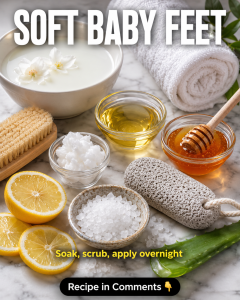
Remedy 1: For Normal Skin
Scientific Working of the Ingredients
This remedy is made for feet that are slightly rough but not extremely dry or sensitive. Milk and yogurt naturally contain lactic acid, an alpha-hydroxy acid that helps loosen dead surface cells and improve skin texture. Honey acts as a humectant, meaning it helps attract moisture. Aloe vera supports hydration through a water-rich gel structure, while finely ground oats reduce friction during scrubbing and help calm the skin barrier. Sunflower oil is used at the end because research shows it can support hydration and preserve the outer skin barrier better than harsher oils. (PubMed)
Ingredients
Warm milk: 1 cup, for softening rough skin with gentle lactic acid.
Plain yogurt: 2 tablespoons, for mild exfoliation and smoother texture.
Fine oat flour: 1 tablespoon, for a soft scrub and barrier comfort.
Raw honey: 1 teaspoon, for moisture attraction and softness.
Aloe vera gel: 1 tablespoon, for cooling hydration.
Sunflower oil: 1 teaspoon, for sealing moisture overnight.
Procedure
Wash your feet with lukewarm water. Mix warm milk and yogurt in a small basin and soak your feet for 10 minutes. Mix oat flour, honey, and aloe vera into a soft paste. Massage it over heels, toes, and soles for 2 minutes using circular movements. Rinse lightly, pat dry, and apply sunflower oil while the feet are slightly damp. Wear clean cotton socks overnight.
How Often to Apply
Use this remedy on alternate nights for 5 days.
Initial Results
Within 1 to 3 days, the feet may feel less tight, the soles may look cleaner, and light roughness may begin to feel smoother.
Remedy 2: For Combination Skin
Scientific Working of the Ingredients
Combination foot skin often means the heel is dry, but the toes or ball of the foot may feel sweaty or sticky. Green tea contains polyphenols that have been studied for reducing sebum and supporting antioxidant protection. Rice flour gives mild physical polishing without being as sharp as salt. Aloe vera and honey hydrate without feeling too heavy, while sunflower oil is applied only to the dry heel zone to prevent greasiness.
Ingredients
Strong cooled green tea: 1 cup, for refreshing sweaty areas.
Rice flour: 1 tablespoon, for gentle polishing.
Aloe vera gel: 1 tablespoon, for light hydration.
Raw honey: 1 teaspoon, for moisture support.
Cucumber juice: 1 tablespoon, for a cooling fresh feel.
Sunflower oil: 1 teaspoon, only for heels and dry patches.
Procedure
Soak your feet in cooled green tea mixed with half a cup of lukewarm water for 8 to 10 minutes. In a bowl, mix rice flour, aloe vera, honey, and cucumber juice. Apply the paste to the feet. Massage the heel and sole areas gently, but avoid aggressive rubbing between the toes. Rinse, pat completely dry, especially between the toes, then apply sunflower oil only on dry heels. Wear socks only if the feet are not sweaty.
How Often to Apply
Apply once daily for 3 days, then continue every other day for one week.
Initial Results
In 1 to 3 days, the heels should feel softer, while the toes and front foot may feel fresher and less sticky.
Remedy 3: For Oily or Sweaty Feet
Scientific Working of the Ingredients
Oily or sweaty feet need freshness without over-drying. Green tea is useful because topical green tea preparations have shown sebum-reducing effects in clinical research. Oats help absorb excess surface moisture gently, while aloe vera hydrates without a greasy finish. A very small amount of apple cider vinegar in plenty of water may help reduce odor because acidic environments are less friendly to many odor-causing microbes, but it must be diluted well and avoided on cuts, cracks, or irritated skin.
Ingredients
Cooled green tea: 1 cup, for freshness and antioxidant support.
Lukewarm water: 2 cups, to dilute the soak.
Apple cider vinegar: 1 teaspoon, for a mild acidic foot soak.
Fine oat flour: 1 tablespoon, for gentle absorption.
Aloe vera gel: 1 tablespoon, for non-greasy hydration.
Raw honey: 1/2 teaspoon, for light softening.
Procedure
Mix green tea, lukewarm water, and apple cider vinegar in a basin. Soak feet for 7 minutes only. Do not use this soak if the skin is cracked, burning, peeling, or wounded. Mix oat flour, aloe vera, and honey into a thin paste. Apply to the soles and heels for 3 minutes, then rinse well. Dry the feet completely, especially between toes. Do not apply heavy oil between toes.
How Often to Apply
Use for 3 days continuously, then reduce to twice weekly.
Initial Results
By day 2 or 3, the feet may feel cleaner, less slippery, and more balanced. Odor linked to sweat may also feel reduced, but persistent odor, itching, peeling, or white skin between toes may suggest fungal infection and needs medical care.
Remedy 4: For Dry Skin
Scientific Working of the Ingredients
Dry feet need less scrubbing and more water-binding ingredients. Glycerin is one of the best-studied humectants and is known to improve hydration in dry, barrier-impaired skin. Colloidal oatmeal has clinical evidence for improving hydration, skin pH, and barrier function. Aloe vera adds water-based hydration, honey helps retain moisture, and sunflower oil seals the routine. This remedy is ideal for rough heels that are dry but not bleeding. (PubMed)
Ingredients
Lukewarm water: 3 cups, for soft soaking.
Colloidal oatmeal or very fine oat powder: 2 tablespoons, for soothing dry skin.
Aloe vera gel: 1 tablespoon, for hydration.
Vegetable glycerin: 1 teaspoon, for moisture binding.
Raw honey: 1 teaspoon, for humectant softness.
Sunflower oil: 1 tablespoon, for moisture sealing.
Procedure
Add oat powder to lukewarm water and soak your feet for 10 minutes. Pat the feet until slightly damp, not fully dry. Mix aloe vera, glycerin, and honey into a smooth gel-like layer and apply it generously on heels and soles. Wait 5 minutes, then seal with sunflower oil. Wear breathable cotton socks overnight.
How Often to Apply
Apply every night for 5 days, then 3 times weekly for maintenance.
Initial Results
Dry tightness may reduce within 1 to 2 days. By day 3, mild flaking may look smoother and the heels may feel more flexible.
Remedy 5: For Sensitive Skin
Scientific Working of the Ingredients
Sensitive feet should avoid lemon juice, strong vinegar, rough salt scrubs, and hard pumice rubbing. This remedy focuses on barrier comfort. Oats contain compounds that help soothe irritated skin, aloe vera supports hydration, glycerin attracts water, and sunflower oil helps protect the outer layer. Honey is included in a very small amount for softening, but it should be skipped if you have allergy, itching, or stinging from honey.
Ingredients
Plain lukewarm water: 3 cups, for a gentle soak.
Fine oat powder: 2 tablespoons, for calming and softening.
Aloe vera gel: 1 tablespoon, for cooling hydration.
Vegetable glycerin: 1/2 teaspoon, diluted for sensitive skin.
Raw honey: 1/2 teaspoon, optional for mild softness.
Sunflower oil: 1 teaspoon, for barrier support.
Procedure
Soak feet in lukewarm oat water for 8 minutes. Do not scrub with a stone or brush. Mix aloe vera, glycerin, optional honey, and sunflower oil. Apply a thin layer to heels and soles. Leave it overnight with loose cotton socks. If any burning, itching, or redness appears, rinse immediately and stop using the remedy.
How Often to Apply
Use once daily for 3 to 5 days.
Initial Results
Within 1 to 3 days, sensitive feet may feel calmer, less rough, and more moisturized without the tight feeling that harsh scrubs can cause.
Final Tips
Always patch test any remedy on a small area of the foot for 24 hours before full use. Keep foot tools clean and dry, and never share pumice stones, towels, or foot files. Use lukewarm water instead of hot water because hot water can worsen dryness. Do not cut thick heel skin at home, and avoid strong lemon or salt scrubs if the skin is cracked or sensitive. For thick dead skin, gentle exfoliation after soaking is enough; over-scrubbing can create micro-injury and make heels rougher. Dermatology and foot-care sources commonly recommend soaking for around 10 minutes, gentle dead-skin removal, applying moisturizer while skin is still damp, and wearing socks overnight to lock in hydration. (American Academy of Dermatology)
Visible improvements usually begin within 2 to 3 days when the feet are only mildly rough. Deeper heel cracks, thick calluses, and long-term dryness may need 2 to 4 weeks of consistent care. If your heels are bleeding, painful, swollen, infected, or not improving after one week of careful home care, see a doctor or podiatrist. People with diabetes, poor circulation, numbness, or frequent foot infections should avoid aggressive scrubbing and should get medical advice early because dry cracked feet can become more serious in diabetes. (American Diabetes Association)
Diet Plan
Continue the home remedy routine for 5 days first, then maintain it 2 to 3 times weekly. Along with external care, support skin softness from inside by drinking enough water daily and eating moisture-supporting foods.
Morning: Drink water after waking. Eat oatmeal with chia seeds or flaxseeds and fruit.
Mid-morning: Take citrus fruit, guava, or berries for vitamin C support.
Lunch: Eat lentils, beans, eggs, fish, or chicken with vegetables and whole grains.
Evening snack: Take nuts or seeds such as almonds, walnuts, pumpkin seeds, or sunflower seeds.
Dinner: Eat vegetables with protein and healthy fats such as olive oil, avocado, or fish.
Before bed: Drink water or caffeine-free herbal tea if your body tolerates it.
Follow this diet pattern for at least 2 to 4 weeks. If dryness is severe, sudden, painful, or linked with itching, peeling, bleeding cracks, diabetes, thyroid problems, or poor circulation, do not rely only on home remedies. See a doctor.
References for the above remedy
- American Academy of Dermatology Association. “How to care for dry, cracked heels.”
URL: https://www.aad.org/public/everyday-care/skin-care-basics/dry/dry-heels - Mayo Clinic. “How to heal cracked heels.”
URL: https://www.mayoclinic.org/diseases-conditions/dry-skin/expert-answers/cracked-heels-treatment/faq-20455140 - Parker J, et al. “Moisturisers for the treatment of foot xerosis: a systematic review.” Journal of Foot and Ankle Research, 2017.
URL: https://pmc.ncbi.nlm.nih.gov/articles/PMC5297015/ - Pham HT, et al. “A prospective, randomized, controlled double-blind study of a moisturizer for xerosis of the feet in patients with diabetes.”
URL: https://pubmed.ncbi.nlm.nih.gov/12046488/ - Capone K, et al. “Effects of Colloidal Oatmeal Topical Atopic Dermatitis Cream on Skin Microbiome and Skin Barrier Properties.”
URL: https://pubmed.ncbi.nlm.nih.gov/32484623/ - Danby SG, et al. “Effect of olive and sunflower seed oil on the adult skin barrier.”
URL: https://pubmed.ncbi.nlm.nih.gov/22995032/ - Dal’Belo SE, et al. “Moisturizing effect of cosmetic formulations containing Aloe vera extract.”
URL: https://pubmed.ncbi.nlm.nih.gov/17026654/ - Fluhr JW, et al. “Glycerol and the skin: holistic approach to its origin and functions.”
URL: https://pubmed.ncbi.nlm.nih.gov/18510666/ - Mahmood T, et al. “A comparison of the effects of topical green tea and lotus on facial sebum control in healthy humans.”
URL: https://pmc.ncbi.nlm.nih.gov/articles/PMC3738281/ - Smith WP. “Epidermal and dermal effects of topical lactic acid.”
URL: https://pubmed.ncbi.nlm.nih.gov/8784274/