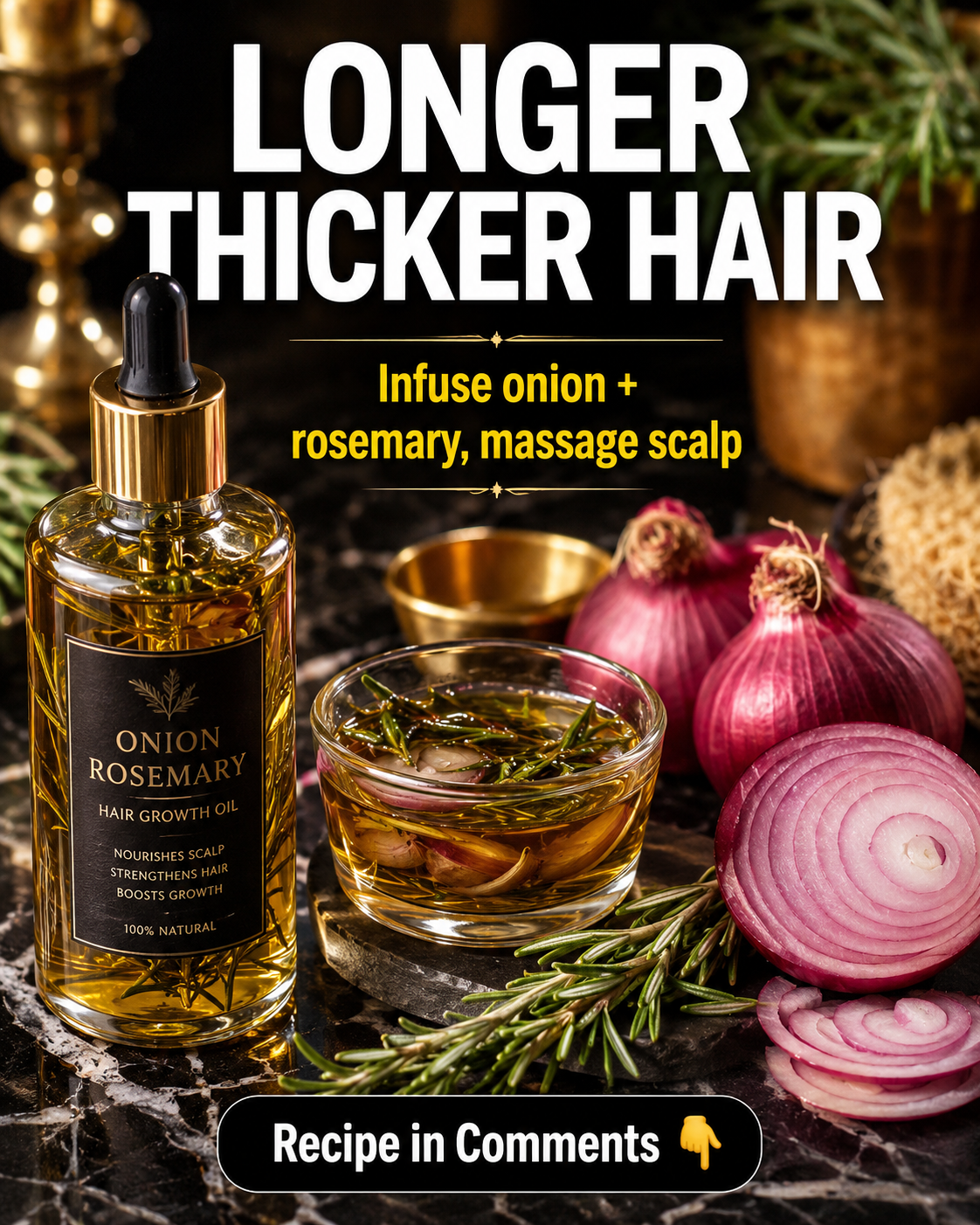
Longer, thicker hair is not only about applying oil; it depends on scalp health, follicle activity, hair-shaft strength, diet, hormones, stress, and how gently you handle your hair. Onion juice and rosemary are two popular natural ingredients because they have some scientific support for hair regrowth and scalp stimulation, but they must be used correctly. Onion juice should not be left on the scalp overnight because it may irritate the skin, while rosemary essential oil must always be diluted in a carrier oil. The remedies below are designed according to scalp type so you can support hair density, reduce breakage, and create a healthier environment for growth without using harsh chemical products. Real hair growth takes time because hair grows in cycles, so the first 1 to 3 days usually show reduced dryness, better softness, less roughness, and improved scalp freshness; visible thickness and length usually need 8 to 24 weeks of consistency.
Remedy 1: For Normal Scalp
Scientific Working of Onion, Rosemary and Supporting Ingredients
Onion juice contains sulfur-based compounds that may support keratin structure and has been studied in patchy alopecia areata. Rosemary oil is believed to support scalp microcirculation and has been clinically compared with 2 percent minoxidil in androgenetic alopecia. Coconut oil helps reduce protein loss from hair fibers, which can make hair look stronger and less breakage-prone. Pumpkin seed oil contains phytosterols and fatty acids that may support hair density. Aloe vera calms the scalp, while green tea provides antioxidant catechins that may support follicle activity.
Ingredients
Fresh onion juice: 1 tablespoon, for sulfur-rich scalp support.
Rosemary essential oil: 2 drops, diluted for follicle stimulation.
Coconut oil: 1 tablespoon, for reducing hair protein loss and breakage.
Pumpkin seed oil: 1 teaspoon, for density-supporting fatty acids.
Aloe vera gel: 1 teaspoon, for cooling scalp hydration.
Strong green tea: 1 tablespoon, for antioxidant scalp support.
Procedure
Mix onion juice, aloe vera gel, and green tea. Apply this liquid to the scalp for 20 minutes only. Rinse with lukewarm water. Now mix coconut oil, pumpkin seed oil, and rosemary essential oil. Massage this diluted oil blend into the scalp for 4 minutes using fingertips, not nails. You may leave only the oil blend overnight, then wash in the morning.
How Often to Apply
Use 3 times weekly for 5 days initially, then continue 2 to 3 times weekly for 12 weeks.
Initial Results
In 1 to 3 days, hair may feel softer and less dry. Growth and thickness changes are gradual and usually need several weeks.
Remedy 2: For Combination Scalp
Scientific Working of Each Ingredient
Combination scalp means oily roots with dry ends. Green tea helps refresh the scalp without heaviness. Onion juice supports the scalp area, but a smaller amount prevents irritation. Rosemary oil is used in very low dilution because the scalp may be oily in some areas. Aloe vera hydrates without greasiness. Coconut oil is applied only to dry ends, not the oily scalp. Honey is used in a small amount because it has soothing and humectant qualities.
Ingredients
Fresh onion juice: 1 teaspoon, for targeted scalp support.
Cooled green tea: 2 tablespoons, for light antioxidant freshness.
Aloe vera gel: 1 tablespoon, for non-greasy hydration.
Rosemary essential oil: 1 drop, properly diluted.
Pumpkin seed oil: 1 teaspoon, as a light carrier for rosemary.
Coconut oil: 1 teaspoon, only for dry ends.
Raw honey: 1/4 teaspoon, for softness and moisture balance.
Procedure
Mix onion juice, green tea, aloe vera, and honey. Apply only to the scalp for 15 to 20 minutes. Rinse well. Mix rosemary essential oil with pumpkin seed oil and massage lightly into the scalp for 3 minutes. Apply coconut oil only to the dry ends. Leave the oil for 2 to 4 hours or overnight if your scalp does not become greasy.
How Often to Apply
Apply on alternate days for the first 5 days, then twice weekly.
Initial Results
Within 1 to 3 days, roots may feel cleaner and ends may feel smoother. Hair fall from breakage may look slightly reduced if the ends are less dry.
Remedy 3: For Oily Scalp
Scientific Working of Each Ingredient
Oily scalp needs a lighter remedy. Cooled coffee provides caffeine, which has been studied in topical hair-loss formulas. Green tea catechins help refresh the scalp. Onion juice is kept very low to reduce odor and irritation. Aloe vera gives hydration without clogging. Rosemary is diluted in pumpkin seed oil instead of heavy oils. Honey is optional and used only in a tiny amount because oily scalp can become sticky.
Ingredients
Cooled black coffee: 1 tablespoon, for caffeine-based scalp stimulation.
Cooled green tea: 2 tablespoons, for antioxidant scalp freshness.
Fresh onion juice: 1 teaspoon, for sulfur compound support.
Aloe vera gel: 1 tablespoon, for lightweight soothing.
Rosemary essential oil: 1 drop, diluted before use.
Pumpkin seed oil: 1/2 teaspoon, as a light carrier.
Raw honey: 1/4 teaspoon, optional for scalp comfort.
Procedure
Mix coffee, green tea, onion juice, aloe vera, and optional honey. Apply to the scalp for 15 minutes before washing. Rinse thoroughly. Mix rosemary essential oil with pumpkin seed oil and massage a very small amount into thinning areas for 2 to 3 minutes. Wash after 1 to 2 hours if the scalp feels oily. Do not leave heavy oil overnight on an oily scalp.
How Often to Apply
Use 3 times in the first 5 days, then twice weekly.
Initial Results
In 1 to 3 days, the scalp may feel fresher, less sticky, and less heavy. Real thickness improvement requires long-term consistency.
Remedy 4: For Dry Scalp and Dry Hair
Scientific Working of Each Ingredient
Dry scalp and dry hair need more conditioning and less strong onion exposure. Coconut oil can penetrate the hair shaft and reduce protein loss. Sunflower oil helps soften the outer hair surface. Aloe vera and honey provide moisture support. Rosemary oil supports scalp stimulation when diluted. Onion juice is used only briefly because dry scalp can sting more easily. Oat water adds a gentle, calming layer for dryness.
Ingredients
Fresh onion juice: 1 teaspoon, for short-contact scalp support.
Rosemary essential oil: 2 drops, diluted in carrier oils.
Coconut oil: 1 tablespoon, for hair-shaft protection.
Sunflower oil: 1 teaspoon, for softness and shine.
Aloe vera gel: 1 tablespoon, for scalp hydration.
Raw honey: 1 teaspoon, for moisture retention.
Oat water: 2 tablespoons, for soothing dryness.
Procedure
Mix onion juice with oat water and apply to the scalp for only 10 to 15 minutes. Rinse completely. Mix coconut oil, sunflower oil, aloe vera, honey, and rosemary essential oil. Apply to the scalp and hair lengths. Massage gently for 4 minutes, then cover with a soft towel or loose cap. Leave for 2 hours or overnight if there is no itching.
How Often to Apply
Use every other night for 5 days, then 2 times weekly for 12 weeks.
Initial Results
In 1 to 3 days, dryness, roughness, and frizz may reduce. Hair may look thicker because moisturized strands appear fuller.
Remedy 5: For Sensitive Scalp
Scientific Working of Each Ingredient
Sensitive scalp should avoid strong onion juice, undiluted essential oils, lemon, chili, and harsh scrubs. This remedy uses rosemary tea instead of rosemary essential oil. Aloe vera and oat water help calm dryness and itching. Sunflower oil gives gentle softness. Honey is used in a very diluted amount for moisture support. Coconut oil is added only to hair lengths, not the scalp, if the scalp reacts easily.
Ingredients
Weak rosemary tea: 2 tablespoons, for mild scalp freshness.
Aloe vera gel: 1 tablespoon, for cooling comfort.
Oat water: 2 tablespoons, for soothing sensitive skin.
Sunflower oil: 1 teaspoon, for gentle barrier support.
Coconut oil: 1 teaspoon, only on hair ends.
Raw honey: 1/4 teaspoon, optional and diluted.
Onion juice: 1/4 teaspoon only if patch test is safe; otherwise skip.
Procedure
First do a patch test behind the ear for 24 hours. If there is no redness, mix rosemary tea, aloe vera, oat water, honey, and optional onion juice. Apply to the scalp for 10 minutes only. Rinse gently. Apply sunflower oil lightly to the scalp and coconut oil only to dry ends. Do not use rosemary essential oil on a reactive scalp unless advised by a professional.
How Often to Apply
Use once every 2 days for 5 days. Continue once or twice weekly only if the scalp remains calm.
Initial Results
Within 1 to 3 days, the scalp may feel calmer and less dry. Stop immediately if burning, rash, swelling, or itching appears.
Final Tips
Always patch test onion juice, rosemary, honey, and oils before using them on the full scalp. Never apply undiluted rosemary essential oil directly to the scalp. Do not scratch the scalp while massaging because inflammation can worsen shedding. Wash combs, pillow covers, and hair towels regularly. Avoid tight hairstyles, harsh brushing, frequent heat styling, and aggressive towel rubbing. Massage gently for 3 to 4 minutes because mechanical scalp massage may support hair thickness over time, but pressing too hard can cause breakage.
Visible softness and shine can begin within 2 to 3 days, but longer and thicker hair usually requires 3 to 6 months. If hair fall is sudden, patchy, painful, associated with dandruff, scalp wounds, itching, hormonal symptoms, pregnancy, anemia, thyroid issues, or does not improve after 6 to 8 weeks, see a dermatologist or doctor. Natural remedies can support scalp care, but they cannot replace diagnosis when hair loss has a medical cause.
Diet Plan for Longer Thicker Hair
Continue the remedy for at least 12 weeks, and follow a hair-supportive diet for 3 months because follicles need steady nutrition. Eat enough protein daily from eggs, lentils, beans, fish, chicken, yogurt, tofu, or chickpeas. Add iron-rich foods such as spinach, dates, lentils, red meat if you eat it, pumpkin seeds, and beans. Include vitamin C foods like oranges, guava, lemon water, strawberries, or bell peppers to support iron absorption. Add omega-3 and healthy fats from walnuts, chia seeds, flaxseeds, fish, avocado, or olive oil. Include zinc-rich foods such as pumpkin seeds, sesame seeds, chickpeas, nuts, and seafood if suitable.
A simple daily plan can be: protein breakfast with eggs or lentil chilla, fruit rich in vitamin C as a snack, lunch with lentils or chicken plus vegetables, evening nuts and seeds, and dinner with protein, whole grains, and leafy greens. Drink enough water and avoid crash dieting because sudden calorie or protein restriction can trigger shedding. Do not take high-dose supplements without testing because excess vitamin A, selenium, or unnecessary supplements may worsen hair loss. If the problem persists, consult a doctor for ferritin, vitamin D, thyroid, hormonal, or scalp evaluation.
References for the above remedy
- Panahi Y, et al. “Rosemary oil vs minoxidil 2% for the treatment of androgenetic alopecia.”
URL: https://pubmed.ncbi.nlm.nih.gov/25842469/ (PubMed) - Sharquie KE, Al-Obaidi HK. “Onion juice, a new topical treatment for alopecia areata.”
URL: https://pubmed.ncbi.nlm.nih.gov/12126069/ (PubMed) - Rele AS, Mohile RB. “Effect of mineral oil, sunflower oil, and coconut oil on prevention of hair damage.”
URL: https://pubmed.ncbi.nlm.nih.gov/12715094/ (PubMed) - Ibrahim IM, et al. “Pumpkin seed oil vs. minoxidil 5% topical foam for female pattern hair loss.”
URL: https://pubmed.ncbi.nlm.nih.gov/33544448/ (PubMed) - Kwon OS, et al. “Human hair growth enhancement in vitro by green tea epigallocatechin-3-gallate.”
URL: https://pubmed.ncbi.nlm.nih.gov/17092697/ (PubMed) - Koyama T, et al. “Standardized scalp massage results in increased hair thickness.”
URL: https://pmc.ncbi.nlm.nih.gov/articles/PMC4740347/ (PMC) - Chen D, et al. “Anti-hair loss effect of a shampoo containing caffeine.”
URL: https://pubmed.ncbi.nlm.nih.gov/38764299/ (PubMed) - Al-Waili NS. “Therapeutic and prophylactic effects of crude honey on chronic seborrheic dermatitis and dandruff.”
URL: https://pubmed.ncbi.nlm.nih.gov/11485891/ (PubMed) - Vardy DA, et al. “A double-blind, placebo-controlled trial of Aloe vera emulsion in seborrheic dermatitis.”
URL: https://www.tandfonline.com/doi/abs/10.3109/09546639909055904 (Taylor & Francis Online) - Guo EL, Katta R. “Diet and hair loss: effects of nutrient deficiency and supplement use.”
URL: https://pmc.ncbi.nlm.nih.gov/articles/PMC5315033/ (PMC)