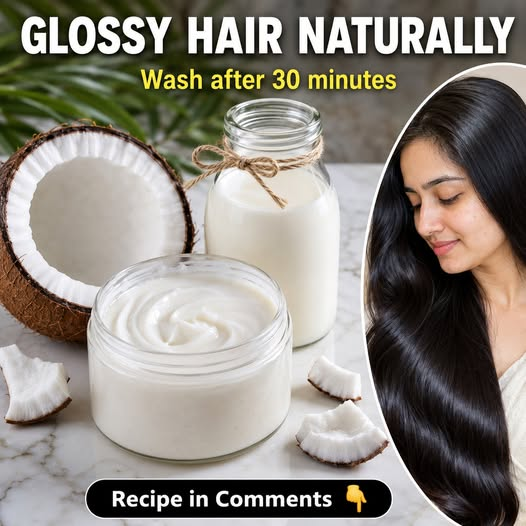
Glossy hair is not only about shine; it is also a sign that the hair cuticle is lying smoother, the strands are less dry, and the scalp is not overloaded with oil or irritation. Coconut-based masks can make hair look shinier because they coat the hair lightly, reduce friction, and help protect the hair fiber before washing. Still, natural remedies cannot permanently repair split ends or change your hair type overnight. The goal of this routine is realistic: softer hair after the first wash, better shine within 3–5 uses, and less roughness when continued carefully for a few weeks.
Remedy 1: For Normal Hair and Scalp
Coconut Milk Shine Mask
Scientific Reason This Remedy Works
Coconut oil is one of the best-studied natural oils for hair because its fatty acid structure allows it to reduce protein loss from the hair shaft. Coconut milk gives a creamy base that spreads easily, while aloe and honey help the hair feel softer and less rough after washing.
Ingredients
Coconut milk, 3 tablespoons: Adds creamy lipids that help soften the hair surface.
Virgin coconut oil, 1 teaspoon: Helps reduce protein loss and supports smoother-looking strands.
Aloe vera gel, 1 tablespoon: Provides lightweight hydration and soothes the scalp.
Raw honey, 1 teaspoon: Works as a natural humectant and helps reduce dryness.
Plain yogurt, 1 tablespoon: Gives a mildly acidic base that may help the hair feel smoother.
Argan oil, 3–4 drops: Adds a light protective finish and helps reduce roughness.
Procedure
Mix coconut milk, coconut oil, aloe gel, honey, yogurt, and argan oil into a smooth cream. Apply from mid-length to ends first, then lightly touch the scalp if it is not oily. Comb with fingers to spread evenly. Cover hair with a shower cap and leave for 30 minutes. Wash with a mild shampoo and rinse well.
How Often to Apply
Use twice a week for 2 weeks, then once weekly for maintenance.
Initial Results
After the first wash, normal hair may feel softer and easier to comb. Within 3–5 days, the shine may look cleaner and more even.
Remedy 2: For Combination Hair
Light Coconut Aloe Mask for Oily Roots and Dry Ends
Scientific Reason This Remedy Works
Combination hair usually has greasy roots but dull, dry ends. This remedy keeps the scalp light while giving the ends enough conditioning. Green tea and aloe keep the formula fresh, while a small amount of coconut oil is used only where dryness is visible.
Ingredients
Coconut milk, 2 tablespoons: Softens the hair without making the mask too heavy.
Aloe vera gel, 1 tablespoon: Hydrates the scalp and lengths without greasiness.
Cooled green tea, 2 tablespoons: Adds antioxidant support and keeps the mask light.
Honey, 1/2 teaspoon: Helps dry ends hold moisture.
Virgin coconut oil, 1/2 teaspoon: Use mainly on the ends to reduce roughness.
Colloidal oat powder, 1 teaspoon: Helps calm a slightly itchy or uncomfortable scalp.
Argan oil, 2 drops: Adds shine to the ends without weighing roots down.
Procedure
Mix coconut milk, aloe gel, green tea, honey, and oat powder. Apply this lighter mixture near the roots and scalp. Rub coconut oil and argan oil between your palms and apply only to the dry ends. Leave for 30 minutes. Shampoo the scalp properly and let the shampoo foam pass through the ends while rinsing.
How Often to Apply
Apply twice weekly for 2 weeks. After that, use once every 7–10 days.
Initial Results
Roots may feel cleaner after washing, while the ends may look less frizzy within 1–3 uses.
Remedy 3: For Oily Hair and Scalp
Non-Greasy Coconut Green Tea Gloss Pack
Scientific Reason This Remedy Works
Oily hair needs shine without heavy coating. Too much oil can make the scalp flat and sticky. This version uses more aloe and green tea, less coconut fat, and a small amount of yogurt to help the hair feel fresh after rinsing.
Ingredients
Aloe vera gel, 2 tablespoons: Gives slip and hydration without heaviness.
Cooled green tea, 2 tablespoons: Helps refresh the scalp and supports oil-control care.
Coconut milk, 1 tablespoon: Adds mild softness without over-conditioning.
Plain yogurt, 1 tablespoon: Helps remove a dull, coated feel from oily hair.
Raw honey, 1/4 teaspoon: Adds slight moisture so hair does not feel stripped.
Colloidal oat powder, 1 teaspoon: Soothes the scalp and improves mask texture.
Virgin coconut oil, 1/4 teaspoon: Use only on the last 2–3 inches of hair.
Procedure
Mix aloe, green tea, coconut milk, yogurt, honey, and oat powder. Apply to the scalp and lengths in a thin layer. Apply the tiny amount of coconut oil only to the ends if they are dry. Keep for 20–30 minutes, not longer. Wash thoroughly with mild shampoo.
How Often to Apply
Use once or twice weekly for 2 weeks. Oily scalps should avoid daily hair masks.
Initial Results
Hair may feel lighter after the first wash. Within 3–5 days, the shine may appear cleaner because excess heaviness is reduced.
Remedy 4: For Dry, Rough, or Frizzy Hair
Rich Coconut Cream Repair-Look Mask
Scientific Reason This Remedy Works
Dry hair looks dull because the cuticle becomes rough and reflects less light. Oils and humectants can temporarily smooth the surface, reduce friction, and make strands look glossier. This mask is richer, so it is best for dry lengths, frizz, and rough ends.
Ingredients
Thick coconut cream, 3 tablespoons: Gives deep softness and a creamy coating.
Virgin coconut oil, 2 teaspoons: Helps reduce protein loss and supports smoother hair.
Aloe vera gel, 1 tablespoon: Adds hydration and makes the mask easier to spread.
Raw honey, 1 teaspoon: Helps attract moisture to dry strands.
Mashed ripe avocado, 1 tablespoon: Adds natural fatty acids for a softer feel.
Argan oil, 1/2 teaspoon: Helps protect hair from roughness and oxidative stress.
Colloidal oat powder, 1 teaspoon: Soothes the scalp if dryness causes itchiness.
Procedure
Mash avocado until completely smooth, then mix with coconut cream, coconut oil, aloe gel, honey, argan oil, and oat powder. Apply mostly from mid-length to ends. If your scalp is dry, apply a very thin layer there too. Leave for 30 minutes. Shampoo twice only if the hair still feels oily after the first rinse.
How Often to Apply
Use twice weekly for 2–3 weeks, then once weekly.
Initial Results
Dry hair may feel softer after one use. Frizz may look calmer within 1–3 washes, especially if heat styling is reduced.
Remedy 5: For Sensitive Scalp
Gentle Coconut Oat Soothing Gloss Mask
Scientific Reason This Remedy Works
Sensitive scalps need fewer active ingredients and less rubbing. Oat and aloe are used for comfort, while coconut milk gives mild softness. This mask avoids lemon, essential oils, strong fragrances, and harsh exfoliating ingredients.
Ingredients
Coconut milk, 2 tablespoons: Gives gentle softness without strong activity.
Aloe vera gel, 1 tablespoon: Helps cool and hydrate the scalp.
Colloidal oat powder, 1 tablespoon: Supports comfort for dry or itchy-feeling skin.
Raw honey, 1/2 teaspoon: Adds mild moisture and soothing support.
Jojoba oil, 4 drops: Works as a light emollient and reduces friction during application.
Filtered water, 1–2 teaspoons: Makes the mask thin and easy to rinse.
Procedure
Mix oat powder with coconut milk first, then add aloe gel, honey, jojoba oil, and water. Patch test behind the ear before using. Apply gently with fingertips without scratching the scalp. Leave for 15–25 minutes only. Rinse well and wash with a mild shampoo.
How Often to Apply
Use once weekly for 3 weeks. Sensitive scalps should not be treated too often.
Initial Results
The scalp may feel calmer after the first use, and the hair may look softly shiny without irritation.
Final Tips
Wash hair with lukewarm water instead of very hot water because heat can make hair feel rougher. Do not rub wet hair harshly with a towel; squeeze gently and use a soft cotton T-shirt or microfiber towel. Avoid straighteners and curling tools during the first 2 weeks of the remedy because heat damage reduces shine. Clean combs and hair brushes weekly so old oil and dust do not transfer back to clean hair. Always patch test natural ingredients, especially honey, aloe, oats, coconut, and oils. Visible shine can begin after the first wash, but smoother, healthier-looking hair usually needs 2–4 weeks of consistent care.
Diet Plan for Glossy Hair
Continue the suitable hair mask for 2–4 weeks. Along with it, follow a hair-supportive diet because dullness, shedding, and weak strands can worsen when protein, iron, zinc, vitamin D, or essential fatty acids are low.
Morning: Eat eggs, yogurt, oats, nuts, seeds, or lentils for protein and minerals. Add a vitamin C fruit such as orange, guava, berries, or kiwi.
Lunch: Choose chicken, fish, beans, lentils, tofu, or eggs with vegetables and whole grains. Add leafy greens for iron and antioxidants.
Evening: Drink water and choose a simple snack such as roasted chickpeas, nuts, fruit, or yogurt instead of sugary snacks.
Dinner: Keep dinner balanced with protein, vegetables, and a small serving of rice or roti. Add fish, flaxseeds, chia seeds, or walnuts a few times weekly for healthy fats.
If hair remains extremely dull, breaks heavily, falls suddenly, develops bald patches, has severe dandruff, scalp pain, redness, infection, or itching that does not improve, see a dermatologist or doctor.
References for the above remedy
- Rele AS, Mohile RB. Effect of mineral oil, sunflower oil, and coconut oil on prevention of hair damage. PubMed. URL: https://pubmed.ncbi.nlm.nih.gov/12715094/ (PubMed)
- Dias MFRG. Hair Cosmetics: An Overview. PubMed Central. URL: https://pmc.ncbi.nlm.nih.gov/articles/PMC4387693/ (PMC)
- Fernandes C, et al. On Hair Care Physicochemistry: From Structure and Degradation to Novel Products. PubMed Central. URL: https://pmc.ncbi.nlm.nih.gov/articles/PMC9921463/ (PMC)
- Sharifi N, et al. Argan oil as a pretreatment of human hair before exposure to oxidative damage. PubMed. URL: https://pubmed.ncbi.nlm.nih.gov/35226791/ (PubMed)
- Al-Waili NS. Therapeutic and prophylactic effects of crude honey on chronic seborrheic dermatitis and dandruff. PubMed. URL: https://pubmed.ncbi.nlm.nih.gov/11485891/ (PubMed)
- National Center for Complementary and Integrative Health. Aloe Vera: Usefulness and Safety. URL: https://www.nccih.nih.gov/health/aloe-vera (NCCIH)
- Reynertson KA, et al. Anti-inflammatory activities of colloidal oatmeal. PubMed. URL: https://pubmed.ncbi.nlm.nih.gov/25607907/ (PubMed)
- Gad HA, et al. Jojoba Oil: An Updated Comprehensive Review on Chemistry, Pharmaceutical Uses, and Toxicity. PubMed Central. URL: https://pmc.ncbi.nlm.nih.gov/articles/PMC8197201/ (PMC)
- Guo EL, Katta R. Diet and hair loss: effects of nutrient deficiency and supplement use. PubMed Central. URL: https://pmc.ncbi.nlm.nih.gov/articles/PMC5315033/ (PMC)
- American Academy of Dermatology. How to test skin care products at home. URL: https://www.aad.org/public/everyday-care/skin-care-secrets/prevent-skin-problems/test-skin-care-products (aad.org)