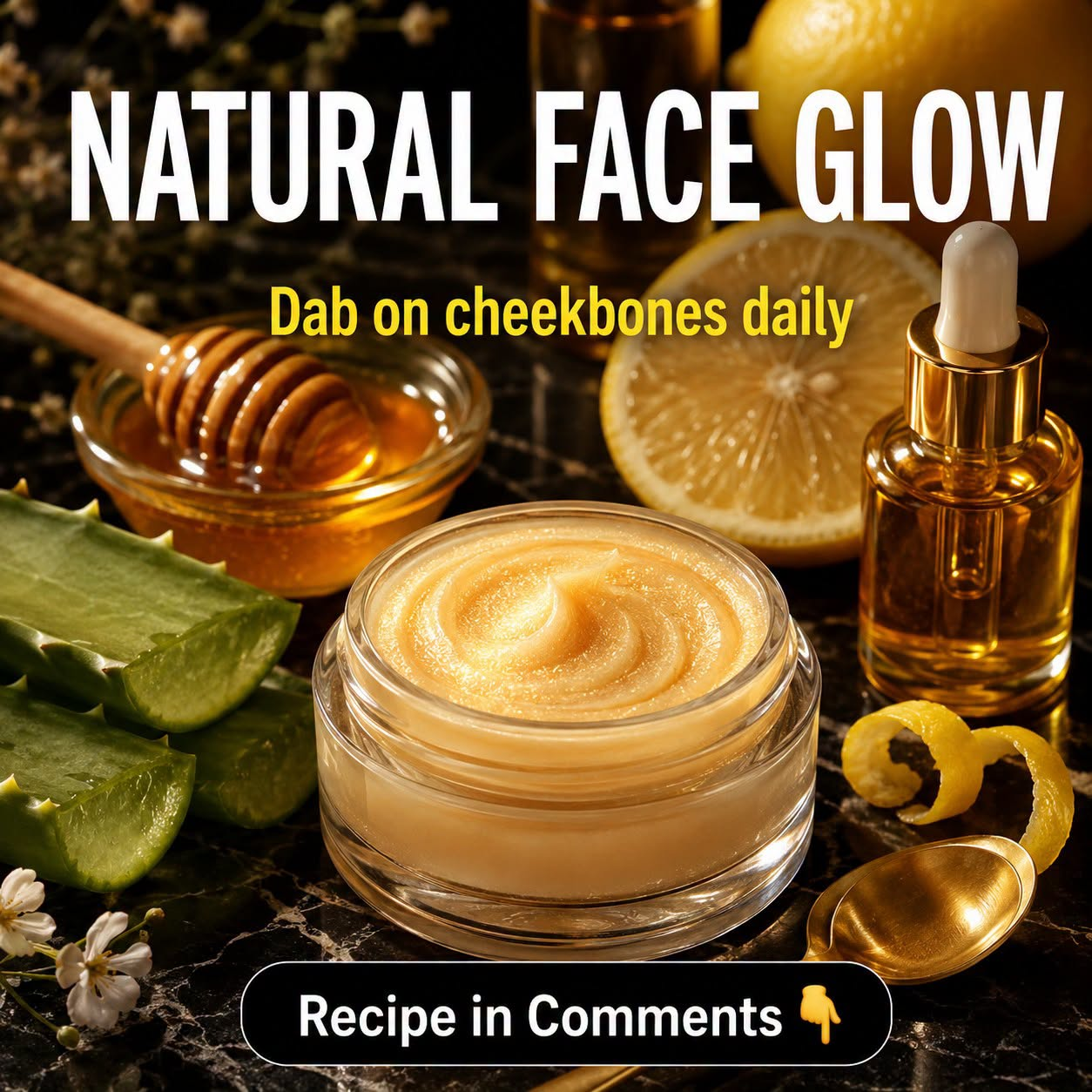
A natural face glow is not only about shine on the cheekbones; it comes from smooth texture, good hydration, calm skin, and a healthy skin barrier. The image suggests a glowing cheekbone balm with honey, aloe, lemon, and oil, but direct lemon juice on the face can irritate the skin and increase sun sensitivity, so it is safer to use vitamin C foods in the diet instead of rubbing lemon on the skin. The remedies below use natural, easy-to-find ingredients that are supported by dermatology and clinical research for hydration, soothing, barrier support, antioxidant protection, and smoother-looking skin. These remedies will not bleach the skin or create permanent fairness, but they can help the face look fresh, soft, and naturally radiant within a few days.
Remedy 1: For Normal Skin
Ingredients
Aloe vera gel: 1 teaspoon
Hydrates the skin and gives a fresh, dewy base.
Raw honey: ½ teaspoon
Helps soften the skin and supports a smoother glow.
Cooled green tea: 1 teaspoon
Provides antioxidant support for dull-looking skin.
Plain yogurt: 1 teaspoon
Contains lactic acid, which gently smooths rough surface cells.
Finely powdered oats: ½ teaspoon
Calms the skin and makes the mask more comfortable.
Sunflower seed oil: 2 drops
Supports the skin barrier and adds a natural cheekbone sheen.
Scientific Working of Each Ingredient
Aloe vera helps increase skin hydration, which makes the face look plumper and fresher. Honey works as a humectant and supports a soft surface. Green tea contains polyphenols that help protect the skin from oxidative stress. Yogurt provides mild lactic acid action, helping dull dead cells loosen gently. Oats soothe the skin barrier, while sunflower seed oil helps reduce moisture loss and gives the cheekbones a natural glow.
Procedure
Mix aloe vera gel, honey, green tea, yogurt, and oat powder into a smooth paste. Apply a thin layer on the face, especially over dull areas. Leave it for 8–10 minutes. Rinse with cool water and pat dry. Then mix 1 drop of sunflower seed oil with ½ teaspoon aloe vera gel and lightly dab only on the cheekbones.
How Often to Apply
Use once daily for 3 days, then 2–3 times weekly.
Initial Results
Within 1–3 days, the skin may feel softer, smoother, and more hydrated. Cheekbones may look naturally fresh because the surface dryness is reduced.
Remedy 2: For Combination Skin
Ingredients
Aloe vera gel: 1 teaspoon
Hydrates without making oily areas greasy.
Cucumber juice: 1 teaspoon
Gives a cooling effect and light freshness.
Plain yogurt: ½ teaspoon
Helps smooth dull texture.
Green tea: 1 teaspoon
Supports oily areas with antioxidant care.
Honey: ¼ teaspoon
Softens dry patches without heaviness.
Oat powder: ½ teaspoon
Balances the mask and calms the skin.
Scientific Working of Each Ingredient
Combination skin needs glow without extra oil. Aloe vera and cucumber add water-based hydration. Yogurt gently smooths roughness through lactic acid. Green tea supports the oily T-zone and helps the skin look less tired. Honey prevents dry cheek patches from becoming tight, while oats reduce irritation and improve comfort.
Procedure
Mix aloe vera gel, cucumber juice, yogurt, green tea, honey, and oat powder. Apply a thin layer on the cheeks and a lighter layer on the T-zone. Leave for 7–9 minutes. Rinse well. For cheekbone glow, dab a tiny amount of aloe vera gel mixed with one drop of cucumber juice on the high points of the cheeks.
How Often to Apply
Apply on alternate days for 5 days. Continue twice weekly afterward.
Initial Results
The skin may look more balanced within 2–3 days. Dry areas may feel softer, while oily areas may look less shiny and more fresh.
Remedy 3: For Oily Skin
Ingredients
Cooled green tea: 1 tablespoon
Helps refresh oily, dull-looking skin.
Aloe vera gel: 1 teaspoon
Hydrates without clogging the skin.
Plain yogurt: ½ teaspoon
Gently smooths rough skin texture.
Turmeric powder: 1 tiny pinch
Provides antioxidant and anti-inflammatory support.
Colloidal oatmeal or fine oat powder: ½ teaspoon
Soothes the skin and reduces dryness risk.
Cucumber juice: 1 teaspoon
Adds a cooling, non-greasy glow.
Scientific Working of Each Ingredient
Oily skin can look dull when sebum mixes with dead surface cells. Green tea provides antioxidant support and may help the skin look calmer. Aloe vera hydrates lightly without adding heavy oil. Yogurt gently smooths the surface, while turmeric supports a more even, healthy appearance. Oats protect against over-drying, and cucumber gives a fresh, clean finish.
Procedure
Mix green tea, aloe vera gel, yogurt, turmeric, oat powder, and cucumber juice. Apply a very thin layer to clean skin. Leave for 6–8 minutes only. Rinse before the mask becomes too dry. After rinsing, dab plain aloe vera gel on the cheekbones for a natural glow without oil.
How Often to Apply
Use every other day for 5 days, then 1–2 times weekly.
Initial Results
Oiliness may look reduced after the first use. Within 2–3 days, the face may appear clearer, smoother, and less dull.
Remedy 4: For Dry Skin
Ingredients
Aloe vera gel: 1 tablespoon
Adds lightweight hydration.
Raw honey: 1 teaspoon
Helps attract moisture to dry skin.
Vegetable glycerin: 1 drop
Supports water retention in the skin surface.
Colloidal oatmeal: 1 teaspoon
Calms dryness and roughness.
Mashed ripe avocado: 1 teaspoon
Adds nourishing fatty texture.
Sunflower seed oil: 3 drops
Helps protect the skin barrier and gives a soft glow.
Scientific Working of Each Ingredient
Dry skin often looks dull because it lacks water and surface lipids. Aloe vera, honey, and glycerin improve hydration. Oatmeal helps reduce roughness and supports the skin barrier. Avocado gives the mask a creamy texture and helps soften flaky areas. Sunflower seed oil supports barrier comfort and leaves a natural-looking glow on the cheekbones.
Procedure
Mash avocado until smooth. Add aloe vera gel, honey, glycerin, oatmeal, and sunflower seed oil. Apply to clean, slightly damp skin. Leave for 10 minutes. Rinse gently without scrubbing. After rinsing, mix 1 drop of sunflower seed oil with aloe vera gel and dab on cheekbones.
How Often to Apply
Apply daily for 3 days, then continue 2–3 times weekly.
Initial Results
Dry tightness may improve from the first use. Within 1–3 days, the skin may look more supple, soft, and naturally luminous.
Remedy 5: For Sensitive Skin
Ingredients
Colloidal oatmeal: 1 tablespoon
Helps soothe sensitive and easily irritated skin.
Aloe vera gel: 1 tablespoon
Adds gentle hydration and cooling comfort.
Honey: ¼ teaspoon
Softens the skin, if tolerated.
Cucumber juice: 1 teaspoon
Provides a mild cooling effect.
Vegetable glycerin: 1 drop
Helps prevent moisture loss.
Green tea: ½ teaspoon, cooled
Adds gentle antioxidant support.
Scientific Working of Each Ingredient
Sensitive skin glows best when irritation is reduced. Colloidal oatmeal helps calm dryness, itching, and roughness. Aloe vera adds water-based hydration. Honey can soften the skin, but it should be skipped if it stings. Cucumber cools the skin, glycerin improves moisture retention, and green tea supports antioxidant defense without harsh exfoliation.
Procedure
Mix oatmeal, aloe vera gel, cucumber juice, glycerin, green tea, and honey. Apply a thin layer for 5–7 minutes. Do not scrub. Rinse with cool water and pat dry. For a cheekbone glow, use only plain aloe vera gel as a light dab.
How Often to Apply
Use every other day for 5 days. Sensitive skin should not be treated aggressively.
Initial Results
In 1–3 days, the skin may feel calmer and less tight. A natural glow may appear as redness, dryness, and rough texture reduce.
Final Tips
Always patch test any remedy for 24 hours before applying it to the face. Do not apply lemon juice directly on the skin, especially before sun exposure, because citrus can trigger irritation and dark marks in some people. Keep your hands, bowls, and brushes clean. Avoid harsh scrubs, baking soda, toothpaste, and strong essential oils on the face. Use sunscreen during the day because sun damage is one of the biggest causes of dullness, pigmentation, and early wrinkles. Drink enough water, sleep 7–8 hours, and avoid sleeping with sticky masks on your skin. Visible freshness may begin within 2–3 days, while a more lasting glow and smoother texture usually need 3–4 weeks of consistent care.
Diet Plan
Continue the home remedy for 5 days first. If your skin responds well, use it 2–3 times weekly for 4 weeks. Diet should continue daily because skin glow depends on hydration, protein, vitamins, minerals, and healthy fats.
Morning: Drink water after waking. Eat oats, yogurt, eggs, lentils, or nuts for protein and minerals.
Midday: Add vitamin C foods such as orange, guava, lemon water, amla, kiwi, strawberries, or bell pepper. Vitamin C supports collagen formation and antioxidant protection.
Lunch: Eat leafy greens, carrots, cucumber, tomatoes, beans, chicken, fish, tofu, or lentils.
Evening: Choose green tea, fruit, seeds, or nuts instead of sugary snacks.
Dinner: Keep dinner light with vegetables, protein, and healthy fats from avocado, walnuts, chia seeds, flaxseeds, olive oil, or sunflower seeds.
Avoid too much sugar, fried food, smoking, and frequent late-night salty meals because they can make the face look dull and puffy. If dullness, redness, itching, acne, pigmentation, or irritation continues after 2–3 weeks, see a dermatologist or doctor.
References for the above remedy
- Dal’Belo SE, Gaspar LR, Maia Campos PMBG. “Moisturizing effect of cosmetic formulations containing Aloe vera extract.” Skin Research and Technology, 2006. URL: https://pubmed.ncbi.nlm.nih.gov/17026654/ (PubMed)
- Tashkandi H. “Honey in wound healing: An updated review.” URL: https://pmc.ncbi.nlm.nih.gov/articles/PMC8496555/ (PMC)
- Smith WP. “Epidermal and dermal effects of topical lactic acid.” URL: https://pubmed.ncbi.nlm.nih.gov/8784274/ (PubMed)
- Katiyar SK, Elmets CA. “Green tea polyphenolic antioxidants and skin photoprotection.” URL: https://pubmed.ncbi.nlm.nih.gov/11351267/ (PubMed)
- Reynertson KA, Garay M, Nebus J, et al. “Anti-inflammatory activities of colloidal oatmeal.” URL: https://pubmed.ncbi.nlm.nih.gov/25607907/ (PubMed)
- Fluhr JW, Darlenski R, Surber C. “Glycerol and the skin: holistic approach to its origin and functions.” URL: https://pubmed.ncbi.nlm.nih.gov/18510666/ (PubMed)
- Danby SG, AlEnezi T, Sultan A, et al. “Effect of olive and sunflower seed oil on the adult skin barrier.” URL: https://pubmed.ncbi.nlm.nih.gov/22995032/ (PubMed)
- Vaughn AR, Branum A, Sivamani RK. “Effects of Turmeric Curcuma longa on Skin Health.” URL: https://pubmed.ncbi.nlm.nih.gov/27213821/ (PubMed)
- Mioduszewski M, Beecker J. “A phototoxic reaction to lime and lemon juice.” URL: https://pmc.ncbi.nlm.nih.gov/articles/PMC4500699/ (PMC)
- American Academy of Dermatology Association. “Sunscreen FAQs.” URL: https://www.aad.org/media/stats-sunscreen (aad.org)