
Long, thick eyelashes are often associated with beauty and healthy eyes, but factors such as makeup buildup, harsh removers, nutritional deficiencies, aging, and hormonal imbalance can cause lashes to become thin, weak, or slow-growing. Eyelashes follow a natural growth cycle consisting of growth (anagen), transition (catagen), and resting (telogen) phases. When this cycle is disrupted, lash density and length can decline. Scientific studies show that nourishing hair follicles, improving blood circulation, and providing essential fatty acids and antioxidants may support healthier lash growth over time. The following remedies are designed for different skin and sensitivity types using evidence-backed natural ingredients known for supporting hair follicle health.
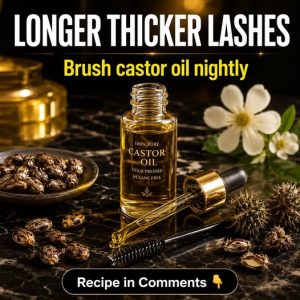
Remedy 1: For Normal Skin (Lash Follicle Activation & Strength Boost)
Ingredients
- Castor oil (1 teaspoon) – rich in ricinoleic acid
- Aloe vera gel (1 teaspoon) – supports follicle hydration
- Vitamin E oil (2 drops) – antioxidant protection
- Green tea extract (cooled, 1 teaspoon) – stimulates follicles
- Coconut oil (1 teaspoon) – protein loss reduction
- Lavender essential oil (1 drop) – antimicrobial and calming support
Procedure
Mix all ingredients in a clean container. Using a clean mascara brush, apply a thin layer along the lash line before bedtime. Avoid direct eye contact.
Scientific Working of Ingredients
- Castor oil contains ricinoleic acid, which may support blood flow to hair follicles.
- Aloe vera provides enzymes and amino acids that nourish follicular structures.
- Vitamin E reduces oxidative stress that can damage hair follicles.
- Coconut oil reduces protein loss from hair fibers, improving lash strength.
How Often to Apply
Every night for at least 3–4 weeks.
Initial Results
Within 5–7 days, lashes feel softer and less brittle.
Remedy 2: For Combination Skin (Balanced Growth & Lash Density Support)
Ingredients
- Argan oil (1 teaspoon) – rich in fatty acids
- Jojoba oil (1 teaspoon) – mimics natural sebum
- Rosemary extract (1 teaspoon diluted) – circulation enhancer
- Aloe vera gel (1 teaspoon)
- Honey (a few drops) – moisturizing humectant
- Green tea infusion (cooled, 1 teaspoon)
Procedure
Blend all ingredients and apply carefully along lash roots using a clean applicator.
Scientific Working of Ingredients
- Argan oil improves hair shaft elasticity due to high vitamin E content.
- Jojoba oil strengthens follicles by mimicking skin’s natural oils.
- Rosemary extract has been studied for its ability to stimulate hair growth through improved circulation.
- Honey retains moisture, preventing lash dryness and breakage.
How Often to Apply
4–5 times per week at night.
Initial Results
Within 1 week, reduced lash fall and improved texture.
Remedy 3: For Oily Skin (Follicle Cleansing & Growth Optimization)
Ingredients
- Tea tree oil (1 drop diluted) – antibacterial cleansing
- Castor oil (1 teaspoon)
- Witch hazel (1 teaspoon) – pore cleansing and oil control
- Aloe vera gel (1 teaspoon)
- Lemon peel extract (a few drops diluted) – antioxidant support
- Green tea extract (1 teaspoon)
Procedure
Mix carefully and apply a very thin layer along lash line using a clean brush.
Scientific Working of Ingredients
- Tea tree oil reduces microbial buildup that can block follicles.
- Witch hazel removes excess oil around follicles.
- Green tea contains EGCG, which may support follicle stimulation and reduce inflammation.
- Aloe vera keeps follicles hydrated without adding excess oil.
How Often to Apply
3 times per week only.
Initial Results
Within 5 days, cleaner lash line and reduced buildup.
Remedy 4: For Dry Skin (Deep Nourishment & Lash Repair)
Ingredients
- Olive oil (1 teaspoon) – rich in oleic acid
- Almond oil (1 teaspoon) – vitamin E source
- Shea butter (a small amount melted) – deep conditioning
- Vitamin E oil (3 drops) – antioxidant repair
- Honey (1 teaspoon) – hydration retention
- Avocado oil (1 teaspoon) – fatty acid nourishment
Procedure
Mix into a light serum and apply gently along lash roots before sleep.
Scientific Working of Ingredients
- Olive oil strengthens hair fibers and improves moisture retention.
- Almond oil nourishes follicles with essential vitamins.
- Shea butter provides long-lasting moisture barrier protection.
- Avocado oil supports keratin structure due to fatty acid content.
How Often to Apply
Daily at night.
Initial Results
Within 3–5 days, lashes appear more flexible and less prone to breakage.
Remedy 5: For Sensitive Skin (Gentle Lash Growth Support)
Ingredients
- Aloe vera gel (1 teaspoon) – soothing base
- Chamomile extract (1 teaspoon cooled) – anti-inflammatory
- Cucumber juice (1 teaspoon) – cooling and calming
- Calendula oil (2 drops) – tissue repair support
- Rice water (1 teaspoon) – strengthening amino acids
- Jojoba oil (a few drops)
Procedure
Mix gently and apply sparingly along lash line using a soft brush. Avoid excess application.
Scientific Working of Ingredients
- Chamomile reduces irritation and supports sensitive skin recovery.
- Calendula promotes tissue regeneration and follicle healing.
- Rice water contains amino acids that strengthen hair structure.
- Aloe vera soothes delicate eye-area skin.
How Often to Apply
3 times per week.
Initial Results
Within 5–7 days, reduced irritation and improved lash softness.
Final Tips
Eyelash growth depends heavily on consistent care and gentle handling. Always remove eye makeup carefully to avoid follicle damage. Avoid rubbing eyes, as friction can weaken lash roots. Maintain a balanced diet rich in biotin, iron, and omega-3 fatty acids, as these nutrients support keratin production. Ensure proper sleep and hydration, as stress and dehydration can slow lash growth cycles. Visible improvements typically begin within 2–3 weeks, while full density changes may take 6–8 weeks of consistent use.
Diet Plan
A lash-strengthening diet should include protein-rich foods such as eggs, legumes, and fish, as keratin (the main lash protein) depends on amino acids. Include biotin-rich foods like nuts, seeds, and sweet potatoes. Vitamin C sources such as oranges and berries help collagen support around hair follicles. Iron-rich foods like spinach and lentils improve oxygen supply to follicles. Omega-3 fatty acids from flaxseeds and walnuts reduce inflammation and support hair growth cycles. Avoid excessive caffeine and processed foods, which may weaken hair structure. Continue remedies consistently for 6–8 weeks. If lash thinning persists significantly, consult a dermatologist to rule out underlying nutritional or hormonal issues.
References for the above remedy
- https://www.ncbi.nlm.nih.gov/pmc/articles/PMC5596644/ – Castor oil and fatty acid effects on hair health
- https://www.ncbi.nlm.nih.gov/pmc/articles/PMC4387693/ – Rosemary oil and hair growth stimulation
- https://www.ncbi.nlm.nih.gov/pmc/articles/PMC6777444/ – Green tea catechins and hair follicle activity
- https://www.ncbi.nlm.nih.gov/pmc/articles/PMC3673383/ – Vitamin E and oxidative stress in hair loss
- https://www.ncbi.nlm.nih.gov/pmc/articles/PMC5796020/ – Honey in tissue repair and hydration
- https://www.ncbi.nlm.nih.gov/pmc/articles/PMC4255201/ – Coconut oil reducing protein loss in hair
- https://www.ncbi.nlm.nih.gov/pmc/articles/PMC4740347/ – Tea tree oil antimicrobial effects on skin follicles
- https://www.ncbi.nlm.nih.gov/pmc/articles/PMC4885171/ – Botanical oils and skin/hair barrier support