Smooth skin is not created by aggressive scrubbing. Rough texture may develop when the outer skin layer becomes dry, irritated, dehydrated, or covered with unevenly shedding surface cells. Although a gentle remedy can make skin feel softer and look fresher within a few days, acne scars, enlarged pores, deep wrinkles, and long-term sun damage cannot disappear after one application. The safest approach is to support hydration, protect the skin barrier, and use only mild exfoliation suited to your skin type.
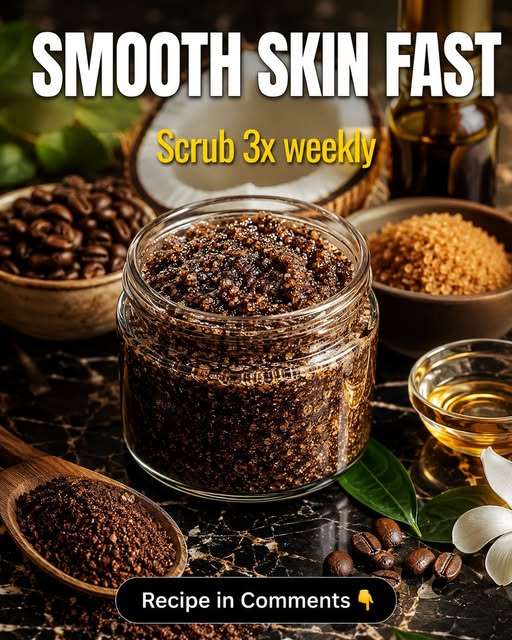
The image shows a coffee-and-sugar scrub, but coarse coffee grounds and sugar crystals are not recommended for facial use. Strong rubbing may increase irritation, redness, dryness, and acne breakouts. Dermatologists recommend gentle exfoliation and caution that over-exfoliating can damage the skin barrier. (American Academy of Dermatology)
The following remedies use soft, non-scrubbing ingredients. Scientific evidence mainly relates to professionally prepared oatmeal, aloe, green-tea, rice-starch, honey, clay, and oil formulations; the exact homemade combinations below have not been tested as finished clinical treatments.
Remedy 1: For Normal Skin — Oat, Aloe and Honey Smoothing Mask
Ingredients
- 1 tablespoon finely powdered colloidal oatmeal
- 1 tablespoon pure aloe vera inner-leaf gel
- 1 teaspoon cooled green tea
- ½ teaspoon pure honey
- ½ teaspoon rice starch
- ¼ teaspoon vegetable glycerin
Scientific Working of Each Ingredient
Colloidal oatmeal contains beta-glucans and antioxidant oat compounds. Clinical studies have found improvements in dryness, roughness, scaling, itching, and skin-barrier function. (PubMed)
Aloe vera contains water-rich polysaccharides. Clinical research involving aloe-containing skincare formulations found increased moisture in the outer skin layer. (PubMed)
Green tea supplies antioxidant catechins. Topical green-tea preparations have shown anti-inflammatory effects and may support healthier-looking skin. (PubMed)
Honey acts as a natural humectant and emollient, helping the skin retain moisture and feel softer. (PubMed)
Rice starch creates a silky texture without rough particles. Research found that rice-starch exposure supported recovery of a damaged skin barrier. (PubMed)
Vegetable glycerin attracts water toward the outer skin layer and reduces the dry, tight feeling that can make texture appear more noticeable.
Procedure
Mix the oatmeal and rice starch. Add aloe, green tea, honey, and glycerin. Stir until completely smooth.
Apply a thin layer to clean skin. Do not massage or scrub. Leave it on for 8–10 minutes. Add a little lukewarm water before rinsing and gently pat the skin dry.
How Often to Apply
Apply once daily for the first 3 days. When no irritation develops, continue for a maximum of 5 days and then reduce use to twice weekly.
Initial Results
Skin may feel softer and more comfortable after the first application. A smoother, more hydrated appearance may become noticeable within 1–3 days.
Remedy 2: For Combination Skin — Green Tea and Jojoba Two-Zone Mask
Ingredients
- 1 tablespoon cooled green tea
- 1 tablespoon aloe vera gel
- 2 teaspoons pure rice starch
- ½ teaspoon cosmetic-grade kaolin clay
- 3 drops of jojoba oil
- ¼ teaspoon vegetable glycerin
Scientific Working of Each Ingredient
Green tea may help reduce excessive surface oil and support inflammatory balance. A clinical study involving a green-tea formulation reported reduced facial sebum production. (PubMed)
Kaolin clay absorbs some excess surface oil. It is included only in the oily-zone mixture so that the cheeks are not unnecessarily dried.
Jojoba oil is a liquid plant wax that softens dry areas. Preliminary clinical research involving clay and jojoba masks found improvement in overall skin condition, although the study was not designed specifically for skin smoothness. (PubMed)
Rice starch creates a soft base without grainy exfoliation. Aloe provides lightweight hydration, while glycerin helps retain water.
Procedure
Divide the aloe, green tea, rice starch, and glycerin mixture equally between two bowls.
Add kaolin clay to the portion for the forehead, nose, and chin. Add jojoba oil to the portion intended for the cheeks.
Apply both mixtures without rubbing. Leave for 6–8 minutes and rinse before the clay becomes hard or cracked.
How Often to Apply
Use every other evening during the first 5 days. Continue 2–3 times weekly when the skin remains comfortable.
Initial Results
The forehead and nose may appear less shiny, while the cheeks may feel softer within 2–3 days. Hydrated skin may temporarily make pores look less noticeable, but pore size will not permanently change.
Remedy 3: For Oily Skin — Lightweight Green Tea and Clay Refining Mask
Ingredients
- 1 tablespoon cooled strong green tea
- 1 tablespoon pure aloe vera gel
- 1 teaspoon cosmetic-grade kaolin clay
- 1 teaspoon colloidal oatmeal
- 1 teaspoon pure rice starch
- ¼ teaspoon vegetable glycerin
Scientific Working of Each Ingredient
Green tea contains EGCG and related catechins. Research suggests that standardized topical green-tea preparations may support acne-prone skin and reduce excess sebum. (PubMed)
Kaolin clay removes some surface oil and may temporarily reduce greasy shine.
Colloidal oatmeal supports the skin barrier and helps prevent the uncomfortable dryness that may occur after excessive cleansing. (PubMed)
Rice starch provides a smooth, powder-soft consistency without sharp particles.
Aloe and glycerin provide water-based hydration. Oily skin can still become dehydrated, and excessive drying may make the surface feel rough or tight.
Procedure
Mix the kaolin, oatmeal, and rice starch. Slowly add green tea, then blend in aloe and glycerin.
Apply a very thin layer. Do not rub it into the skin. Leave for only 5–6 minutes and rinse while the mask remains slightly damp.
How Often to Apply
Apply every other evening for 5 days. Afterward, limit use to twice weekly.
Initial Results
Surface oil may decrease after the first few applications. Skin may feel cleaner and smoother within 2–3 days, but blackheads and active acne generally need longer-term treatment.
Remedy 4: For Dry Skin — Honey, Oat and Sunflower Softening Mask
Ingredients
- 2 tablespoons colloidal oatmeal
- 1 tablespoon pure aloe vera gel
- ½ teaspoon pure honey
- ¼ teaspoon high-linoleic sunflower seed oil
- ¼ teaspoon vegetable glycerin
- 1 teaspoon rice starch
Scientific Working of Each Ingredient
Colloidal oatmeal provides moisturizing, soothing, and barrier-supporting activity. It may reduce the rough and flaky appearance associated with dryness. (PubMed)
Sunflower seed oil contains linoleic acid and other emollient fatty acids. A human study found that sunflower oil preserved the integrity of the outer skin layer and improved hydration. (PubMed)
Honey contributes humectant and skin-softening properties. (PubMed)
Aloe vera provides water-based hydration, while glycerin helps retain that moisture.
Rice starch improves the mask’s silky consistency and reduces the need for physical rubbing.
Procedure
Mix all ingredients into a soft cream. Apply to slightly damp skin and leave for approximately 10 minutes.
Wet the mask before removing it. Rinse gently and avoid using a washcloth or facial brush.
How Often to Apply
Use once daily for 3 days. When the skin remains comfortable, continue through day 5 and then reduce application to 2–3 times weekly.
Initial Results
Dryness and tightness may begin improving after the first application. Rough texture and fine dehydration lines may appear softer within 1–3 days as hydration improves.
Remedy 5: For Sensitive Skin — Minimal Rice and Oat Comfort Treatment
Ingredients
- 1 tablespoon finely powdered colloidal oatmeal
- 1 teaspoon pure rice starch
- 1½ tablespoons boiled and completely cooled water
- 1 teaspoon pure aloe vera gel
- ¼ teaspoon vegetable glycerin
- 2 drops of high-linoleic sunflower seed oil
Scientific Working of Each Ingredient
Colloidal oatmeal is one of the better-studied natural ingredients for dry and reactive skin. Its antioxidant and anti-inflammatory compounds may support comfort and barrier recovery. (PubMed)
Rice starch produces a soft texture without abrasive grains and has shown barrier-supportive effects in damaged skin. (PubMed)
Aloe vera provides light hydration but should be omitted when there is a previous allergy or sensitivity to aloe.
Glycerin supports moisture retention. Sunflower oil provides a small amount of emollient protection and reduces friction. (PubMed)
Procedure
Mix the oatmeal and rice starch. Add cooled water gradually. Blend in aloe, glycerin, and sunflower oil.
Apply without rubbing or massaging. Leave for only 5 minutes and rinse gently.
Stop immediately when the skin develops burning, swelling, strong itching, or increasing redness.
How Often to Apply
Patch-test first. Apply every other day during the initial 5-day period. Continue only once or twice weekly when completely comfortable.
Initial Results
Sensitive skin may feel less tight and smoother within 1–3 days. Persistent redness, scaling, or burning should not be treated repeatedly with homemade masks.
Final Tips for Smooth, Healthy-Looking Skin
Avoid using coarse sugar, salt, coffee grounds, crushed seeds, or rough brushes on the face. Physical exfoliation that is too strong can increase irritation and may worsen acne or make pores appear more noticeable. (American Academy of Dermatology)
Use a gentle cleanser and lukewarm water. Apply moisturizer after rinsing while the skin is still slightly damp. Moisturizers hold water in the outer skin layer and can temporarily soften fine lines and improve dullness. (American Academy of Dermatology)
Keep pillowcases, towels, makeup brushes, and facial tools clean. Avoid picking pimples or rubbing rough patches.
Use broad-spectrum, water-resistant SPF 30 or higher during the day. Sun protection helps prevent premature roughness, wrinkles, uneven pigmentation, and loss of elasticity. (American Academy of Dermatology)
Visible softness and glow may begin within 2–3 days. Continued hydration may reduce the appearance of fine dehydration lines over time, but permanent wrinkle reduction, scar improvement, and major texture changes usually require longer-term evidence-based care.
Diet Plan for Naturally Smooth and Glowing Skin
Follow this balanced eating pattern for at least 8–12 weeks.
Breakfast: Choose oatmeal with berries and chia seeds, or eggs with vegetables and whole-grain bread.
Mid-morning: Eat one fruit such as guava, orange, kiwi, papaya, berries, or an apple. Increasing fruit and vegetable intake has been associated with gradual changes in skin coloration linked with dietary carotenoids. (PubMed)
Lunch: Include whole-grain roti, brown rice, or another high-fibre carbohydrate. Add lentils, beans, eggs, fish, chicken, or another protein source. Fill approximately half the plate with vegetables.
Evening snack: Choose plain yogurt, fruit, cucumber, carrots, roasted chickpeas, or a small handful of unsalted nuts.
Dinner: Eat vegetables with lentils, beans, eggs, fish, or chicken. Reduce frequent sugary drinks, highly refined snacks, and heavily fried foods.
Hydration: Drink water regularly according to thirst, activity, weather, and individual health needs. Research suggests that additional water may improve hydration and reduce dryness or roughness in people whose usual intake is relatively low. (PubMed)
How Long to Continue
Use only the remedy designed for your skin type. Test it for 3–5 days and then continue 1–3 times weekly for approximately 4–8 weeks when it remains comfortable.
Follow the balanced diet, regular hydration, daily moisturizer, adequate sleep, and sun protection for at least 8–12 weeks before judging longer-term changes.
Stop the remedy when it causes burning, worsening acne, swelling, persistent itching, or a rash. Consult a dermatologist when roughness continues despite gentle care, becomes painful, develops cracks or bleeding, or occurs with persistent redness, severe itching, unusual pigmentation, or thick scaling. A dermatologist can determine whether eczema, acne, rosacea, keratosis pilaris, contact dermatitis, or another condition is affecting the skin.
References for the above remedy
- American Academy of Dermatology Association. How to Safely Exfoliate at Home.
https://www.aad.org/skin-care-secrets/safely-exfoliate-at-home - Reynertson KA, et al. Anti-Inflammatory Activities of Colloidal Oatmeal.
https://pubmed.ncbi.nlm.nih.gov/25607907/ - Capone K, et al. Effects of Colloidal Oatmeal Topical Treatment on Skin Barrier Function.
https://pubmed.ncbi.nlm.nih.gov/32484623/ - Dal’Belo SE, et al. Moisturizing Effect of Cosmetic Formulations Containing Aloe Vera Extract.
https://pubmed.ncbi.nlm.nih.gov/17026654/ - De Paepe K, et al. Effect of Rice Starch on the Barrier Function of Damaged Skin.
https://pubmed.ncbi.nlm.nih.gov/12353708/ - Danby SG, et al. Effect of Olive and Sunflower Seed Oil on the Adult Skin Barrier.
https://pubmed.ncbi.nlm.nih.gov/22995032/ - Burlando B, Cornara L. Honey in Dermatology and Skin Care: A Review.
https://pubmed.ncbi.nlm.nih.gov/24305429/ - Kim S, et al. The Effects of Green Tea on Acne Vulgaris: A Systematic Review and Meta-Analysis.
https://pubmed.ncbi.nlm.nih.gov/32812270/ - Meier L, et al. Clay Jojoba Oil Facial Mask for Lesioned Skin and Mild Acne.
https://pubmed.ncbi.nlm.nih.gov/22585103/ - American Academy of Dermatology Association. 11 Ways to Reduce Premature Skin Aging.
https://www.aad.org/public/everyday-care/skin-care-secrets/anti-aging/reduce-premature-aging-skin