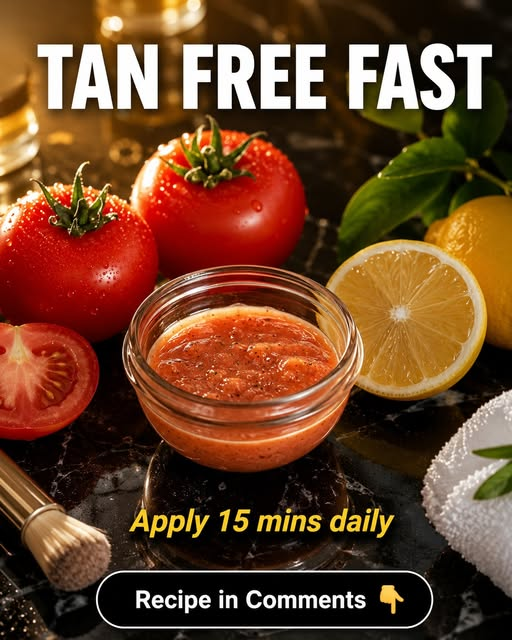
Sun tanning develops when ultraviolet exposure stimulates the skin to produce more melanin. A tan is not dirt and cannot be scrubbed away in one day. Gentle skincare can reduce dryness and dullness within a few days, but noticeable fading usually takes several weeks while the skin naturally renews. Daily sun protection is the most important step because continued exposure can deepen tanning and uneven pigmentation. Broad-spectrum, water-resistant SPF 30 or higher, protective clothing, and shade help prevent additional UV damage. (American Academy of Dermatology)
The image shows tomato and lemon, but raw lemon juice is not included in these facial remedies. Citrus juice on sun-exposed skin may trigger a painful phototoxic reaction and can worsen discoloration. (PubMed) Tomato is used in the diet plan instead because research on tomato and lycopene mainly supports long-term dietary photoprotection rather than instant topical tan removal. (PubMed)
The exact homemade mixtures below have not been tested as complete clinical treatments. Their ingredients were selected from evidence-supported natural skincare categories such as soy, green tea, aloe, oatmeal, and gentle barrier-supporting oils. (PubMed)
Remedy 1: For Normal Skin — Green Tea and Soy Radiance Mask
Ingredients
- 1 tablespoon cooled green tea
- 1 tablespoon plain unsweetened soy milk
- 1 teaspoon pure aloe vera gel
- 1 teaspoon finely powdered colloidal oatmeal
- ½ teaspoon rice starch
- ¼ teaspoon vegetable glycerin
Scientific Working of Each Ingredient
Green tea contains antioxidant catechins that may help reduce UV-related oxidative and inflammatory stress. Human research using standardized green-tea extracts has shown photoprotective activity, although homemade tea is milder. (PubMed)
Soy contains compounds that may interfere with pathways involved in uneven pigment transfer. Controlled research supports formulated soy ingredients for mild hyperpigmentation, although kitchen soy milk is less concentrated and less predictable. (PubMed)
Aloe vera supplies soothing hydration. Colloidal oatmeal supports the skin barrier and may improve dryness and roughness. Rice starch creates a soft, non-scrubbing base, while glycerin helps retain water in the outer skin layer. (PubMed)
Procedure
Mix all ingredients into a smooth, thin paste. Apply to cleansed skin without rubbing. Leave for 8–10 minutes, rinse with lukewarm water, and gently pat dry.
How Often to Apply
Use once daily for 3 days. When no irritation occurs, continue for a maximum of 5 days, then reduce to twice weekly.
Initial Results
Within 1–3 days, the face may look fresher and feel smoother because of improved hydration. A true suntan will not disappear during this short period.
Remedy 2: For Combination Skin — Two-Zone Green Tea and Oat Treatment
Ingredients
- 1 tablespoon cooled green tea
- 1 tablespoon aloe vera gel
- 2 teaspoons colloidal oatmeal
- ½ teaspoon cosmetic-grade kaolin clay
- ½ teaspoon plain unsweetened soy milk
- 2 drops of sunflower seed oil
Scientific Working of Each Ingredient
Green tea provides antioxidant support and may help reduce surface oil. Kaolin clay absorbs some excess oil from the forehead, nose, and chin without requiring harsh exfoliation.
Soy milk provides a mild source of soy compounds associated with more even-looking pigmentation. Aloe supplies lightweight moisture. Colloidal oatmeal supports dry areas and reduces the rough appearance caused by dehydration. (PubMed)
Sunflower seed oil contains barrier-supporting fatty acids. Research found that sunflower oil improved hydration while preserving the integrity of the outer skin barrier. (PubMed)
Procedure
Divide the oatmeal into two bowls. For the oily T-zone, mix one portion with green tea and kaolin. For the cheeks, mix the remaining oatmeal with aloe, soy milk, and sunflower oil.
Apply each mixture only to its appropriate area. Leave for 7–8 minutes and rinse before the clay dries completely.
How Often to Apply
Apply every other evening during the first 5 days. Continue 2–3 times weekly when well tolerated.
Initial Results
The T-zone may appear less shiny, while the cheeks may feel softer within 2–3 days. Uneven tanning requires longer and depends strongly on preventing further sun exposure.
Remedy 3: For Oily Skin — Green Tea, Licorice and Clay Mask
Ingredients
- 1 tablespoon cooled strong green tea
- 1 teaspoon aloe vera gel
- 1 teaspoon kaolin clay
- 1 teaspoon rice starch
- ⅛ teaspoon cosmetic-grade licorice extract powder
- ¼ teaspoon vegetable glycerin
Scientific Working of Each Ingredient
Licorice extract contains compounds such as glabridin that have been studied for effects on melanin production and inflammation. Licorice is among the natural ingredients with evidence for supporting the treatment of uneven pigmentation, although standardized extracts are more reliable than raw licorice root. (PubMed)
Green tea provides antioxidant compounds and may help calm UV-related inflammatory activity. Kaolin absorbs surface oil, while rice starch gives the mixture a soft texture without abrasive scrubbing.
Aloe vera and vegetable glycerin add water-based hydration so that oily skin is not excessively dried. Irritation itself can worsen dark marks, particularly in medium and deeper skin tones. (PubMed)
Procedure
Combine the clay, rice starch, and licorice powder. Add green tea slowly, then mix in aloe and glycerin.
Apply a thin layer without massaging. Leave for only 5–7 minutes and rinse while the mask is still slightly damp.
How Often to Apply
Use every other day for 5 days. Afterward, limit application to twice weekly.
Initial Results
Oiliness may decrease after the first few applications. Skin may appear less dull within 2–3 days, but deeper tanning and dark patches generally fade gradually.
Remedy 4: For Dry Skin — Oat, Honey and Sunflower Moisture Mask
Ingredients
- 1 tablespoon colloidal oatmeal
- 1 tablespoon aloe vera gel
- 1 teaspoon plain unsweetened soy milk
- ½ teaspoon pure honey
- ¼ teaspoon sunflower seed oil
- ¼ teaspoon vegetable glycerin
Scientific Working of Each Ingredient
Colloidal oatmeal contains beta-glucans and antioxidant compounds that support hydration and help improve dryness, roughness, and scaling. (PubMed)
Honey acts as a natural humectant and helps the skin feel softer. Glycerin also attracts water into the outer skin layer.
Sunflower seed oil reduces moisture loss and supports the skin barrier. Aloe vera supplies soothing water-based hydration, while soy milk provides skin-conditioning compounds associated with a more even-looking tone. (PubMed)
Procedure
Mix all ingredients until creamy. Apply to slightly damp skin. Leave for 10 minutes, soften the mask with water, and rinse gently.
Do not scrub while removing it because friction may increase irritation and make pigmentation look darker.
How Often to Apply
Apply once nightly for 3–5 days. Continue twice weekly when the skin remains comfortable.
Initial Results
Dryness and roughness may improve within 1–3 days. Better hydration may temporarily make the complexion look brighter, but established tanning will need more time.
Remedy 5: For Sensitive Skin — Minimal Rice and Oat Comfort Mask
Ingredients
- 1 tablespoon colloidal oatmeal
- 1 teaspoon pure rice starch
- 1 tablespoon boiled and completely cooled water
- 1 teaspoon pure aloe vera gel
- ¼ teaspoon vegetable glycerin
- 2 drops of sunflower seed oil
Scientific Working of Each Ingredient
Colloidal oatmeal helps support dry, reactive skin and has demonstrated anti-inflammatory and barrier-supporting properties. (PubMed)
Rice starch creates a soft, non-abrasive consistency. Aloe may provide light soothing hydration, although it should be left out when there is a known aloe allergy.
Glycerin improves water retention, while a very small amount of sunflower seed oil supports the outer barrier and reduces friction. (PubMed)
Sensitive skin should avoid raw lemon, undiluted vinegar, harsh tomato rubbing, baking soda, bleaching mixtures, and grainy scrubs. Irritation may stimulate additional pigmentation rather than improving it. (American Academy of Dermatology)
Procedure
Mix the oatmeal and rice starch. Add cooled water gradually, then blend in aloe, glycerin, and sunflower oil.
Apply without rubbing. Leave for 5 minutes and rinse gently. Stop immediately when burning, swelling, itching, or increasing redness develops.
How Often to Apply
Patch-test first. Use every other day for 5 days. Continue once or twice weekly only when completely comfortable.
Initial Results
The skin may feel calmer and less tight within 1–3 days. This remedy supports barrier recovery and softness rather than rapidly removing melanin.
Final Tips for Removing Tan Safely
Use broad-spectrum, water-resistant SPF 30 or higher every morning on exposed skin. Reapply approximately every two hours when outdoors and after sweating or swimming. Wear a wide-brimmed hat and seek shade when possible. Sunscreen is essential because repeated UV exposure can prevent existing discoloration from fading. (American Academy of Dermatology)
Do not scrub the skin with sugar, salt, coffee grounds, dry rice, or rough brushes. Avoid applying lemon juice directly to the face. More irritation does not create faster brightening and may produce new dark patches.
Prepare every homemade mask fresh and discard leftovers. Keep bowls, brushes, towels, and skincare tools clean. Patch-test new ingredients before full facial use. Dermatologists recommend testing a new skincare preparation on a small area before regular application. (American Academy of Dermatology)
Visible softness and temporary radiance may begin within 2–3 days. A recent tan usually fades gradually over several weeks when further UV exposure is controlled. Persistent pigmentation may take much longer and sometimes requires professional treatment. (American Academy of Dermatology)
Diet Plan for Supporting Skin Against Sun Damage
Diet cannot remove an existing tan immediately and cannot replace sunscreen. However, antioxidant-rich foods may support the skin’s long-term response to environmental stress.
Breakfast
Choose oatmeal with berries and seeds, or eggs with vegetables and whole-grain bread.
Mid-Morning
Eat one vitamin-rich fruit such as guava, orange, berries, papaya, or kiwi.
Lunch
Include whole-grain roti or brown rice with lentils, beans, fish, chicken, or eggs. Fill approximately half the plate with vegetables.
Tomato-Based Addition
Include cooked tomato sauce, tomato paste, or tomato-based food several times weekly. Research using dietary tomato paste found reduced UV-induced redness after approximately 10 weeks, not after a few days. The study used tomato paste with olive oil, which may improve absorption of fat-soluble carotenoids. (PubMed)
Evening Snack
Choose cucumber, carrots, fruit, plain yogurt, roasted chickpeas, or unsalted nuts.
Dinner
Eat vegetables with lentils, beans, fish, chicken, eggs, or another protein source. Limit frequent sugary drinks and heavily processed foods.
Drink water regularly according to thirst, activity, climate, and individual health needs.
How Long to Continue the Home Remedy and Diet Plan
Use only the remedy designed for your skin type for 3–5 days initially. When it suits your skin, continue 1–3 times weekly for approximately 4–8 weeks.
Follow the balanced diet consistently for at least 8–12 weeks. Dietary tomato and lycopene research shows that photoprotective effects develop gradually and do not replace external sun protection. (PubMed)
Consult a dermatologist when pigmentation is patchy, rapidly worsening, painful, associated with itching or scaling, or unchanged after several months of careful sun protection. Also seek professional advice for persistent melasma, dark patches after acne, unexplained discoloration, or any changing skin spot.
References for the above remedy
- American Academy of Dermatology Association. Sunscreen FAQs.
https://www.aad.org/media/stats-sunscreen - American Academy of Dermatology Association. How to Fade Dark Spots in Darker Skin Tones.
https://www.aad.org/public/everyday-care/skin-care-secrets/routine/fade-dark-spots - Stahl W, et al. Dietary Tomato Paste Protects Against Ultraviolet Light-Induced Erythema in Humans.
https://pubmed.ncbi.nlm.nih.gov/11340098/ - Zhang X, et al. The Effect of Tomato and Lycopene on Clinical Characteristics and Molecular Markers of UV-Induced Skin Damage.
https://pubmed.ncbi.nlm.nih.gov/36606553/ - Elmets CA, et al. Cutaneous Photoprotection from Ultraviolet Injury by Green Tea Polyphenols.
https://pubmed.ncbi.nlm.nih.gov/11209110/ - Leyden J, et al. The Mechanism of Action and Clinical Benefits of Soy for the Treatment of Hyperpigmentation.
https://pubmed.ncbi.nlm.nih.gov/21332714/ - Leyden JJ, et al. Natural Options for the Management of Hyperpigmentation.
https://pubmed.ncbi.nlm.nih.gov/21623927/ - Reynertson KA, et al. Anti-Inflammatory Activities of Colloidal Oatmeal.
https://pubmed.ncbi.nlm.nih.gov/25607907/ - Danby SG, et al. Effect of Olive and Sunflower Seed Oil on the Adult Skin Barrier.
https://pubmed.ncbi.nlm.nih.gov/22995032/ - American Academy of Dermatology Association. How to Test Skin Care Products.
https://www.aad.org/public/everyday-care/skin-care-secrets/prevent-skin-problems/test-skin-care-products