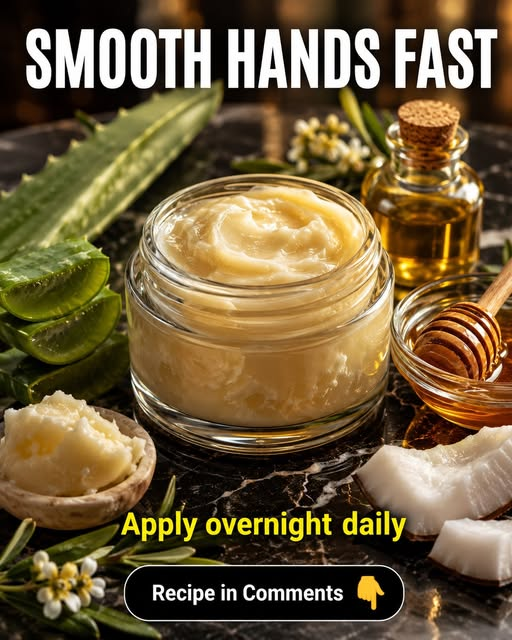
Frequent handwashing, cleaning products, hot water, dry weather, sanitizers and repeated wet-to-dry cycles can strip protective lipids from the hands. The result may be rough texture, tightness, flaking and fine lines that make the hands look older. An overnight remedy cannot permanently reverse wrinkles or repair severe eczema, but the right combination of humectants, emollients and occlusive ingredients can improve softness and reduce visible dryness surprisingly quickly. Dermatologists recommend applying a thick moisturizer to slightly damp hands after washing because this traps water and supports the damaged skin barrier. (American Academy of Dermatology)
The following recipes are intended for uncomplicated dryness. Research supports several individual ingredients, but these exact homemade mixtures have not been tested as complete clinical treatments. Prepare water-containing remedies freshly, patch-test new ingredients and never apply a homemade mask to bleeding, infected or deeply cracked skin.
Remedy 1: Coconut, Aloe and Oat Night Cream for Normal Hand Skin
Ingredients
Use one teaspoon of virgin coconut oil, one teaspoon of sunflower-seed oil, one teaspoon of pure inner-leaf aloe vera gel, one teaspoon of finely ground colloidal oatmeal, half a teaspoon of shea butter and half a teaspoon of honey.
Scientific Working of Each Ingredient
Virgin coconut oil creates an emollient layer that reduces moisture loss. A randomized controlled trial found that it improved hydration in people with mild-to-moderate dry skin. Sunflower oil supplies linoleic acid and has been shown to preserve the outer skin barrier. Colloidal oatmeal contains antioxidant and anti-inflammatory avenanthramides and can improve dryness, roughness and barrier function. Aloe contributes water-based hydration, while honey acts as a humectant. Shea butter softens rough surface cells and helps seal the treatment onto the skin. (PubMed)
Procedure
Soften the shea butter and coconut oil between clean fingertips. Mix in the sunflower oil and oatmeal. Add the aloe and honey immediately before application, stirring until creamy.
Wash the hands with lukewarm water, pat them until slightly damp and massage the fresh mixture over the backs, palms, knuckles and cuticles for two minutes. Leave it on for 30 minutes or wear clean cotton gloves overnight. Discard any leftover mixture because it contains water and no preservative.
How Often to Apply
Apply every night for the first five days. Continue three or four nights weekly for four to six weeks.
Initial Results
Within one to three days, the hands may feel softer and look less dull. Fine lines caused by dehydration may temporarily appear less obvious.
Remedy 2: Two-Zone Jojoba Treatment for Combination Hands
Combination hands may have dry backs and knuckles while the palms feel sweaty, sticky or uncomfortable with heavy creams.
Ingredients
Use two teaspoons of pure aloe vera gel, one teaspoon of colloidal oatmeal, half a teaspoon of plant-derived glycerin, half a teaspoon of jojoba oil, half a teaspoon of sunflower-seed oil and one teaspoon of cooled green tea.
Scientific Working of Each Ingredient
Glycerin is a humectant that draws water into the outer skin layer, and clinical studies show that glycerol-based moisturizers can improve hydration. Aloe and green tea produce a light base suitable for the palms. Oatmeal helps reduce roughness and irritation. Jojoba consists largely of wax esters and provides lighter conditioning, while sunflower oil supports the dry backs of the hands without requiring a thick coating. (PubMed)
Procedure
Combine the aloe, green tea, oatmeal and glycerin. Divide the mixture into two portions. Add the jojoba and sunflower oils only to the portion intended for the backs of the hands.
Apply the oil-free portion lightly to the palms. Massage the richer portion over the backs, knuckles and cuticles. Leave both treatments on for ten minutes, rinse and dry thoroughly. Apply one drop of jojoba oil to each dry knuckle afterward.
How Often to Apply
Use on alternate nights during the first five days. Continue two or three times weekly for four weeks.
Initial Results
The backs may feel smoother after two or three applications, while the palms should feel hydrated without remaining greasy.
Remedy 3: Lightweight Green-Tea Hand Mask for Sweaty Hands
Ingredients
Use one tablespoon of cooled green tea, one teaspoon of pure aloe gel, one teaspoon of colloidal oatmeal, one teaspoon of finely ground rice flour, one-quarter teaspoon of plant-derived glycerin and three drops of sunflower oil.
Scientific Working of Each Ingredient
This remedy avoids a heavy overnight oil layer. Green tea and aloe create a water-rich base, while glycerin attracts moisture. Oatmeal helps calm rough or overwashed skin. Rice flour thickens the mask and absorbs temporary surface moisture, although it should never be rubbed into the hands as a harsh scrub. Three drops of sunflower oil provide limited barrier support without coating the palms heavily.
Procedure
Mix the green tea, aloe and glycerin. Add the oatmeal and rice flour gradually until the mixture becomes smooth. Stir in the sunflower oil.
Spread a thin layer over clean hands and leave it on for five to seven minutes. Rinse before it becomes completely dry, then pat carefully around the fingers and beneath rings.
Prepare a fresh mixture for every use.
How Often to Apply
Apply on days one, three and five. Continue twice weekly when the hands remain comfortable.
Initial Results
The hands may feel cleaner, calmer and less tight within one to three days. This treatment will not control medical causes of excessive sweating.
Remedy 4: Shea, Beeswax and Coconut Balm for Very Dry Hands
Ingredients
Use one teaspoon of unrefined shea butter, one teaspoon of virgin coconut oil, one teaspoon of sunflower-seed oil, half a teaspoon of jojoba oil, one-quarter teaspoon of cosmetic-grade beeswax and half a teaspoon of finely ground colloidal oatmeal.
Scientific Working of Each Ingredient
Shea butter and coconut oil fill gaps between dry surface cells, improving flexibility. Beeswax creates a protective film that slows water evaporation during sleep. Sunflower oil contributes barrier-supporting linoleic acid, while jojoba improves spreadability. Oatmeal provides soothing and protective compounds for rough knuckles and dry cuticles. Reviews of plant oils indicate that oils rich in linoleic or saturated fatty acids may be more supportive of the barrier than oils dominated by oleic acid. (PubMed)
Procedure
Place the beeswax, coconut oil and shea butter in a heat-safe bowl. Stand the bowl in warm water until the ingredients melt. Remove it from the heat and mix in the sunflower oil, jojoba oil and oatmeal.
Allow the balm to cool in a clean, completely dry container. At bedtime, wash the hands, leave them slightly damp and massage a pea-sized amount into each hand. Concentrate on the knuckles, fingertips and areas beside the nails. Wear cotton gloves overnight.
How Often to Apply
Apply every night for at least five days. Continue nightly for four to eight weeks, especially after cleaning or frequent handwashing.
Initial Results
Tightness and roughness may improve after the first few applications. Cracks require longer to heal and should not be covered with homemade balm if they are bleeding, swollen or infected.
Remedy 5: Fragrance-Free Oat Compress for Sensitive Hands
Ingredients
Use one tablespoon of colloidal oatmeal, two tablespoons of boiled and completely cooled water, half a teaspoon of plant-derived glycerin, half a teaspoon of sunflower-seed oil and half a teaspoon of softened shea butter.
Scientific Working of Each Ingredient
Sensitive hands benefit from a simple preparation without perfume, citrus, essential oils or strongly active botanicals. Colloidal oatmeal has direct antioxidant and anti-inflammatory properties and has produced clinical improvements in dryness, scaling, roughness and itching. Glycerin increases water content in the outer skin, while sunflower oil and shea butter help reduce moisture loss after the compress is removed. (PubMed)
Procedure
Combine the oatmeal, cooled water and glycerin. Place the mixture inside soft cotton gauze and rest it over the backs of the hands for five minutes without rubbing.
Remove the compress and gently pat away excess moisture. Mix the sunflower oil with the shea butter and press a thin layer over the damp skin.
Patch-test the remedy on a small area and wait 24–48 hours before applying it to both hands.
How Often to Apply
Use once on the first day. When no itching, swelling or burning occurs, repeat on days three and five. Continue once or twice weekly.
Initial Results
Sensitive hands may feel calmer and less tight within two or three applications. Discontinue use if redness, blisters or persistent itching develops.
Final Tips for Keeping Hands Smooth
Wash with lukewarm rather than hot water and use a mild, fragrance-free cleanser. Pat the hands dry instead of rubbing them with a rough towel. Apply a moisturizer immediately after every wash while the skin is still slightly damp. Frequent handwashing can cause flaking, cracking and bleeding, but regular moisturising can help restore comfort. (American Academy of Dermatology)
Wear waterproof gloves when washing dishes or using household cleaners. Remove rings before wet work because soap and moisture can remain trapped beneath them. Wear broad-spectrum SPF 30 or higher on the backs of the hands during the day to reduce sun-related roughness and discoloration.
Avoid lemon juice, baking soda, undiluted vinegar, coarse salt, sugar scrubs and perfumed essential oils. They may irritate an already weakened barrier. Visible softness and surface glow may begin within two to three days. Continued hydration can make dehydration lines look smoother over time, but it cannot permanently remove established wrinkles.
Diet Plan for Healthy-Looking Hands
For breakfast, choose eggs with wholegrain bread, plain yogurt with fruit and seeds, or oatmeal with nuts. At lunch, include lentils, chickpeas, beans, fish or chicken with vegetables and wholegrain roti or brown rice. Dinner can include eggs, tofu, fish, chicken or lentil soup with colourful vegetables.
Include vitamin-C-rich foods such as guava, oranges, kiwi, strawberries, tomatoes and bell peppers. Vitamin C is needed for collagen production and normal wound healing. Nuts, seeds, fish, eggs and suitable plant oils provide fats and protein needed for normal skin structure. A varied diet based on fruits, vegetables, pulses, whole grains and appropriate protein sources is more useful than relying on a single “skin food.” (Office of Dietary Supplements)
Continue the suitable remedy and diet plan for four to six weeks. See a doctor or dermatologist sooner if the hands develop painful deep cracks, bleeding, pus, swelling, blisters, intense itching or a spreading rash. Extremely dry and painful hands that do not improve with frequent moisturising may be a sign of hand eczema and often require more than home treatment. (American Academy of Dermatology)
References for the above remedy
- American Academy of Dermatology. Dry Skin Relief from Handwashing.
https://www.aad.org/public/everyday-care/skin-care-basics/dry/coronavirus-handwashing - American Academy of Dermatology. Four Skin-Care Tips for Your Hands.
https://www.aad.org/public/everyday-care/skin-care-basics/care/skin-care-tips-hands - Agero ALC, Verallo-Rowell VM. A Randomized Double-Blind Trial Comparing Virgin Coconut Oil with Mineral Oil for Xerosis.
https://pubmed.ncbi.nlm.nih.gov/15724344/ - Danby SG, et al. Effect of Olive and Sunflower-Seed Oil on the Adult Skin Barrier.
https://pubmed.ncbi.nlm.nih.gov/22995032/ - Capone K, et al. Effects of Colloidal Oatmeal Topical Treatment on Skin-Barrier Function and Hydration.
https://pubmed.ncbi.nlm.nih.gov/32484623/ - Reynertson KA, et al. Anti-Inflammatory Activities of Colloidal Oatmeal.
https://pubmed.ncbi.nlm.nih.gov/25607907/ - Breternitz M, et al. Placebo-Controlled Study of a Glycerol-Based Emollient in Atopic Dermatitis.
https://pubmed.ncbi.nlm.nih.gov/18025807/ - Burlando B, Cornara L. Honey in Dermatology and Skin Care: A Review.
https://pubmed.ncbi.nlm.nih.gov/24305429/ - National Center for Complementary and Integrative Health. Aloe Vera: Usefulness and Safety.
https://www.nccih.nih.gov/health/aloe-vera - National Institutes of Health, Office of Dietary Supplements. Vitamin C Fact Sheet for Health Professionals.
https://ods.od.nih.gov/factsheets/VitaminC-HealthProfessional/