
Fine lines and wrinkles develop as collagen, elastin, natural oils and water content gradually decline with age. Sun exposure, smoking, repeated facial movements, dehydration and an impaired skin barrier can make them appear more noticeable. The image suggests massaging a natural face pack upward for five minutes, but one massage session cannot lift loose skin or erase established wrinkles. Gentle massage may temporarily improve circulation and reduce puffiness, while regular hydration can soften dehydration lines. In a small clinical trial, facial rolling and gua sha produced changes in elasticity and facial measurements only after repeated use for eight weeks—not after a single five-minute session. Daily sun protection remains one of the most strongly supported ways to slow visible photoageing. (PubMed)
The following remedies are designed to moisturise, support the skin barrier and make fine lines appear temporarily smoother. The individual ingredients have scientific support, but these exact homemade mixtures have not been tested as wrinkle treatments. Patch-test every remedy for 24 hours, prepare a fresh portion each time and stop immediately if burning, itching or swelling develops.
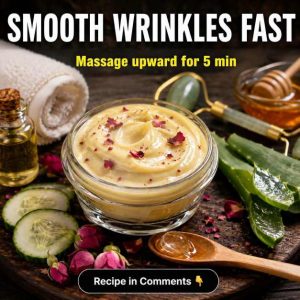
Remedy 1: Aloe, Soy and Honey Smoothing Pack for Normal Skin
Ingredients and Their Scientific Benefits
- 1 tablespoon pure aloe vera gel: Adds water-based moisture and may calm mild redness.
- 1 tablespoon unsweetened soy milk: Contains soy proteins associated with improvements in texture, fine lines and uneven tone.
- 1 teaspoon pure honey: Acts as a humectant and attracts moisture to the outer skin layer.
- 1 teaspoon cooled green tea: Supplies antioxidant polyphenols.
- 1 teaspoon cucumber juice: Provides cooling hydration.
- 1 teaspoon finely ground colloidal oatmeal: Helps strengthen the moisture barrier and reduce roughness.
Scientific Working of the Ingredients
Wrinkles often look deeper when the outer skin is dry. Aloe, cucumber and honey increase surface moisture, creating a temporarily plumper appearance. Colloidal oatmeal helps reduce water loss and supports barrier function. A controlled 12-week study of a formulated soy moisturiser reported improvements in fine lines, texture, blotchiness and overall appearance. Ordinary soy milk is not equivalent to the tested formulation, but it offers a reasonable evidence-informed ingredient for a gentle mask. (PubMed)
Procedure
Combine all ingredients in a clean bowl. Apply a thin layer to cleansed, slightly damp skin. Using clean fingertips, glide very lightly from the centre of the face outward and upward for one minute. Do not pull or repeatedly stretch the skin. Leave the pack on for another eight minutes, rinse with lukewarm water and apply moisturiser.
How Often to Apply
Use on alternate evenings for five days. After that, limit application to twice weekly.
Initial Results
Within one to three days, the face may feel softer and look better hydrated. Dehydration lines may appear less obvious temporarily, but permanent wrinkle reduction should not be expected.
Remedy 2: Yogurt, Green Tea and Cucumber Pack for Combination Skin
Ingredients and Their Scientific Benefits
- 1 tablespoon plain unsweetened yogurt: Provides moisture and naturally occurring lactic acid.
- 1 tablespoon cucumber juice: Hydrates without adding heavy oil.
- 1 teaspoon cooled green tea: Provides antioxidant and soothing compounds.
- 1 teaspoon aloe vera gel: Supports dry areas with lightweight hydration.
- 1 teaspoon colloidal oatmeal: Helps comfort dry cheeks while absorbing some surface oil.
- 1 teaspoon unsweetened soy milk: Supports a smoother and more even-looking complexion.
Scientific Working of the Ingredients
Combination skin requires hydration without a greasy coating. Yogurt contains a variable, relatively low amount of lactic acid, which may gently loosen dull surface cells. Clinical research involving formulated yogurt masks found improvements in moisture and brightness, although the tested preparation contained additional standardised ingredients. Green-tea extracts have also shown potential benefits for elasticity and wrinkles after several weeks when delivered through a professionally formulated cream. Homemade green tea will be weaker and less predictable. (PubMed)
Procedure
Mix the ingredients into a smooth paste. Apply a thin layer to the cheeks and a lighter amount to the forehead, nose and chin. Massage gently for no longer than 30 seconds, then leave it on for five to seven minutes. Rinse without scrubbing.
How Often to Apply
Apply on days one, three and five. Do not use facial scrubs, exfoliating acids or retinoids on the same evening.
Initial Results
Drier sections may look smoother after two or three applications, while the oily areas should feel refreshed rather than coated. Deeper lines require considerably more time and cannot be removed by yogurt alone.
Remedy 3: Oil-Free Green Tea and Oat Gel for Oily Skin
Ingredients and Their Scientific Benefits
- 1 tablespoon cooled green tea: Supplies catechins with antioxidant activity.
- 1 tablespoon aloe vera gel: Provides non-greasy hydration.
- 1 teaspoon cucumber juice: Adds water and a cooling sensation.
- 1 teaspoon colloidal oatmeal: Helps calm irritation and bind excess surface oil.
- 1 teaspoon unsweetened soy milk: Provides supportive skin-tone and texture benefits.
- ½ teaspoon plain yogurt: Offers mild surface exfoliation.
Scientific Working of the Ingredients
Oily skin can still be dehydrated. Harsh cleansing may increase tightness and make fine lines look sharper without addressing oil production. Aloe, cucumber and green tea provide lightweight moisture, while oatmeal helps support the barrier. A split-face clinical study found that a formulated green-tea cream improved elasticity after four weeks and showed visible wrinkle improvement after repeated application. These findings support green-tea extract as a cosmetic ingredient but do not prove that brewed tea will produce the same outcome. (PubMed)
Procedure
Blend the ingredients and apply a very thin layer to intact skin. Avoid open pimples, freshly shaved areas and inflamed acne. Glide the fingertips gently outward for 30 seconds and allow the mixture to remain for five minutes. Rinse and use a lightweight moisturiser.
How Often to Apply
Use every other evening for five days, with a maximum of three applications.
Initial Results
The skin may feel less tight and look smoother within one to three days. The pack will not permanently shrink pores or erase expression lines.
Remedy 4: Honey, Oat and Sunflower Moisture Pack for Dry Skin
Ingredients and Their Scientific Benefits
- 1 tablespoon colloidal oatmeal: Supports barrier repair and reduces roughness.
- 1 tablespoon plain yogurt: Adds moisture and mild lactic-acid activity.
- 1 teaspoon honey: Helps retain water at the skin’s surface.
- 1 teaspoon aloe vera gel: Provides soothing hydration.
- ½ teaspoon cold-pressed sunflower-seed oil: Supplies linoleic-acid-rich emollient support.
- 1 teaspoon cucumber juice: Makes the mixture lighter and more hydrating.
Scientific Working of the Ingredients
Dryness increases the visibility of superficial lines because rough skin reflects light unevenly. Oatmeal, honey, yogurt and sunflower oil primarily work by improving softness, flexibility and moisture retention. Research in adults found that sunflower-seed oil preserved barrier integrity and improved hydration, whereas olive oil weakened the barrier and caused mild redness. A recent clinical study of formulated honey creams also reported improvements in moisturisation, smoothness and measured wrinkle characteristics after four weeks. Raw honey alone has not been proven to deliver the same results. (PubMed)
Procedure
Mix the ingredients until creamy. Apply to slightly damp skin and use very light upward gliding movements for one minute. Never press hard around the eyes or stretch the cheeks. Leave the mask on for 10 minutes, rinse gently and immediately apply moisturiser.
How Often to Apply
Apply nightly for the first three days and then twice weekly.
Initial Results
Flakiness and tightness may improve after one or two applications. Hydrated skin can make fine lines appear temporarily softer, but established wrinkles will remain.
Remedy 5: Calming Oat and Cucumber Pack for Sensitive Skin
Ingredients and Their Scientific Benefits
- 1 tablespoon previously boiled and cooled water: Creates a simple, low-irritation base.
- 1 tablespoon colloidal oatmeal: Helps reduce dryness and support the skin barrier.
- 1 teaspoon cucumber juice: Provides gentle cooling.
- 1 teaspoon aloe vera gel: Adds lightweight hydration when tolerated.
- 1 teaspoon cooled green tea: Supplies antioxidant polyphenols.
- 1 teaspoon unsweetened soy milk: Provides mild moisturising and texture support.
Scientific Working of the Ingredients
Sensitive skin can develop more visible lines when repeated irritation disrupts the barrier. The priority should therefore be moisture and comfort rather than vigorous massage or strong exfoliation. Clinical research found that a formulated 1% colloidal-oat cream improved hydration, skin pH and barrier function after 14 days. Botanical ingredients can still cause contact reactions, so sensitive skin should be exposed to fewer applications and shorter contact times. (PubMed)
Procedure
Mix and strain the preparation so no rough oat particles remain. Apply a thin layer without massaging during the first use. After successful patch testing, lightly press the mixture into the skin with flat fingertips. Leave it on for five minutes and rinse with cool or lukewarm water.
How Often to Apply
Use only twice during the first five days. Do not apply during an active eczema, rosacea or allergic flare.
Initial Results
The skin may feel calmer and less tight within one to three days. Sensitive skin should not be pushed toward rapid results through frequent masking.
Can an Upward Facial Massage Smooth Wrinkles?
Gentle massage can temporarily increase warmth, reduce facial tension and help spread a moisturising mixture evenly. However, continuously pulling the skin upward does not permanently lift tissue. The available clinical evidence involves repeated massage-tool use for several weeks, and the studies remain small. Keep massage pressure light, limit it to one or two minutes and stop if the skin becomes red or sore. (PubMed)
Clean facial rollers thoroughly before and after use. Avoid rolling over inflamed acne, sunburn, broken capillaries, active dermatitis, infections or recently treated skin.
Final Tips for Preventing Premature Wrinkles
Apply broad-spectrum SPF 30 or higher every morning and reapply during prolonged outdoor exposure. In a randomised trial, people assigned to daily sunscreen use showed 24% less progression of skin ageing than those using it only when they considered it necessary. Sun protection therefore contributes more to long-term wrinkle prevention than any homemade mask. (PubMed)
Use a gentle cleanser, moisturise while the skin is slightly damp and avoid lemon juice, baking soda, undiluted vinegar, toothpaste and essential oils. Keep towels, pillowcases, bowls and massage tools clean. Adequate sleep and hydration can make the complexion appear fresher, although they cannot rebuild lost facial volume.
Visible softness and glow may begin within two or three days. Continued hydration can reduce the appearance of dehydration lines, but meaningful improvements in photoageing generally require several weeks or months.
Diet Plan for Healthy, Youthful-Looking Skin
Breakfast: Eat eggs, plain yogurt or oatmeal with guava, berries, kiwi, papaya or orange.
Lunch: Choose lentils, beans, fish, chicken or tofu with whole grains and colourful vegetables.
Afternoon: Have water or unsweetened green tea with almonds, walnuts, pumpkin seeds or sunflower seeds.
Dinner: Include a moderate portion of protein, cooked vegetables, salad and brown rice or whole-grain bread.
Continue the skin-type-appropriate remedy for four to six weeks without exceeding the recommended frequency. Diet and home care can support healthy skin but cannot reverse deep wrinkles or sagging. Consult a dermatologist when wrinkles appear suddenly, the skin becomes persistently inflamed, or no improvement in dryness and texture occurs after six to eight weeks.
References for the above remedy
- Hughes MC, Williams GM, Baker P, Green AC. Sunscreen and Prevention of Skin Aging: A Randomized Trial.
https://pubmed.ncbi.nlm.nih.gov/23732711/ - Ahn SH, et al. Comparative Effects of Facial Roller and Gua Sha Massage on Facial Contour, Muscle Tone, and Skin Elasticity.
https://pubmed.ncbi.nlm.nih.gov/40439289/ - Capone K, Kirchner F, Klein SL, Tierney NK. Effects of Colloidal Oatmeal Cream on Skin Barrier Properties.
https://pubmed.ncbi.nlm.nih.gov/32484623/ - Wallo W, Nebus J, Leyden JJ. Efficacy of a Soy Moisturizer in Photoaging.
https://pubmed.ncbi.nlm.nih.gov/17941363/ - Wisuitiprot W, et al. Effect of Green Tea Extract on Facial Skin: A Randomized Placebo-Controlled Study.
https://pubmed.ncbi.nlm.nih.gov/34965006/ - Danby SG, et al. Effect of Olive and Sunflower Seed Oil on the Adult Skin Barrier.
https://pubmed.ncbi.nlm.nih.gov/22995032/ - Kim S, et al. Clinical Efficacy of Facial Masks Containing Yoghurt and Natural Ingredients.
https://pubmed.ncbi.nlm.nih.gov/22152494/ - Fox LT, et al. Skin Hydration and Anti-Erythema Effects of Aloe Vera Gel Materials.
https://pubmed.ncbi.nlm.nih.gov/24991119/ - Chiu AE, et al. Green Tea Extracts and the Clinical and Histologic Appearance of Photoaging Skin.
https://pubmed.ncbi.nlm.nih.gov/16029678/ - Pastore S, et al. Honey-Based Formulations and Their Effects on Skin Moisturisation and Wrinkle Measurements.
https://pubmed.ncbi.nlm.nih.gov/39770550/