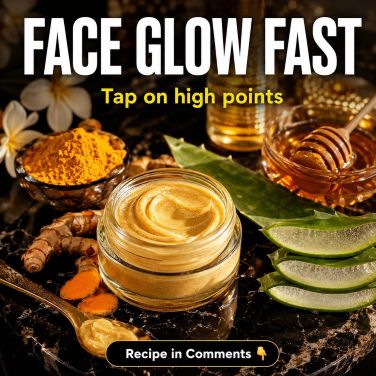
Dull-looking skin can make the face appear tired, uneven and less vibrant, especially after poor sleep, dehydration, sun exposure or an unsuitable skincare routine. A quick natural face mask may improve softness and create a temporary glow by increasing surface hydration, calming irritation and smoothing dry skin cells so that light reflects more evenly. The individual ingredients below have supportive dermatological or clinical evidence, but the exact homemade mixtures have not been tested as complete treatments. Results should therefore remain realistic: softer, calmer and more hydrated skin may appear within one to three days, while pigmentation, acne scars and established wrinkles require longer-term professional care.
Remedy 1: Yogurt, Honey and Oat Glow Mask for Normal Skin
Ingredients
- 1 tablespoon plain, unsweetened yogurt: contains naturally occurring lactic acid that can loosen dull surface cells.
- 1 teaspoon finely ground colloidal oatmeal: supports the skin barrier and calms mild dryness.
- 1 teaspoon honey: acts as a humectant, helping the skin retain moisture.
- 1 teaspoon cooled green tea: provides antioxidant polyphenols that may calm environmental stress.
- 1 teaspoon clear aloe vera gel: adds water-based hydration and a soothing texture.
Scientific Working of the Ingredients
Lactic acid has demonstrated skin-smoothing and moisturizing effects when used in properly formulated concentrations. Yogurt contains a much lower and less predictable amount, so its action is gentler but also less reliable. Oatmeal contains beta-glucans and avenanthramides that support hydration and reduce inflammatory signalling. Honey attracts water, while aloe and green tea may help relieve temporary redness and dryness.
Procedure
Mix everything into a smooth paste. Apply a thin layer to clean, damp skin, avoiding the eyes and lips. Leave it on for eight to ten minutes. Wet your fingertips, loosen the mask without scrubbing and rinse with lukewarm water.
How Often to Apply
Use on alternate days for five days, giving a total of three applications.
Initial Results
After one to three days, the face may feel softer and look slightly fresher. Do not expect permanent lightening or removal of dark spots.
Remedy 2: Green Tea and Glycerin Balancing Gel for Combination Skin
Ingredients
- 1 tablespoon clear aloe vera gel: hydrates without adding heavy oil.
- 2 teaspoons strongly brewed, cooled green tea: may help control excess facial sebum over time.
- ¼ teaspoon vegetable glycerin: attracts water into the outer skin layer.
- 1 teaspoon colloidal oat flour: reduces tightness on dry areas.
- A very small pinch of turmeric: supplies curcumin-associated antioxidant and anti-inflammatory activity.
Scientific Working of the Ingredients
Combination skin needs hydration without excessive occlusion. Glycerin is a well-studied humectant that increases water content in the stratum corneum. Green tea has been studied in topical formulations for facial sebum control, although noticeable oil reduction required several weeks rather than a few days. Oatmeal supports dry cheek areas, while turmeric may calm inflammatory redness, but household turmeric can stain and irritate some complexions.
Procedure
Whisk the ingredients until evenly blended. Spread a very thin layer over the face, using slightly less on the nose, forehead and chin. Leave it on for seven minutes only. Rinse thoroughly and pat dry.
How Often to Apply
Apply once every other evening for five days. Stop immediately if burning, itching or persistent yellow staining develops.
Initial Results
The cheeks may feel less tight within one or two uses, while the T-zone may look temporarily less shiny. Significant oil regulation will not occur within three days.
Remedy 3: Turmeric, Yogurt and Green Tea Mask for Oily Skin
Ingredients
- 1 tablespoon plain low-fat yogurt: provides gentle lactic-acid activity.
- 2 teaspoons cooled green tea: supplies antioxidant catechins.
- 1 teaspoon aloe vera gel: offers lightweight hydration.
- 1 teaspoon colloidal oatmeal: absorbs some surface moisture while protecting the barrier.
- ⅛ teaspoon turmeric: may help calm inflammatory activity.
Scientific Working of the Ingredients
Oily skin can still become dehydrated, which sometimes increases discomfort and shine. Aloe and oatmeal provide water-based soothing without a heavy oily coating. Research on green-tea-containing topical preparations has found reductions in facial sebum, but these effects developed over approximately two months. Turmeric has early clinical support in several inflammatory skin conditions, although kitchen turmeric is not equivalent to standardized curcumin formulations.
Procedure
Combine the ingredients into a thin paste. Apply with clean fingers without rubbing acne lesions. Leave for five to seven minutes, then rinse carefully. Use a dark towel because turmeric may stain fabric.
How Often to Apply
Use three times over five days, with at least one rest day between applications.
Initial Results
The skin may appear less greasy immediately after rinsing, and mild redness may look calmer within one to three days. This remedy will not cure acne, shrink pores permanently or remove acne scars.
Remedy 4: Sunflower, Honey and Oat Barrier Mask for Dry Skin
Ingredients
- 1 tablespoon prepared colloidal oatmeal gel: reduces roughness and helps retain water.
- 1 teaspoon honey: provides humectant moisture.
- 1 teaspoon aloe vera gel: increases the mask’s water content.
- ¼ teaspoon vegetable glycerin: improves short-term hydration.
- 3 to 4 drops sunflower seed oil: supplies linoleic-acid-rich emollient lipids.
Scientific Working of the Ingredients
Dry skin often looks dull because rough, dehydrated cells reflect light unevenly. Glycerin and honey bind water, while oatmeal supports barrier lipids and decreases water loss. An adult skin study found that sunflower seed oil preserved barrier integrity and improved hydration, whereas olive oil weakened the barrier. This is why sunflower oil is preferred here.
Procedure
Mix the oatmeal gel, honey, aloe and glycerin before adding the oil. Apply to slightly damp skin and leave for ten minutes. Rinse gently without using soap. Pat the face dry instead of rubbing it.
How Often to Apply
Apply once daily for three days, followed by every other day for the next four days if the skin remains comfortable.
Initial Results
Dryness and tightness may improve after the first application. Fine dehydration lines can look temporarily softer within two or three days, but established wrinkles will not disappear.
Remedy 5: Minimal Oat and Aloe Compress for Sensitive Skin
Ingredients
- 1 tablespoon finely milled colloidal oatmeal: provides barrier-supporting beta-glucans and soothing avenanthramides.
- 1 tablespoon clear aloe vera gel: gives cooling, water-based hydration.
- ¼ teaspoon vegetable glycerin: helps the outer skin hold water.
- 2 drops sunflower seed oil: adds a small amount of protective emollient lipid.
- 1 to 2 teaspoons cooled, previously boiled water: dilutes the mixture and reduces friction during application.
Scientific Working of the Ingredients
Sensitive skin generally tolerates a short ingredient list better than strongly acidic, fragranced or heavily botanical masks. Colloidal oatmeal has clinical evidence for reducing dryness, itching and irritation while improving barrier function. Glycerin increases hydration, and a very small quantity of sunflower oil helps reduce roughness. Aloe can feel soothing, although some individuals develop contact reactions.
Procedure
Mix the ingredients into a soft, runny paste. Place it on clean skin without massaging. Leave for five minutes, rinse with cool-to-lukewarm water and gently blot dry.
How Often to Apply
Begin with one application. When no irritation occurs, repeat every other day for three to five days.
Initial Results
The skin may feel calmer and less tight within one or two days. Persistent redness, burning, scaling or itching requires medical assessment rather than repeated masking.
Final Tips for a Faster, Healthier-Looking Glow
Perform a patch test before putting any mixture on your face. Dermatologists recommend testing new skincare ingredients on a small area for several days because delayed allergic reactions are possible. Prepare only enough for one application and discard leftovers, as homemade masks contain no preservatives.
Use clean bowls, spoons and towels. Avoid lemon juice, baking soda, undiluted vinegar, toothpaste, essential oils and aggressive scrubbing. These can disturb the skin barrier and make redness or pigmentation more noticeable. Do not apply masks over broken skin, active eczema, painful acne, sunburn or infected areas.
Drink adequate water, sleep regularly and protect the face from excessive sunlight. Surface softness or temporary brightness may begin within two to three days. Continued hydration may maintain a healthy-looking glow, but homemade remedies cannot permanently tighten skin or remove wrinkles.
Seven-Day Diet Plan for Naturally Healthy-Looking Skin
Follow this balanced pattern for at least four weeks rather than expecting dietary changes within three days.
Morning: Begin with water and one vitamin-C-rich fruit, such as guava, orange, kiwi or papaya.
Breakfast: Choose oatmeal with plain yogurt and fruit, or eggs with whole-grain bread and vegetables.
Lunch: Eat lentils, beans, chicken or fish with a large serving of spinach, carrots, tomatoes, cucumber or broccoli.
Afternoon snack: Have a small portion of unsalted almonds, walnuts, pumpkin seeds or sunflower seeds.
Dinner: Choose grilled fish, chicken, chickpeas or beans with vegetables and a moderate portion of brown rice or whole-grain roti.
Daily hydration: Drink according to thirst, climate and activity level. Reduce frequent sugary drinks, excessive sweets and heavily fried foods.
Carotenoid-rich fruits and vegetables can gradually influence skin coloration, but controlled research observed changes after approximately four weeks, not overnight.
Continue the home remedy that suits your skin for no longer than two to three weeks unless a dermatologist advises otherwise. Consult a doctor or dermatologist when dullness, pigmentation, acne, redness or itching persists beyond two to four weeks, suddenly worsens, or occurs with fatigue, swelling, pain, hair loss or other health symptoms.
References for the above remedy
- Reynertson KA, Garay M, Nebus J, et al. Safety and efficacy of personal-care products containing colloidal oatmeal. Clinical, Cosmetic and Investigational Dermatology.
URL: https://pmc.ncbi.nlm.nih.gov/articles/PMC3508548/ (PubMed Central (PMC)) - Mahmood T, Akhtar N, Moldovan C. A comparison of the effects of topical green tea and lotus on facial sebum control in healthy humans. Hippokratia.
URL: https://pubmed.ncbi.nlm.nih.gov/23935347/ (PubMed) - Smith WP. Epidermal and dermal effects of topical lactic acid. Journal of the American Academy of Dermatology.
URL: https://pubmed.ncbi.nlm.nih.gov/8784274/ (PubMed) - Breternitz M, Kowatzki D, Langenauer M, et al. Placebo-controlled randomized study of a glycerol-based emollient on eczematous skin.
URL: https://pubmed.ncbi.nlm.nih.gov/18025807/ (PubMed) - Danby SG, AlEnezi T, Sultan A, et al. Effect of olive and sunflower seed oil on the adult skin barrier. Pediatric Dermatology.
URL: https://pubmed.ncbi.nlm.nih.gov/22995032/ (PubMed) - Vaughn AR, Branum A, Sivamani RK. Effects of turmeric on skin health: a systematic review of clinical evidence. Phytotherapy Research.
URL: https://pubmed.ncbi.nlm.nih.gov/27213821/ (PubMed) - Braithwaite I, Hunt A, Riley J, et al. Randomised controlled trial of topical kanuka honey for rosacea. BMJ Open.
URL: https://pubmed.ncbi.nlm.nih.gov/26109117/ (PubMed) - Hekmatpou D, Mehrabi F, Rahzani K, Aminiyan A. The effect of Aloe vera clinical trials on prevention and healing of skin wounds: a systematic review.
URL: https://pmc.ncbi.nlm.nih.gov/articles/PMC6330525/ (PubMed Central (PMC)) - American Academy of Dermatology. How to test skincare products before use.
URL: https://www.aad.org/public/everyday-care/skin-care-secrets/prevent-skin-problems/test-skin-care-products (American Academy of Dermatology) - Pezdirc K, Hutchesson MJ, Williams RL, et al. Consuming high-carotenoid fruits and vegetables influences skin yellowness: a randomized crossover trial.
URL: https://pubmed.ncbi.nlm.nih.gov/27160341/ (PubMed)