Introduction
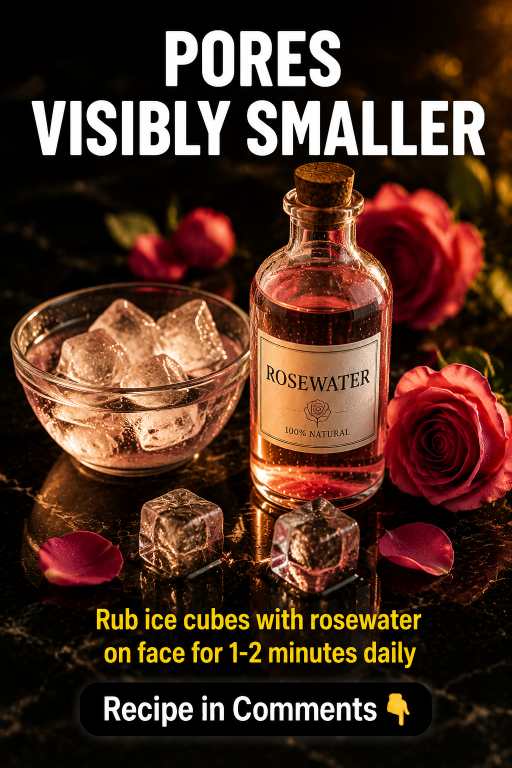
The uploaded image presents rosewater ice cubes rubbed over the face for one to two minutes each day, with the promise that pores will look smaller. Cold can temporarily constrict surface blood vessels and reduce mild puffiness, so skin may look smoother immediately after cooling. Rosewater may feel refreshing, but neither permanently shrinks pores. Size depends on genetics, sebum, age, sun exposure and congestion.
Dermatologists recommend gentle cleansing and non-comedogenic products because clogged pores can expand and look more noticeable.[1] Sunscreen and moisturiser also protect skin from sun damage and dryness.[2] Rose-extract research suggests antioxidant potential, but evidence for homemade rosewater ice is limited. These options are not proven methods for shrinking pores, curing acne or reversing scars.
How to Prepare Rosewater Ice Safely
Choose cosmetic-grade rosewater without perfume, alcohol or essential oil. “Natural” does not guarantee sterility or non-irritation. Pour it into a clean ice tray and freeze it. Wrap one cube in a thin, clean cotton cloth rather than dragging bare ice across the skin. Glide it continuously over clean, intact skin for 30–60 seconds, never holding it in one spot. Stop if skin becomes painful, numb, pale, blotchy or intensely red. Rinse the cloth and do not share it.
Do not use ice on broken skin, active cold sores, severe rosacea, eczema flares or immediately after a peel, laser treatment or other procedure. Extreme cold can irritate skin and may aggravate cold-sensitive conditions. Patch-test any rosewater separately on the inner arm for 24–48 hours before facial use.

Remedy 1: For Normal Skin — Rosewater, Green Tea and Aloe Ice
Ingredients and scientific benefit
Use 120 ml rosewater, 60 ml cooled green tea and 1 teaspoon pure aloe gel. Rosewater provides a fragrant-free floral water base when properly selected; green tea contains polyphenols studied for antioxidant and anti-inflammatory activity; aloe contributes a soothing, water-binding texture. The cold may temporarily reduce puffiness, while the liquid hydrates the surface. None of these ingredients changes pore anatomy.
Procedure
Brew weak green tea, cool it completely and mix it with rosewater and aloe. Freeze in a clean tray. Wrap one cube in cloth and glide it over the face for up to one minute. Let the skin return naturally to room temperature, then apply a light moisturiser.
How Often to Apply
Use once every other day for five days. Daily use is unnecessary, and longer contact does not improve the result.
Initial Results
The face may look fresher and less puffy within one to three days. Pores may appear less obvious temporarily, but not permanently smaller.
Remedy 2: For Combination Skin — Rosewater and Cucumber Cooling Cubes
Ingredients and scientific benefit
Combine 120 ml rosewater, 60 ml strained cucumber juice and ½ teaspoon glycerin. Cucumber adds water and a cooling sensation; glycerin is a humectant that helps attract moisture; rosewater provides the floral base. The light formula avoids heavy oils that may contribute to congestion for some people, but it has not been clinically validated for combination skin or pore reduction.
Procedure
Mix the ingredients, pour into a clean tray and freeze. Wrap a cube and glide it mainly over the cheeks and forehead, using only brief passes over the nose and chin. Moisturise afterward if the cheeks feel tight.
How Often to Apply
Apply every other day for five days, using one cube per session. Do not rub until the cube melts completely.
Initial Results
The skin may feel refreshed, while dry areas feel more comfortable. The oily T-zone and visible pores are unlikely to change within 72 hours.
Remedy 3: For Oily Skin — Rosewater, Green Tea and Niacinamide-Free Ice
Ingredients and scientific benefit
Use 150 ml rosewater, 30 ml cooled green tea, ½ teaspoon aloe gel, 1 teaspoon finely strained cucumber juice and 1 teaspoon plain distilled water. This version is light and oil-free. Green tea and aloe may soothe; cucumber and water improve glide. Cold may briefly reduce surface redness, but it does not stop sebum production or unclog pores.
Procedure
Mix, freeze and wrap one cube in clean fabric. Glide over the central face for 30–45 seconds, then pat dry. Follow with a non-comedogenic moisturiser. Do not use lemon, baking soda, toothpaste or undiluted apple-cider vinegar to “tighten” pores.
How Often to Apply
Use once or twice during five days, not several times daily. Frequent icing and friction can increase irritation and make pores appear more prominent.
Initial Results
Shine may be reduced briefly. Ice will not cure blackheads, acne or enlarged-looking pores.
Remedy 4: For Dry Skin — Rosewater, Oat and Honey Ice
Ingredients and scientific benefit
Mix 120 ml rosewater, 60 ml cooled boiled water, 1 teaspoon colloidal oatmeal, ½ teaspoon honey and ½ teaspoon aloe gel. Colloidal oatmeal is associated with improved hydration and barrier comfort in tested topical products; honey attracts moisture and aloe gives a soothing feel. This homemade mixture is less predictable than a formulated product; do not use it on cracked or inflamed skin.
Procedure
Stir thoroughly, allow the oats to hydrate for 10 minutes, strain if necessary and freeze. Wrap the cube and glide lightly for 30 seconds. Rinse any residue and moisturise immediately.
How Often to Apply
Use once during the five-day period. Dry skin usually benefits more from consistent moisturising than from repeated cold exposure.
Initial Results
Surface dryness may look less pronounced after moisturising. Fine lines may look softer temporarily, but ice will not tighten lax skin.
Remedy 5: For Sensitive Skin — Diluted Rosewater Compress
Ingredients and scientific benefit
Use 60 ml fragrance-free rosewater and 120 ml cooled boiled water. No essential oils, perfume, lemon, alcohol, clay or scrub is added. Dilution reduces the concentration of potentially irritating aromatic compounds, while cool—not freezing—water may feel calming. Even diluted rosewater can irritate or cause allergy, so test it first.
Procedure
Patch-test the diluted liquid for 24–48 hours. If tolerated, soak a clean soft cloth, wring it out and place it on the face for 30 seconds. Do not use a hard ice cube. Remove the cloth, pat dry and apply a bland moisturiser.
How Often to Apply
Try once during five days. Skip it during rosacea, eczema, sunburn, peeling or unexplained redness.
Initial Results
The reasonable early result is comfort, not pore reduction. Stop immediately if itching, burning, swelling or worsening redness occurs.
Final Tips
Pores cannot be erased, and no home remedy can permanently change their size. Keep them less noticeable by washing gently, avoiding harsh scrubs, choosing non-comedogenic products and not squeezing blackheads. The American Academy of Dermatology advises testing new products, stopping products that sting or burn, and using broad-spectrum SPF 30 or higher.[1] [2]
Never rub bare ice for several minutes or use perfumed rosewater on sensitive skin. Refrigerate mixtures briefly and discard them if their smell, colour or texture changes. Seek professional advice for persistent acne, painful cysts, rosacea, scarring, sudden texture changes or a changing lesion. Visible freshness may occur within one to three days, but meaningful pore care usually requires consistent habits over several weeks.
Diet Plan
For five days, use one cooling treatment according to skin type and eat protein, vegetables, fruit, legumes, whole grains, nuts or seeds with adequate fluids. Foods rich in vitamin C, such as peppers, berries, broccoli and citrus eaten as food, support normal skin nutrition; they do not need to be applied to the face. Limit smoking, excess alcohol and high added-sugar intake, and avoid using diet as a substitute for acne or dermatology treatment.
Continue the gentle skincare routine for two to four weeks if your skin remains comfortable. If the pore concern persists, worsens or is accompanied by acne, itching, pain, bleeding or marked redness, see a doctor or dermatologist. If you have rosacea, eczema, cold sensitivity, allergies or have recently had a cosmetic procedure, ask a qualified clinician before trying ice or botanical water.
References for the above remedy
- American Academy of Dermatology. “What Can Treat Large Facial Pores?” https://www.aad.org/public/everyday-care/skin-care-secrets/face/treat-large-pores
- American Academy of Dermatology. “Wrinkle Remedies.” https://www.aad.org/public/everyday-care/skin-care-secrets/anti-aging/wrinkle-remedies
- Lee YH, et al. “Skin Anti-Inflammatory Activity of Rose Petal Extract (Rosa gallica ) Through Reduction of MAPK Signaling Pathway.” Journal of Functional Foods (2018). https://pmc.ncbi.nlm.nih.gov/articles/PMC6261181/
- Ilnytska O, et al. “Colloidal Oatmeal (Avena sativa ) Improves Skin Barrier Through Multi-Therapy Activity.” Journal of Drugs in Dermatology (2016). https://pubmed.ncbi.nlm.nih.gov/27272074/
- National Center for Complementary and Integrative Health. “Aloe Vera: Usefulness and Safety.” https://www.nccih.nih.gov/health/aloe-vera
- McLoone P, et al. “Honey: A Therapeutic Agent for Disorders of the Skin.” Central Asian Journal of Global Health (2016 ). https://pmc.ncbi.nlm.nih.gov/articles/PMC5661189/
Note: These references support selected skincare practices and ingredient properties; they do not prove that rosewater ice permanently shrinks pores or treats a skin disease.