
Premature gray or white hair can affect appearance and confidence, especially when it begins at a young age. Hair turns gray when pigment-producing cells in the follicles make less melanin, the substance responsible for black, brown and other natural hair colours. Genetics is the strongest influence, although smoking, oxidative stress, thyroid disorders and deficiencies involving vitamin B12, iron, folate or certain minerals may contribute in some people. Established gray hair usually cannot be permanently turned black with amla, curry leaves, rosemary, black sesame or any other kitchen ingredient. Current dermatology guidance confirms that no home treatment has been clinically proven to restore pigment reliably once follicular melanocytes have stopped functioning. (PubMed)
Natural remedies can still help in two realistic ways. Henna and indigo can deposit botanical colour onto gray hair, while gentle oils and moisturising ingredients can reduce dryness and breakage. Nutritional treatment may also help when premature graying is linked to a confirmed deficiency. The following routines are therefore designed to create darker-looking hair safely, according to scalp type, without claiming to reverse genetic or age-related graying.
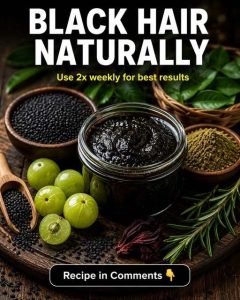
Remedy 1: Two-Step Henna and Indigo Treatment for Normal Scalp
Ingredients and Scientific Working
Pure henna powder — 50 grams: Henna contains lawsone, an orange-red dye molecule that attaches to hair keratin and creates a foundation for darker botanical colour.
Pure indigo powder — 50 grams: Indigo develops blue colour molecules on the hair. Applying it over henna can produce a deep brown or near-black result.
Warm water — approximately 150 millilitres: Water releases the plant pigments and allows them to spread evenly through the hair.
Amla powder — 1 teaspoon: Amla contains polyphenols and acids that may slightly reduce the bright orange tone of henna. It has not been clinically proven to restore melanin.
Pure aloe vera gel — 1 teaspoon: Aloe can improve skin hydration and may reduce the tight feeling that plant dyes sometimes cause around the hairline.
Coconut oil — 1 teaspoon: Coconut oil penetrates the hair shaft because of its lauric-acid structure and has been shown to reduce protein loss from damaged and undamaged hair. (PubMed)
Procedure
Mix the henna and amla powders with enough warm water to form a smooth yoghurt-like paste. Cover it and let it rest for four to six hours. Apply a little aloe gel around the hairline, then spread the henna paste through clean, dry hair. Leave it for 60 to 90 minutes and rinse with water.
Immediately prepare the indigo paste using fresh indigo powder and warm water. Apply it over the henna-treated hair, leave for 45 to 60 minutes and rinse thoroughly. Avoid shampooing for approximately 24 hours while the colour oxidises. Apply coconut oil briefly before the next wash.
How Often to Apply
Use once initially and repeat only on new gray roots every three to four weeks. Do not apply twice weekly, because frequent dyeing can make hair feel dry.
Initial Results
Gray strands may appear deep brown or black after the first treatment. The final shade normally develops over the following one to three days. This is external colouring, not biological repigmentation.
Remedy 2: One-Step Botanical Dark-Brown Gloss for Combination Scalp
Ingredients and Scientific Working
Pure henna powder — 25 grams: Provides the red-orange pigment needed for indigo to create a stable brown shade.
Pure indigo powder — 50 grams: The higher proportion of indigo shifts the colour toward dark brown.
Amla powder — 1 teaspoon: Helps create a cooler-looking botanical tone but does not reverse graying.
Hibiscus powder — 1 teaspoon: Adds plant mucilage that can make the paste easier to spread. Evidence that hibiscus restores gray hair is lacking.
Aloe vera gel — 1 tablespoon: Adds lightweight moisture without coating oily sections heavily.
Warm water — approximately 150 millilitres: Activates and carries the plant pigments.
A small human study found that herbal formulations containing henna, amla, hibiscus and other plant ingredients could colour gray hair. However, the evidence was preliminary, and henna remained the principal established colouring ingredient. (PubMed)
Procedure
Prepare the henna and amla mixture with half the water and allow it to rest for four hours. In a separate bowl, mix the indigo with the remaining water immediately before application. Combine both pastes, add hibiscus and aloe gel, and apply mainly to gray roots and dry sections.
Leave the mixture on for 60 minutes before rinsing thoroughly. Keep the paste away from the eyes, eyebrows and broken skin.
How Often to Apply
Apply once every three to four weeks. Between applications, touch up only clearly visible roots rather than repeatedly colouring the entire length.
Initial Results
White hairs may become medium or dark brown within one day. The colour can deepen over two or three days as indigo oxidises.
Remedy 3: Low-Oil Root Treatment for Oily Scalp
Ingredients and Scientific Working
Pure henna powder — 20 grams: Creates a warm colour base on resistant gray roots.
Pure indigo powder — 40 grams: Darkens the henna-covered strands.
Amla powder — ½ teaspoon: Helps soften the warm tone without adding oil.
Strong black-tea infusion — 100 millilitres: Tea tannins can produce mild temporary staining, although black tea alone cannot permanently colour or repigment gray hair.
Aloe vera gel — 1 teaspoon: Provides enough slip for application without making the scalp excessively greasy.
Warm water — as required: Adjusts the mixture to a smooth paste.
Procedure
Brew one teaspoon of black tea in 100 millilitres of water, strain it and allow it to cool. Prepare the henna and amla with the tea, then leave the mixture covered for four hours. Mix the indigo separately with water and combine it with the henna immediately before application.
Apply only to the gray roots, not repeatedly over the oily scalp or previously coloured ends. Leave for 45 to 60 minutes and rinse thoroughly.
How Often to Apply
Use every three to four weeks. Wash the scalp normally between applications instead of applying additional oils or pigment pastes.
Initial Results
Visible roots may look darker after one application. Some strands may initially appear brown and become deeper during the next 48 hours.
Black tea, henna and indigo can all occasionally trigger contact allergy. Plant-based does not mean allergy-free, so each ingredient requires a patch test. (PubMed)
Remedy 4: Coconut-Protected Colour Treatment for Dry Scalp and Hair
Ingredients and Scientific Working
Virgin coconut oil — 1 tablespoon: Used before colouring to reduce dryness and protein loss from vulnerable hair lengths.
Pure henna powder — 40 grams: Binds reddish pigment to gray hair fibres.
Pure indigo powder — 60 grams: Combines with the henna layer to produce a darker finish.
Amla powder — 1 teaspoon: Helps moderate the reddish tone.
Aloe vera gel — 1 tablespoon: Provides temporary hydration around dry scalp areas.
Warm water — approximately 180 millilitres: Creates both colouring pastes.
Procedure
Apply coconut oil lightly to dry mid-lengths and ends, but avoid saturating the gray roots because excessive oil may reduce dye uptake. Leave it for 30 minutes.
Prepare and apply the henna-amla paste for 60 minutes, rinse, and then apply freshly mixed indigo for another 45 to 60 minutes. After rinsing, use a small amount of aloe gel only on dry outer scalp areas. Do not store leftover plant-dye paste for later use.
How Often to Apply
Colour the roots once every four weeks. Use coconut oil as a pre-shampoo treatment one or two times weekly for hair conditioning.
Initial Results
Gray hairs may darken after the first colouring session. Dry lengths may feel softer within one to three coconut-oil treatments, although oil does not restore natural pigment. (PubMed)
Remedy 5: Minimal Patch-Tested Routine for Sensitive Scalp
Ingredients and Scientific Working
Pure henna powder — 20 grams: Provides copper or reddish-brown coverage and may be better tolerated than mixtures sold as “black henna.”
Pure indigo powder — 20 grams, optional: Can darken henna, but it must be patch-tested separately because natural indigo can also cause allergy.
Warm water — approximately 80 millilitres: Releases plant colour without fragrance or essential oils.
Pure aloe vera gel — ½ teaspoon: May provide light hydration, although sensitive individuals must patch-test aloe too.
Coconut oil — ½ teaspoon: Used only on hair ends after colouring to reduce dryness.
Procedure
Test henna, indigo and aloe separately behind the ear or on the inner arm 48 hours before use. Never test all ingredients in one mixture because that makes the cause of a reaction difficult to identify.
For the lowest-risk approach, mix only henna and water and apply it to a small hidden section of hair. This will produce a copper-brown result rather than black. Use indigo only after a separate patch test and only when henna has caused no reaction.
How Often to Apply
Begin with one strand test. When tolerated, apply no more than once every four weeks.
Initial Results
Pure henna may colour white hair after the first application. A darker shade requires separately tested indigo. Stop immediately if burning, swelling, intense itching or blistering develops.
Avoid products labelled “instant black henna.” Research has found undeclared para-phenylenediamine, a strong allergen, in some commercially sold henna products. One recent analysis detected PPD in more than one-third of the tested samples, including products that were not properly labelled. (PubMed)
Final Tips for Preventing Premature Graying
Do not pluck gray hairs. Plucking cannot make neighbouring hairs gray, but repeated pulling can damage follicles and cause thinning. Protect hair from excessive heat, bleach, ultraviolet exposure and rough brushing because gray fibres can be more difficult to manage and more vulnerable to environmental damage.
Stop smoking and avoid regular tobacco exposure. Systematic reviews and observational research have found premature graying to be more common among smokers, although stopping smoking cannot guarantee that existing white strands will repigment. (PubMed)
Get enough sleep, manage stress and keep combs, towels and colouring tools clean. Visible botanical colour develops within one to three days, but diet or lifestyle changes require several months and may help only when a reversible cause is present.
Diet Plan to Support Natural Hair Pigmentation
Follow a balanced diet for at least eight to twelve weeks.
Breakfast: Eat eggs, plain yoghurt, milk or a fortified plant alternative with oats and a vitamin-C-rich fruit. These foods provide protein and may contribute vitamin B12, depending on the choice.
Lunch: Choose lentils, chickpeas, chicken, fish or lean meat with leafy vegetables and whole-grain roti or brown rice.
Snack: Have a small handful of black sesame seeds, pumpkin seeds, almonds or walnuts. These foods supply minerals and healthy fats, but black sesame has not been clinically proven to turn white hair black.
Dinner: Include fish, eggs, beans, tofu or lean meat with mixed vegetables. Vegetarians and vegans should discuss vitamin B12 testing and supplementation with a qualified clinician.
Do not take high-dose iron, copper, biotin or vitamin supplements merely because hair is gray. Studies have found associations between premature graying and lower vitamin B12, ferritin, vitamin D, calcium or copper levels, but association does not prove that everyone with gray hair is deficient. Supplementation should follow blood testing and medical advice. (PubMed)
Continue the hair-care routine for eight to twelve weeks, with plant colour applied only every three to four weeks. Consult a dermatologist or doctor when graying begins suddenly, occurs before approximately 25 years of age in an Asian adult, appears in patches, accompanies significant hair loss, or occurs with fatigue, numbness, weight changes, menstrual problems or other symptoms. A clinician may consider checking a complete blood count, ferritin, vitamin B12, folate and thyroid function.
References for the above remedy
- American Academy of Dermatology. What causes gray hair, and can I stop it?
https://www.aad.org/public/everyday-care/hair-scalp-care/hair/gray-hair-causes - Poonia K, Bhalla M. Premature Graying of Hair: A Comprehensive Review and Recent Insights.
https://pmc.ncbi.nlm.nih.gov/articles/PMC11444426/ - Kumar AB, Shamim H, Nagaraju U. Premature Graying of Hair: Review with Updates.
https://pmc.ncbi.nlm.nih.gov/articles/PMC6290285/ - Singh V, Ali M, Upadhyay S. Study of Colouring Effect of Herbal Hair Formulations on Graying Hair.
https://pubmed.ncbi.nlm.nih.gov/26130937/ - Rele AS, Mohile RB. Effect of Mineral Oil, Sunflower Oil, and Coconut Oil on Prevention of Hair Damage.
https://pubmed.ncbi.nlm.nih.gov/12715094/ - Leiva-Salinas M, et al. Quantification of Lawsone and p-Phenylenediamine in Natural Henna Products for Hair Colouring.
https://pubmed.ncbi.nlm.nih.gov/39756814/ - Charansol A, et al. Contact Dermatitis From Natural Indigo Contained in Hair Dye Preparations.
https://pubmed.ncbi.nlm.nih.gov/39976114/ - Bhat RM, et al. Premature Graying of Hair: Risk Factors, Co-morbid Conditions, Pharmacotherapy and Reversal.
https://pubmed.ncbi.nlm.nih.gov/32654282/ - Mumcuoglu C, et al. The Effects of Smoking on Hair Health: A Systematic Review.
https://pubmed.ncbi.nlm.nih.gov/34307472/ - Chakrabarty S, et al. A Clinical Study of Premature Canities and Its Association with Hemoglobin, Ferritin and Calcium Levels.
https://pubmed.ncbi.nlm.nih.gov/36386090/