
Introduction
Dark spots, also known as post-inflammatory hyperpigmentation (PIH) or sun spots, develop when the skin produces excess melanin after acne, sun exposure, hormonal changes, or minor injuries. While these spots are harmless, they can make the skin appear uneven and dull. Natural ingredients such as potato and aloe vera have long been used in traditional skincare because they contain antioxidants, vitamins, and soothing compounds that help support a brighter, healthier-looking complexion.
Potato contains vitamin C, polyphenols, and naturally occurring enzymes that may help improve skin brightness. Aloe vera contains aloesin, a compound that has been studied for its potential to reduce melanin production, along with polysaccharides that hydrate and support skin repair. Since different skin types have different needs, the following remedies are tailored for Normal, Combination, Oily, Dry, and Sensitive skin.
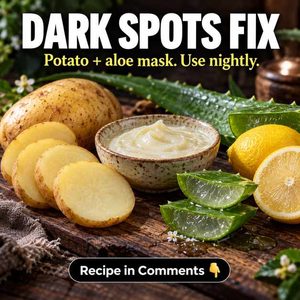
Remedy 1: For Normal Skin
Scientific Working of Potato and Aloe Vera
Potato provides vitamin C and antioxidant compounds that help protect skin from oxidative stress. Aloe vera contains aloesin, which may help reduce excess melanin production. Honey attracts moisture to the skin, while yogurt supplies lactic acid for gentle exfoliation.
Ingredients
- Fresh potato juice – 2 tablespoons
- Fresh aloe vera gel – 2 tablespoons
- Raw honey – 1 teaspoon
- Plain yogurt – 1 teaspoon
- Rose water – 1 teaspoon
- Vitamin E oil – 2 drops
Procedure
Mix all ingredients until smooth. Apply evenly to clean skin and leave for 15–20 minutes before rinsing with cool water. For an overnight routine, apply only the potato juice and aloe vera gel mixture in a thin layer and wash it off the following morning if your skin tolerates it.
How Often to Apply
Apply 3–4 nights per week.
Initial Results
Skin may feel softer and more hydrated within one week. Gradual fading of mild dark spots may require 6–12 weeks of consistent use.
Remedy 2: For Combination Skin
Scientific Working of Potato, Aloe Vera, and Green Tea
Green tea contains catechins that help reduce oxidative stress. Potato supplies antioxidants, while aloe vera hydrates without making oily areas greasy. Oatmeal gently removes dead skin cells.
Ingredients
- Potato juice – 2 tablespoons
- Aloe vera gel – 2 tablespoons
- Green tea – 1 tablespoon
- Oatmeal powder – 1 teaspoon
- Honey – 1 teaspoon
- Cucumber juice – 1 teaspoon
Procedure
Mix into a smooth paste. Apply for 20 minutes, then rinse with lukewarm water.
How Often to Apply
Every alternate night.
Initial Results
The skin may appear smoother, fresher, and more balanced after several applications.
Remedy 3: For Oily Skin
Scientific Working of Potato, Aloe Vera, and Multani Mitti
Potato provides antioxidants while aloe vera hydrates without clogging pores. Multani mitti absorbs excess oil, and neem contains plant compounds traditionally used for acne-prone skin.
Ingredients
- Potato juice – 2 tablespoons
- Aloe vera gel – 2 tablespoons
- Multani mitti – 1 teaspoon
- Neem powder – 1 teaspoon
- Honey – ½ teaspoon
- Green tea – 1 teaspoon
Procedure
Prepare a smooth paste and apply a thin layer for 15 minutes. Wash gently with cool water.
How Often to Apply
Use 2–3 nights weekly.
Initial Results
Skin may feel cleaner with reduced oiliness and a more refreshed appearance.
Remedy 4: For Dry Skin
Scientific Working of Potato, Aloe Vera, and Avocado
Dry skin requires extra nourishment. Potato supports brighter-looking skin, aloe vera hydrates the skin barrier, avocado provides vitamin E and healthy fats, and honey helps retain moisture.
Ingredients
- Potato juice – 2 tablespoons
- Aloe vera gel – 2 tablespoons
- Mashed avocado – 1 tablespoon
- Honey – 1 teaspoon
- Milk cream – 1 teaspoon
- Oatmeal powder – 1 teaspoon
Procedure
Mix into a creamy mask. Apply evenly for 20 minutes, then rinse with lukewarm water.
How Often to Apply
Use 2–3 nights weekly.
Initial Results
Skin may become softer and more hydrated after several applications.
Remedy 5: For Sensitive Skin
Scientific Working of Potato, Aloe Vera, and Oatmeal
Sensitive skin benefits from gentle ingredients. Aloe vera helps calm irritation, potato provides antioxidants, oatmeal supports the skin barrier, and chamomile contains soothing plant compounds.
Ingredients
- Potato juice – 2 tablespoons
- Aloe vera gel – 2 tablespoons
- Colloidal oatmeal – 1 teaspoon
- Chamomile tea – 1 tablespoon
- Cucumber juice – 1 teaspoon
- Honey – ½ teaspoon
Procedure
Mix gently and apply a thin layer for 10–15 minutes before rinsing with cool water.
How Often to Apply
Use twice weekly.
Initial Results
Skin may feel calmer, smoother, and better hydrated after the first week.
Final Tips
- Always perform a patch test before applying natural remedies.
- Use broad-spectrum sunscreen (SPF 30 or higher) every day because UV exposure can worsen pigmentation.
- Avoid picking acne or scratching dark spots.
- Keep your skin moisturized to support barrier repair.
- Get 7–9 hours of sleep and stay well hydrated.
- Use gentle cleansers and avoid harsh scrubbing.
Natural remedies require patience. Most noticeable improvements in pigmentation take 6–12 weeks of consistent care. If dark spots rapidly increase, become irregular, or fail to improve after several months, consult a qualified dermatologist.
Diet Plan for Brighter, Even-Toned Skin
Breakfast
- Oatmeal with strawberries or kiwi
- Greek yogurt
- Green tea
Mid-Morning Snack
- Orange or guava
- Handful of almonds
Lunch
- Grilled fish, chicken, lentils, or beans
- Brown rice
- Mixed leafy green salad
Evening Snack
- Carrot and cucumber sticks
- Pumpkin seeds
Dinner
- Steamed vegetables
- Salmon or chickpeas
- Sweet potato
Hydration
Drink 2–3 liters of water daily and include foods rich in vitamin C, vitamin E, zinc, and antioxidants to support healthy skin.
Continue the skincare routine and healthy diet for 8–12 weeks. If pigmentation persists or worsens despite consistent care, seek advice from a dermatologist.
References for the above remedy
- Choi S, et al. Aloesin Inhibits Melanin Synthesis by Suppressing Tyrosinase Activity.
https://pubmed.ncbi.nlm.nih.gov/15689218/ - Surjushe A, Vasani R, Saple DG. Aloe Vera: A Short Review. Indian Journal of Dermatology.
https://www.ncbi.nlm.nih.gov/pmc/articles/PMC2763764/ - Pullar JM, Carr AC, Vissers MCM. The Roles of Vitamin C in Skin Health. Nutrients.
https://www.ncbi.nlm.nih.gov/pmc/articles/PMC5579659/ - American Academy of Dermatology. Hyperpigmentation: Overview.
https://www.aad.org/public/diseases/a-z/hyperpigmentation-overview - Mayo Clinic. Skin Care Basics.
https://www.mayoclinic.org/healthy-lifestyle/adult-health/in-depth/skin-care/art-20048237 - National Center for Biotechnology Information. Antioxidants and Skin Health.
https://www.ncbi.nlm.nih.gov/pmc/articles/PMC3583891/ - Cleveland Clinic. Hyperpigmentation: Causes and Treatment.
https://my.clevelandclinic.org/health/diseases/21885-hyperpigmentation