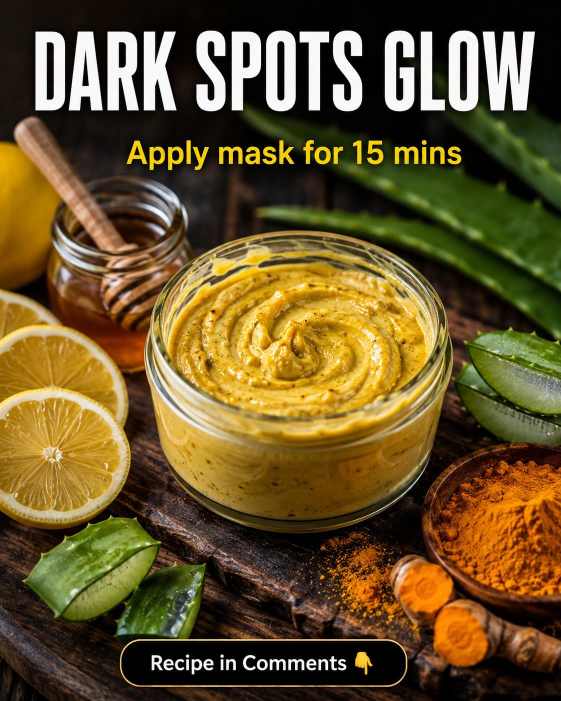
Introduction
Dark spots can appear after acne, insect bites, irritation, cuts, hormonal changes or repeated sun exposure. They are usually areas where the skin has produced extra melanin, and they may affect confidence even when the original inflammation has disappeared. “Dark spots glow” suggests quick brightening, but pigment is not safely removed overnight. The safest approach is to calm irritation, protect skin from ultraviolet and visible light, and support its barrier.
Sunscreen is the foundation of dark-spot care because sunlight can maintain or deepen hyperpigmentation. Dermatologists also warn that irritating products can create more inflammation and leave darker marks, particularly in deeper skin tones.[1] Licorice, aloe, green tea and turmeric have promising research, but homemade preparations are less standardized. These remedies may improve radiance but are not guaranteed bleaching treatments.
How to Prepare and Apply a Brightening Remedy Safely
Use one fresh portion. Apply to clean, dry or slightly damp skin with clean fingertips, avoiding the eyelids, lips, nostrils and broken areas. Leave on for 5–10 minutes, rinse with lukewarm water and moisturise. Never scrub dark spots; friction can worsen inflammation and pigmentation.
Patch-test each ingredient on the inner arm for 24 hours before facial use. Do not add lemon juice, undiluted vinegar, baking soda, toothpaste, bleach, rough sugar or salt. Citrus and harsh acids can burn skin and may trigger a sun-related reaction. Stop for stinging, swelling, hives, blistering, worsening redness or new darkening. During pregnancy, avoid self-starting strong pigment medicines or retinoids without clinical advice.
Remedy 1: For Normal Skin — Licorice, Aloe and Oat Glow Mask
Ingredients and scientific benefit
Use 1 teaspoon cosmetic-grade licorice-root gel or a licorice-containing, fragrance-free base, 1 teaspoon plain aloe vera gel, 1 teaspoon colloidal oatmeal, ½ teaspoon honey and ½ teaspoon clean water. Licorice compounds such as glabridin and liquiritin have been studied for effects on melanin formation and inflammation, while aloe provides a cooling water-based layer. Oatmeal supports comfort, and honey attracts water to the surface. Evidence supports licorice as a promising pigment ingredient, but not a rapid cure from kitchen quantities.[2]
Procedure
Mix into a smooth paste and apply a thin layer. Leave for 8 minutes, rinse gently and apply moisturiser. Use sunscreen in the morning.
How Often to Apply
Use once or twice weekly for three to five weeks. Do not combine with several new brightening products.
Initial Results
The skin may feel softer and look temporarily fresher after one use. Spots will not truly reduce within one to three days.
Remedy 2: For Oily or Acne-Prone Skin — Green Tea, Aloe and Oat Gel
Ingredients and scientific benefit
Use 1 teaspoon cooled freshly brewed green tea, 1 teaspoon plain aloe gel, 1 teaspoon colloidal oatmeal and ½ teaspoon lightweight fragrance-free moisturiser. Green-tea polyphenols have antioxidant and anti-inflammatory activity in laboratory and topical studies. Aloe and oatmeal reduce the temptation to rub or dry out acne-prone skin. It may soothe, but does not treat acne or guarantee removal of post-acne marks.[3]
Procedure
Apply a thin layer to clean skin, avoiding active open pimples. Leave for 5–7 minutes, rinse fully and moisturise lightly. Do not apply tea leaves or hot liquid.
How Often to Apply
Use once weekly for three weeks. Stop if the face becomes tight, flaky or more irritated.
Initial Results
Oiliness may feel temporarily reduced and the surface may look calmer. Post-acne spots generally fade over weeks or months, especially when new breakouts are controlled.
Remedy 3: For Dry Skin — Aloe, Honey and Oat Moisture Pack
Ingredients and scientific benefit
Use 1 teaspoon aloe gel, ½ teaspoon honey, 1 tablespoon colloidal oatmeal, 1 teaspoon plain moisturiser and ½ teaspoon water. Honey is a humectant, oatmeal can soothe roughness and moisturiser reduces water loss. Better hydration can make dull, uneven skin look more luminous, but it does not remove melanin from a dark spot.[4]
Procedure
Stir gently and spread over the face without massaging. Leave for 10 minutes, rinse with lukewarm water and apply moisturiser while the skin is slightly damp. Avoid honey if you have a known allergy.
How Often to Apply
Use once weekly for three to five weeks. Moisturise daily between applications.
Initial Results
Tightness and flaking may improve after one application. Pigment changes are gradual, and dry skin should not be exfoliated aggressively in pursuit of faster results.
Remedy 4: For Sensitive Skin — Oatmeal and Aloe Calm Mask
Ingredients and scientific benefit
Use 1 tablespoon colloidal oatmeal, 1 teaspoon plain aloe gel, 1 tablespoon fragrance-free moisturiser and 1–2 teaspoons clean water. This formula excludes strong acids, essential oils and abrasive particles. Oatmeal supports the skin barrier and aloe may provide cooling comfort, which can help reduce the irritation that sometimes prolongs post-inflammatory pigmentation.[4]
Procedure
Patch-test first. Apply for 5 minutes, rinse without rubbing and follow with a tolerated moisturiser. Do not use during an active rash, eczema flare, infection or burning episode.
How Often to Apply
Use once weekly for three weeks, or less often if the skin is reactive.
Initial Results
The skin may feel calmer within one to three days. Any burning or new redness is a warning to stop, not a sign that the mask is working.
Remedy 5: For Sun-Exposed or Uneven-Looking Skin — Turmeric, Aloe and Oat Routine
Ingredients and scientific benefit
Use 1 teaspoon aloe gel, 1 teaspoon colloidal oatmeal, ½ teaspoon plain moisturiser, ⅛ teaspoon turmeric and ½ teaspoon water. Curcuminoids in turmeric have anti-inflammatory and antioxidant research interest, but turmeric can stain and can provoke contact dermatitis in some users. Oat and moisturiser dilute friction and support the barrier. Daily broad-spectrum SPF 30 or higher is more important for pigment control than the mask itself.[1] [5]
Procedure
Mix thoroughly and apply a very thin layer for 5 minutes. Rinse carefully, as turmeric may leave yellow residue, then moisturise. In the daytime use broad-spectrum sunscreen, seek shade and consider protective clothing. Tinted sunscreen may help protect against visible light, which can worsen some types of hyperpigmentation.[1]
How Often to Apply
Use once weekly for three weeks. Apply sun protection every day, including on cloudy days when exposed.
Initial Results
Hydration may make skin look brighter, but established spots will not vanish in one to three days. Judge progress with monthly photographs taken in similar lighting.
Final Tips
Keep the routine simple: cleanse gently, moisturise, avoid picking blemishes and protect the skin from sunlight. Do not layer a homemade remedy with retinoids, benzoyl peroxide, strong acids or prescription lighteners without clinical advice. Clean bowls and hands before preparation, discard leftovers and avoid storing water-based mixtures.
Visible radiance may improve within a few days when dryness is the main problem, but dark spots usually need many weeks to fade. If a mark is changing rapidly, bleeding, painful, very itchy, irregular or unlike your other spots, arrange a medical examination rather than treating it at home. See a dermatologist if pigmentation persists after eight to twelve weeks, repeatedly returns, follows a medication or appears with hormonal symptoms. Professional diagnosis matters because melasma, post-inflammatory pigmentation, medication-related changes and skin cancer can look different and require different treatment.[1] [6]
Diet Plan
Continue a varied eating pattern for at least eight to twelve weeks. Include colourful vegetables and fruit, beans, lentils, eggs, fish or another protein source, whole grains, nuts and seeds. Vitamin-C foods such as peppers, berries and citrus support normal collagen production. Healthy fats from nuts, seeds, olive oil or fish support general nutrition. Drink fluids according to thirst and avoid extreme restriction diets.
Food cannot bleach a dark spot or replace sunscreen. Do not rely on high-dose vitamin, glutathione or herbal supplements marketed for instant complexion brightening without professional advice. If the issue persists, darkens or affects your confidence, consult a doctor or dermatologist instead of increasing the strength or frequency of home remedies.
References for the above remedy
- American Academy of Dermatology. “How to Fade Dark Spots in Darker Skin Tones.” https://www.aad.org/public/everyday-care/skin-care-secrets/routine/fade-dark-spots
- Sarkar R, et al. “Cosmeceuticals for Hyperpigmentation: What is Available?” Indian Journal of Dermatology. https://pmc.ncbi.nlm.nih.gov/articles/PMC3663177/
- OyetakinWhite P, et al. “Protective Mechanisms of Green Tea Polyphenols in Skin.” Oxidative Medicine and Cellular Longevity. https://pmc.ncbi.nlm.nih.gov/articles/PMC3390139/
- National Eczema Association. “Colloidal Oatmeal.” https://nationaleczema.org/eczema/treatment/colloidal-oatmeal/
- Hollinger JC, et al. “Are Natural Ingredients Effective in the Management of Hyperpigmentation?” Journal of Clinical and Aesthetic Dermatology. https://pmc.ncbi.nlm.nih.gov/articles/PMC5843359/
- DermNet New Zealand. “Postinflammatory Hyperpigmentation.” https://dermnetnz.org/topics/postinflammatory-hyperpigmentation
Note: These references support information about hyperpigmentation, photoprotection, licorice, green tea, colloidal oatmeal and clinical evaluation. They do not prove that any homemade mask can permanently remove dark spots quickly.
Author: Manus AI