Introduction
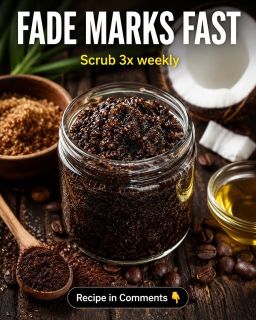
The uploaded image shows a dark coffee-based scrub and recommends using it three times weekly to fade marks. Coffee grounds provide physical exfoliation, but a scrub cannot erase acne scars, stretch marks or deep pigmentation. Rough particles and friction can trigger irritation and post-inflammatory hyperpigmentation.[1] [2]
Caffeine research is stronger for standardised formulations and temporary cellulite appearance than homemade grounds.[3] Coconut oil may reduce water loss but can clog acne-prone skin. Honey and colloidal oatmeal are useful supportive ingredients for moisture and barrier comfort, not proven erasers of marks. These are short-contact cosmetic exfoliants, not cures for acne, melasma, scars or stretch marks.
How to Prepare a Safer Coffee Scrub
Use very finely ground coffee, never sharp or coarse grounds. Mix 1 teaspoon coffee with 2 teaspoons plain yoghurt or aloe gel to create slip. Apply to damp, intact skin with almost no pressure for 10 seconds. Leave it on for no longer than 3–5 minutes, then rinse with lukewarm water and moisturise. Do not scrub daily, use it on the eyelids or lips, or apply it to cuts, sunburn, active eczema, rosacea or inflamed acne.
Patch-test each recipe for 24–48 hours. Prepare one use at a time and discard leftovers. Do not add lemon juice, baking soda, salt, sugar crystals, cinnamon or essential oils. These can increase irritation or photosensitivity. Use sunscreen every morning because UV exposure can maintain dark marks and undermine treatment.[1] [2]
Remedy 1: For Normal Skin — Coffee, Honey and Yoghurt Polish
Ingredients and scientific benefit
Use 1 teaspoon finely ground coffee, 1 teaspoon plain yoghurt, ½ teaspoon honey, ½ teaspoon aloe gel, ½ teaspoon finely milled oats, 1 drop glycerin and 2 drops jojoba oil. Coffee provides physical polishing, but homemade coffee is not proven to fade marks. Yoghurt supplies unstandardised lactic acid; honey and glycerin attract moisture; aloe and oats support comfort; jojoba adds emollience.
Procedure
Mix into a soft paste. Apply to damp cheeks, forehead and jaw with light circular movements for 10 seconds. Leave for 3 minutes, rinse thoroughly and apply moisturiser. Avoid pressing over blemishes.
How Often to Apply
Use once or twice during five days, with at least two days between applications. Do not follow it with another exfoliant.
Initial Results
Skin may feel smoother and look temporarily brighter after one use. Established marks will not visibly disappear within one to three days.
Remedy 2: For Combination Skin — Coffee, Aloe and Green Tea Gel Scrub
Ingredients and scientific benefit
Combine 1 teaspoon fine coffee, 1 teaspoon aloe gel, ½ teaspoon cooled green tea, ½ teaspoon plain yoghurt, ¼ teaspoon honey, ½ teaspoon cucumber juice and 1 drop glycerin. Aloe and cucumber provide a water-rich feel; green tea contains polyphenols studied for antioxidant and anti-inflammatory activity; yoghurt and coffee provide mild exfoliating action; glycerin and honey reduce dryness.
Procedure
Stir into a thin gel. Apply mainly to the cheeks and forehead, using a very brief touch on the nose and chin. Massage for no more than 10 seconds, leave for 3 minutes and rinse without rubbing. Moisturise the drier zones.
How Often to Apply
Apply once every three days for five days. Skip oily or congested areas if they become uncomfortable.
Initial Results
The face may feel fresher. Oiliness, pores and marks are unlikely to change within 72 hours.
Remedy 3: For Oily Skin — Coffee and Kaolin Oil-Control Scrub
Ingredients and scientific benefit
Use 1 teaspoon fine coffee, ½ teaspoon kaolin clay, 1 teaspoon aloe gel, ½ teaspoon cooled green tea, ½ teaspoon colloidal oatmeal, ¼ teaspoon honey and 1 drop glycerin. Kaolin can absorb some surface oil; aloe, oatmeal and glycerin soften the drying feel; green tea contributes antioxidant potential; coffee gives physical exfoliation. It does not cure acne or prevent new marks.
Procedure
Mix until smooth. Apply a thin layer to the forehead and cheeks, avoiding active pustules and painful spots. Use a single gentle pass for 10 seconds, leave for 2 minutes and rinse before the clay dries hard. Apply a non-comedogenic moisturiser.
How Often to Apply
Use once during five days. Never scrub harder to compensate for a lack of immediate results.
Initial Results
Surface shine may look reduced temporarily. Blackheads, acne scars and post-inflammatory marks require appropriate treatment and will not be removed by this scrub.
Remedy 4: For Dry Skin — Coffee, Oat and Avocado Comfort Scrub
Ingredients and scientific benefit
Mix ½ teaspoon fine coffee, 1 teaspoon colloidal oatmeal, 1 teaspoon mashed avocado, ½ teaspoon honey, ½ teaspoon aloe gel, 2 drops sunflower oil and 1 drop glycerin. Oatmeal supports barrier comfort; avocado and sunflower oil provide emollient lipids; honey, aloe and glycerin support surface moisture. The small coffee quantity limits friction, but dry skin may still be irritated by physical exfoliation.
Procedure
Blend into a creamy paste. Apply to damp cheeks for 5–10 seconds only. Leave for 3 minutes, rinse gently and moisturise while the skin is slightly damp. Do not use on flaking, cracked or inflamed skin.
How Often to Apply
Use once during five days. Regular moisturising is more important than repeated scrubbing for dry skin.
Initial Results
Flakiness may look less obvious after moisturising and the skin may feel softer. It cannot rebuild collagen or erase stretch marks.
Remedy 5: For Sensitive Skin — Coffee-Free Oat and Aloe Alternative
Ingredients and scientific benefit
Use 1 teaspoon colloidal oatmeal, 1 teaspoon fragrance-free aloe gel, ½ teaspoon glycerin, ½ teaspoon cooled boiled water, ¼ teaspoon honey, 1 drop squalane and no coffee. Removing coffee is the safer choice when the barrier is reactive. Oatmeal, glycerin, aloe and honey may support hydration and comfort, but aloe can still cause burning, itching or rash in some people.[4]
Procedure
Patch-test the mixture first. If tolerated, apply a thin layer to one cheek for 3 minutes without massaging. Rinse, moisturise and observe for another day before considering a second use. Avoid it during eczema, rosacea, sunburn or unexplained redness.
How Often to Apply
Try once during five days. Stop immediately if stinging, itching, swelling or worsening redness occurs.
Initial Results
The early result should be comfort and hydration, not rapid mark fading. Persistent sensitivity should be assessed professionally.
Final Tips
A coffee scrub can polish the surface, but marks have different causes. Flat brown or red acne marks may improve when acne and inflammation are controlled; indented or raised scars need professional assessment; melasma often requires strict sun protection and medical treatment. Aggressive exfoliation can worsen discoloration, so stop if the skin stings, burns or becomes darker.[1] [2]
Use broad-spectrum SPF 30 or higher, cleanse gently and moisturise consistently. Do not use coffee grounds on the face if you have active acne, rosacea, eczema, broken skin or a history of easy hyperpigmentation. Avoid applying caffeine-containing mixtures near the eyes. See a dermatologist for changing marks, bleeding, pain, rash or persistent pigment.
Smoothness may appear within three days, but fading marks takes weeks to months. If a mark persists after four to eight weeks of gentle care, see a doctor rather than increasing scrub frequency.
Diet Plan
For five days, use no more than one scrub application suited to your skin type. Eat vegetables, whole fruit, legumes, whole grains, protein-rich foods, nuts or seeds and drink adequate water. A balanced diet supports health, but no food or drink erases a mark. Limit smoking, excess alcohol and high added-sugar intake, and do not use a “detox” plan as a substitute for dermatology care.
Continue sunscreen and gentle moisturising daily for four to eight weeks. If marks persist, spread, itch, hurt or change, see a doctor or dermatologist. People with eczema, rosacea, very dark-mark-prone skin, allergies or a recent peel, laser or procedure should ask a qualified clinician before exfoliating.
References for the above remedy
- American Academy of Dermatology. “How to Safely Exfoliate at Home.” https://www.aad.org/skin-care-secrets/safely-exfoliate-at-home
- Davis EC, Callender VD. “Postinflammatory Hyperpigmentation: A Review of the Epidemiology, Clinical Features, and Treatment Options in Skin of Color.” Journal of Clinical and Aesthetic Dermatology (2010 ). https://pmc.ncbi.nlm.nih.gov/articles/PMC2921758/
- Elias ML, et al. “Caffeine in Skincare: Its Role in Skin Cancer, Sun Protection, and Cellulite Treatment.” Cosmetics (2023 ). https://pmc.ncbi.nlm.nih.gov/articles/PMC10718232/
- National Center for Complementary and Integrative Health. “Aloe Vera: Usefulness and Safety.” https://www.nccih.nih.gov/health/aloe-vera
- Lin TK, et al. “Anti-Inflammatory and Skin Barrier Repair Effects of Topical Application of Some Plant Oils.” International Journal of Molecular Sciences (2017 ). https://pmc.ncbi.nlm.nih.gov/articles/PMC5796020/
- Ilnytska O, et al. “Colloidal Oatmeal (Avena sativa ) Improves Skin Barrier Through Multi-Therapy Activity.” Journal of Drugs in Dermatology (2016). https://pubmed.ncbi.nlm.nih.gov/27272074/
Note: These references support selected exfoliation, caffeine, barrier and safety claims; they do not prove that homemade coffee grounds rapidly fade marks or scars.