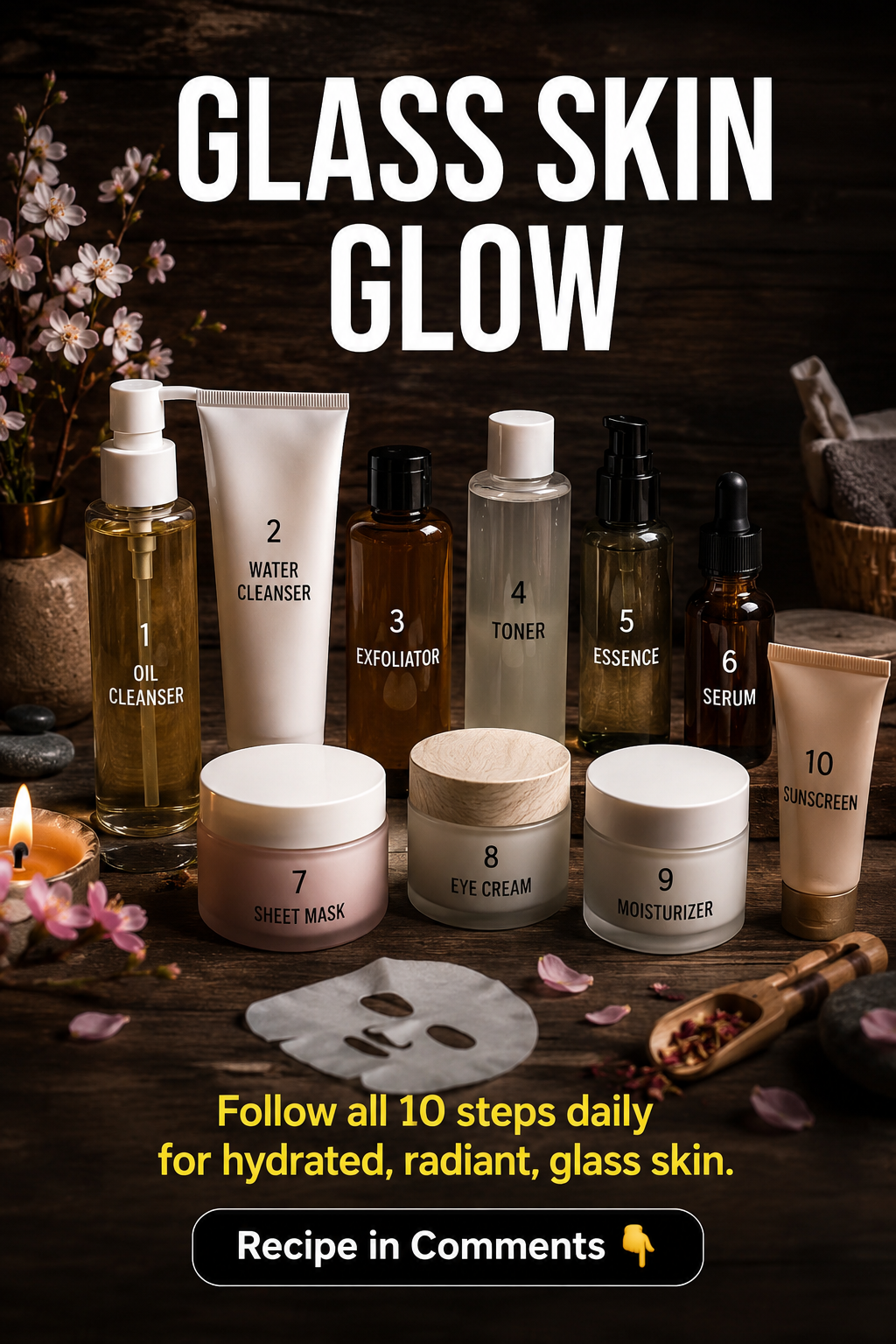
Healthy, glowing skin is often seen as a reflection of good skincare habits rather than makeup or temporary fixes. The “glass skin” trend focuses on achieving a smooth, deeply hydrated, and luminous complexion that looks almost transparent and reflective. This effect is not about a single product or quick fix—it is built through layered skincare that improves hydration, skin barrier strength, and gentle exfoliation. Ingredients commonly used in this routine, such as hyaluronic acid, green tea, rice extract, niacinamide, and ceramides, are widely studied for their role in improving skin moisture retention, reducing inflammation, and supporting natural skin repair. When used consistently, they help create a visibly smoother texture and natural glow.
Below are five scientifically inspired home-focused skincare routines tailored for different skin types to help you build the glass skin effect safely and effectively.
Remedy 1: For Normal Skin (Balanced Glow Hydration Routine)
Ingredients:
- Rice water – 3 tablespoons (rich in amino acids and brightening enzymes)
- Aloe vera gel – 1 tablespoon (hydrates and supports skin repair)
- Green tea extract – 1 teaspoon (antioxidant protection against aging)
- Honey – ½ teaspoon (natural humectant that locks moisture)
- Rose water – 2 tablespoons (balances skin pH)
- Hyaluronic acid serum (natural or cosmetic grade) – 2–3 drops (deep hydration)
Procedure:
Mix all ingredients in a clean bowl. Apply after cleansing as a lightweight hydrating layer. Massage gently for 1–2 minutes and allow absorption.
How Often to Apply:
Daily, morning and night for 5–7 days continuously.
Initial Results:
Skin feels softer, more hydrated, and slightly brighter within 2–3 days.
Scientific Working:
Rice water contains inositol which supports cell growth and improves texture. Hyaluronic acid binds water molecules in the skin, increasing plumpness and reducing fine dryness lines.
Remedy 2: For Combination Skin (Oil Balance + Hydration Control)
Ingredients:
- Witch hazel water – 2 tablespoons (controls excess oil production)
- Niacinamide (vitamin B3 serum) – 2–3 drops (regulates sebum)
- Aloe vera gel – 1 tablespoon
- Cucumber juice – 1 tablespoon (soothes irritation)
- Green tea water – 2 tablespoons
- Light jojoba oil – 2 drops (balances oil production)
Procedure:
Apply a thin layer on T-zone first, then rest of face. Use light tapping motions.
How Often to Apply:
Once daily at night for 7 days.
Initial Results:
Reduced oiliness in T-zone and improved hydration balance within 3 days.
Scientific Working:
Niacinamide reduces sebaceous gland activity, while cucumber provides anti-inflammatory flavonoids that calm uneven skin zones.
Remedy 3: For Oily Skin (Deep Detox Clarifying Routine)
Ingredients:
- Clay mask (bentonite or kaolin) – 1 tablespoon (absorbs excess oil)
- Apple cider vinegar – ½ teaspoon (balances skin microbiome)
- Tea tree oil – 1 drop (antibacterial action)
- Lemon juice – ½ teaspoon (mild exfoliation via citric acid)
- Rose water – 2 tablespoons
- Activated charcoal powder – ½ teaspoon (removes impurities)
Procedure:
Mix into paste and apply thin layer. Leave for 10–12 minutes only. Rinse with lukewarm water.
How Often to Apply:
2–3 times per week.
Initial Results:
Clearer pores and reduced shine within 48 hours.
Scientific Working:
Clay binds sebum and toxins through adsorption. Tea tree oil disrupts acne-causing bacteria cell membranes, reducing breakouts.
Remedy 4: For Dry Skin (Deep Barrier Repair Glow Mask)
Ingredients:
- Avocado pulp – 1 tablespoon (rich in fatty acids)
- Shea butter – ½ teaspoon (intense skin barrier repair)
- Milk cream – 1 tablespoon (lactic acid gentle exfoliation)
- Honey – 1 teaspoon
- Almond oil – 2–3 drops (vitamin E support)
- Oat flour – 1 teaspoon (soothing beta-glucan)
Procedure:
Blend into smooth paste and apply for 15–20 minutes. Rinse gently.
How Often to Apply:
Every alternate day for 1 week.
Initial Results:
Skin feels deeply nourished and less flaky within 2 days.
Scientific Working:
Oats contain beta-glucan which reduces irritation and strengthens skin barrier function, while avocado lipids restore moisture loss.
Remedy 5: For Sensitive Skin (Calming Glass Skin Repair Routine)
Ingredients:
- Chamomile tea water – 3 tablespoons (anti-inflammatory effect)
- Aloe vera gel – 1 tablespoon
- Calendula extract – 1 teaspoon (skin healing properties)
- Oat water – 2 tablespoons (reduces irritation)
- Rose water – 1 tablespoon
- Panthenol (Vitamin B5) – 2 drops (skin repair booster)
Procedure:
Apply gently using cotton pad or fingertips. Avoid rubbing.
How Often to Apply:
Once daily for 7–10 days.
Initial Results:
Reduced redness and smoother skin texture within 48–72 hours.
Scientific Working:
Chamomile contains bisabolol which reduces inflammation. Panthenol improves skin barrier recovery and moisture retention.
Final Tips
Achieving glass skin requires consistency, not aggressive treatment. Always cleanse skin gently and avoid over-exfoliation. Hydration from both skincare and water intake plays a key role in maintaining skin elasticity. Sleep quality directly affects skin regeneration, so aim for 7–8 hours daily. Always perform a patch test before applying any new ingredient, especially for sensitive skin types. Visible glow improvement typically begins within 3–5 days, while deeper texture refinement takes 2–4 weeks of consistent routine.
Diet Plan
A skin-focused diet supports external skincare efforts. Include antioxidant-rich foods such as berries, citrus fruits, and leafy greens. Healthy fats from nuts, seeds, and fish help maintain skin elasticity. Drink at least 2–3 liters of water daily to support internal hydration. Avoid excessive sugar, fried foods, and processed items that increase inflammation and breakouts. Green tea can be included daily for its polyphenol content, which supports skin clarity. Continue this routine for 3–4 weeks for best results. If persistent skin issues remain, consulting a dermatologist is recommended.
References for the above remedy
- NIH – Hyaluronic Acid and Skin Hydration Research
https://www.ncbi.nlm.nih.gov/pmc/articles/PMC3583886/ - National Library of Medicine – Niacinamide in Skin Care
https://pubmed.ncbi.nlm.nih.gov/17147561/ - Harvard Medical School – Skin Barrier and Moisturization Science
https://www.health.harvard.edu/staying-healthy - NIH – Aloe Vera and Wound Healing Properties
https://www.ncbi.nlm.nih.gov/pmc/articles/PMC2763764/ - Dermatology Research Journal – Green Tea Polyphenols in Skin Protection
https://www.ncbi.nlm.nih.gov/pmc/articles/PMC4050182/ - Mayo Clinic – Skin Care Basics and Moisturizing Science
https://www.mayoclinic.org/healthy-lifestyle/adult-health/in-depth/skin-care/art-20048237 - National Institutes of Health – Oat and Skin Barrier Function
https://www.ncbi.nlm.nih.gov/pmc/articles/PMC3169162/ - PubMed – Tea Tree Oil Antimicrobial Effects
https://pubmed.ncbi.nlm.nih.gov/22998411/ - World Health Organization – Healthy Diet and Skin Health Link
https://www.who.int/news-room/fact-sheets/detail/healthy-diet