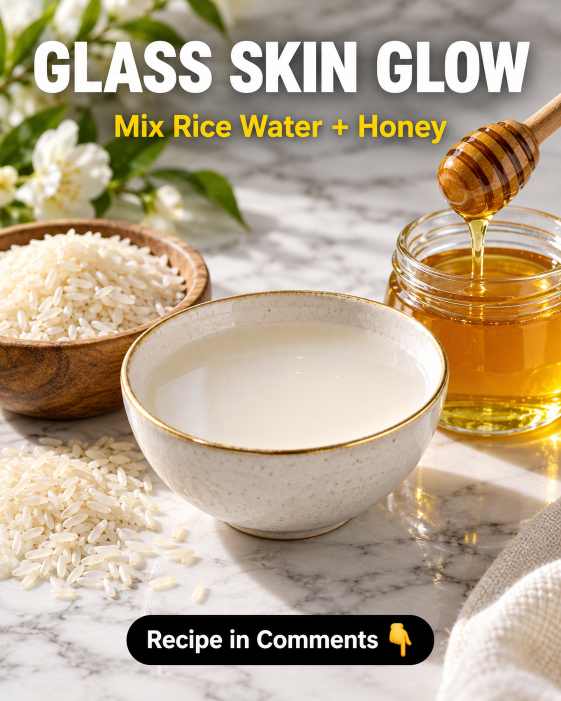
Glass skin describes a complexion that looks smooth, hydrated, even-toned, and naturally luminous. It does not mean that real skin must be completely poreless or flawless. Dehydration, excess oil, irritation, sun exposure, poor sleep, and an impaired skin barrier can all make the face appear dull or uneven. Rice water and honey may temporarily improve softness and surface hydration, but they cannot permanently remove pores, scars, pigmentation, or wrinkles.
Rice water contains starch and small amounts of rice-derived compounds. Research on rice starch suggests that it may support the recovery of a damaged skin barrier, but direct clinical evidence for homemade rice water is still limited. Honey acts as a humectant, which means it helps attract and retain moisture. It also possesses antimicrobial and soothing properties, although most strong clinical evidence concerns properly prepared medical-grade honey rather than ordinary kitchen honey.
The following remedies use fresh, non-fermented rice water and simple ingredients selected according to different skin types. These mixtures are cosmetic home-care options, not treatments for acne, eczema, infections, melasma, or other medical skin conditions.
How to Prepare Safe Rice Water
Rinse two tablespoons of plain white rice thoroughly to remove dust and surface impurities. Place the cleaned rice in one cup of boiled and cooled water for approximately 30 minutes. Stir it several times, strain the cloudy liquid into a clean covered container, and refrigerate it immediately.
Use the rice water within 24 to 48 hours. Discard it sooner if its color, texture, or smell changes. Do not intentionally ferment it because homemade fermentation can permit unwanted microorganisms to grow. Prepare every facial mixture immediately before application and never return leftovers to the storage container.
Remedy 1: Rice Water and Honey Hydration Mask for Normal Skin
Ingredients and Their Scientific Working
- Two tablespoons of fresh rice water provide a light, starch-containing liquid that may leave the surface feeling smoother while supporting moisture retention.
- One teaspoon of pure honey acts as a humectant and helps reduce the tight feeling associated with surface dehydration.
- One teaspoon of plain unsweetened yogurt provides water, fats, and a small amount of naturally occurring lactic acid. It can soften the surface, but frequent use may irritate some people.
- One teaspoon of finely ground oats supplies starches and beta-glucan-rich compounds that can help soothe and protect the skin barrier.
- One teaspoon of fresh cucumber juice adds water and produces a temporary cooling, refreshing effect.
Procedure
Combine the rice water and honey in a clean bowl. Add the yogurt, finely ground oats, and cucumber juice. Mix until a soft, spreadable paste forms. Wash the face with a gentle cleanser and pat it dry. Apply a thin, even layer while avoiding the eyes, lips, nostrils, and broken skin.
Leave the mask on for 8 to 10 minutes. Do not allow it to dry into a hard layer. Rinse gently with lukewarm water and apply a fragrance-free moisturizer.
How Often to Apply
Apply once daily for three days. If the skin remains comfortable, continue three times per week for up to four weeks.
Initial Results
Within one to three applications, the face may feel softer and appear temporarily plumper or more luminous because of improved surface hydration. Permanent pore reduction or pigmentation removal should not be expected.
Remedy 2: Rice Water Balancing Mask for Combination Skin
Ingredients and Their Scientific Working
- Two tablespoons of fresh rice water provide starch and water that may support a smoother-looking surface.
- Half a teaspoon of honey helps hold moisture in dry areas without using a heavy oily ingredient.
- One tablespoon of cooled green tea supplies tea polyphenols. Research on properly formulated topical green-tea extracts suggests possible benefits for inflammation and sebum control, although homemade tea is less standardized.
- One teaspoon of aloe vera gel provides a lightweight, water-rich base. Studies of aloe-containing formulations have reported improvements in skin hydration.
- One teaspoon of finely ground oats helps calm dry or easily irritated areas and supports the skin barrier.
Procedure
Brew plain green tea without sugar, lemon, or flavoring and allow it to cool completely. Mix it with the rice water, honey, aloe vera gel, and ground oats. Apply a thin layer over the face. Use slightly less over the oily T-zone and a little more over dry cheek areas.
Leave it on for 7 to 8 minutes, rinse without scrubbing, and finish with a light fragrance-free moisturizer.
How Often to Apply
Use on alternate days for five days. After that, limit use to two or three times weekly if the skin tolerates it.
Initial Results
Dry areas may feel less tight after the first few applications, while the oily areas may feel refreshed. Any reduction in facial shine is likely to be modest and temporary.
Remedy 3: Lightweight Rice Water Mask for Oily Skin
Ingredients and Their Scientific Working
- Two tablespoons of fresh rice water create a lightweight base without adding heavy oil.
- Half a teaspoon of honey contributes hydration and has recognized antimicrobial properties, but kitchen honey should not be considered an acne medicine.
- One tablespoon of cooled green tea provides polyphenols associated with antioxidant and anti-inflammatory activity. Studies involving standardized green-tea preparations suggest possible reductions in sebum and acne lesions.
- One teaspoon of pure aloe vera gel adds water-based hydration and may help soothe mild irritation.
- One teaspoon of colloidal oatmeal or extremely finely ground plain oats helps protect the barrier, which is important because aggressively drying oily skin may worsen irritation.
Procedure
Mix all five ingredients until smooth. Apply a very thin layer to clean skin, keeping it away from active open pimples, picked spots, and the eye area. Leave it on for five to seven minutes. Rinse thoroughly with lukewarm water and pat dry with a clean towel.
Follow with a lightweight, non-comedogenic moisturizer. Avoid lemon juice, baking soda, toothpaste, undiluted vinegar, and harsh scrubs because they can damage the barrier without safely controlling acne.
How Often to Apply
Apply every other day for three to five days. Continue no more than two or three times a week if no burning, itching, or new breakouts occur.
Initial Results
The skin may feel fresher and less greasy for a short period. Inflamed acne, blackheads, or clogged pores are unlikely to disappear within three days and usually require evidence-based acne treatment.
Remedy 4: Nourishing Rice Water Mask for Dry Skin
Ingredients and Their Scientific Working
- Two tablespoons of fresh rice water supply water and starch that may support surface softness.
- One teaspoon of honey attracts moisture and can make dehydrated skin feel more supple.
- One teaspoon of finely ground oats contains compounds that help soothe dryness and strengthen the protective barrier.
- One teaspoon of pure aloe vera gel provides lightweight hydration through its water-rich composition.
- Three drops of food-grade sunflower seed oil provide linoleic-acid-rich lipids that can reduce moisture loss by forming a light occlusive layer.
Procedure
Blend the rice water, honey, oats, and aloe vera gel. Add only three drops of sunflower oil and stir well. Apply the mixture to clean, slightly damp skin. Leave it on for 8 to 10 minutes and rinse gently.
Apply a fragrance-free moisturizer within a few minutes of rinsing. This final step is important because a rinse-off mask alone cannot provide lasting hydration.
How Often to Apply
Use once daily for three days, then two or three times weekly. Stop if clogged pores, redness, or itching develop.
Initial Results
Dry skin may feel softer after the first use, and fine dehydration lines may look less noticeable within one to three days. This effect comes mainly from improved hydration; it is not permanent wrinkle removal.
Remedy 5: Gentle Rice Water and Oat Mask for Sensitive Skin
Ingredients and Their Scientific Working
- Two tablespoons of diluted fresh rice water provide a mild starch-containing base. Mix one tablespoon of rice water with one tablespoon of boiled and cooled water.
- One teaspoon of colloidal oatmeal helps form a protective layer and has evidence supporting its use for dry, itchy, and barrier-impaired skin.
- Half a teaspoon of honey supports moisture retention, although it must be omitted in people with honey, bee-product, or pollen allergies.
- One teaspoon of pure aloe vera gel may provide cooling hydration, but aloe can also cause contact reactions in some individuals.
- One teaspoon of mashed ripe banana adds water and creates a soft texture that reduces the need for rubbing. Its direct dermatological evidence is limited, so it should be considered a gentle mixing base rather than a proven active treatment.
Procedure
Mix the diluted rice water with the oatmeal. Add honey, aloe vera gel, and mashed banana. Make sure the mixture contains no rough particles. Apply a small amount without massaging or scrubbing.
Leave it on for only five minutes during the first application. Rinse with cool or lukewarm water and apply a fragrance-free moisturizer. Sensitive or eczema-prone skin should be reviewed by a dermatologist before experimenting with homemade mixtures.
How Often to Apply
After a successful patch test, use once every other day for three to five days. Do not exceed twice a week afterward.
Initial Results
Comfort and softness may improve within one to three uses. Persistent redness, burning, itching, scaling, or swelling is not a normal adjustment and means the remedy should be stopped.
Patch Test and Important Safety Instructions
Test each completed mixture on a small area of the inner arm or behind the ear. Leave it on for the intended application time, rinse it, and monitor the area for 24 to 48 hours. Do not use the mixture on the face if redness, itching, burning, bumps, or swelling appear.
Never apply these remedies to open wounds, infected skin, severe acne, active eczema, or a damaged skin barrier. People with allergies to rice, honey, oats, aloe, dairy, pollen, or any included ingredient must omit the relevant ingredient. Stop immediately if the skin begins to burn.
Severe facial swelling, hives, throat tightness, breathing difficulty, or dizziness may indicate a serious allergic reaction and requires urgent medical care.
Final Tips for a Healthy Glass-Like Glow
Use a gentle cleanser and avoid rubbing the face with rough towels or cleansing brushes. Apply a suitable moisturizer after every mask because hydrated skin reflects light more evenly and therefore looks smoother.
Wear a broad-spectrum, water-resistant sunscreen with SPF 30 or higher every morning. Sun protection is considerably more important for preventing pigmentation and premature wrinkles than any homemade mask.
Drink enough water, maintain a regular sleeping routine, and clean makeup tools, pillowcases, face towels, and reusable applicators frequently. Avoid introducing several new remedies or active ingredients simultaneously because this makes irritation harder to identify.
A temporary improvement in hydration and softness may become noticeable within two or three days. A more stable improvement in the skin barrier usually requires several weeks of consistent gentle care. Home remedies cannot reliably produce permanent wrinkle reduction within a few days.
Diet Plan for Hydrated and Healthy-Looking Skin
Morning
Begin with a glass of water. Eat a breakfast containing protein and fiber, such as eggs with whole-grain bread or unsweetened yogurt with oats and fruit. Add an orange, guava, berries, or another vitamin-C-rich fruit when available.
Mid-Morning
Choose one seasonal fruit and a small portion of unsalted nuts or seeds. Fruits supply water and antioxidant-containing nutrients, while nuts and seeds provide healthy fats.
Lunch
Fill approximately half the plate with cooked or raw vegetables. Add a protein source such as lentils, beans, chicken, fish, eggs, or tofu. Complete the meal with a moderate portion of whole grains or roti.
Evening
Drink water or unsweetened tea. Replace sugary drinks and frequent fried snacks with fruit, plain yogurt, roasted chickpeas, or a small handful of nuts.
Dinner
Choose a balanced but lighter meal containing vegetables, protein, and a moderate serving of carbohydrates. Fatty fish, walnuts, flaxseed, and chia seeds can contribute useful unsaturated fats.
How Long to Continue
Follow the balanced diet and gentle skincare routine consistently for at least four to six weeks. The rice-water masks should not be used every day indefinitely; after the initial three-to-five-day trial, reduce them to two or three applications weekly.
If dullness, itching, acne, pigmentation, rash, persistent dryness, or sensitivity continues for two to four weeks, consult a qualified dermatologist. Seek medical advice sooner if symptoms are painful, rapidly worsening, infected, or affecting confidence significantly.
References for the above remedy
- De Paepe K, Hachem JP, Vanpee E, Roseeuw D, Rogiers V. “Effect of Rice Starch as a Bath Additive on the Barrier Function of Healthy but SLS-Damaged Skin and Skin of Atopic Patients.” Acta Dermato-Venereologica.
https://pubmed.ncbi.nlm.nih.gov/12353708/ - Dias MFRG. “Rice Water: A Traditional Ingredient with Anti-Aging Efficacy.” Cosmetics.
https://www.mdpi.com/2079-9284/5/2/26 - McLoone P, Warnock M, Fyfe L. “Honey: A Realistic Antimicrobial for Disorders of the Skin.” Journal of Microbiology, Immunology and Infection.
https://pubmed.ncbi.nlm.nih.gov/26428905/ - Yaghoobi R, Kazerouni A, Kazerouni O. “Evidence for Clinical Use of Honey in Wound Healing as an Anti-Bacterial, Anti-Inflammatory, Antioxidant and Anti-Viral Agent.” Jundishapur Journal of Natural Pharmaceutical Products.
https://pmc.ncbi.nlm.nih.gov/articles/PMC3941901/ - Dal’Belo SE, Gaspar LR, Maia Campos PMBG. “Moisturizing Effect of Cosmetic Formulations Containing Aloe Vera Extract in Different Concentrations.” Skin Research and Technology.
https://pubmed.ncbi.nlm.nih.gov/17026654/ - Saric S, Notay M, Sivamani RK. “Green Tea and Other Tea Polyphenols: Effects on Sebum Production and Acne Vulgaris.” Antioxidants.
https://pmc.ncbi.nlm.nih.gov/articles/PMC5384166/ - Kim S, et al. “The Effects of Green Tea on Acne Vulgaris: A Systematic Review and Meta-Analysis of Randomized Clinical Trials.” Phytotherapy Research.
https://pubmed.ncbi.nlm.nih.gov/32812270/ - Fowler JF. “Colloidal Oatmeal Formulations and the Treatment of Atopic Dermatitis.” Journal of Drugs in Dermatology.
https://jddonline.com/articles/colloidal-oatmeal-formulations-and-the-treatment-of-atopic-dermatitis-S1545961614P1180X/ - American Academy of Dermatology. “Sunscreen FAQs.”
https://www.aad.org/media/stats-sunscreen - Palma L, Marques LT, Bujan J, Rodrigues LM. “Dietary Water Affects Human Skin Hydration and Biomechanics.” Clinical, Cosmetic and Investigational Dermatology.
https://pmc.ncbi.nlm.nih.gov/articles/PMC4529263/