
Spending time outdoors can leave the skin looking dull, dry, uneven, or slightly darker because ultraviolet radiation increases oxidative stress and stimulates melanin production. A tomato and yogurt mask may temporarily improve the appearance of healthy, intact skin by providing hydration and gentle surface smoothing. However, this mask must not be used on freshly sunburned skin that is red, hot, painful, peeling, or blistered. Such skin needs cooling, protection, and healing—not acidic kitchen ingredients.
Tomatoes contain lycopene and other antioxidant compounds. Human studies suggest that regularly eating tomato-based foods may strengthen the skin’s natural resistance to ultraviolet damage, but evidence for applying raw tomato directly to the face is limited. Yogurt contains water, fats, proteins, and a variable amount of lactic acid, which may gently soften the skin’s surface. Because both ingredients are naturally acidic, patch-testing is essential.
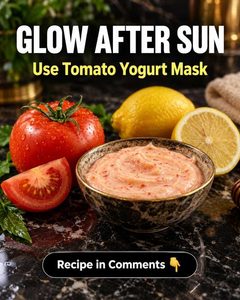
Remedy 1: Tomato and Yogurt Glow Mask for Normal Skin
Ingredients
- 1 teaspoon fresh ripe tomato pulp
- 1 tablespoon plain unsweetened yogurt
- 1 teaspoon finely ground oatmeal
- ½ teaspoon raw honey
- 1 teaspoon pure aloe vera gel
- 1 teaspoon clean water, if required
Scientific Working of the Ingredients
Tomato supplies lycopene, beta-carotene, and vitamin C. These substances have antioxidant properties, although the strongest research supporting tomato and skin photoprotection involves eating processed tomato rather than applying raw tomato.
Plain yogurt provides moisture and contains naturally occurring lactic acid. It may gently loosen dull surface cells, but food yogurt does not provide a standardized concentration or pH. Its effects are therefore less predictable than those of a properly formulated skincare treatment.
Oatmeal supports the skin barrier and can reduce minor discomfort. Honey acts as a humectant by attracting water to the skin’s surface. Aloe vera provides light hydration and may help soothe mildly stressed skin.
Procedure
Mix the tomato pulp and yogurt in a clean bowl. Add the oatmeal, honey, and aloe vera. If the mixture is too thick, add a small quantity of water.
Patch-test it on the inner arm or behind the ear for 24 hours. If there is no reaction, apply a thin layer to a clean face while avoiding the eyes, lips, and broken skin.
Leave it on for 5–7 minutes during the first use. Rinse thoroughly with cool or lukewarm water and pat the skin dry.
How Often to Apply
Apply once every other evening for 3–5 days. If the skin remains comfortable, continue once or twice weekly.
Initial Results
Within 1–3 days, the skin may feel softer and look temporarily fresher because of improved hydration and surface smoothing. Pigmentation caused by sun exposure will not disappear within a few days and usually requires consistent sun protection and time.
Remedy 2: Tomato, Yogurt and Cucumber Mask for Combination Skin
Ingredients
- ½ teaspoon fresh tomato pulp
- 1 tablespoon plain unsweetened yogurt
- 1 tablespoon finely blended cucumber
- 1 teaspoon pure aloe vera gel
- 1 teaspoon finely ground oatmeal
- ½ teaspoon raw honey
Scientific Working of the Ingredients
Combination skin has oily and dry areas, so this remedy uses only a small amount of tomato. Tomato antioxidants may help counter oxidative stress, but raw tomato has not been clinically proven to reverse tanning or sun damage.
Cucumber contains abundant water and provides a cooling effect. Yogurt and honey support moisture retention, while oatmeal and aloe help protect the skin from becoming overly dry.
This mixture may improve temporary dullness, but it cannot remove established pigmentation or repair damaged skin DNA.
Procedure
Mix all the ingredients until a smooth consistency forms. Apply a thin layer to the face, using slightly less on areas that are already sensitive or dry.
Leave the mask on for approximately 5 minutes. Rinse without rubbing or using a facial brush. Apply a gentle moisturizer afterward.
How Often to Apply
Use on alternate evenings for up to 5 days. Afterward, apply once weekly if it does not cause congestion or irritation.
Initial Results
Dry areas may feel more comfortable, while oily areas may look less dull. A mild surface glow may appear after one to three applications, but deeper discoloration requires several weeks of careful skincare.
Remedy 3: Tomato, Yogurt and Green Tea Mask for Oily Skin
Ingredients
- 1 teaspoon fresh tomato pulp
- 2 teaspoons plain unsweetened yogurt
- 1 tablespoon cooled green tea
- 1 teaspoon cosmetic-grade kaolin clay
- 1 teaspoon pure aloe vera gel
- ½ teaspoon finely ground oatmeal
Scientific Working of the Ingredients
Kaolin clay absorbs excess surface oil, which may reduce shine and make the complexion look cleaner. It cannot remove a tan or prevent ultraviolet damage.
Green tea contains catechins with antioxidant and anti-inflammatory properties. Limited research suggests topical green tea preparations may help regulate facial sebum, although homemade green tea is not standardized.
Tomato contributes antioxidants, while yogurt may provide very mild surface exfoliation. Aloe and oatmeal reduce the risk of the clay making the skin excessively tight.
Procedure
Combine the tomato, yogurt, green tea, clay, aloe, and oatmeal. The consistency should be soft rather than stiff.
Apply a thin layer to intact skin. Leave it on for 5 minutes and rinse before the clay becomes dry or cracked. Do not scrub the mixture into the skin.
How Often to Apply
Use twice during the first 5 days, leaving at least 48 hours between applications. Continue no more than once or twice weekly.
Initial Results
Excess shine may decrease after the first application. The complexion may look temporarily smoother and fresher within 1–3 days, but the mask will not treat significant hyperpigmentation or active acne.
Remedy 4: Tomato, Yogurt and Avocado Mask for Dry Skin
Ingredients
- ½ teaspoon fresh tomato pulp
- 1 tablespoon plain unsweetened full-fat yogurt
- 1 tablespoon mashed ripe avocado
- 1 teaspoon raw honey
- 1 teaspoon pure aloe vera gel
- ½ teaspoon finely ground oatmeal
Scientific Working of the Ingredients
Sun exposure may worsen water loss and make dry skin look rough or tired. Avocado contains fatty acids that soften the skin’s surface. Honey and aloe provide humectant hydration, while oatmeal helps support the skin barrier.
Full-fat yogurt supplies moisture and fats. Its natural acidity may contribute to gentle surface smoothing, but it can sting damaged or highly sensitive skin. Tomato is kept at a low quantity because excessive acidity may worsen dryness.
Procedure
Mash the avocado until completely smooth. Add the yogurt, tomato pulp, honey, aloe, and oatmeal. Mix thoroughly.
Apply a thin layer to clean, slightly damp skin. Leave it on for 5–7 minutes, rinse with lukewarm water, and apply a gentle moisturizer.
How Often to Apply
Apply every other evening for 3–5 days. Continue once weekly if the skin remains comfortable.
Initial Results
The skin may feel softer after one application. Improved hydration can produce a fresher appearance within 1–3 days, but persistent roughness, discoloration, or peeling requires a longer recovery period.
Remedy 5: Oatmeal and Aloe Recovery Mask for Sensitive Skin
Raw tomato and yogurt are not ideal for highly sensitive or recently irritated skin because their acidity can cause burning or redness. A gentler alternative is more appropriate.
Ingredients
- 1 tablespoon finely ground colloidal oatmeal
- 1 tablespoon pure aloe vera gel
- 1 tablespoon cooled green tea
- 1 teaspoon finely blended cucumber
- ½ teaspoon raw honey
- 1 teaspoon clean water
Scientific Working of the Ingredients
Colloidal oatmeal contains beta-glucans and avenanthramides that support barrier function and help soothe irritation. Aloe vera may calm mild discomfort and support hydration, although it can cause an allergic reaction in some people.
Green tea provides antioxidant catechins, while cucumber offers a cooling, water-rich base. Honey helps retain surface moisture. These ingredients may make sensitive skin look calmer and healthier, but they cannot reverse sun damage.
Procedure
Mix the ingredients in a clean bowl. Patch-test the mixture for 24 hours before facial use.
Apply a thin layer and leave it on for only 5 minutes. Rinse with cool or lukewarm water. Do not massage, rub, or exfoliate sensitive skin after sun exposure.
How Often to Apply
Use once every other day for 3–5 days. Stop immediately if itching, burning, swelling, or persistent redness develops.
Initial Results
Mild dryness may improve within 1–3 days, helping the complexion look calmer and more hydrated. Seek medical advice if irritation continues or becomes worse.
What to Do If the Skin Is Actually Sunburned
Do not apply tomato, yogurt, lemon, vinegar, essential oils, perfume, scrubs, or exfoliating acids to sunburned skin. These substances may increase irritation.
Take a cool shower or place a cool, damp cloth on the affected area. Do not apply ice directly. Use a gentle aloe vera gel or bland moisturizer, drink enough water, and protect the area from further sunlight with loose clothing and shade.
Do not deliberately break blisters. Seek medical attention for severe blistering, fever, dizziness, confusion, vomiting, dehydration, eye pain, or sunburn covering a large area of the body.
Final Tips for Maintaining Your Glow
Use broad-spectrum, water-resistant SPF 30 or higher before going outdoors. Apply enough sunscreen to exposed skin and reapply approximately every two hours, as well as after swimming or heavy sweating.
Wear a wide-brimmed hat, sunglasses, and protective clothing. Seek shade during the strongest sunlight hours. A tomato mask cannot replace sunscreen, and eating tomatoes does not provide enough protection to replace standard sun-safety measures.
Avoid applying undiluted lemon juice, baking soda, toothpaste, or apple cider vinegar. These ingredients may cause irritation, barrier damage, and uneven pigmentation. Do not scrub tanned skin aggressively because a suntan represents a response to ultraviolet injury rather than removable surface dirt.
Cleanse gently, moisturize regularly, keep towels and brushes clean, drink according to thirst, and obtain sufficient sleep. Temporary softness or brightness may begin within 2–3 days. Uneven pigmentation normally requires several weeks, and no home remedy should promise instant reversal.
Diet Plan for Skin Recovery and Natural Glow
A balanced diet cannot cure sunburn, but it supplies the protein, vitamins, minerals, and healthy fats needed for normal skin maintenance.
Breakfast
Eat plain yogurt with berries, oats, and a small portion of seeds, or choose eggs with whole-grain bread and fresh fruit. Berries and colorful fruits provide vitamin C and antioxidant compounds.
Lunch
Choose lentils, beans, chicken, fish, or another protein source with vegetables and brown rice or whole-grain roti. Include tomatoes with a small amount of healthy fat because dietary fat can improve lycopene absorption.
Evening Snack
Select watermelon, guava, an orange, plain yogurt, unsalted nuts, or roasted chickpeas. Avoid relying on sugary juices because whole fruit provides more fibre.
Dinner
Eat grilled fish, chicken, lentils, or beans with cooked vegetables and salad. Oily fish, walnuts, and seeds provide healthy fats that support general skin-barrier function.
Fluids
Drink water regularly, particularly after spending time in hot weather. Milk, soups, and water-rich fruits can also contribute to fluid intake. Avoid excessive alcohol because it can worsen dehydration.
Follow the dietary plan consistently for at least 4–8 weeks. Use the tomato and yogurt mask for no longer than 2–3 weeks before assessing tolerance and results. Stop immediately if it causes irritation. If dullness, burning, peeling, itching, or pigmentation persists, consult a dermatologist. A changing, bleeding, or unusual skin spot should always be examined by a medical professional.
References for the above remedy
- American Academy of Dermatology Association. How to treat sunburn. https://www.aad.org/public/everyday-care/injured-skin/burns/treat-sunburn
- American Academy of Dermatology Association. Sunscreen FAQs. https://www.aad.org/media/stats-sunscreen
- Stahl W, Heinrich U, Wiseman S, et al. Dietary tomato paste protects against ultraviolet light-induced erythema in humans. Journal of Nutrition. https://pubmed.ncbi.nlm.nih.gov/11340098/
- Groten K, Marini A, Grether-Beck S, et al. Tomato phytonutrients balance UV response. Skin Pharmacology and Physiology. https://pmc.ncbi.nlm.nih.gov/articles/PMC6826455/
- National Center for Complementary and Integrative Health. Aloe Vera: Usefulness and Safety. https://www.nccih.nih.gov/health/aloe-vera
- Cerio R, Dohil M, Jeanine D, et al. Mechanism of action and clinical benefits of colloidal oatmeal for dermatologic practice. Journal of Drugs in Dermatology. https://pubmed.ncbi.nlm.nih.gov/25607907/
- Burlando B, Cornara L. Honey in dermatology and skin care: a review. Journal of Cosmetic Dermatology. https://pubmed.ncbi.nlm.nih.gov/24305429/
- Mayo Clinic. Sunburn: Diagnosis and treatment. https://www.mayoclinic.org/diseases-conditions/sunburn/diagnosis-treatment/drc-20355928
- U.S. Food and Drug Administration. Tips to stay safe in the sun: From sunscreen to sunglasses. https://www.fda.gov/consumers/consumer-updates/tips-stay-safe-sun-sunscreen-sunglasses