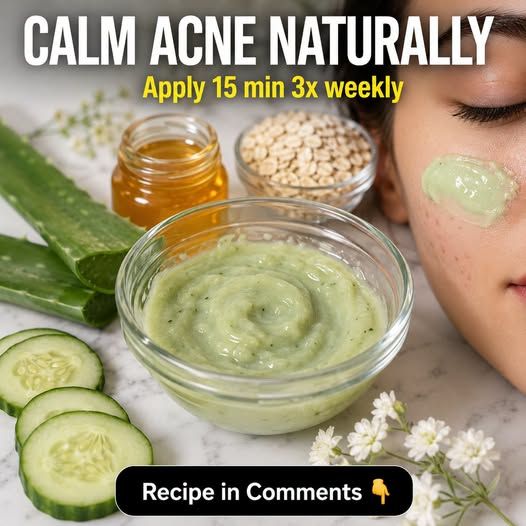
Acne can affect more than the skin. Persistent redness, painful spots and post-acne marks may influence confidence and make people experiment with harsh do-it-yourself treatments. A safer approach is to use gentle ingredients that support the skin barrier, reduce surface inflammation and complement proven acne care. Green tea, aloe vera, colloidal oatmeal and properly diluted tea tree oil have the strongest evidence among commonly available natural ingredients. However, no homemade multi-ingredient mask has been clinically tested as an exact formula. The remedies below are therefore evidence-informed supportive treatments rather than cures. They are intended for mild acne and should not replace medical treatment for painful, cystic or scarring acne.
Before applying any remedy, patch-test it behind the ear or along the jaw for 24 hours. Prepare only enough for one application, use clean utensils and never apply a mask over broken, bleeding or freshly squeezed spots.
Remedy 1: Soothing Green Tea and Aloe Mask for Normal Skin
Ingredients and Their Scientific Benefits
Use 1 tablespoon pure aloe vera gel, 1 tablespoon freshly brewed and cooled green tea, 1 teaspoon finely ground colloidal oatmeal, ½ teaspoon plain honey, 2 drops vegetable glycerin and 1 teaspoon cooled boiled water.
Aloe vera provides a cooling gel base and may help reduce treatment-related redness and irritation. In a clinical trial, aloe vera used alongside tretinoin produced greater improvement in inflammatory and non-inflammatory acne than tretinoin with a vehicle gel, although aloe was tested as an adjunct rather than a stand-alone cure. (PubMed)
Topical green tea contains catechins, including epigallocatechin gallate, which have antioxidant and anti-inflammatory activity. A meta-analysis of randomized trials found that topical green-tea preparations reduced inflammatory acne lesions. (PubMed)
Colloidal oatmeal contains beta-glucan and avenanthramides that help retain moisture and calm inflammatory signalling. Honey acts mainly as a humectant in this recipe; its acne-specific clinical evidence remains limited. Glycerin attracts water into the outer skin layer and supports hydration. (PubMed)
Procedure
Brew green tea without sugar or milk and allow it to cool completely. Mix the aloe, oatmeal, honey and glycerin in a clean bowl. Add the tea and enough cooled water to create a smooth, spreadable paste. Apply a thin layer to clean skin, avoiding the eyes and lips. Leave it on for 10–15 minutes and rinse gently with lukewarm water.
How Often to Apply
Apply three times during the first seven days. Continue two or three times weekly for three weeks if no irritation develops.
Initial Results
Within one to three days, the skin may feel calmer, softer and less tight. Inflamed spots may appear temporarily less red, but meaningful reduction in acne lesions normally takes several weeks.
Remedy 2: Two-Zone Oat and Clay Mask for Combination Skin
Ingredients and Their Scientific Benefits
Use 1 tablespoon aloe vera gel, 1 tablespoon cooled green tea, 1 teaspoon colloidal oatmeal, ½ teaspoon kaolin clay, ¼ teaspoon alcohol-free propolis extract and ¼ teaspoon fragrance-free 5% tea tree gel.
Aloe, green tea and oatmeal support hydration and reduce irritation on the drier cheek area. Kaolin clay physically absorbs surface oil, so it should be concentrated on the forehead, nose and chin instead of being spread heavily over dry areas.
Tea tree oil has better acne evidence than most kitchen remedies. Randomized trials involving 5% tea tree gel reported improvement in mild-to-moderate acne, although dryness, peeling or irritation can occur. (PubMed)
A clinical investigation also found that a standardized formulation containing propolis, tea tree oil and aloe vera reduced acne lesion counts and redness. This does not prove that every homemade variation will produce the same results, but it supports the selection of these ingredients. (PubMed)
Procedure
Combine the aloe, tea and oatmeal. Divide the mixture into two portions. Mix the clay, propolis and tea tree gel into one portion and apply it only to oily areas. Apply the plain aloe-oat portion to normal or dry areas. Leave both layers on for no more than 10 minutes. Do not allow the clay to become completely dry and cracked. Rinse without scrubbing.
How Often to Apply
Use on alternate days for the first five days, then reduce to twice weekly.
Initial Results
The T-zone may look less shiny after the first application. Dry areas may feel more comfortable within two or three days. Blackheads and deeper blemishes will not disappear immediately.
Remedy 3: Green Tea, Propolis and Tea Tree Gel for Oily Skin
Ingredients and Their Scientific Benefits
Use 2 tablespoons strong cooled green tea, 1 tablespoon aloe vera gel, 1 teaspoon colloidal oatmeal, ½ teaspoon alcohol-free propolis extract, ½ teaspoon standardized 5% tea tree gel and 2 drops vegetable glycerin.
Green tea is the main ingredient because topical green-tea extracts have shown benefits for inflammatory acne without causing major adverse effects in the available studies. Tea tree oil may suppress acne-associated microorganisms and inflammation, while propolis contains plant-derived compounds with antimicrobial activity. Aloe and oatmeal reduce the likelihood that the oil-controlling ingredients will leave the skin excessively dry. (PubMed)
Use a prepared 5% tea tree gel rather than adding undiluted essential oil directly to the mixture. Pure essential oil can cause burning, allergic dermatitis and uneven exposure when stirred into a water-based mask.
Procedure
Stir all ingredients together until a light gel forms. Apply a very thin layer over acne-prone areas rather than creating a thick mask. Leave it on for 8–10 minutes and rinse with cool or lukewarm water. Discard the unused mixture.
How Often to Apply
Apply three times during the first week. If well tolerated, continue three times weekly for three to four weeks.
Initial Results
Oiliness and visible shine may decrease during the first few applications. Mild surface redness may begin settling within two or three days, but fewer pimples should not be expected until the routine has been followed consistently.
Remedy 4: Hydrating Aloe-Oat Mask for Dry, Acne-Prone Skin
Ingredients and Their Scientific Benefits
Use 1 tablespoon aloe vera gel, 2 teaspoons colloidal oatmeal, 1 teaspoon cooled green tea, ½ teaspoon plain honey, 3 drops vegetable glycerin and 1 teaspoon cooled boiled water.
Dry acne-prone skin needs hydration without heavy, pore-clogging oils. Colloidal oatmeal helps hold water in the outer skin layer and supports barrier recovery. Glycerin is a well-studied humectant that improves skin hydration, while aloe provides a lightweight base. Green tea adds anti-inflammatory catechins without the drying action associated with clay. (PubMed)
Honey is included for moisture retention rather than as a proven acne treatment. Avoid it if you have a bee-product allergy.
Procedure
Mix the oatmeal and green tea first and allow them to stand for two minutes. Add the aloe, honey, glycerin and water. Apply to slightly damp skin and leave it on for 10 minutes. Rinse gently and pat the face dry instead of rubbing it with a towel.
How Often to Apply
Use every other day for five days. Afterwards, apply twice weekly when the skin feels dry or irritated.
Initial Results
Flaking and tightness may improve in one to three days. Better hydration can make the complexion appear smoother, but it will not instantly unclog pores or remove established acne.
Remedy 5: Minimal Oatmeal Compress for Sensitive Skin
Ingredients and Their Scientific Benefits
Use 1 tablespoon colloidal oatmeal, 1 tablespoon pure aloe vera gel, 1 tablespoon weak cooled green tea, ¼ teaspoon vegetable glycerin and 1 teaspoon cooled boiled water.
Sensitive skin benefits from a short ingredient list. Colloidal oatmeal has anti-inflammatory, antioxidant and barrier-supporting properties, while glycerin reduces dehydration. Aloe and weak green tea provide a light, cooling base. (PubMed)
This remedy deliberately excludes essential oils, clay, turmeric, fragrance and acidic ingredients. Even natural substances can cause contact dermatitis, so stop immediately if burning, swelling or persistent itching occurs.
Procedure
Combine the ingredients and soak a clean piece of soft cotton or gauze in the mixture. Place it gently over the affected area for five to eight minutes. Remove it without rubbing and rinse with cool water.
How Often to Apply
Use every other day for five days. Continue once or twice weekly only if the skin remains comfortable.
Initial Results
Temporary cooling and reduced tightness may be noticed after the first application. Mild irritation-related redness may settle over several days, but persistent inflammatory acne requires proper treatment.
Final Tips for Calmer, Clearer Skin
Wash the face gently no more than twice daily and after heavy sweating. Avoid scrubs, cleansing brushes, alcohol-based toners, lemon juice, baking soda, toothpaste and undiluted essential oils. Repeatedly changing remedies can damage the skin barrier and worsen breakouts. Keep pillowcases, makeup brushes, phones and skincare tools clean, and avoid squeezing pimples because picking increases the likelihood of scars and dark marks. Use a non-comedogenic sunscreen during the day. (American Academy of Dermatology)
Hydration, reduced tightness and a temporary healthy glow may become noticeable within two or three days. These masks are not proven wrinkle treatments, and acne lesion reduction usually requires four to eight weeks. Dermatology guidance advises giving an appropriate acne treatment six to eight weeks before assessing improvement. (American Academy of Dermatology)
Supportive Diet Plan for Acne-Prone Skin
Diet should support treatment rather than replace it. Some trials suggest that a low-glycaemic-load eating pattern may help certain people, but results are mixed, and NICE states that evidence is not strong enough to prescribe one specific acne diet for everyone. (PubMed)
For breakfast, choose unsweetened oatmeal with seeds and fruit, eggs with vegetables, or whole-grain bread with a protein source. At lunch, combine lentils, beans, chicken or fish with salad, cooked vegetables and a moderate portion of brown rice or whole-grain roti. Snacks may include an apple, guava, berries, cucumber, a small handful of nuts or unsweetened yogurt if dairy does not appear to trigger breakouts. Dinner can include vegetable soup, dal, grilled fish, chicken or beans with vegetables.
Limit sugary drinks, sweets, heavily refined bakery foods and frequent large portions of white bread or fried snacks. Drink water regularly and observe patterns without imposing extreme restrictions. Continue a balanced eating pattern for eight to twelve weeks before judging whether it affects your skin.
Continue the topical routine for three to four weeks if it causes no irritation, but do not depend on masks alone when acne persists. Consult a doctor or dermatologist if there is no improvement after six to eight weeks, or sooner if you develop painful nodules, cysts, rapidly worsening acne, scars, persistent dark marks, facial swelling or significant emotional distress. (American Academy of Dermatology)
References for the above remedy
- Enshaieh, S., Jooya, A., Siadat, A. H., & Iraji, F. (2007). The efficacy of 5% topical tea tree oil gel in mild to moderate acne vulgaris: A randomized, double-blind placebo-controlled study. Indian Journal of Dermatology, Venereology and Leprology, 73(1), 22–25.
https://pubmed.ncbi.nlm.nih.gov/17314442/ - Kim, S., et al. (2020). The effects of green tea on acne vulgaris: A systematic review and meta-analysis of randomized clinical trials.
https://pubmed.ncbi.nlm.nih.gov/32812270/ - Hajheydari, Z., Saeedi, M., Morteza-Semnani, K., & Soltani, A. (2014). Effect of Aloe vera topical gel combined with tretinoin in treatment of mild and moderate acne vulgaris. Journal of Dermatological Treatment, 25(2), 123–129.
https://pubmed.ncbi.nlm.nih.gov/23336746/ - Mazzarello, V., et al. (2018). Treatment of acne with a combination of propolis, tea tree oil and Aloe vera compared to erythromycin cream. Clinical Pharmacology, 10, 175–181.
https://pubmed.ncbi.nlm.nih.gov/30588129/ - Cerio, R., et al. (2010). Mechanism of action and clinical benefits of colloidal oatmeal for dermatologic practice. Journal of Drugs in Dermatology, 9(9), 1116–1120.
https://pubmed.ncbi.nlm.nih.gov/20865844/ - Korponyai, C., et al. (2017). Effects of locally applied glycerol and xylitol on hydration, barrier function and morphological parameters of the skin. Acta Dermato-Venereologica, 97(2), 182–187.
https://pubmed.ncbi.nlm.nih.gov/27349297/ - Smith, R. N., et al. (2007). A low-glycemic-load diet improves symptoms in acne vulgaris patients: A randomized controlled trial. American Journal of Clinical Nutrition, 86(1), 107–115.
https://pubmed.ncbi.nlm.nih.gov/17616769/ - American Academy of Dermatology. Acne: Tips for managing.
https://www.aad.org/public/diseases/acne/skin-care/tips - National Institute for Health and Care Excellence. Acne vulgaris: Management recommendations. Updated April 2026.
https://www.nice.org.uk/guidance/ng198/chapter/Recommendations