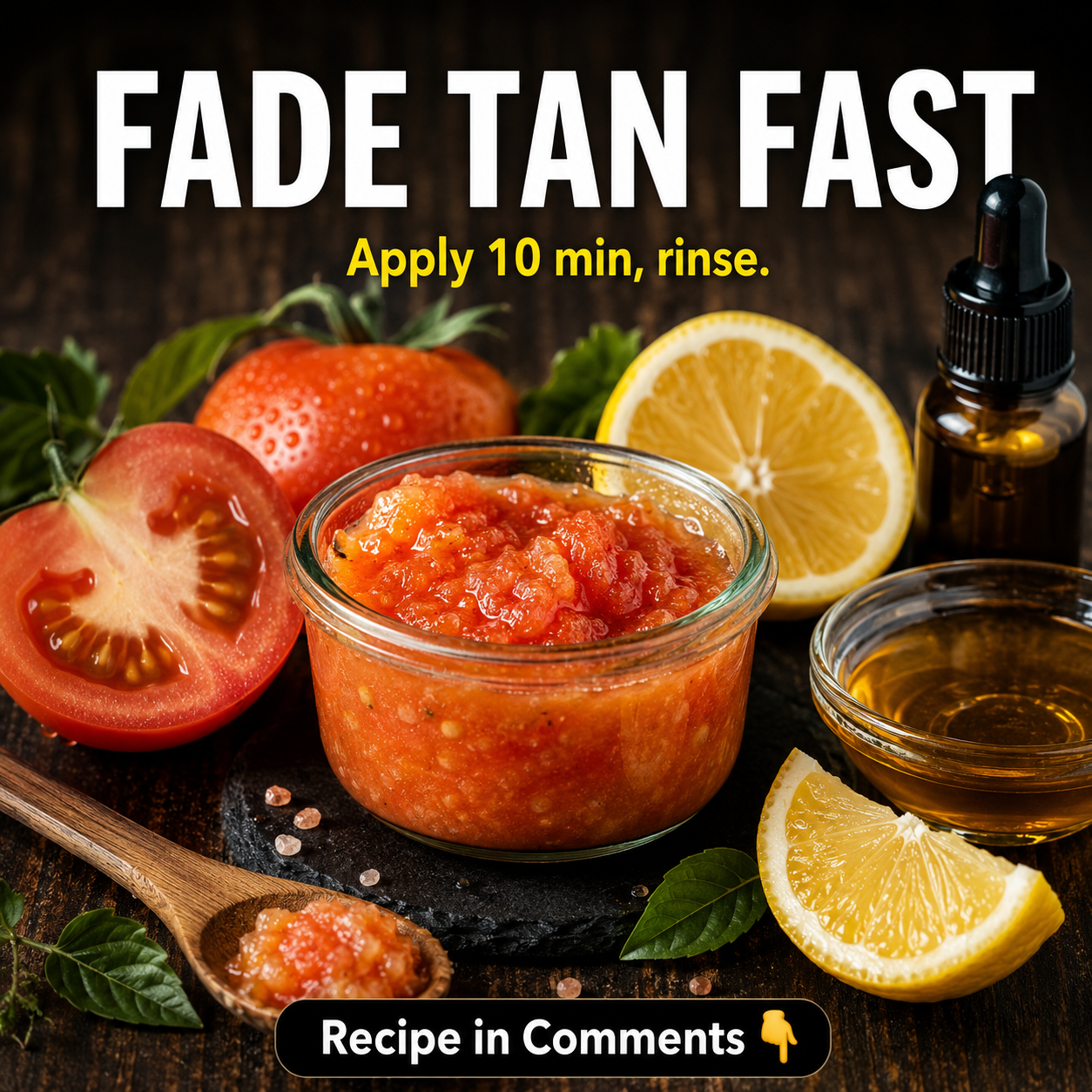
A fresh sun tan may look uneven, dull or darker than your usual skin tone and can affect confidence, especially when the face, neck, arms and hands develop different shades. Tanning happens because ultraviolet exposure stimulates the skin to produce more melanin as a protective response. A tan is therefore a sign that the skin has been affected by UV radiation, not simply a layer of dirt that can be scrubbed away. It usually fades gradually as pigmented surface cells are naturally replaced. No tomato, lemon or homemade mask can safely erase a developed tan in ten minutes. (American Academy of Dermatology)
The lemon shown in the image is intentionally excluded from the remedies below. Fresh lemon juice can irritate the skin, and contact with citrus followed by sunlight may cause a painful phototoxic reaction and additional dark pigmentation. (American Academy of Dermatology)
The routines below use naturally derived ingredients studied for pigmentation, hydration or skin-barrier support. Cosmetic-grade standardized extracts are more predictable than raw kitchen powders. Always perform a patch test, prepare fresh water-based mixtures and use daily sun protection while waiting for the tan to fade.
Remedy 1: White Mulberry and Aloe Glow Mask for Normal Skin
Ingredients and Scientific Benefits
- Cosmetic-grade white mulberry extract oil: 3 drops
White mulberry contains natural compounds that may reduce activity in pathways involved in excessive pigmentation. - Pure aloe vera gel: 2 teaspoons
Aloe contains aloesin, a compound studied for its effect on tyrosinase, an enzyme involved in melanin formation. - Colloidal oatmeal: 1 teaspoon
Oatmeal supports the protective skin barrier and reduces roughness. - Vegetable glycerin: 2 drops
Glycerin attracts water to the outer layer of the skin and improves hydration. - Sunflower seed oil: ¼ teaspoon
Sunflower oil softens the skin and helps reduce moisture loss.
How the Ingredients Work Scientifically
White mulberry extract has shown skin-lightening activity in a controlled study involving facial hyperpigmentation, although a homemade mixture cannot be expected to perform exactly like the tested formulation. Aloe-derived aloesin has demonstrated inhibition of melanin-related enzyme activity. Oatmeal, glycerin and sunflower oil do not bleach the skin; they improve hydration and barrier condition, which can make dull, dry skin appear smoother and more luminous. (PubMed)
Procedure
Mix the aloe gel, oatmeal and glycerin until smooth. Add the mulberry extract and stir gently.
Apply a thin layer to clean skin. Leave for eight to ten minutes without allowing the mask to become completely dry.
Rinse with cool or lukewarm water. Pat the skin gently and press the sunflower oil onto slightly damp areas.
How Often to Apply
Use four evenings weekly for at least six weeks. Apply for five consecutive days initially only when the skin remains comfortable.
Initial Results
The skin may feel softer and look more hydrated within one to three days. A visible change in tan should be expected gradually over several weeks rather than overnight.
Remedy 2: Soy and Green Tea Balancing Treatment for Combination Skin
Ingredients and Scientific Benefits
- Fragrance-free gel containing stabilized soy extract: 1 teaspoon
Soy contains natural protease inhibitors that may reduce the transfer of pigment-containing structures into surface skin cells. - Strong green tea, completely cooled: 1 teaspoon
Green tea provides antioxidant polyphenols that help protect the skin from oxidative stress. - Pure aloe vera gel: 1 teaspoon
Provides lightweight hydration without a heavy greasy layer. - Finely powdered colloidal oatmeal: ½ teaspoon
Helps protect dry cheek areas from irritation. - Jojoba oil: 2 drops
Softens dry areas while keeping the routine relatively lightweight.
How the Ingredients Work Scientifically
Topical soy preparations have been studied in controlled clinical research and may gradually improve uneven pigmentation and overall skin tone. Green tea contains antioxidant compounds investigated for UV-related skin effects, while aloe and oatmeal support hydration. Jojoba is included only for dry areas and is not a tan-removing ingredient. (PubMed)
Procedure
Mix the soy gel, cooled green tea, aloe and oatmeal.
Apply a thin layer to the face, neck or other tanned areas. Use slightly more over dry cheeks and less over naturally oily areas.
Leave for eight minutes and rinse gently. Press one drop of jojoba oil onto each dry area. Avoid spreading oil over an oily forehead, nose or acne-prone zone.
How Often to Apply
Use on alternate evenings for six to eight weeks.
Initial Results
Dry areas may feel smoother after one or two applications. The complexion may appear fresher within two or three days because of improved hydration, while actual tan fading takes longer.
Remedy 3: Licorice and Green Tea Clarifying Mask for Oily Skin
Ingredients and Scientific Benefits
- Cosmetic-grade water-soluble licorice extract: 3 drops
Licorice contains glabridin and related compounds associated with reduced tyrosinase activity. - Strong cooled green tea: 1 tablespoon
Provides antioxidant plant polyphenols. - Pure aloe vera gel: 1 teaspoon
Adds hydration without a thick oil layer. - Cosmetic-grade kaolin clay: 1 teaspoon
Absorbs some excess surface oil and temporarily reduces shine. - Colloidal oatmeal: ½ teaspoon
Reduces the overly dry feeling that clay may produce. - Boiled and cooled water: up to 1 teaspoon
Adjusts the mask into a soft, spreadable consistency.
How the Ingredients Work Scientifically
Licorice-derived glabridin has demonstrated effects on tyrosinase activity, melanin production and inflammation in experimental research. Green tea provides antioxidant support, while clay mainly controls temporary oiliness. Aloe and oatmeal protect against excessive dryness because irritated skin may develop more uneven pigmentation. (PubMed)
Procedure
Mix the kaolin, oatmeal, green tea and aloe. Add enough water to create a thin paste, then stir in the licorice extract.
Apply a light layer to clean skin. Leave for five to seven minutes. Do not allow the clay to become hard, cracked or uncomfortable.
Rinse carefully without scrubbing and apply a lightweight, non-greasy moisturizer.
How Often to Apply
Use twice weekly for the first two weeks. Increase to three times weekly only when there is no tightness, burning or increased dryness.
Initial Results
Surface shine may appear reduced after the first application. The skin may look calmer within two or three days, but pigment changes usually require several weeks.
Remedy 4: Aloe, Soy and Oat Recovery Mask for Dry Skin
Ingredients and Scientific Benefits
- Pure aloe vera gel: 1 tablespoon
Provides water-based hydration and naturally occurring aloesin. - Stabilized soy extract gel: 1 teaspoon
Supports gradual improvement in uneven tone. - Colloidal oatmeal: 1 tablespoon
Helps improve barrier function, hydration and surface smoothness. - Vegetable glycerin: ⅛ teaspoon
Attracts and retains water in the outer skin layer. - Sunflower seed oil: ½ teaspoon
Supplies emollient fatty acids and helps reduce water loss. - Plain honey: ½ teaspoon
Acts mainly as a humectant and improves the soft texture of the fresh mask.
How the Ingredients Work Scientifically
Dryness can make a tan look patchier because rough surface cells reflect light unevenly. Soy and aloe provide the main pigmentation-focused ingredients, while oatmeal, glycerin, honey and sunflower oil improve hydration. Better moisturization can soften the appearance of fine dehydration lines but does not permanently bleach the skin. (PubMed)
Procedure
Mix aloe, soy gel, oatmeal, glycerin and honey into a soft paste.
Apply without rubbing and leave for ten minutes.
Rinse with lukewarm water and leave the skin slightly damp. Massage the sunflower oil over dry areas for approximately one minute.
Prepare only enough for one application and discard the remainder.
How Often to Apply
Use once daily for five days, then continue three or four evenings weekly for six to eight weeks.
Initial Results
Tightness and rough texture may improve within one to three days. Uneven tanning should fade gradually as the skin naturally renews.
Remedy 5: Minimal Oat and Aloe Comfort Treatment for Sensitive Skin
Ingredients and Scientific Benefits
- Colloidal oatmeal: 1 tablespoon
Supports barrier recovery and helps reduce dryness and irritation. - Pure aloe vera gel: ½ teaspoon
Provides cooling hydration after a successful patch test. - Boiled and cooled water: 1 tablespoon
Creates a mild, fragrance-free mask. - Vegetable glycerin: 1 drop
Improves moisture retention without creating a heavy layer. - Sunflower seed oil: 3 drops
Softens the skin and helps seal in moisture.
How the Ingredients Work Scientifically
Sensitive skin often becomes darker or more uneven when it is repeatedly irritated. This remedy avoids strong brightening botanicals, citrus, spices, rough powders and essential oils. Oatmeal supports barrier function, while aloe, glycerin and sunflower oil improve hydration and comfort. The goal is to allow normal fading without triggering additional inflammation. (PubMed)
Procedure
Patch-test every ingredient for 24–48 hours.
Mix the oatmeal, water, aloe and glycerin. Apply a thin layer for five minutes only.
Rinse with cool or lukewarm water. Press three drops of sunflower oil onto slightly damp skin.
Stop immediately when burning, swelling, itching or increased redness occurs.
How Often to Apply
Use every other evening for at least five days. Continue two or three times weekly when well tolerated.
Initial Results
Mild dryness and tightness may improve after one or two applications. Sensitive skin should be treated gently; rapid peeling or aggressive lightening is not a safe goal.
Final Tips for Fading a Tan Safely
Use broad-spectrum, water-resistant sunscreen with SPF 30 or higher every morning. Reapply when outdoors for extended periods and after swimming or heavy sweating. Wear protective clothing, seek shade and reduce direct midday sun exposure. Without continued protection, new UV exposure can maintain or deepen the tan. (American Academy of Dermatology)
Do not apply lemon juice, lime juice, undiluted vinegar, baking soda, toothpaste or bleach to the skin. Citrus exposure followed by sunlight may cause burns, blistering and darker pigmentation. (American Academy of Dermatology)
Avoid harsh tomato-and-sugar scrubs. Fresh tomato is nutritious when eaten, but raw tomato pulp has not been proven to erase a tan in ten minutes. Rough scrubbing can damage the barrier and make the skin look more irritated.
Keep towels, mixing bowls and application tools clean. Do not store remedies containing aloe, tea, oatmeal, soy, honey or water because they do not contain a professionally tested preservative system.
A smoother texture and hydrated glow may begin within two or three days. A developed tan commonly needs several weeks to fade. Moisturizing can make dehydration lines appear softer, but home remedies do not permanently remove wrinkles or change the skin’s natural genetic color.
Diet Plan to Support Healthy, Even-Looking Skin
Diet cannot remove a tan, but balanced nutrition supports normal skin renewal and antioxidant protection.
Breakfast
Eat eggs, plain yogurt or oatmeal with a vitamin-C-rich fruit such as guava, orange, kiwi or berries.
Drink one glass of water.
Mid-Morning
Choose cucumber, watermelon, a seasonal fruit or a small handful of almonds and walnuts.
Lunch
Include vegetables, whole grains and protein from lentils, beans, chicken, fish or eggs.
Add cooked tomatoes, carrots, leafy vegetables or bell peppers to provide naturally occurring carotenoids and antioxidants.
Evening Snack
Choose fruit, plain yogurt, roasted chickpeas or nuts instead of frequently consuming sugary drinks and highly processed snacks.
Dinner
Eat vegetables with a protein source such as fish, chicken, eggs, beans or lentils.
Include healthy fats from nuts, seeds or suitable plant oils.
Drink according to thirst, especially during hot weather and exercise. Hydration supports normal skin function but does not directly bleach melanin or replace sunscreen.
How Long Should You Continue?
Use only the remedy designed for your skin type and continue consistently for six to eight weeks. Maintain sunscreen and protective clothing every day, even after your normal skin tone begins returning.
See a doctor or dermatologist when darkening continues despite sun protection, remains unchanged after eight to twelve weeks, or develops as clearly defined facial patches that may be melasma. Medical assessment is also important for severe burning, blisters, persistent redness, painful peeling or sudden unexplained pigmentation.
A new or changing dark spot should not automatically be treated as a tan. Seek professional examination when a spot develops an irregular border, several colors, rapid growth, bleeding or repeated crusting.
References for the above remedy
- American Academy of Dermatology. “Sunscreen FAQs.”
https://www.aad.org/media/stats-sunscreen - Leyden JJ, et al. “Natural Options for the Management of Hyperpigmentation.”
https://pubmed.ncbi.nlm.nih.gov/21623927/ - Alvin G, Catambay N, Vergara A, Jamora MJ. “A Comparative Study of the Safety and Efficacy of 75% Mulberry Extract Oil Versus Placebo as a Topical Treatment for Melasma.”
https://pubmed.ncbi.nlm.nih.gov/22052272/ - Leyden J, Wallo W. “The Mechanism of Action and Clinical Benefits of Soy for the Treatment of Hyperpigmentation.”
https://pubmed.ncbi.nlm.nih.gov/21332714/ - Jones K, Hughes J, Hong M, Jia Q, Orndorff S. “Modulation of Melanogenesis by Aloesin.”
https://pubmed.ncbi.nlm.nih.gov/12213089/ - Yokota T, et al. “The Inhibitory Effect of Glabridin from Licorice Extracts on Melanogenesis and Inflammation.”
https://pubmed.ncbi.nlm.nih.gov/9870547/ - Ilnytska O, et al. “Colloidal Oatmeal Improves Skin Barrier Through Multi-Therapy Activity.”
https://pubmed.ncbi.nlm.nih.gov/27272074/ - Danby SG, et al. “Effect of Olive and Sunflower Seed Oil on the Adult Skin Barrier.”
https://pubmed.ncbi.nlm.nih.gov/22995032/ - Fluhr JW, et al. “Glycerol and the Skin: Holistic Approach to Its Origin and Functions.”
https://pubmed.ncbi.nlm.nih.gov/18510666/ - American Academy of Dermatology. “How to Prevent Skin Problems While Gardening.”
https://www.aad.org/public/everyday-care/skin-care-secrets/routine/prevent-skin-problems-gardening