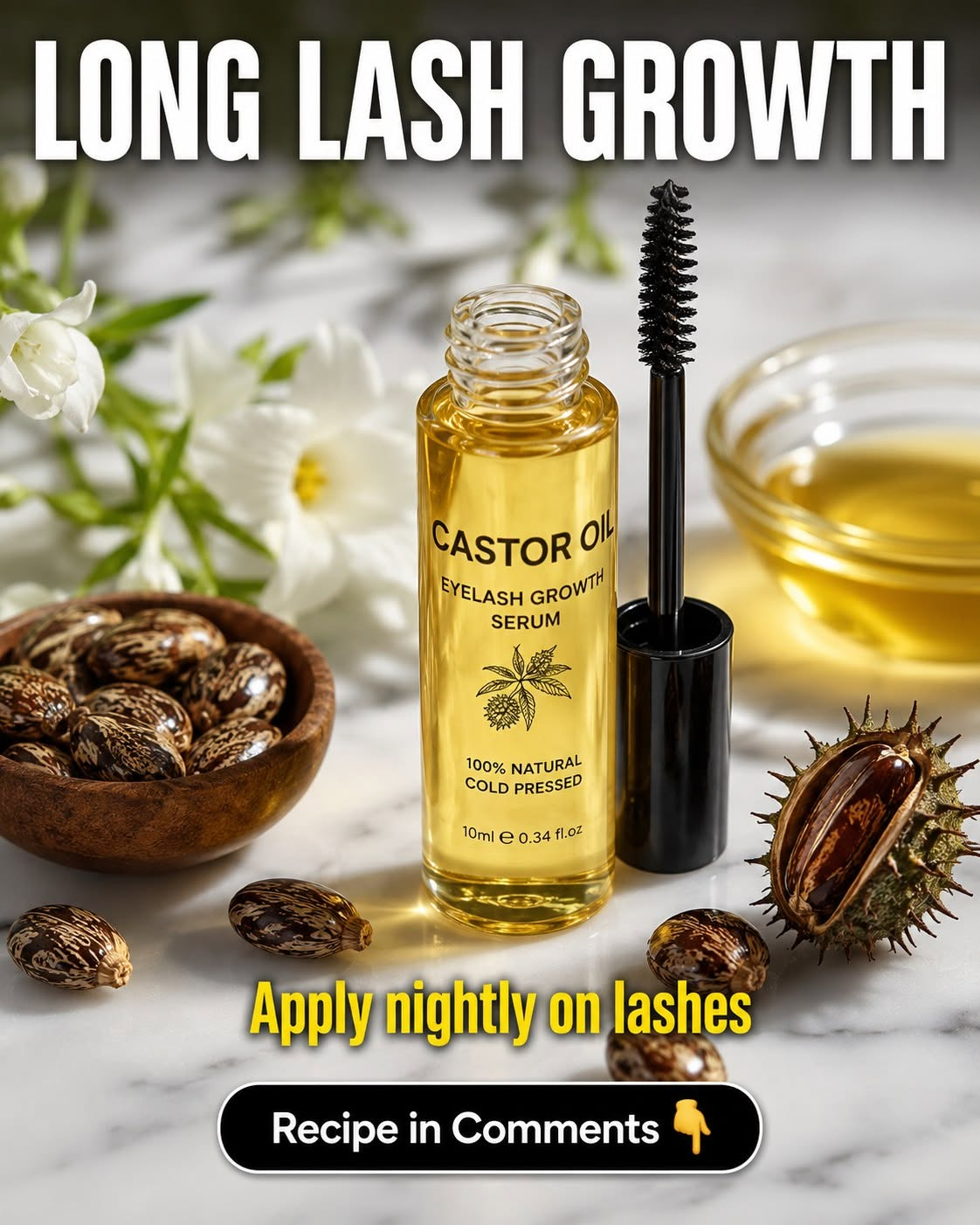
Long, defined eyelashes can make the eyes look brighter and may improve confidence, but lashes are delicate hairs that can easily become dry, brittle or damaged by rubbing, waterproof makeup, extensions and rough cleansing. Castor oil is widely promoted as a natural eyelash-growth remedy; however, current research does not show strong clinical evidence that it directly makes eyelash follicles grow faster. A systematic review found that castor oil may improve hair shine and condition, but evidence for actual hair growth remains weak. Coconut oil has better evidence for reducing protein loss from hair fibres, while castor oil has shown potential for improving certain eyelid problems such as blepharitis. Therefore, the following natural routines are designed mainly to condition lashes, protect them from breakage and maintain a healthier eyelid environment rather than promise dramatic growth within days. (PubMed)
Because homemade mixtures are not sterile, prepare only enough for one application. Never apply oils inside the eye, on the lower waterline or directly into the tear duct. Remove contact lenses first and stop immediately if redness, swelling, blurred vision, pain or persistent burning occurs.
Remedy 1: Conditioning Castor and Coconut Routine for Normal Skin
Ingredients and Scientific Working
Cold-pressed castor oil, ¼ teaspoon: Castor oil is rich in ricinoleic acid and works mainly as an emollient. It coats the lashes, improves surface shine and may reduce dryness. Research involving the eyelid area has reported improvements in eyelash matting, crusting and signs of blepharitis, although this does not prove increased lash growth.
Virgin coconut oil, ¼ teaspoon: Coconut oil contains lauric acid, which has an affinity for hair proteins and can enter the hair shaft more effectively than many other oils. Studies on human hair found that it reduced protein loss and grooming-related damage. (PubMed)
Sunflower seed oil, ⅛ teaspoon: Its linoleic acid content can support the surrounding skin barrier and reduce moisture loss.
Pure aloe vera gel, ⅛ teaspoon: Aloe can temporarily improve skin hydration, helping the eyelid area feel less dry. It does not have proven lash-growth activity. (PubMed)
Cooled boiled water, 1 teaspoon: Used separately to remove loose makeup residue before applying the oil.
Clean spoolie and small glass dish: Clean tools reduce bacterial contamination around the lash roots.
Procedure
Mix the castor, coconut and sunflower oils in the dish. Do not add water or aloe directly to the stored oil. Clean the eyelids with a cotton pad lightly dampened with cooled boiled water. Apply a trace of aloe to the outer eyelid skin, avoiding the lash roots. Dip the clean spoolie into the oil, remove almost all excess on the dish and brush a very thin coating through the upper lashes from the middle to the tips.
How Often to Apply
Apply nightly for five days. Afterward, use three or four nights a week. Wash the spoolie after every application.
Initial Results
Within one to three days, lashes may look darker, glossier and less dry because oil coats the hair. Actual new growth should not be expected in this period.
Remedy 2: Lightweight Jojoba Routine for Combination Skin
Ingredients and Scientific Working
Jojoba oil, ¼ teaspoon: Jojoba is technically a liquid wax containing wax esters. It spreads easily without feeling as heavy as castor oil and can help soften dry sections of the eyelid.
Castor oil, ⅛ teaspoon: Adds a protective coating to brittle lash tips but should be used sparingly on oilier areas.
Sunflower seed oil, ⅛ teaspoon: Supports the skin barrier around areas that feel tight or flaky. Plant oils can reduce water loss by forming a semi-occlusive surface layer. (PubMed)
Aloe vera gel, ⅛ teaspoon: Provides lightweight hydration for drier eyelid sections.
Cooled boiled water, 1 teaspoon: Helps loosen residue without using harsh scrubs.
Clean cotton pad and spoolie: Prevents unnecessary rubbing and improves controlled application.
Procedure
Clean the eyelid gently with cooled water and allow it to dry. Apply aloe only to dry outer areas. Mix jojoba, castor and sunflower oils. Use the spoolie to place the smallest possible quantity on the lash hairs, concentrating on dry tips rather than the lash roots.
How Often to Apply
Use on alternate nights for at least five days. Reduce the amount if the eyelids feel greasy the next morning.
Initial Results
The lashes may feel softer and appear more separated within two or three applications. The routine may also reduce the rough appearance caused by dry lash tips.
Remedy 3: Minimal-Oil Lash Routine for Oily Skin
Ingredients and Scientific Working
Jojoba oil, ¼ teaspoon: Its light texture makes it more suitable than heavy oils for people whose eyelids become greasy quickly.
Castor oil, 2 drops: Provides limited surface conditioning without heavily coating the roots.
Aloe vera gel, ⅛ teaspoon: Hydrates the surrounding skin without requiring a thick oil layer.
Colloidal oatmeal, a very small pinch: Oat components have anti-inflammatory, antioxidant and barrier-supporting properties. It should be used only on the outer eyelid skin, never inside the eye. (PubMed)
Cooled boiled water, 2 teaspoons: Used to prepare a fresh, diluted oatmeal compress.
Clean cotton pad and spoolie: Help prevent buildup around the follicles.
Procedure
Mix the oatmeal with cooled boiled water and allow it to settle. Moisten a cotton pad with the clear upper liquid and wipe the closed outer eyelid gently. Discard the mixture immediately. Combine jojoba oil with two drops of castor oil and brush a nearly invisible layer onto the lash tips. Do not saturate the roots.
How Often to Apply
Use the oatmeal step no more than twice during the first five days. Apply the lightweight oil every other night.
Initial Results
The eyelid area may feel cleaner and less tight, while lashes may look smoother within one to three days. Oils will not reduce natural sebum production or produce rapid new lashes.
Remedy 4: Rich Protective Routine for Dry Skin
Ingredients and Scientific Working
Virgin coconut oil, ¼ teaspoon: Helps protect hair fibres against protein loss and may reduce brittleness.
Castor oil, ¼ teaspoon: Forms a thicker emollient coating that can improve visible shine.
Sunflower seed oil, ⅛ teaspoon: Linoleic-acid-rich sunflower oil may support barrier recovery in dry skin. Research has found sunflower oil more supportive of the skin barrier than olive oil, which may impair the barrier in some people. (PubMed)
Jojoba oil, ⅛ teaspoon: Improves spreadability so less heavy oil is required.
Aloe vera gel, ⅛ teaspoon: Offers temporary hydration to dry outer eyelid skin.
Clean dish and spoolie: Allow a controlled, hygienic application.
Procedure
Apply a tiny amount of aloe to the dry skin above the lash line and let it absorb. Mix the four oils. Coat only the lash hairs with the spoolie, using less than one drop for both eyes. Leave overnight unless irritation occurs.
How Often to Apply
Use nightly for three to five days, then reduce to three nights weekly. Avoid applying several layers, as excessive oil can enter the eyes during sleep.
Initial Results
Dry lashes may look more flexible, glossy and defined after one or two applications. Reduced breakage requires consistent gentle care over several weeks.
Remedy 5: Single-Ingredient Rotation for Sensitive Skin
Sensitive eyelids should not be exposed to a five-ingredient blend. Using one ingredient at a time makes it easier to identify irritation.
Ingredient Options and Scientific Working
Sunflower seed oil, 1 drop: A lightweight option for supporting dry skin.
Virgin coconut oil, 1 drop: May reduce hair-fibre protein loss but can cause irritation in some individuals.
Jojoba oil, 1 drop: Provides light conditioning and may be easier to tolerate than thick castor oil.
Colloidal oatmeal, a pinch in 2 teaspoons of cooled water: May soothe dry or itchy outer skin but should be avoided by anyone with oat allergy.
Pure aloe vera gel, a rice-grain amount: Can increase hydration but may cause contact allergy in susceptible people.
Procedure
Patch-test one ingredient on the skin behind the ear for 24 to 48 hours. Select only one tolerated option. Apply it to the outer half of the lashes with a clean spoolie. Do not use homemade remedies during active eczema, conjunctivitis, a stye, blepharitis flare or unexplained eyelash loss.
How Often to Apply
Begin every third night for five days. Increase to alternate nights only when there is no itching, redness or swelling.
Initial Results
A tolerated ingredient may reduce the dry, stiff feeling of lashes in one to three days. Sensitive skin should not be expected to improve faster through heavier application.
Final Tips for Stronger, Longer-Looking Lashes
Remove eye makeup gently every night and allow stubborn makeup to soften before wiping. Do not pull at mascara, curl lashes after applying mascara or sleep in eye makeup. Keep curlers, spoolies and makeup tools clean, and avoid sharing them. Replace contaminated eye cosmetics and discontinue any item that causes itching.
Visible conditioning may begin within two or three days, but the natural lash cycle takes much longer. Home care cannot produce a clinically meaningful increase in lash length within three days. Prescription bimatoprost has demonstrated increased lash length, thickness and darkness in randomized trials, but it may cause redness, itching, eyelid pigmentation, keratitis and changes in eye pressure. It should be discussed with an ophthalmologist or dermatologist rather than purchased in an unregulated cosmetic serum. (PubMed)
Continue a tolerated home-conditioning routine for six to eight weeks. See a doctor if lashes continue falling out, become patchy or are accompanied by scaling, eye pain, skin lesions or eyebrow and scalp-hair loss. Acquired eyelash loss can be associated with local eyelid disease, autoimmune conditions, thyroid disorders, infections, nutritional deficiency, medication effects and hair-pulling disorders, so identifying the cause is more important than repeatedly applying oils. (PubMed)
Diet Plan for Healthy Eyelashes
Follow this balanced plan for at least eight to twelve weeks rather than relying on high-dose hair supplements.
Breakfast: Eggs, plain yoghurt or lentils for protein; whole-grain bread or oats; and one vitamin-C-rich fruit such as guava, orange or strawberries.
Lunch: Chicken, fish, chickpeas or kidney beans with leafy vegetables, tomatoes and whole-grain roti or brown rice.
Snack: A small handful of pumpkin seeds, walnuts or almonds, accompanied by fruit.
Dinner: Fish, lean meat, tofu or lentils with mixed vegetables. Include iron-rich foods such as spinach, beans or lean red meat according to individual dietary needs.
Hydration: Drink water regularly throughout the day. Limit crash diets, excessive sugary drinks and highly restrictive eating patterns.
Hair follicles require adequate protein and micronutrients, but supplements are most useful when a genuine deficiency exists. Evidence concerning routine biotin, iron, zinc or vitamin supplementation in people without deficiency remains limited. Excessive supplementation may also be harmful, so iron, vitamin D, zinc and thyroid testing should be discussed with a doctor when lash loss is persistent. (PubMed)
References for the above remedy
- Phong C, Lee V, Yale K, et al. Coconut, Castor, and Argan Oil for Hair in Skin of Color Patients: A Systematic Review. Journal of Drugs in Dermatology. 2022.
https://pubmed.ncbi.nlm.nih.gov/35816075/ - Muntz A, Sandford E, Claassen M, et al. Randomized Trial of Topical Periocular Castor Oil Treatment for Blepharitis. Journal of Tear Film and Ocular Surface. 2021.
https://pubmed.ncbi.nlm.nih.gov/32422285/ - Rele AS, Mohile RB. Effect of Mineral Oil, Sunflower Oil, and Coconut Oil on Prevention of Hair Damage. Journal of Cosmetic Science. 2003.
https://pubmed.ncbi.nlm.nih.gov/12715094/ - Lin TK, Zhong L, Santiago JL. Anti-Inflammatory and Skin Barrier Repair Effects of Topical Application of Some Plant Oils. International Journal of Molecular Sciences. 2018.
https://pubmed.ncbi.nlm.nih.gov/29280987/ - Capone K, Kirchner F, Klein SL, Tierney NK. Effects of Colloidal Oatmeal Topical Atopic Dermatitis Cream on Skin Microbiome and Skin Barrier Properties. Journal of Drugs in Dermatology. 2020.
https://pubmed.ncbi.nlm.nih.gov/32484623/ - Dal’Belo SE, Gaspar LR, Maia Campos PM. Moisturizing Effect of Cosmetic Formulations Containing Aloe Vera Extract. Skin Research and Technology. 2006.
https://pubmed.ncbi.nlm.nih.gov/17026654/ - Smith S, Fagien S, Whitcup SM, et al. Eyelash Growth in Subjects Treated with Bimatoprost: A Randomized, Vehicle-Controlled Study. Journal of the American Academy of Dermatology. 2012.
https://pubmed.ncbi.nlm.nih.gov/21899919/ - Mumford BP, Eisman S, Yip L. Acquired Causes of Eyebrow and Eyelash Loss: A Review and Approach to Diagnosis and Treatment. Australasian Journal of Dermatology. 2023.
https://pubmed.ncbi.nlm.nih.gov/36320026/ - Almohanna HM, Ahmed AA, Tsatalis JP, Tosti A. The Role of Vitamins and Minerals in Hair Loss: A Review. Dermatology and Therapy. 2019.
https://pubmed.ncbi.nlm.nih.gov/30547302/