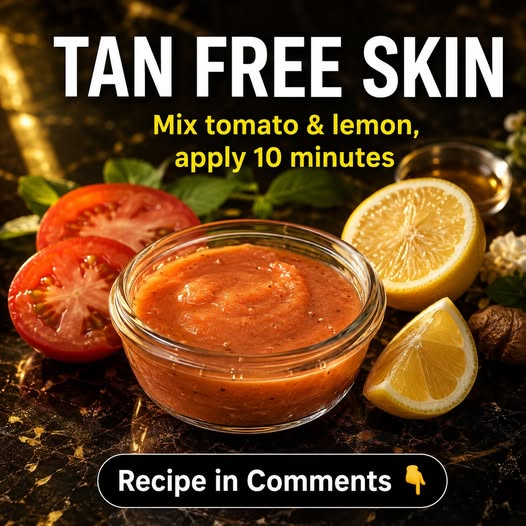
Sun tanning can leave the face looking uneven, dull or noticeably darker than the neck and body, which may affect confidence. The popular tomato-and-lemon remedy shown in the image promises “tan-free skin” after only ten minutes, but skin pigmentation cannot safely disappear that quickly. A tan develops when ultraviolet radiation stimulates melanin production, and meaningful fading usually requires consistent sun protection and several weeks of gentle skincare. Applying lemon juice is not recommended because citrus compounds can react with UVA light and cause phytophotodermatitis, including burning, blistering and darker pigmentation. (American Academy of Dermatology)
The following natural face packs are designed to calm sun-exposed skin, improve hydration and support gradual brightening according to skin type. The complete kitchen mixtures have not been tested as clinical formulations; the scientific support comes from studies of their individual ingredients. Always perform a patch test and never apply a mask to freshly sunburned, blistered, broken or irritated skin.
Remedy 1: Green Tea, Soy and Aloe Mask for Normal Skin
Ingredients and Scientific Benefits
Cooled green tea, 1 tablespoon: Green-tea catechins provide antioxidant and anti-inflammatory activity against ultraviolet stress.
Pure aloe-vera gel, 1 tablespoon: Aloe polysaccharides can temporarily increase hydration and reduce redness.
Finely ground oats, 1 teaspoon: Oat compounds help reduce irritation and support the protective skin barrier.
Plain unsweetened yogurt, 1 teaspoon: Yogurt supplies moisture, while naturally occurring lactic acid provides very mild surface exfoliation.
Unsweetened soy milk, 1 teaspoon: Soy contains compounds related to those used in clinical formulations for uneven pigmentation.
Raw honey, ½ teaspoon: Honey acts as a humectant, helping attract and retain water at the skin surface.
How This Remedy Works Scientifically
Human research has shown that topical green-tea extracts can reduce UV-induced redness and cellular damage. Aloe may calm erythema, while colloidal oatmeal improves hydration and barrier function. Clinical research on yogurt-based masks has also reported improvements in moisture and brightness. Standardized topical soy extracts have improved mottled pigmentation in studies, although household soy milk is less concentrated and should not be expected to produce the same results. (PubMed)
Procedure
Mix all ingredients into a smooth paste. Clean the face with lukewarm water and pat it dry. Apply a thin, even layer, avoiding the eyes and lips. Leave it on for 8–10 minutes without allowing it to become completely dry. Rinse gently and apply a simple fragrance-free moisturizer.
How Often to Apply
Use once daily in the evening for three days, followed by three times weekly if the skin remains comfortable.
Initial Results
Within one to three days, normal skin may feel softer, calmer and more hydrated. The face may look fresher because hydrated skin reflects light more evenly, but actual tan fading normally takes several weeks.
Remedy 2: Tomato and Oat Balancing Pack for Combination Skin
Ingredients and Scientific Benefits
Fresh tomato pulp, 1 teaspoon: Tomatoes contain lycopene, an antioxidant associated with protection against UV-related oxidative stress.
Cooled green tea, 1 tablespoon: Helps soothe the oily T-zone without heavily coating dry areas.
Aloe-vera gel, 1 teaspoon: Supplies lightweight hydration.
Finely ground oats, 1 teaspoon: Helps absorb excess surface oil while supporting irritated dry patches.
Plain yogurt, 1 teaspoon: Adds moisture and gentle lactic-acid exfoliation.
Unsweetened soy milk, 1 teaspoon: Provides a light base containing naturally occurring soy compounds.
How This Remedy Works Scientifically
Lycopene-rich tomato foods have reduced UV-induced redness and photodamage in human trials, but the strongest evidence involves eating tomato products for approximately 12 weeks—not applying raw tomato to the face. Therefore, tomato pulp should be viewed as an antioxidant addition rather than an instant tan remover. Oats, aloe and yogurt help balance hydration so that the cheeks are not over-dried while the T-zone feels less greasy. (PubMed)
Procedure
Combine the ingredients and apply a thinner layer to the forehead, nose and chin. Use a slightly thicker layer on dry cheek areas. Leave it on for only 7–8 minutes. Rinse with cool or lukewarm water without scrubbing.
How Often to Apply
Apply on alternate evenings for five days. Discontinue the tomato if it causes tingling, persistent redness or itching.
Initial Results
The T-zone may feel cleaner and the cheeks may appear smoother within two or three applications. Deep pigmentation will not disappear in five days, but dullness caused by dryness may become less noticeable.
Remedy 3: Lightweight Green Tea and Aloe Pack for Oily Skin
Ingredients and Scientific Benefits
Strong cooled green tea, 2 tablespoons: Provides antioxidant support in a water-based form.
Aloe-vera gel, 1 tablespoon: Hydrates without adding heavy oil.
Tomato pulp, ½ teaspoon: Adds a small quantity of lycopene-containing plant material.
Oat flour, 1 teaspoon: Absorbs some excess oil while helping calm irritation.
Raw honey, ¼ teaspoon: Supports hydration so the mask does not leave the skin overly tight.
Boiled and cooled water, 1 teaspoon: Dilutes the naturally acidic tomato pulp and creates a lighter texture.
How This Remedy Works Scientifically
Oily skin can become more inflamed when harsh acids or scrubs damage its barrier. This lightweight mask focuses on green-tea polyphenols, aloe and oats rather than aggressive “bleaching.” Topical green tea has demonstrated photoprotective and anti-inflammatory effects, while oatmeal supports barrier repair. Honey contributes humectant activity, but it should not be considered an acne treatment. (PubMed)
Procedure
Mix everything into a thin gel. Apply to clean skin for five to seven minutes. Do not massage tomato seeds or oat particles against the face. Rinse thoroughly and use a lightweight, non-comedogenic moisturizer.
How Often to Apply
Use once daily for three days, then reduce to two or three times weekly. Do not apply during an active acne flare with open or picked lesions.
Initial Results
Excess surface oil and redness may look reduced within one to three days. Proper hydration can also make oily skin appear less rough, although existing tan pigmentation requires longer treatment.
Remedy 4: Honey, Yogurt and Coconut Comfort Mask for Dry Skin
Ingredients and Scientific Benefits
Full-fat plain yogurt, 1 tablespoon: Adds water, fats and mild lactic-acid activity.
Raw honey, 1 teaspoon: Helps retain surface moisture.
Aloe-vera gel, 1 tablespoon: Provides cooling hydration.
Finely ground oats, 1 teaspoon: Helps relieve dryness and reinforce the skin barrier.
Virgin coconut oil, 2–3 drops: Acts as an emollient that reduces roughness.
Cooled green tea, 1 teaspoon: Adds antioxidants and thins the mixture.
How This Remedy Works Scientifically
Randomized research has found virgin coconut oil effective as a moisturizer for xerosis, while oatmeal-based formulations improve dryness and hydration. Honey-containing creams have also increased skin moisturization in clinical testing. These ingredients primarily improve the dry, rough appearance that can make tanning look more pronounced; they do not chemically remove melanin. (PubMed)
Procedure
Blend the ingredients until creamy. Apply a generous layer for ten minutes. Rinse with lukewarm water and immediately apply moisturizer while the skin is still slightly damp.
How Often to Apply
Use once daily for three to five evenings. People who develop clogged pores easily should omit coconut oil.
Initial Results
Tightness, flaking and roughness may improve after the first few applications. Increased softness and temporary radiance are realistic early results.
Remedy 5: Oat and Aloe Recovery Mask for Sensitive Skin
Ingredients and Scientific Benefits
Colloidal oat or very finely powdered oats, 2 teaspoons: Supports barrier repair and helps reduce discomfort.
Pure aloe-vera gel, 1 tablespoon: Provides lightweight soothing moisture.
Boiled and cooled water, 1 tablespoon: Hydrates and dilutes the mixture.
Raw honey, ¼ teaspoon: Adds mild humectant support.
Sunflower-seed oil, 2 drops: Helps reduce moisture loss without using fragrance or essential oils.
How This Remedy Works Scientifically
Sensitive skin requires the fewest possible ingredients. Colloidal oatmeal has performed well in controlled trials involving dry and eczema-prone skin, improving hydration and barrier measurements. Aloe may reduce redness, while sunflower-seed oil has been shown to preserve skin-barrier integrity better than some other natural oils. (PubMed)
Procedure
Combine the ingredients and refrigerate the mixture for five minutes. Apply a small amount for five minutes only. Rinse without rubbing and pat dry with a clean towel.
How Often to Apply
After a successful 48-hour patch test, use once every other day for four days. Stop immediately if burning, swelling or itching develops.
Initial Results
Sensitive skin may appear calmer and feel less tight within one to three days. Do not expect rapid pigment removal, especially when redness or irritation is still present.
Why Lemon Juice Should Not Be Used for Tan Removal
Lemon juice is highly acidic and contains photosensitizing furocoumarins. When lemon-exposed skin comes into contact with UVA radiation, it may develop painful inflammation, burn-like blisters and lingering dark patches. This can make the original pigmentation significantly worse. Diluting lemon with tomato, honey or water does not guarantee safety. (PubMed)
Final Tips for Gradually Brighter, Healthier Skin
Apply a broad-spectrum, water-resistant sunscreen with SPF 30 or higher every morning, including on cloudy days. Reapply approximately every two hours when outdoors and after sweating. For darker skin tones or persistent pigmentation, tinted sunscreen containing iron oxide may offer additional protection against visible light. Sunscreen is the most important step because new UV exposure can deepen the tan faster than home masks can improve its appearance. (American Academy of Dermatology)
Keep bowls, brushes, towels and hands clean. Avoid scrubs, baking soda, undiluted vinegar, essential oils and harsh bleaching mixtures. Sleep seven to nine hours, drink sufficient water and perform a patch test before every new remedy.
Improved hydration, softness and surface glow may become visible within two to three days. Continued glow, more even-looking pigmentation and any reduction in fine lines require several weeks or months of consistent care. Natural remedies cannot reverse wrinkles or established photodamage in three days.
Diet Plan to Support Sun-Damaged Skin
At breakfast, include protein, whole grains and a vitamin-C-rich fruit such as guava, orange, berries or papaya. At lunch, eat a balanced plate containing vegetables, lentils, beans, eggs, fish or chicken. Add cooked tomatoes with a small amount of healthy fat because dietary fat can improve carotenoid absorption.
For an afternoon snack, choose unsalted nuts, seeds or fresh fruit. Unsweetened green tea may be consumed if it suits your health and does not interfere with medication. At dinner, include leafy vegetables, carrots, tomatoes, pumpkin or sweet potato with a protein source. Drink water regularly rather than relying on sugary drinks.
Continue the home-care routine for four to eight weeks while practising daily sun protection. Dietary tomato and lycopene studies generally observed photoprotective changes after several weeks, not after one drink or meal. Food-based antioxidants complement sunscreen but cannot replace it. (PubMed)
Consult a dermatologist if pigmentation remains unchanged after eight to twelve weeks, becomes patchy or rapidly darker, or is accompanied by itching, scaling, pain or inflammation. Seek prompt medical attention for blistering or severe burning after applying citrus juice.
References for the above remedy
- American Academy of Dermatology. Melasma: Self-care and sun protection.
https://www.aad.org/public/diseases/a-z/melasma-self-care - American Academy of Dermatology. Sunscreen FAQs.
https://www.aad.org/media/stats-sunscreen - Harshman J, Quan Y, Hsiang D. Lemons in the Arizona Sunshine: Furocoumarins, phytophotodermatitis and burn-like injuries.
https://pubmed.ncbi.nlm.nih.gov/29324427/ - Elmets CA, Singh D, Tubesing K, et al. Cutaneous photoprotection from ultraviolet injury by green tea polyphenols.
https://pubmed.ncbi.nlm.nih.gov/11209110/ - Fox LT, du Plessis J, Gerber M, et al. Skin hydration and anti-erythema effects of Aloe species.
https://pubmed.ncbi.nlm.nih.gov/24991119/ - Kalaaji AN, Wallo W. Randomized controlled study of colloidal oatmeal for xerosis.
https://pubmed.ncbi.nlm.nih.gov/25607563/ - Yeom G, Yun DM, Kang YW, et al. Clinical efficacy of facial masks containing yoghurt.
https://pubmed.ncbi.nlm.nih.gov/22152494/ - Wallo W, Nebus J, Leyden JJ. Efficacy of a soy moisturizer in photoaging and mottled pigmentation.
https://pubmed.ncbi.nlm.nih.gov/17941363/ - Agero ALC, Verallo-Rowell VM. Randomized trial of virgin coconut oil as a moisturizer for xerosis.
https://pubmed.ncbi.nlm.nih.gov/15724344/ - Rizwan M, Rodriguez-Blanco I, Harbottle A, et al. Tomato paste rich in lycopene protects against cutaneous photodamage.
https://pubmed.ncbi.nlm.nih.gov/20854436/