Stretch marks, medically called striae distensae, are narrow lines that form when the skin expands or contracts faster than the deeper supporting tissue can adapt. They commonly appear during pregnancy, puberty, rapid weight change, muscle growth or prolonged corticosteroid exposure. New marks are often red, pink or purple, while older marks gradually become pale, silvery or white. Because stretch marks are a form of dermal scarring, no scrub, oil or homemade mask can completely erase them. Newer marks generally respond better than older white marks, and even professional procedures make them less noticeable rather than removing them entirely. (American Academy of Dermatology)
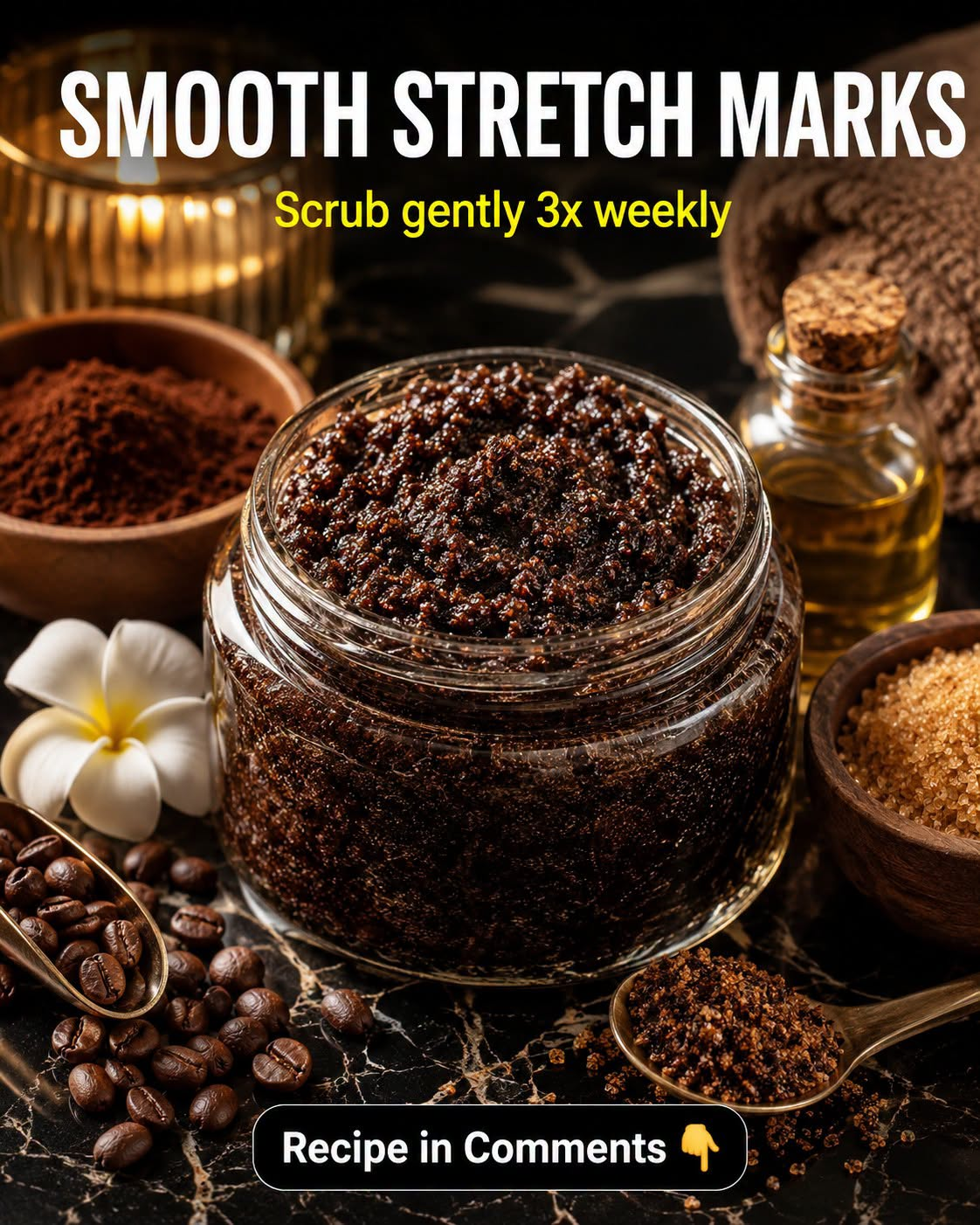
The coffee-and-sugar scrub shown in the image is not clinically proven to repair damaged collagen or elastin. Coarse scrubbing three times weekly may cause irritation, dryness and darker post-inflammatory marks, particularly on sensitive or deeper skin tones. Evidence for natural topical treatments remains limited, although standardized Centella asiatica preparations, hyaluronic acid, rosehip-containing formulations and massage have shown some promise. Moisturizing ingredients can also reduce itching, roughness and dryness, making the area appear smoother. (PMC)
The exact homemade combinations below have not been tested as complete clinical treatments. They are supportive routines built around ingredients with the most relevant available evidence. Patch-test every remedy for 24–48 hours before treating a larger area.

Remedy 1: Centella and Hyaluronic Hydration Gel for Normal Skin
Ingredients
- Standardized Centella asiatica gel: 1 teaspoon
- Biofermented hyaluronic acid gel: 1 teaspoon
- Pure aloe vera gel: 1 tablespoon
- Plant-derived glycerin: 2 drops
- Jojoba oil: 3 drops
- Colloidal oatmeal: ½ teaspoon
Scientific Working of Each Ingredient
Centella asiatica contains triterpenes, including asiaticoside and madecassoside, which are associated with collagen formation and tissue repair. A controlled pregnancy study found that a formulation containing Centella extract, vitamin E and collagen-elastin hydrolysates reduced the development of stretch marks compared with placebo. However, this evidence relates to a standardized formulation rather than homemade Centella leaves. (PubMed)
Hyaluronic acid naturally occurs in connective tissue and attracts water, temporarily improving skin plumpness and flexibility. Reviews describe limited evidence that hyaluronic-acid preparations may help prevent or reduce early stretch marks. Aloe, glycerin and jojoba improve moisture retention, while oatmeal helps calm dryness. (PMC)
Procedure
Combine the Centella and hyaluronic acid gels. Add aloe, glycerin, jojoba oil and oatmeal, then mix until smooth.
Apply a thin layer over clean stretch marks. Massage gently in circular movements for two minutes without aggressive rubbing. Leave the mixture on for 20 minutes, then rinse or remove the excess with a damp cloth.
How Often to Apply
Apply once daily for at least eight weeks. Continue for three months when the skin remains comfortable.
Initial Results
Within one to three days, the area may feel softer and less itchy. Visible fading or textural improvement should be assessed after eight to twelve weeks, not after a few applications.
Remedy 2: Rosehip and Green Tea Emulsion for Combination Skin
Ingredients
- Cold-pressed rosehip seed oil: ½ teaspoon
- Pure aloe vera gel: 1 tablespoon
- Cooled green tea: 1 teaspoon
- Jojoba oil: ¼ teaspoon
- Plant-derived glycerin: 2 drops
- Rice starch: ½ teaspoon
Scientific Working of Each Ingredient
Rosehip seed oil contains linoleic acid, linolenic acid and naturally occurring carotenoid compounds. A studied anti-stretch-mark formulation containing rosehip oil and other active ingredients reduced the severity and progression of pregnancy-related stretch marks. This does not prove that rosehip oil alone removes existing marks, but it can condition dry tissue and support a smoother appearance. (PubMed)
Green tea supplies antioxidant polyphenols, while aloe and glycerin hydrate without leaving oily areas heavily coated. Jojoba provides lightweight emollient protection, and rice starch creates a less greasy finish.
Procedure
Mix the aloe, green tea, glycerin and rice starch. Add the rosehip and jojoba oils slowly while stirring.
Apply a light coating over the affected area. Massage for three minutes using gentle upward circles. Leave it on for 15 minutes and wipe away any excess.
How Often to Apply
Use on alternate days during the first week. If no irritation develops, apply daily for eight to twelve weeks.
Initial Results
Skin may appear more moisturized within two or three days. New red stretch marks may gradually look less prominent, but old white marks usually change slowly.
Remedy 3: Lightweight Centella Gel for Oily or Acne-Prone Skin
Ingredients
- Standardized Centella asiatica extract: 1 teaspoon
- Biofermented hyaluronic acid gel: 1 teaspoon
- Pure aloe vera gel: 1 tablespoon
- Cooled green tea: 1 tablespoon
- Rice starch: ½ teaspoon
- Plant-derived glycerin: 1 drop
Scientific Working of Each Ingredient
This oil-free preparation is designed for areas prone to body acne, including the chest, back and upper arms. Centella and hyaluronic acid are the principal evidence-informed ingredients. Centella may support connective-tissue repair, while hyaluronic acid improves water retention and temporarily makes the skin surface look fuller. (PMC)
Green tea provides antioxidant support, while aloe and glycerin reduce dehydration without a heavy oily film. Rice starch thickens the mixture and helps it dry with a light finish. None of these ingredients can dissolve scar tissue or permanently restore broken elastin.
Procedure
Combine all ingredients and stir until there are no dry lumps. Apply a thin layer to cleansed skin.
Massage for only one minute if the area is free from inflamed acne. Leave the gel on for 15 minutes and rinse with lukewarm water. Do not scrub over active pimples.
How Often to Apply
Use once daily for five days. Continue five days weekly for two to three months.
Initial Results
Dryness and surface roughness may improve within one to three days. Genuine changes in stretch-mark depth require considerably longer.
Remedy 4: Almond and Shea Massage Balm for Dry Skin
Ingredients
- Sweet almond oil: 1 teaspoon
- Unrefined shea butter: 1 teaspoon
- Rosehip seed oil: ½ teaspoon
- Sunflower seed oil: ½ teaspoon
- Plant-derived glycerin: 2 drops
- Pure aloe vera gel: 1 teaspoon
Scientific Working of Each Ingredient
A pregnancy study found that a daily 15-minute massage performed with almond oil reduced the development of stretch marks, while applying the oil without massage did not provide the same result. This suggests that regular massage may have contributed more than the oil itself. Evidence remains limited, so massage cannot guarantee prevention or removal. (PubMed)
Shea butter, sunflower oil and almond oil reduce moisture loss and improve skin flexibility. Rosehip oil contributes fatty acids, while glycerin and aloe provide water-binding hydration. The balm is most useful for dryness, tightness and itching rather than deep scar correction.
Procedure
Soften the shea butter in a clean bowl. Stir in the almond, rosehip and sunflower oils. Add glycerin and aloe immediately before applying.
Massage a small quantity over damp skin for five minutes. Use comfortable pressure and stop if the area becomes painful or red. Leave the balm on overnight.
How Often to Apply
Apply nightly for at least eight weeks. During pregnancy, discuss new topical preparations and prolonged abdominal massage with the maternity-care professional.
Initial Results
Dryness and tightness may improve after one or two applications. Fewer surface flakes can make the marks appear smoother within several days, while fading requires months.
Do not use almond oil if you have a nut allergy.
Remedy 5: Oat and Hyaluronic Compress for Sensitive Skin
Ingredients
- Colloidal oatmeal: 1 tablespoon
- Biofermented hyaluronic acid gel: 1 teaspoon
- Rice starch: 1 teaspoon
- Boiled and cooled water: 2 tablespoons
- Plant-derived glycerin: 1 drop
- Sunflower seed oil: 2 drops
Scientific Working of Each Ingredient
Sensitive skin can become darker or more inflamed after rough exfoliation. This remedy avoids coffee, sugar, citrus juice, essential oils and fragrance.
Oatmeal supports the protective skin barrier and relieves dryness, while hyaluronic acid and glycerin attract moisture to the outer skin. Rice starch creates a smooth, non-abrasive texture, and sunflower oil seals in a small amount of moisture. These ingredients improve comfort and surface appearance but do not rebuild established scar tissue.
Procedure
Mix the oatmeal and rice starch. Add cooled water gradually, followed by the hyaluronic acid gel, glycerin and sunflower oil.
Apply the mixture as a thin compress without rubbing. Leave it on for five to eight minutes, then rinse carefully. Stop immediately if burning, swelling or itching develops.
How Often to Apply
Use on day one, day three and day five. If the skin remains calm, continue three times weekly for eight weeks.
Initial Results
The treated area may feel calmer and less dry within one to three days. Sensitive skin should improve gradually without redness or a strong tightening sensation.
Why Coffee and Sugar Scrubs Are Not Recommended
Stretch marks originate in the dermis, far below the dead surface cells removed by a body scrub. Coffee grounds and sugar can temporarily make the surface feel smoother, but they cannot reconnect disrupted collagen or elastin. Published reviews continue to find limited and inconsistent evidence for most topical stretch-mark remedies. (PubMed)
Avoid lemon juice, baking soda, undiluted vinegar, salt, stiff brushes and aggressive dry brushing. Repeated irritation can worsen itching and uneven pigmentation.
Final Tips for Smoother-Looking Stretch Marks
Apply treatments to early red or purple marks whenever possible because mature white stretch marks are generally more resistant. Massage gently rather than scrubbing.
Use broad-spectrum sunscreen on areas exposed to daylight. Tanning darkens the surrounding skin while mature stretch marks often remain pale, making the contrast more noticeable.
Maintain a reasonably stable weight and avoid rapid crash dieting or unplanned bulking. Weight changes cannot always be controlled during puberty or pregnancy, and stretch marks are strongly influenced by genetics and hormones.
Moisturizing may reduce itching and improve softness within two or three days, but continue the routine for at least eight to twelve weeks. Professional microneedling, laser therapy, radiofrequency and other dermatologist-performed procedures generally offer stronger results, although none completely removes stretch marks. (American Academy of Dermatology)
Pregnant or breastfeeding individuals should avoid retinoid treatments unless specifically advised otherwise by a qualified clinician. (American Academy of Dermatology)
Diet Plan to Support Skin Structure
Food cannot erase stretch marks, but balanced nutrition supplies the materials required for normal connective-tissue maintenance.
Breakfast: Eat eggs, plain yogurt, lentils or unsweetened soy food with oatmeal or whole-grain bread. Add guava, oranges, berries or kiwi.
Lunch: Choose beans, lentils, fish, chicken or lean meat with leafy vegetables, tomatoes and a whole-grain carbohydrate.
Snack: Eat fruit with almonds, walnuts, pumpkin seeds, sunflower seeds or roasted chickpeas.
Dinner: Include fish, tofu, eggs, beans or poultry with cooked vegetables.
Vitamin C foods: Guava, citrus fruit, peppers, tomatoes, kiwi and berries supply vitamin C, which is required for collagen synthesis. (Office of Dietary Supplements)
Protein and zinc: Eggs, fish, meat, dairy foods, beans, lentils and seeds support protein intake and provide zinc involved in cell division and tissue repair. (Office of Dietary Supplements)
Follow the diet and skincare routine for at least two to three months. Consult a dermatologist if stretch marks appear suddenly without an obvious body change, spread rapidly, become painful, or develop alongside easy bruising, muscle weakness or prolonged corticosteroid use. These features occasionally require assessment for an underlying hormonal or medical condition.
References for the above remedy
- American Academy of Dermatology Association. Stretch Marks: Why They Appear and How to Get Rid of Them.
https://www.aad.org/public/cosmetic/scars-stretch-marks/stretch-marks-why-appear - Ud-Din S, et al. Topical Management of Striae Distensae.
https://pmc.ncbi.nlm.nih.gov/articles/PMC5057295/ - Farahnik B, et al. Striae Gravidarum: Risk Factors, Prevention and Management.
https://pmc.ncbi.nlm.nih.gov/articles/PMC5440454/ - Korgavkar K, Wang F. Stretch Marks During Pregnancy: A Review of Topical Prevention.
https://pubmed.ncbi.nlm.nih.gov/25255817/ - Mallol J, et al. Prophylaxis of Striae Gravidarum with a Centella-Containing Topical Formulation.
https://pubmed.ncbi.nlm.nih.gov/19291041/ - Taşhan ST, Kafkasli A. The Effect of Bitter Almond Oil and Massage on Striae Gravidarum.
https://pubmed.ncbi.nlm.nih.gov/22594386/ - Hernández González JA, et al. Use of a Specific Anti-Stretch-Mark Cream for Preventing or Reducing Striae Gravidarum.
https://pubmed.ncbi.nlm.nih.gov/23237514/ - Brennan M, et al. Topical Preparations for Preventing Stretch Marks in Pregnancy.
https://pmc.ncbi.nlm.nih.gov/articles/PMC10001689/ - Mendes N, et al. A Narrative Review of Current Striae Treatments.
https://pmc.ncbi.nlm.nih.gov/articles/PMC9777947/ - National Institutes of Health, Office of Dietary Supplements. Vitamin C Fact Sheet for Health Professionals.
https://ods.od.nih.gov/factsheets/VitaminC-HealthProfessional/