White teeth can make a smile look fresher and improve confidence, but healthy teeth naturally occur in several shades of ivory rather than paper white. Coffee, tea, tobacco, plaque and ageing can create surface stains, while medicines, dental injuries, enamel changes and internal tooth conditions can cause deeper discoloration. Surface stains may improve with careful home care, but intrinsic discoloration usually requires treatment planned by a dentist. (Ada University)
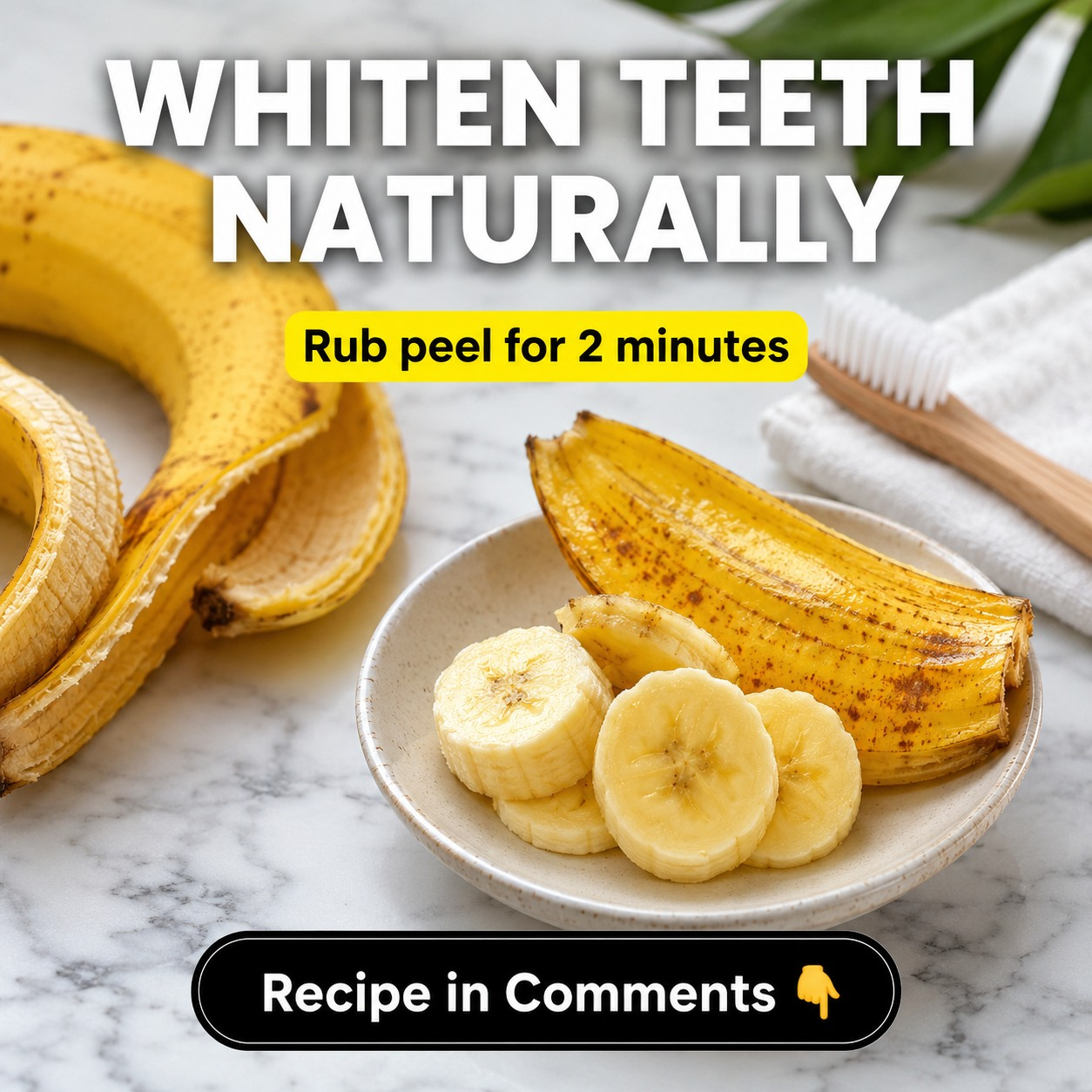
The banana-peel method shown in the image is not a scientifically proven whitening treatment. Laboratory research found that banana peel did not produce meaningful whitening, even after use designed to represent 14 to 30 days of brushing. Rubbing it on the teeth for two minutes may leave sugars and plant residue behind without bleaching the enamel. Acidic fruits, lemon, vinegar, charcoal, turmeric and abrasive homemade pastes are also unreliable and may damage enamel or make teeth appear more yellow. (PubMed)
Because strong clinical evidence for kitchen-based whitening recipes is lacking, the following remedies are safe home-care routines tailored to different dental needs. They focus on removing external stains, preventing new discoloration and protecting enamel.
Remedy 1: Baking-Soda Toothpaste Routine for Normal Teeth
Ingredients and Supplies
- Fluoride toothpaste containing baking soda: one pea-sized amount
- Soft-bristled toothbrush: one
- Dental floss: approximately 45 centimetres
- Plain water: one glass
- Sugar-free xylitol gum: one piece
- Tongue cleaner: one
Scientific Working of Each Ingredient
Baking-soda toothpaste contains sodium bicarbonate, a mildly abrasive and alkaline ingredient that helps loosen stains deposited on the enamel by food, tea and coffee. Reviews and clinical trials show that properly formulated baking-soda dentifrices can remove external stains effectively without relying on harsh acidity. Loose baking soda should not be scrubbed directly onto the teeth because a formulated toothpaste provides safer particle size, fluoride and controlled abrasivity. (PubMed)
Fluoride supports enamel remineralization and strengthens areas affected by early acid damage. A soft toothbrush removes plaque while reducing unnecessary gum and enamel abrasion. Floss removes plaque and dark debris between teeth, where brushing cannot reach. Xylitol gum stimulates saliva, helping reduce plaque acids and clear food residue. (Ada University)
Procedure
Floss gently before brushing. Apply a pea-sized amount of baking-soda fluoride toothpaste to the brush. Brush every tooth surface for two minutes using small, gentle circles. Spit out the toothpaste without repeatedly rinsing with large amounts of water.
Clean the tongue gently, then drink plain water as needed. After meals, chew one piece of sugar-free gum for approximately 20 minutes when brushing is not possible.
How Often to Apply
Brush twice daily and floss once daily for at least four to six weeks. Chew sugar-free gum after one or two main meals.
Initial Results
The mouth may feel cleaner within one to three days. Surface stains normally require several weeks of regular brushing before a visible shade improvement develops.
Remedy 2: Coffee and Tea Stain-Control Routine
Ingredients and Supplies
- Plain water: 250 millilitres
- Fluoride whitening toothpaste: one pea-sized amount
- Soft toothbrush: one
- Dental floss or interdental cleaner: one daily portion
- Sugar-free chewing gum: one piece
- Unsweetened milk or plain yogurt: one small serving with breakfast
Scientific Working of Each Ingredient
Water helps rinse away staining pigments before they remain on the tooth surface. Whitening toothpaste removes extrinsic discoloration through controlled polishing ingredients; a recent systematic review found that whitening dentifrices reduced tooth-surface staining more effectively than regular dentifrices. They polish existing stains but do not bleach the inner tooth structure. (PMC)
Sugar-free gum increases saliva, which helps clear food particles and neutralize plaque acids. Flossing prevents dark buildup between teeth. Unsweetened dairy foods provide protein, calcium and phosphorus as part of an enamel-supporting diet, although they do not directly whiten teeth.
Procedure
Drink tea or coffee with a meal rather than sipping it continuously for several hours. After finishing, rinse the mouth with plain water. Chew sugar-free gum for up to 20 minutes when suitable.
Brush twice daily, but do not perform additional aggressive brushing after every cup. Excessive brushing can irritate the gums and wear the tooth surface.
How Often to Apply
Follow the routine daily for at least four weeks. Keep coffee, black tea and other strongly coloured drinks to limited, defined occasions rather than repeated sipping.
Initial Results
The teeth may feel cleaner within two or three days. Reduced new staining becomes more noticeable after two to four weeks.
Remedy 3: Gentle Whitening Care for Sensitive Teeth
Ingredients and Supplies
- Desensitizing fluoride toothpaste: one pea-sized amount
- Extra-soft toothbrush: one
- Lukewarm water: one small glass
- Dental floss: approximately 45 centimetres
- Sugar-free gum: one piece
- Plain water for post-meal rinsing: 250 millilitres
Scientific Working of Each Ingredient
Desensitizing toothpaste commonly uses fluoride and sensitivity-control ingredients to protect exposed dentin and reduce nerve response. It does not create instant whitening, but it allows safe plaque and stain removal without harsh scrubbing.
Lukewarm water avoids the discomfort caused by very cold or hot water. An extra-soft brush limits mechanical irritation. Floss removes staining deposits between the teeth, and sugar-free gum stimulates protective saliva.
Bleaching treatments can cause temporary sensitivity, particularly during the first few days and when stronger peroxide concentrations are used. People who already have sensitive teeth should therefore avoid homemade hydrogen-peroxide mixtures and obtain dental advice before bleaching. (Ada University)
Procedure
Use gentle pressure to brush for two minutes. Do not scrub horizontally across the gumline. Floss slowly and stop if the gums bleed heavily or the tooth pain becomes sharp.
Rinse with water after tea, coffee or coloured food. Avoid charcoal powder, lemon, salt and acidic fruit pastes.
How Often to Apply
Brush twice daily for at least two to four weeks. Use the same sensitivity toothpaste consistently rather than changing formulas every few days.
Initial Results
Sensitivity may begin improving after several days, while surface-stain reduction usually requires two to six weeks.
Remedy 4: Saliva-Boosting Routine for Dry Mouth and Dull-Looking Teeth
Ingredients and Supplies
- Plain water: small sips throughout the day
- Sugar-free xylitol gum: one piece
- Fluoride toothpaste: one pea-sized amount
- Soft toothbrush: one
- Dental floss: one daily portion
- Alcohol-free oral rinse: one measured dose if advised
- Bedroom humidifier: one, when nighttime dryness is present
Scientific Working of Each Ingredient
Saliva cleans the mouth, buffers acids and protects enamel. Dry mouth increases the risk of plaque buildup, demineralization, tooth sensitivity, decay and oral infections. Water provides temporary moisture, while sugar-free gum stimulates the remaining salivary glands. Fluoride toothpaste protects enamel when natural saliva protection is reduced. (Ada University)
An alcohol-free rinse may be more comfortable than an alcohol-containing rinse, which can worsen dryness. A humidifier may reduce overnight discomfort caused by mouth breathing or dry indoor air. These measures do not chemically bleach teeth, but reducing plaque and dryness can make the smile look cleaner.
Procedure
Sip water regularly rather than drinking sugary beverages. Chew sugar-free gum for approximately 20 minutes after meals. Brush gently twice daily and floss once daily.
Use an alcohol-free rinse only according to its directions. Do not use lemon water, vinegar or concentrated essential oils as mouth rinses.
How Often to Apply
Continue the routine every day. Persistent dry mouth should be assessed because medicines, diabetes, autoimmune disease and other conditions may contribute to it.
Initial Results
The mouth may feel less sticky within the first day. Reduced plaque buildup and a cleaner tooth appearance require several days to weeks.
Remedy 5: Dentist-Supervised Home Whitening for Deep or Uneven Stains
Required Components
- Dental examination: one before treatment
- Professional cleaning: when plaque or calculus is present
- Custom-fitted whitening trays: one upper and one lower tray
- Dentist-prescribed peroxide gel: exact measured dose
- Desensitizing fluoride gel or toothpaste: as directed
- Treatment timer: according to the prescribed concentration
Scientific Working of the Treatment
Peroxide-based whitening works differently from toothpaste. Hydrogen peroxide or carbamide peroxide enters the tooth and oxidizes coloured molecules, producing genuine bleaching rather than surface polishing. Dentist-supervised trays provide controlled concentration, contact time and gum protection. Treatment commonly continues for two to six weeks. (Ada University)
Professional assessment is essential because crowns, fillings, veneers, implants and dentures do not whiten like natural teeth. A single dark tooth may also indicate previous trauma, nerve damage or decay rather than ordinary staining.
Procedure
Have the teeth and gums examined first. Complete any necessary cleaning or treatment. Place only the prescribed amount of gel in each tray and wear it for the recommended time. Remove excess gel from the gums and never extend the treatment time to obtain faster results.
How Often to Apply
Follow the dentist’s schedule, commonly daily for several weeks. Stop and contact the dentist if sensitivity or gum irritation becomes significant.
Initial Results
Minor lightening may appear within several days. The full result usually develops over two to six weeks.
Final Tips for Whiter and Healthier Teeth
Do not rub banana peel, lemon, orange peel, strawberries, vinegar, charcoal, turmeric or salt onto the teeth. Acid can soften enamel, while coarse particles can wear it away and expose the naturally yellow dentin underneath. Oil pulling has not been shown to whiten teeth. (MouthHealthy)
Brush twice daily for two minutes, clean between the teeth once daily and arrange routine dental examinations and cleanings. Avoid smoking and tobacco because they contribute to persistent staining and gum disease. Early improvements in cleanliness may appear within two or three days, but natural-looking stain reduction generally takes two to six weeks.
Diet Plan for Cleaner, Healthier Teeth
Breakfast: Eat eggs, unsweetened yogurt or oatmeal. Enjoy fruit as food rather than rubbing it on the teeth. Drink water after tea or coffee.
Lunch: Include vegetables, beans, chicken or fish with whole grains. Drink staining beverages with the meal rather than continuously afterward.
Snack: Choose plain yogurt, cheese, nuts or fresh vegetables more often than sticky sweets. Chew sugar-free gum after eating when brushing is unavailable.
Dinner: Eat a balanced meal containing protein and vegetables. Rinse the mouth with water afterward.
Daily limits: Reduce sugary drinks, frequent sweets, tobacco and continuous coffee or tea sipping. Keep acidic drinks occasional and never use citrus juice as a tooth scrub.
Continue the home routine for four to six weeks. See a dentist if discoloration remains unchanged, appears on only one tooth, develops suddenly or occurs with pain, swelling, bleeding gums, cavities or persistent sensitivity. Professional assessment is also necessary before whitening during pregnancy, for anyone younger than 18, or when crowns, veneers, implants or extensive fillings are present. (nhs.uk)
References for the above remedy
- American Dental Association. Whitening: Evidence, Treatment Considerations and DIY Methods.
https://www.ada.org/resources/ada-library/oral-health-topics/whitening - American Dental Association, MouthHealthy. Natural Teeth Whitening: Fact vs. Fiction.
https://www.mouthhealthy.org/all-topics-a-z/natural-teeth-whitening - National Health Service. Teeth Whitening.
https://www.nhs.uk/tests-and-treatments/teeth-whitening/ - Li Y. Stain Removal and Whitening by Baking Soda Dentifrice: A Review of Literature.
https://pubmed.ncbi.nlm.nih.gov/29056186/ - Maciel K, et al. Whitening Efficacy of Popular Natural Products on Dental Enamel.
https://pubmed.ncbi.nlm.nih.gov/35766717/ - Ghassemi A, et al. Effectiveness of a Dentifrice with Baking Soda for Whitening and Stain Removal.
https://pubmed.ncbi.nlm.nih.gov/23210419/ - American Dental Association. Chewing Gum and Oral Health.
https://www.ada.org/resources/ada-library/oral-health-topics/chewing-gum - American Dental Association. Xerostomia and Dry-Mouth Management.
https://www.ada.org/resources/ada-library/oral-health-topics/xerostomia - Effect of Whitening Dentifrice on Discoloration of Tooth Surface: Updated Systematic Review and Meta-Analysis.
https://pmc.ncbi.nlm.nih.gov/articles/PMC12010553/ - American Dental Association. Taking Care of Teeth and Mouth.
https://www.nia.nih.gov/health/teeth-and-mouth/taking-care-your-teeth-and-mouth