Introduction
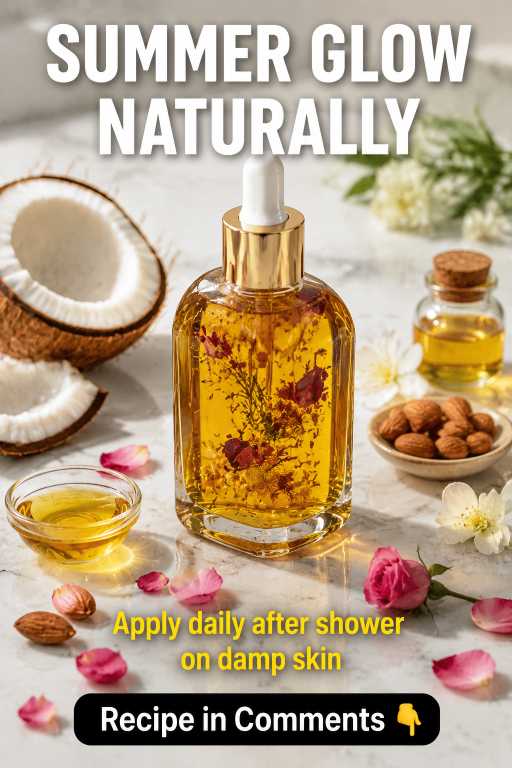
The uploaded image shows a golden botanical oil blend surrounded by coconut, almonds, roses and a small bowl of oil. It recommends applying oil daily after a shower while the skin is still damp. The practice slows water loss and can make skin look smoother and reflective. It cannot change skin colour, remove scars, erase wrinkles or replace sunscreen.
Plant oils differ. Reviews suggest that topical coconut oil can improve hydration and barrier function in some people, while sunflower oil may be more barrier-friendly than some heavily fragranced blends.[1] Sweet almond oil may soften skin, but people with nut allergy should avoid uncertain almond preparations.[2] Rose oil may offer relaxation, but evidence does not validate a homemade infusion.[3] These are moisturising oils, not treatments for eczema, pigmentation or disease.
How to Prepare and Apply the Base Oil Safely
Use a clean, dry bottle. Combine 2 tablespoons sunflower or jojoba oil with 1 tablespoon fractionated coconut oil and ½ teaspoon rose-infused oil made from a reputable cosmetic ingredient. Do not store fresh flowers, water, aloe or fruit juice in oil because moisture encourages contamination. Apply 4–6 drops to damp skin immediately after bathing, then gently spread without vigorous rubbing.
Patch-test each blend on the inner arm for 24–48 hours. Keep oils away from broken skin, active rashes and the eyes. Stop if burning, itching, swelling or hives develop. Fragrance and essential oils can trigger contact dermatitis, so fragrance-free carrier oils are the safer foundation. Oil does not replace broad-spectrum SPF 30 or higher, protective clothing or shade.
Remedy 1: For Normal Skin — Coconut, Sunflower and Rose Body Oil
Ingredients and scientific benefit
Use 1 tablespoon fractionated coconut oil, 1 tablespoon sunflower oil, 1 teaspoon jojoba oil, ½ teaspoon rose-infused oil, 2 drops squalane, 1 drop vitamin E if previously tolerated and 1 drop rose essential oil only if properly diluted. Coconut and sunflower oils reduce the dry feel; jojoba and squalane add slip; rose provides fragrance; vitamin E is an antioxidant ingredient but can cause contact allergy. The oil mainly improves surface smoothness, not permanent radiance.
Procedure
Mix in a dry bottle. After showering, pat the skin until damp and apply a few drops to the arms, legs and shoulders. Avoid the face initially, because richer oils may clog pores for some people. Let it absorb before dressing.
How Often to Apply
Use once daily for five days. Reduce to every other day if the skin feels greasy or develops bumps.
Initial Results
Skin may feel softer and look luminous within three days. It will not lighten skin or remove marks.
Remedy 2: For Combination or Acne-Prone Skin — Lightweight Jojoba and Sunflower Blend
Ingredients and scientific benefit
Combine 2 tablespoons jojoba oil, 1 tablespoon sunflower oil, 1 teaspoon rose-infused oil, ½ teaspoon squalane, 2 drops glycerin-based cosmetic serum only if separately preserved, 1 drop vitamin E if tolerated and no coconut or almond oil. Jojoba and squalane offer light emollience; sunflower oil supports surface barrier comfort; rose contributes aroma. The light formula reduces heaviness, but cannot guarantee that pores will not clog.
Procedure
Use 2–3 drops on damp arms, chest or legs. For facial use, apply one drop to a small cheek area after moisturiser and observe for two days. Do not apply over active acne, sweaty skin or the eyelids.
How Often to Apply
Apply once daily for five days to the body; use on the face only every other night if tolerated.
Initial Results
Dry patches may look smoother without a heavy sheen. Acne, clogged pores and pigmentation will not improve within 72 hours.
Remedy 3: For Oily or Folliculitis-Prone Skin — Squalane and Rosemary-Free Rose Oil
Ingredients and scientific benefit
Use 2 tablespoons squalane, 1 tablespoon jojoba oil, 1 teaspoon sunflower oil, ½ teaspoon rose-infused oil, 1 drop vitamin E if tolerated, 1 teaspoon cooled distilled water added only at the moment of use and no essential oil. Squalane and jojoba provide a light film; sunflower oil supports emollience; the absence of fragrance reduces potential irritation. Adding water makes a temporary mixture that must not be stored.
Procedure
Mix a few drops in your palm immediately before application. Spread lightly over damp body skin, avoiding areas with follicle bumps, heat rash or active infection. Do not seal sweaty skin under a thick layer.
How Often to Apply
Use once daily for three of the five days, then pause. Stop if bumps or itching appear.
Initial Results
The skin may feel comfortable with less surface tightness. Oiliness, body acne and folliculitis will not be cured by this blend.
Remedy 4: For Dry Skin — Coconut, Almond and Oat Comfort Oil
Ingredients and scientific benefit
Mix 1 tablespoon coconut oil, 1 tablespoon sunflower oil, 1 tablespoon jojoba oil, 1 teaspoon sweet almond oil, ½ teaspoon rose-infused oil, 2 drops squalane and 1 teaspoon colloidal oatmeal kept separate for a single-use paste. Oils reduce water loss and soften roughness; oatmeal supports barrier comfort. Almond oil should be avoided by anyone with tree-nut allergy or uncertainty about the product’s refining and contamination controls.[2]
Procedure
Warm the oils between your palms. Apply to damp body skin, then pat on a small amount of colloidal oatmeal paste only where roughness is present. Do not rub the oats as a scrub. Rinse hands after application and avoid slippery floors.
How Often to Apply
Use nightly for five days if comfortable. Apply less in hot weather or under tight clothing.
Initial Results
Roughness and tightness may feel reduced after moisturising. It cannot rebuild collagen, remove stretch marks or reverse eczema.
Remedy 5: For Sensitive Skin — Fragrance-Free Sunflower and Jojoba Oil
Ingredients and scientific benefit
Use 2 tablespoons sunflower oil, 1 tablespoon jojoba oil, ½ teaspoon squalane, 1 drop vitamin E only if previously tolerated, 1 teaspoon cooled boiled water used fresh and no rose, almond, coconut or essential oil. The short ingredient list avoids common fragrance triggers. Sunflower oil has evidence for supporting the skin barrier, while jojoba and squalane reduce the dry feel.[1]
Procedure
Patch-test the oil blend first. After a lukewarm shower, apply 2 drops to one small area of damp skin. Do not massage over eczema, hives, sunburn, cuts or an unexplained rash. If tolerated, use on larger body areas the next day.
How Often to Apply
Try once during five days. Stop immediately if redness, burning, itching or swelling occurs.
Initial Results
The realistic early result is improved comfort and less dryness, not dramatic glow or skin tightening. Persistent sensitivity needs clinical assessment.
Final Tips
Applying oil to damp skin is a moisturising technique, not a proven brightening treatment. The finish is not tanning. Do not use tanning oils as sunscreen. Avoid homemade infusions containing fresh flowers, herbs, water or fruit because they are difficult to preserve safely.
Use clean hands, a clean bottle and small batches. Patch-test fragrances and essential oils, and remember that “natural” does not mean hypoallergenic. Coconut oil may worsen acne in some people, and almond oil is inappropriate when nut allergy is possible. Seek medical advice for painful rash, widespread itching, blistering, swelling, oozing, sudden pigment change or an eczema flare. Visible softness may appear within one to three days; persistent dryness may require a properly formulated moisturiser or medical treatment.
Diet Plan
For five days, maintain ordinary balanced meals containing protein, vegetables, fruit, whole grains, legumes, nuts or seeds and adequate fluids. Protein and healthy fats support nutrition, but no food or oil permanently changes skin tone. Limit smoking, excess alcohol and extreme dieting. Eat nuts only if safe, and do not use supplements solely for cosmetic glow.
Continue moisturising and sun protection for two to four weeks. If dryness, itching, pigmentation or rash persists or worsens, see a doctor or dermatologist instead of applying more oil. People with eczema, rosacea, nut allergy, diabetes, pregnancy or regular medicines should ask a qualified clinician before using concentrated botanical oils.
References for the above remedy
- Lin TK, et al. “Anti-Inflammatory and Skin Barrier Repair Effects of Topical Application of Some Plant Oils.” International Journal of Molecular Sciences (2017). https://pmc.ncbi.nlm.nih.gov/articles/PMC5796020/
- American Academy of Allergy, Asthma & Immunology. “Food Allergy: Nut Oils in Topical Products.” https://www.aaaai.org/allergist-resources/ask-the-expert/answers/old-ask-an-experts/nutoil
- Mohebitabar S, et al. “The Efficacy of Rose Oil: A Comprehensive Review of Pharmacological and Clinical Effects.” Avicenna Journal of Phytomedicine (2017 ). https://pmc.ncbi.nlm.nih.gov/articles/PMC5511972/
- American Academy of Dermatology. “Skin Care: 10 Tips for Healthier-Looking Skin.” https://www.aad.org/public/everyday-care/skin-care-secrets/routine/skin-care-routine
- American Academy of Dermatology. “How to Select a Sunscreen.” https://www.aad.org/public/everyday-care/sun-protection/shade-clothing-sunscreen/choosing-sunscreen
- National Center for Complementary and Integrative Health. “Aloe Vera: Usefulness and Safety.” https://www.nccih.nih.gov/health/aloe-vera
Note: These references support selected barrier, oil-safety and botanical claims; they do not prove that a homemade oil blend permanently brightens skin or prevents ageing.