
A brighter smile can improve the overall appearance of the face, but yellow or stained teeth do not always mean poor oral hygiene. Tooth color is influenced by naturally yellow dentin beneath the enamel, genetics, age, tobacco use, and surface stains from tea, coffee and other foods. Whitening methods also work differently depending on whether discoloration is on the tooth surface or lies deeper within enamel and dentin. The American Dental Association (ADA) notes that established whitening approaches generally use either abrasives to remove external stains or peroxide-based agents to chemically bleach tooth pigments. (ADA)
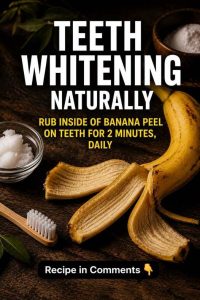
The image recommends rubbing the inside of a banana peel on the teeth for two minutes daily. Banana peel contains minerals and plant compounds, but there is currently no good clinical evidence demonstrating that rubbing banana peel on human teeth produces meaningful whitening. It should therefore not be described as a clinically proven whitening treatment. The remedies below focus instead on conservative methods with stronger scientific support, while avoiding highly acidic or abrasive DIY mixtures that can damage teeth.
Remedy 1: For Normal Teeth – Gentle Baking Soda Stain-Removal Routine
Ingredients
- 1/4 teaspoon baking soda
- 1 teaspoon water
- A soft-bristled toothbrush
- Fluoride toothpaste for regular brushing
- 1 cup plain water for rinsing
- Sugar-free chewing gum, optional after staining meals
Scientific Working of Each Ingredient
Baking soda: Sodium bicarbonate is one of the few familiar household ingredients with meaningful scientific evidence for removing external tooth stains. A review in the Journal of the American Dental Association concluded that baking-soda-containing dentifrices are effective for stain removal and whitening and can have relatively low abrasivity when properly formulated. (PubMed)
Its effect is mainly mechanical stain removal, rather than chemically bleaching the internal tooth structure. This distinction is important: baking soda can improve stains caused by foods and drinks but will not necessarily transform the natural underlying shade of teeth.
Water: Dilutes the powder and creates a soft paste, reducing the temptation to scrub with dry baking soda.
Fluoride toothpaste: Remains essential because a whitening routine should never replace normal cavity-prevention oral hygiene.
Procedure
Mix baking soda with enough water to form a thin paste. Place a small amount on a soft toothbrush and brush extremely gently for about 30–60 seconds. Do not scrub aggressively.
Rinse thoroughly. At another regular brushing session, use fluoride toothpaste as usual.
How Often to Apply
For a homemade approach, limit this to 2–3 times weekly rather than repeatedly scrubbing with baking soda throughout the day. A properly formulated fluoride toothpaste containing baking soda is a better option for routine use.
Initial Results
Very light surface staining may begin looking cleaner after several uses. Clinical research on formulated baking-soda dentifrices has demonstrated measurable stain removal, including improvement within five days in one trial. (PubMed)
Remedy 2: For Tea and Coffee Stains – Baking Soda Plus Consistent Brushing
Ingredients
- 1/4 teaspoon baking soda
- 1 teaspoon water
- Soft toothbrush
- Fluoride toothpaste
- 1 cup water after tea or coffee
- Sugar-free gum, optional
Scientific Working of the Routine
Dark beverages can leave extrinsic stains on the tooth surface. These are precisely the type of stains mechanical cleaning can address.
Clinical research supports sodium-bicarbonate dentifrices for extrinsic stain removal. A six-week clinical study involving 180 participants found that a baking-soda-and-peroxide fluoride dentifrice produced significantly better control of external staining than the regular fluoride control used in the study. (PubMed)
Rinsing with ordinary water after a staining beverage is not a bleaching treatment, but it can help clear residual beverage from the mouth.
Procedure
After tea or coffee, rinse your mouth with plain water. Maintain twice-daily brushing with fluoride toothpaste.
On 2–3 days per week, use the gentle baking-soda paste described above for surface stains.
How Often to Apply
Maintain normal oral hygiene daily. Use the homemade baking-soda step only a few times per week.
Initial Results
A cleaner surface can become noticeable within several days, but heavily stained teeth may require professional cleaning before whitening is considered.
Remedy 3: For Naturally Yellow Teeth – Oral Hygiene Plus Dentist-Guided Whitening
Ingredients
For the safest home routine:
- Fluoride toothpaste
- Soft toothbrush
- Dental floss or another interdental cleaner
- Plain water
- A dentist-approved whitening method if desired
Why Natural Ingredients Cannot Reliably Change Naturally Yellow Teeth
This is where many online remedies become misleading.
If the yellow appearance comes primarily from dentin or intrinsic tooth coloration, rubbing foods on enamel cannot reliably bleach it. According to the ADA, established chemical whitening relies primarily on hydrogen peroxide or carbamide peroxide. Reactive oxygen molecules interact with colored organic compounds within enamel and dentin, producing a genuine bleaching effect. (ADA)
Therefore, banana peel, coconut oil and similar kitchen ingredients should not be promised to change genetically or intrinsically yellow teeth.
Procedure
Brush twice daily with fluoride toothpaste and clean between the teeth daily. If teeth remain yellow despite being clean and healthy, ask a dentist whether bleaching is appropriate.
How Often to Apply
Oral hygiene is a lifelong routine. Follow the exact schedule of any dentist-recommended whitening treatment rather than improvising peroxide concentrations at home.
Initial Results
Cleaning may improve surface appearance within days. Genuine bleaching can take days to weeks depending on the whitening technique, concentration and type of discoloration. (ADA)
Remedy 4: For Stain-Prone Teeth – Baking Soda and Water Cleaning Paste
Ingredients
- 1/4 teaspoon baking soda
- 1–2 teaspoons water
- Soft toothbrush
- Fluoride toothpaste
- Plain water rinse
- Dental floss
Scientific Working of Baking Soda
Evidence supporting baking soda is stronger than evidence supporting most fruit-based DIY whitening hacks.
A scientific review found accumulated clinical evidence for stain removal and whitening with baking-soda-containing dentifrices. (PubMed) Another randomized controlled trial found that a whitening dentifrice containing sodium bicarbonate and peroxide produced significant reductions in extrinsic staining and improvements in tooth shade during six weeks of use. (PubMed)
Again, these studies examined formulated dental products, so they should not be interpreted as permission to scrub the teeth aggressively with concentrated household powders.
Procedure
Make a very thin baking-soda-and-water paste. Brush gently for no longer than about one minute. Rinse thoroughly.
Continue normal brushing with fluoride toothpaste and daily interdental cleaning.
How Often to Apply
Limit the homemade paste to 2–3 times weekly. Stop if sensitivity or gum irritation develops.
Initial Results
Surface stains may gradually become less obvious. Deep brown, grey or internally discolored teeth are unlikely to respond substantially.
Remedy 5: For Sensitive Teeth – No-Acid Whitening Routine
Ingredients
- Soft-bristled toothbrush
- Fluoride toothpaste appropriate for sensitive teeth
- Dental floss or interdental cleaner
- Plain water
- Baking soda only if tolerated and preferably in a formulated fluoride dentifrice
Scientific Working of the Routine
Sensitive teeth require special caution because whitening itself can increase sensitivity. The ADA identifies temporary tooth sensitivity and gum irritation among the most common adverse effects of peroxide whitening. (ADA)
For sensitive teeth, maintaining clean enamel without deliberately exposing it to acidic fruits or aggressive abrasives is more important than attempting fast DIY whitening.
Procedure
Brush gently twice daily and clean between teeth once daily. Rinse with water after staining beverages. Do not brush aggressively in an attempt to accelerate whitening.
If you want substantial whitening, have the cause of sensitivity evaluated before bleaching.
How Often to Apply
Continue the gentle hygiene routine every day. Any additional whitening program should be discussed with a dentist when sensitivity is persistent.
Initial Results
Teeth can appear cleaner within several days as surface plaque and staining are controlled. A dramatic shade change should not be expected from this routine.
Does Banana Peel Actually Whiten Teeth?
The claim shown in the image—that rubbing banana peel over teeth for two minutes daily whitens them—does not currently have strong clinical support.
The theory often given online is that minerals from banana peel somehow enter the enamel and whiten it. That mechanism has not been established in convincing human clinical trials.
This is consistent with the ADA’s broader warning about DIY whitening. Natural approaches involving fruits, vinegar, charcoal and coconut oil have much weaker evidence than established dental whitening methods. (ADA)
Even the popular strawberry-and-baking-soda method failed to produce measurable whitening in research discussed by the ADA. Charcoal is another poor alternative: evidence is insufficient to establish effective, safe whitening, and overly abrasive mixtures may damage enamel. (ADA)
What About Coconut Oil Pulling?
Coconut oil pulling is frequently promoted as a natural teeth whitener. A systematic review of randomized controlled trials found some evidence of improvements in measures such as plaque and bacterial counts, but the studies were small, heterogeneous and at relatively high risk of bias. The authors concluded that better-quality research was needed. (PubMed)
More importantly, improved oral hygiene is not the same thing as bleaching tooth structure. The ADA states that documented tooth whitening from oil pulling is absent. (ADA)
It should therefore not replace brushing with fluoride toothpaste.
Ingredients You Should Never Use for DIY Teeth Whitening
Avoid rubbing lemon or lime juice, vinegar or other strongly acidic ingredients onto the teeth. Acid can soften and erode enamel. As enamel becomes thinner, the yellow dentin beneath it can actually become more visible.
Avoid charcoal-and-salt scrubs as well. The ADA summarizes research in which a charcoal-and-salt mixture was abrasive and ineffective, with substantial tooth-surface abrasion reported. (ADA)
Also avoid using concentrated hydrogen peroxide directly from household supplies. Peroxide is a legitimate whitening agent when appropriately formulated, but concentration, exposure time and contact with the gums matter. Whitening can cause sensitivity and gingival irritation. (ADA)
Final Tips for Naturally Cleaner, Brighter Teeth
Brush twice daily for approximately two minutes with fluoride toothpaste, use a soft toothbrush and clean between your teeth every day. Rinse with water after strongly staining drinks and avoid tobacco. Do not brush harder to make teeth whiter—excessive abrasion can damage enamel and gums.
A reduction in superficial staining may become noticeable within several days, particularly with appropriate stain-removing dental care. However, changing the actual shade of intrinsically discolored teeth usually requires a proven bleaching method rather than fruit peels.
Remember that crowns, veneers, fillings and other tooth-colored restorations do not whiten like natural teeth. (ADA)
Diet Plan for Healthy, Cleaner-Looking Teeth
Begin breakfast with low-added-sugar foods such as eggs, oats, plain yogurt and whole fruit. Lunch can contain vegetables, whole grains and a protein source such as beans, lentils, fish, chicken or eggs. Snack on crunchy whole foods such as carrots, cucumber or apples alongside nuts where appropriate. Dinner should again emphasize vegetables, protein and minimally processed foods.
Drink water regularly and especially after coffee or tea. Reduce frequent sipping of sugary drinks and constant snacking on sugary foods because repeated exposure to fermentable carbohydrates encourages tooth decay.
For surface staining, follow good oral hygiene consistently for 2–6 weeks before judging improvement. If yellowing persists despite clean teeth, or if you have brown/white patches, pain, sensitivity, cavities, bleeding gums, a single tooth becoming darker, or discoloration that appears to come from inside the tooth, see a dentist. A dentist can determine whether you need professional cleaning, treatment for disease or an appropriate whitening procedure.
References for the above remedy
- American Dental Association. Whitening: Oral Health Topics.
https://www.ada.org/resources/ada-library/oral-health-topics/whitening - Li Y. Stain Removal and Whitening by Baking Soda Dentifrice: A Review of Literature. Journal of the American Dental Association. 2017.
https://pubmed.ncbi.nlm.nih.gov/29056186/ - Ghassemi A, et al. Effectiveness of a New Dentifrice With Baking Soda and Peroxide in Removing Extrinsic Stain and Whitening Teeth. Journal of Clinical Dentistry.
https://pubmed.ncbi.nlm.nih.gov/23210419/ - Yankell SL, et al. A Six-Week Clinical Efficacy Study of Four Commercially Available Dentifrices for the Removal of Extrinsic Tooth Stain.
https://pubmed.ncbi.nlm.nih.gov/10825858/ - Mankodi SM, Conforti N, Berkowitz H. Efficacy of Baking Soda-Containing Chewing Gum in Removing Natural Tooth Stain.
https://pubmed.ncbi.nlm.nih.gov/11913307/ - Woolley J, et al. The Effect of Oil Pulling With Coconut Oil to Improve Dental Hygiene and Oral Health: A Systematic Review. Heliyon. 2020.
https://pubmed.ncbi.nlm.nih.gov/32923724/ - Ghassemi A, et al. The Effects of Two Baking-Soda Toothpastes in Enhancing Mechanical Plaque Removal and Improving Gingival Health: A 6-Month Randomized Clinical Study.
https://pubmed.ncbi.nlm.nih.gov/33017530/ - Silveira FM, et al. Potentially Carcinogenic Effects of Hydrogen Peroxide for Tooth Bleaching on the Oral Mucosa: A Systematic Review and Meta-Analysis. Journal of Prosthetic Dentistry.
https://pubmed.ncbi.nlm.nih.gov/35282937/