Introduction
Sun exposure is one of the most common reasons behind uneven skin tone, tanning, dullness, and loss of natural brightness. When the skin is exposed to ultraviolet (UV) radiation, it increases melanin production as a protective response. Although melanin helps protect skin cells from UV damage, excessive production can create visible tanning and pigmentation concerns. Natural ingredients containing antioxidants, vitamins, and skin-supporting compounds may help improve the appearance of dull and uneven skin when used carefully with proper sun protection.
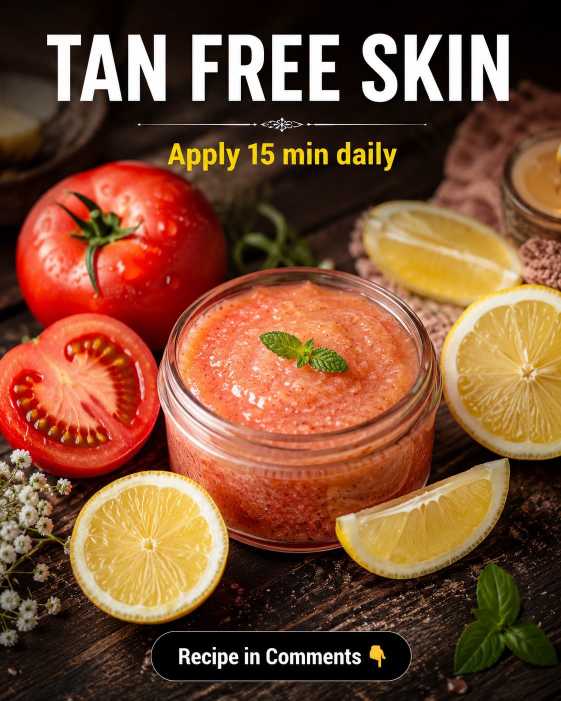
The tomato and lemon-based remedy shown in the image is popular because both ingredients contain naturally occurring compounds that support brighter-looking skin. Tomato contains lycopene, vitamin C, and other antioxidants that help reduce oxidative stress caused by environmental factors. Lemon contains citric acid and vitamin C, which are commonly studied for their role in supporting skin brightness. However, lemon juice can irritate sensitive skin and increase sun sensitivity, so it should always be diluted and patch-tested before use.
Different skin types react differently to natural ingredients. Oily skin may benefit from lightweight antioxidant-based treatments, while dry or sensitive skin requires additional moisturizing ingredients to protect the skin barrier. The following remedies are designed according to different skin types using natural ingredients and explaining the scientific role of each component.

Remedy 1: For Normal Skin
Scientific Working of Tomato, Lemon, and Honey for Tan Reduction
Normal skin usually maintains a balanced oil and moisture level, making it suitable for antioxidant-based remedies. Tomato provides lycopene, a carotenoid antioxidant that helps protect skin from oxidative stress. Lemon provides vitamin C and citric acid, which may support a brighter appearance by helping remove surface dullness. Honey contains natural humectants that attract moisture and support smoother-looking skin.
Ingredients
- Tomato pulp: 2 tablespoons
Tomato contains lycopene and vitamin C, antioxidants that help protect skin from environmental stress and support a healthier appearance. - Lemon juice: ½ teaspoon
Lemon contains citric acid and vitamin C, which help improve the appearance of uneven skin tone. It should always be diluted. - Honey: 1 teaspoon
Honey acts as a moisturizing ingredient and helps maintain skin softness. - Yogurt: 1 tablespoon
Yogurt contains lactic acid, which gently supports removal of dead surface skin cells. - Aloe vera gel: 1 teaspoon
Aloe vera contains polysaccharides and soothing compounds that support skin hydration.
Procedure
Mix tomato pulp, diluted lemon juice, honey, yogurt, and aloe vera gel until a smooth paste forms. Apply a thin layer to clean skin and leave it for 10–15 minutes. Wash gently with normal water and apply moisturizer afterward.
How Often to Apply
Use this remedy 2–3 times per week. Avoid daily lemon application because excessive use may irritate the skin barrier.
Initial Results
Within several uses, skin may appear fresher, softer, and more hydrated. A visible improvement in tanning usually requires consistent care over several weeks.
Remedy 2: For Combination Skin
Scientific Working of Tomato, Aloe Vera, and Green Tea
Combination skin contains both oily and dry areas, so it requires ingredients that balance oil without removing moisture. Tomato antioxidants support skin protection, aloe vera helps hydration, and green tea contains polyphenols that help reduce oxidative stress.
Ingredients
- Tomato pulp: 2 tablespoons
Provides lycopene and antioxidants. - Aloe vera gel: 1 tablespoon
Supports hydration without heavy oiliness. - Green tea water: 1 tablespoon
Contains catechins, antioxidant compounds that support skin health. - Honey: 1 teaspoon
Helps maintain moisture balance. - Oat powder: 1 teaspoon
Contains beta-glucan, which supports gentle cleansing and skin comfort.
Procedure
Prepare green tea water and allow it to cool. Mix all ingredients into a smooth paste. Apply evenly to the face and leave for 15 minutes before rinsing.
How Often to Apply
Apply on alternate days for 1–2 weeks, then reduce according to skin response.
Initial Results
The skin may feel smoother, less dull, and more balanced after regular use.
Remedy 3: For Oily Skin
Scientific Working of Tomato, Multani Mitti, and Aloe Vera
Oily skin produces excess sebum, which can contribute to clogged pores and dull appearance. Tomato antioxidants support healthier-looking skin, while clay-based ingredients such as multani mitti absorb excess oil. Aloe vera helps prevent excessive dryness.
Ingredients
- Tomato juice: 2 tablespoons
Provides antioxidant compounds including lycopene. - Multani mitti: 1 tablespoon
Helps absorb excess surface oil. - Aloe vera gel: 1 teaspoon
Supports hydration and skin comfort. - Cucumber juice: 1 tablespoon
Provides water content and soothing compounds. - Rose water: 1 teaspoon
Helps refresh the skin.
Procedure
Combine ingredients into a paste. Apply a thin layer and allow it to dry partially for around 10–15 minutes. Rinse gently without scrubbing.
How Often to Apply
Use 2 times weekly.
Initial Results
Skin may look cleaner, refreshed, and less oily after several applications.
Remedy 4: For Dry Skin
Scientific Working of Tomato, Avocado, and Honey
Dry skin has a weaker moisture barrier and requires nourishing ingredients. Tomato provides antioxidants, while avocado contains fatty acids and vitamin E that support skin softness. Honey helps retain moisture.
Ingredients
- Tomato pulp: 2 tablespoons
Provides antioxidant support. - Avocado pulp: 1 tablespoon
Contains moisturizing fatty acids and vitamin E. - Honey: 1 teaspoon
Works as a natural humectant. - Milk: 1 tablespoon
Contains lactic acid and proteins that support smooth skin texture. - Aloe vera gel: 1 teaspoon
Supports hydration.
Procedure
Mix all ingredients and apply gently to clean skin. Leave for 15 minutes and wash with lukewarm water.
How Often to Apply
Apply 2–3 times weekly.
Initial Results
Skin may feel softer and more hydrated after the first few applications.
Remedy 5: For Sensitive Skin
Scientific Working of Oatmeal, Aloe Vera, and Chamomile
Sensitive skin requires gentle ingredients because harsh acids may cause redness or irritation. Oatmeal contains beta-glucan, which supports skin comfort. Aloe vera provides soothing hydration, while chamomile contains plant compounds traditionally used for calming irritated skin.
Ingredients
- Aloe vera gel: 2 tablespoons
Supports hydration and soothing. - Oat powder: 1 tablespoon
Provides gentle cleansing and comfort. - Honey: 1 teaspoon
Helps maintain moisture. - Chamomile tea water: 1 tablespoon
Contains antioxidant plant compounds. - Cucumber juice: 1 tablespoon
Provides cooling hydration.
Procedure
Mix ingredients into a soft paste. Apply for 10 minutes and rinse gently.
How Often to Apply
Use 1–2 times weekly.
Initial Results
Skin may feel calmer, smoother, and more hydrated.
Final Tips
Natural remedies can support healthier-looking skin, but they cannot replace daily sun protection. Apply a broad-spectrum sunscreen before sun exposure because preventing tanning is easier than reversing it.
Drink enough water, maintain proper sleep, clean skincare tools regularly, and avoid harsh scrubbing. Always perform a patch test before applying any new ingredient, especially lemon-based mixtures.
Visible improvements in skin texture and brightness usually require consistent care. If pigmentation, dark patches, or skin changes continue despite proper skincare, consult a dermatologist for professional evaluation.
Diet Plan for Brighter Skin
A balanced diet supports skin health from within. Include:
- Citrus fruits such as oranges and grapefruit for vitamin C.
- Tomatoes and other colorful vegetables for antioxidants.
- Nuts and seeds for healthy fats and vitamin E.
- Fish, eggs, beans, or other protein sources for skin repair.
- Plenty of water to support hydration.
Continue a healthy diet and skincare routine for at least 6–8 weeks for noticeable improvement. If excessive pigmentation or unusual skin changes persist, medical advice should be taken.
References for the above remedy
- Pullar JM, Carr AC, Vissers MCM. The Roles of Vitamin C in Skin Health. Nutrients.
https://www.ncbi.nlm.nih.gov/pmc/articles/PMC5579659/ - Stahl W, Sies H. Lycopene: Antioxidant and biological properties. Biochimica et Biophysica Acta.
https://pubmed.ncbi.nlm.nih.gov/17306372/ - Draelos ZD. Cosmetic Dermatology: Products and Procedures.
https://www.ncbi.nlm.nih.gov/books/NBK279496/ - Korać RR, Khambholja KM. Potential of herbs in skin protection from ultraviolet radiation. Pharmacognosy Reviews.
https://www.ncbi.nlm.nih.gov/pmc/articles/PMC3263051/ - Lodén M. Role of topical emollients and moisturizers in the treatment of dry skin barrier disorders. American Journal of Clinical Dermatology.
https://pubmed.ncbi.nlm.nih.gov/15109299/ - Surjushe A, Vasani R, Saple DG. Aloe vera: A short review. Indian Journal of Dermatology.
https://www.ncbi.nlm.nih.gov/pmc/articles/PMC2763764/ - Williams HC, Dellavalle RP, Garner S. Acne vulgaris. The Lancet.
https://pubmed.ncbi.nlm.nih.gov/24055063/