Introduction
Soft, naturally pink lips are often associated with healthy skin and good hydration. However, sun exposure, dehydration, smoking, lip licking, certain cosmetics, nutritional deficiencies, and environmental conditions can make the lips appear dark, dry, or dull. Since the lips have a very thin protective barrier and almost no oil glands, they lose moisture much faster than the rest of the skin.
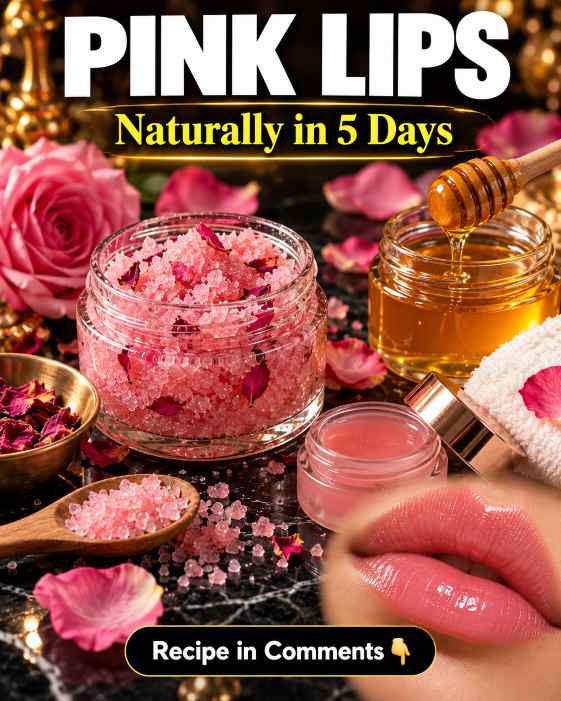
Red rose petals contain natural anthocyanins, flavonoids, vitamin C, and antioxidants that help protect delicate lip skin from oxidative stress while providing a temporary natural rosy tint. Honey is a natural humectant that attracts moisture, supports skin repair, and helps soften rough lips. Although natural remedies cannot permanently change your natural lip color in 5 days, they can improve hydration, smoothness, and enhance your lips’ natural healthy appearance with consistent use.
The following remedies are customized for different lip types.
Remedy 1: For Normal Lips
Scientific Working of Red Rose and Honey
Red rose petals are rich in anthocyanins and polyphenols that help protect the lips from environmental damage. Honey attracts moisture into the lips and supports skin healing. Aloe vera provides soothing hydration, while sweet almond oil supplies vitamin E and healthy fatty acids.
Ingredients
- Fresh red rose petals – 8–10 petals
- Raw honey – 1 teaspoon
- Fresh aloe vera gel – ½ teaspoon
- Sweet almond oil – ½ teaspoon
- Vitamin E oil – 2 drops
Procedure
Wash the rose petals thoroughly and grind them into a smooth paste. Mix in the honey, aloe vera gel, almond oil, and vitamin E oil. Apply a generous layer to clean lips and leave it on for 15–20 minutes. Wipe away gently with a damp cotton pad or leave a thin layer overnight if comfortable.
How Often to Apply
Apply every night for at least 5 consecutive days.
Initial Results
Within 3–5 days, lips may feel softer, smoother, and better hydrated. Natural brightness may improve with continued use.
Remedy 2: For Dry Lips
Scientific Working of Rose Petals, Honey, and Shea Butter
Dry lips need deep hydration. Honey locks in moisture, shea butter strengthens the lip barrier with fatty acids, while rose petals provide antioxidants that help protect delicate lip tissue.
Ingredients
- Rose petal paste – 1 teaspoon
- Honey – 1 teaspoon
- Shea butter – 1 teaspoon
- Coconut oil – ½ teaspoon
- Vitamin E oil – 2 drops
Procedure
Mix into a creamy balm and massage gently onto the lips. Leave overnight.
How Often to Apply
Use daily before bedtime.
Initial Results
Lips may become noticeably softer with reduced flaking after several applications.
Remedy 3: For Pigmented Lips
Scientific Working of Rose Petals, Honey, and Licorice
Licorice root contains glabridin, a plant compound studied for helping reduce excess pigmentation. Honey hydrates the lips, while rose petals supply antioxidant pigments that support a healthier appearance.
Ingredients
- Rose petal paste – 1 teaspoon
- Honey – 1 teaspoon
- Licorice root powder – ¼ teaspoon
- Aloe vera gel – ½ teaspoon
- Sweet almond oil – ½ teaspoon
Procedure
Blend all ingredients into a smooth paste. Apply for 20 minutes, then wipe gently.
How Often to Apply
Use 4 times per week.
Initial Results
With regular use, lips may appear more even-toned over 6–8 weeks.
Remedy 4: For Sensitive Lips
Scientific Working of Rose Petals, Honey, and Oat Extract
Sensitive lips require soothing ingredients. Oat extract strengthens the skin barrier, aloe vera calms irritation, while honey hydrates without excessive dryness.
Ingredients
- Rose petal paste – 1 teaspoon
- Honey – 1 teaspoon
- Aloe vera gel – 1 teaspoon
- Colloidal oat extract – ½ teaspoon
- Jojoba oil – ½ teaspoon
Procedure
Mix gently and perform a patch test first. Apply for 10–15 minutes, then rinse with cool water.
How Often to Apply
Use 2–3 times weekly.
Initial Results
The lips may feel calmer, smoother, and more comfortable after a few applications.
Remedy 5: Overnight Lip Repair Mask
Scientific Working of Rose Petals, Honey, and Coconut Oil
During sleep, the skin naturally repairs itself. Honey helps retain moisture overnight, coconut oil strengthens the lip barrier, while rose petals provide antioxidants that support healthier-looking lips.
Ingredients
- Rose petal paste – 1 teaspoon
- Honey – 1 teaspoon
- Coconut oil – ½ teaspoon
- Aloe vera gel – ½ teaspoon
- Vitamin E oil – 2 drops
Procedure
Apply a thick layer before bedtime and leave it on overnight. Wash gently the following morning.
How Often to Apply
Every night for 5–7 days, then continue 3 nights per week for maintenance.
Initial Results
Lips may become softer, smoother, and more moisturized within the first week.
Final Tips
- Drink 2–3 liters of water daily to prevent dehydration.
- Avoid licking your lips frequently.
- Use a lip balm with SPF 30 or higher before going outdoors.
- Exfoliate gently only once a week using a soft washcloth or a gentle lip scrub.
- Remove lipstick completely before sleeping.
- Avoid smoking and tobacco products, which contribute to lip discoloration.
- Perform a patch test before using any new natural ingredient.
Natural remedies improve hydration and the appearance of lip brightness but cannot permanently change natural lip color within 5 days. Continued care is needed for lasting improvements.
Diet Plan for Healthy Pink Lips
Breakfast
- Orange, strawberries, or kiwi
- Greek yogurt
- Oatmeal
Mid-Morning Snack
- Almonds or walnuts
Lunch
- Grilled fish, chicken, lentils, or beans
- Mixed leafy greens
- Brown rice
Evening Snack
- Watermelon or cucumber
Dinner
- Sweet potato
- Steamed vegetables
- Eggs or chickpeas
Hydration
Drink 2–3 liters of water daily and include foods rich in vitamin C, vitamin E, iron, omega-3 fatty acids, and antioxidants to support healthy skin and lips.
Continue this routine for 6–8 weeks. If persistent lip discoloration, cracking, ulcers, or swelling continues despite proper care, consult a qualified dermatologist or healthcare professional.
References for the above remedy
- Burlando B, Cornara L. Honey in Dermatology and Skin Care.
https://www.ncbi.nlm.nih.gov/pmc/articles/PMC5661189/ - Pullar JM, Carr AC, Vissers MCM. The Roles of Vitamin C in Skin Health. Nutrients.
https://www.ncbi.nlm.nih.gov/pmc/articles/PMC5579659/ - Surjushe A, Vasani R, Saple DG. Aloe Vera: A Short Review. Indian Journal of Dermatology.
https://www.ncbi.nlm.nih.gov/pmc/articles/PMC2763764/ - National Center for Biotechnology Information. Anthocyanins and Their Antioxidant Properties.
https://www.ncbi.nlm.nih.gov/pmc/articles/PMC5613902/ - American Academy of Dermatology. How to Heal Dry, Chapped Lips.
https://www.aad.org/public/everyday-care/skin-care-basics/dry/heal-dry-chapped-lips - Mayo Clinic. Skin Care Basics.
https://www.mayoclinic.org/healthy-lifestyle/adult-health/in-depth/skin-care/art-20048237 - Cleveland Clinic. Dry Lips: Causes and Treatment.
https://health.clevelandclinic.org/dry-lips-causes-treatment