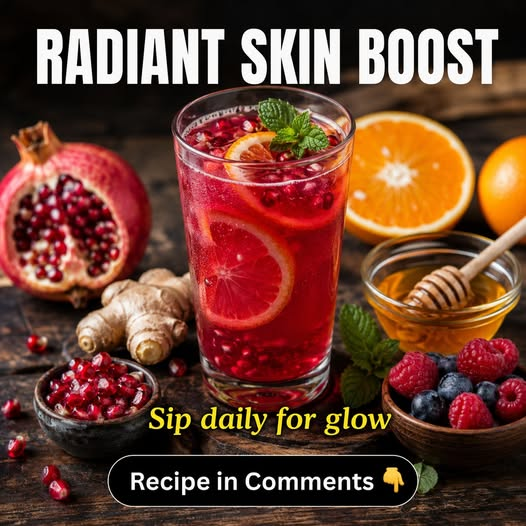
Radiant skin is usually the result of consistent hydration, balanced nutrition, adequate sleep, sun protection and a healthy skin barrier—not one “detox” drink. Dullness may become more noticeable because of dehydration, insufficient fruit and vegetable intake, smoking, stress, poor sleep, acne, irritation or repeated ultraviolet exposure. The pomegranate, orange, ginger and honey drink shown in the image provides fluids, vitamin C and plant polyphenols, but it cannot create flawless or permanently brighter skin after a few servings. Human trials suggest that pomegranate, green tea, tomato-derived lycopene, flaxseed oil, soy isoflavones and certain fermented-milk preparations may support selected skin measurements when consumed consistently for several weeks or months. (PubMed)
Diet cannot be matched to facial skin type as precisely as topical skincare. The five drinks below are therefore tailored to common concerns associated with normal, combination, oily, dry and sensitive skin. The exact recipes have not been tested as complete clinical treatments; their benefits are based on research involving individual foods or standardized preparations.
Remedy 1: Pomegranate Citrus Cooler for Normal Skin
Ingredients and Scientific Benefits
- Unsweetened pomegranate juice – 120 millilitres: Provides ellagitannins, anthocyanins and other polyphenols studied for protection against ultraviolet-related skin stress.
- Fresh orange – ½ small fruit: Supplies vitamin C required for normal collagen production.
- Fresh ginger – ¼ teaspoon, grated: Adds antioxidant plant compounds and flavour without refined sugar.
- Chia seeds – 1 teaspoon: Provide fibre and the plant omega-3 fatty acid alpha-linolenic acid.
- Fresh mint – 4 leaves: Improves flavour without syrup or excess honey.
- Cold water – 150 millilitres: Dilutes the natural fruit sugar and supports hydration.
Scientific Working of the Drink
In a randomized study, daily pomegranate juice or extract consumed for 12 weeks increased resistance to ultraviolet-B-induced redness in healthy women. This does not mean that pomegranate replaces sunscreen or instantly brightens the face. Vitamin C from oranges is required for collagen biosynthesis and also functions as a physiological antioxidant. (PubMed)
Procedure
Blend the pomegranate juice, peeled orange, ginger, mint and water briefly. Stir in the chia seeds and allow the drink to stand for five minutes. Drink it with breakfast rather than on an empty stomach if citrus causes acidity.
How Often to Drink
Drink one serving daily for five days. Continue four or five days weekly for eight to twelve weeks if it fits your overall calorie and sugar intake.
Initial Results
Within one to three days, you may feel better hydrated and less tempted to choose a sugary drink. Significant changes in pigmentation, elasticity or fine lines should not be expected this quickly.
Remedy 2: Green Tea and Berry Cooler for Combination Skin
Ingredients and Scientific Benefits
- Brewed green tea – 200 millilitres: Supplies catechins, including epigallocatechin gallate.
- Strawberries – ⅓ cup: Provide vitamin C and antioxidant pigments.
- Cucumber – 4 thin slices: Adds water and volume with minimal natural sugar.
- Fresh mint – 3 leaves: Creates freshness without sweeteners.
- Lemon juice – ½ teaspoon: Adds flavour and a small amount of vitamin C.
- Plain water – 100 millilitres: Reduces caffeine concentration and improves hydration.
Scientific Working of the Drink
A 12-week clinical study found that a green-tea-polyphenol beverage reduced ultraviolet-related redness and improved several measurements of skin quality, including elasticity, roughness and hydration. However, another randomized trial found that oral green-tea catechins did not prevent every form of ultraviolet damage, so green tea should be considered supportive rather than protective treatment. (PubMed)
This low-sugar drink may suit combination skin better than concentrated fruit juice because it supplies antioxidants without a large carbohydrate load.
Procedure
Brew the tea for two to three minutes and allow it to cool. Blend or lightly crush the strawberries, cucumber and mint. Add the tea, water and lemon juice. Do not add sugar or honey.
How Often to Drink
Drink once daily for five days, preferably earlier in the day. Continue for up to twelve weeks if caffeine does not disturb sleep or cause palpitations.
Initial Results
The drink may improve hydration and replace sweetened tea within the first few days. Visible skin improvements, where they occur, require much longer use.
Remedy 3: Tomato and Red Pepper Savoury Drink for Oily Skin
Ingredients and Scientific Benefits
- Tomato paste – 2 tablespoons: Provides concentrated lycopene.
- Red bell pepper – ¼ cup: Supplies vitamin C and carotenoids.
- Cucumber – ¼ cup: Adds water without substantial sugar.
- Extra-virgin olive oil – ½ teaspoon: Helps the body absorb fat-soluble tomato carotenoids.
- Fresh mint or coriander – 1 tablespoon: Adds flavour without salt or sugar.
- Plain water – 200 millilitres: Creates a light, drinkable consistency.
Scientific Working of the Drink
In a randomized controlled study, women consumed 55 grams of tomato paste providing 16 milligrams of lycopene in olive oil daily for 12 weeks. The intervention reduced several ultraviolet-related skin changes and supported markers associated with the extracellular matrix. This recipe contains a smaller amount and therefore cannot be expected to reproduce the clinical result. (PubMed)
A low-glycaemic dietary pattern has improved acne in some randomized trials, although results across studies are not completely consistent. Choosing an unsweetened vegetable drink instead of fruit juice may help reduce the overall glycaemic load, but it is not an acne treatment by itself. (PubMed)
Procedure
Blend all ingredients until smooth. Add more water if needed. Drink with breakfast or lunch and avoid adding sugar, excessive salt or commercial sauces.
How Often to Drink
Use once daily for three to five days. Continue three or four times weekly for approximately twelve weeks.
Initial Results
Oil production will not change immediately, but replacing a sugary beverage may reduce blood-sugar spikes from the first day. Skin-related changes require consistent dietary and topical care.
Remedy 4: Soy, Oat and Flax Smoothie for Dry Skin
Ingredients and Scientific Benefits
- Unsweetened soy milk – 250 millilitres: Supplies protein and naturally occurring isoflavones.
- Ground flaxseed – 1 tablespoon: Provides fibre and alpha-linolenic acid.
- Rolled oats – 2 tablespoons: Add soluble fibre and create a filling texture.
- Strawberries or kiwi – ½ cup: Supply vitamin C.
- Almond butter – 1 teaspoon: Provides unsaturated fat and vitamin E.
- Water – ¼ cup: Adjusts thickness without adding sugar.
Scientific Working of the Drink
A randomized trial found that flaxseed-oil supplementation improved hydration and smoothness while reducing roughness, scaling, water loss and sensitivity after twelve weeks. Ground flaxseed is nutritious but is not identical to the measured flaxseed-oil preparation used in that trial. (PubMed)
A six-month randomized study in postmenopausal women found that soy protein containing isoflavones improved facial hydration and several signs of photoageing. Ordinary soy milk provides less protein and a less controlled isoflavone dose than the research supplement, so realistic expectations remain important. (PubMed)
Procedure
Blend all ingredients until smooth. Use it as breakfast rather than drinking it beside another full meal. Do not add sugar, syrup or sweetened milk.
How Often to Drink
Use once daily for five days, then continue three to five mornings weekly for at least eight to twelve weeks.
Initial Results
Fullness and steadier morning energy may improve after the first serving. Dry skin will still require a suitable moisturiser; measurable barrier improvement cannot be expected in three days.
Remedy 5: Gentle Probiotic Pear and Oat Smoothie for Sensitive Skin
Ingredients and Scientific Benefits
- Plain live-culture yogurt or kefir – ¾ cup: Provides protein and live microorganisms when cultures remain active.
- Ripe pear – ½ fruit: Adds fibre and mild sweetness without citrus acidity.
- Rolled oats – 1 tablespoon: Supply soluble fibre that supports a balanced diet.
- Ground flaxseed – 1 teaspoon: Adds plant omega-3 fat and fibre.
- Cucumber – ¼ cup: Provides water and a lighter consistency.
- Plain water – ½ cup: Dilutes the drink without added sugar.
Scientific Working of the Drink
A four-week randomized trial found that a specific probiotic and prebiotic fermented milk helped maintain stratum-corneum hydration in healthy women compared with placebo. Probiotic effects are strain- and dose-specific, so ordinary yogurt or kefir cannot be assumed to produce the same result. (PubMed)
This recipe avoids ginger, strong citrus and caffeine, making it a gentler choice for people who experience reflux or flushing after highly acidic or stimulating drinks. It does not treat eczema, rosacea or food allergies.
Procedure
Blend all ingredients until smooth. Drink immediately and do not leave it at room temperature. Choose dairy-free cultured yogurt when medically necessary, provided it is unsweetened and appropriately fortified.
How Often to Drink
Drink once daily for five days. Continue three or four times weekly for four to eight weeks if tolerated.
Initial Results
Digestive comfort and hydration may improve within several days. Redness, itching or an active rash should not be expected to resolve from a smoothie.
Final Tips for a Lasting Skin Glow
Do not drink all five recipes on the same day. Choose one that matches your needs, and remember that concentrated juices can add substantial natural sugar.
Drink according to thirst, activity and climate. A systematic review found only a slight improvement in skin hydration from additional water, with the greatest potential benefit among people who previously drank relatively little. Excessive water intake does not create extra glow. (PubMed)
Apply broad-spectrum, water-resistant sunscreen with SPF 30 or higher every morning. Sunscreen has stronger evidence for preventing dark spots, wrinkles and premature ageing than any beauty drink. Cleanse gently, moisturise according to skin type, avoid smoking and sleep consistently. (American Academy of Dermatology)
Visible freshness from improved hydration may begin within two or three days. Changes in roughness, elasticity, pigmentation or fine lines generally require eight to twenty-four weeks, and results vary.
Diet Plan for Radiant Skin
Follow this plan for at least eight to twelve weeks:
Breakfast: Choose one drink above with eggs, plain yogurt, lentils or another protein source when the drink is not already a complete smoothie.
Lunch: Eat beans, lentils, fish, chicken or tofu with leafy vegetables, tomatoes and a whole-grain carbohydrate.
Snack: Choose whole fruit with a small serving of walnuts, almonds, pumpkin seeds or roasted chickpeas.
Dinner: Include protein, colourful vegetables and a moderate portion of whole grains. Limit frequent deep-fried foods and heavily sweetened drinks.
Weekly variety: Rotate citrus, guava, berries, tomatoes, peppers, leafy vegetables, legumes, nuts, seeds, fish and unsweetened soy foods. Vitamin C-rich fruits and vegetables support normal collagen synthesis, but supplements are unnecessary when the diet already provides enough. (Office of Dietary Supplements)
Continue the drink and diet routine for two to three months. Consult a dermatologist if dullness occurs with persistent acne, scaling, severe itching, facial swelling, unusual paleness or rapidly changing pigmentation. Speak with a doctor or dietitian before making concentrated drinks a daily habit if you have diabetes, kidney disease, food allergies, reflux, pregnancy, breastfeeding or regular medication use.
References for the above remedy
- Henning SM, et al. Pomegranate Juice and Extract Consumption Increases Resistance to UVB-Induced Erythema.
https://pubmed.ncbi.nlm.nih.gov/31601842/ - Heinrich U, et al. Green Tea Polyphenols Provide Photoprotection and Improve Skin Properties.
https://pubmed.ncbi.nlm.nih.gov/21525260/ - Rizwan M, et al. Tomato Paste Rich in Lycopene Protects Against Cutaneous Photodamage.
https://pubmed.ncbi.nlm.nih.gov/20854436/ - Neukam K, et al. Flaxseed Oil Supplementation Improves Skin Hydration and Barrier Function.
https://pubmed.ncbi.nlm.nih.gov/21088453/ - Rizzo J, et al. Soy Protein Containing Isoflavones Improves Facial Photoageing and Hydration.
https://pubmed.ncbi.nlm.nih.gov/37836398/ - Kano M, et al. Fermented Milk Containing Probiotics and Prebiotics Benefits Skin Condition.
https://pubmed.ncbi.nlm.nih.gov/24936360/ - Smith RN, et al. A Low-Glycaemic-Load Diet Improves Acne Symptoms.
https://pubmed.ncbi.nlm.nih.gov/17616769/ - National Institutes of Health, Office of Dietary Supplements. Vitamin C Fact Sheet for Health Professionals.
https://ods.od.nih.gov/factsheets/VitaminC-HealthProfessional/ - Akdeniz M, et al. Does Dietary Fluid Intake Affect Skin Hydration? A Systematic Review.
https://pubmed.ncbi.nlm.nih.gov/29392767/ - American Academy of Dermatology Association. Ten Skin-Care Secrets for Healthier-Looking Skin.
https://www.aad.org/public/everyday-care/skin-care-secrets/routine/healthier-looking-skin