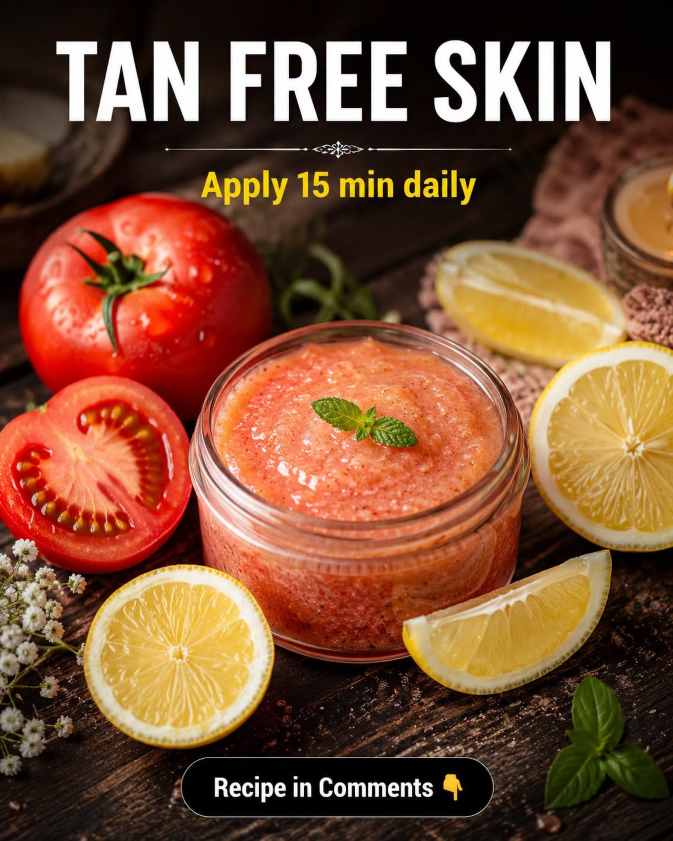
A suntan develops when ultraviolet radiation stimulates the skin to produce more melanin. Although tanning is often treated as a cosmetic problem, dermatologists consider a tan a sign that the skin has responded to UV injury. (American Academy of Dermatology) Once the skin is tanned, there is no safe kitchen ingredient that can erase the extra pigment overnight. The most effective natural approach is to stop additional UV exposure, keep the skin barrier healthy, and use gentle ingredients with evidence for reducing UV-induced pigmentation or supporting more even-looking skin. Aloe-derived aloesin, topical soy, standardized mulberry extract, green-tea polyphenols, and properly formulated vitamin C have better scientific support than harsh viral remedies. (PubMed)
An important note about the image: raw tomato mixed with lemon juice is not recommended as a clinically proven tan-removal mask. Tomato has stronger evidence when consumed as a source of lycopene, while citrus juice on sun-exposed skin can cause phytophotodermatitis, blistering, and additional hyperpigmentation. (PubMed)
Remedy 1: For Normal Skin — Aloe, Soy and Green Tea Tan-Fading Mask
Ingredients and Scientific Working
- Pure inner-leaf aloe vera gel — 1 tablespoon: Aloe contains aloesin. Human research found that aloesin suppressed pigmentation caused by ultraviolet radiation by interfering with melanin production. (PubMed)
- Plain unsweetened soy milk — 1 tablespoon: Topical soy has human clinical evidence for improving mottled pigmentation, dullness, overall tone, and texture. (PubMed)
- Strong cooled green tea — 1 tablespoon: Green-tea polyphenols have shown photoprotective effects when applied to human skin, although they should not replace sunscreen. (PubMed)
- Rice starch — 1 teaspoon: Rice-derived preparations can support hydration and the skin barrier while providing a smooth finish. (PubMed)
- Vegetable glycerin — 2 drops: Helps retain water in the outer skin layer.
- Colloidal oatmeal — ½ teaspoon: Supports barrier function and reduces dryness and irritation. (PubMed)
Procedure
Mix the rice starch and oatmeal first. Add aloe, soy milk, cooled green tea, and glycerin. Apply a thin layer to clean skin and leave it on for 8–10 minutes. Rinse with lukewarm water without scrubbing.
How Often to Apply
Use once daily for the first 3 days if comfortable, then three to four times weekly.
Initial Results
Within 1–3 days, skin may feel softer, calmer, and more hydrated. A true suntan will not disappear this quickly; pigment improvement usually takes several weeks.
Remedy 2: For Combination Skin — Mulberry, Cucumber and Aloe Tone-Balancing Gel
Ingredients and Scientific Working
- Cosmetic-grade mulberry extract — 2–3 drops: A randomized placebo-controlled trial found significant improvement in melasma with a standardized mulberry extract preparation after several weeks. (PubMed)
- Pure aloe vera gel — 1 tablespoon: Provides soothing hydration while aloesin-related research supports an effect on UV-induced pigmentation.
- Fresh cucumber juice — 1 tablespoon: Primarily provides cooling water and helps create a lightweight treatment.
- Plain soy milk — 1 teaspoon: Supplies soy-derived compounds with human evidence for improving uneven pigmentation. (PubMed)
- Colloidal oatmeal — ½ teaspoon: Helps prevent dry cheek areas from becoming irritated.
- Vegetable glycerin — 1 drop: Adds lightweight hydration.
Procedure
Combine all ingredients until smooth. Apply a thinner layer over the oily T-zone and slightly more over drier tanned areas. Leave for approximately 8 minutes and rinse.
How Often to Apply
Use every other day for the first 3–5 days. Continue three times weekly for 6–8 weeks if there is no irritation.
Initial Results
Skin may look fresher within a few applications because of improved hydration. Pigment reduction should be assessed over weeks rather than days.
Remedy 3: For Oily Skin — Green Tea, Aloe and Licorice Clarifying Treatment
Ingredients and Scientific Working
- Strong chilled green tea — 2 tablespoons: Human studies show topical green-tea extracts can reduce several biological effects of ultraviolet exposure. (PubMed)
- Pure aloe vera gel — 1 tablespoon: Provides non-greasy hydration and a pigmentation-supporting botanical.
- Skin-safe diluted licorice extract — 2 drops: Licorice-derived glabridin inhibits tyrosinase and melanogenesis in experimental research and is widely investigated as a botanical depigmenting ingredient. (PubMed)
- Rice starch — 1 teaspoon: Creates a lightweight, oil-free base.
- Colloidal oatmeal — ½ teaspoon: Helps avoid over-drying the skin.
- Distilled water — 1 tablespoon: Keeps the treatment light for oily areas.
Procedure
Mix until a thin gel forms. Apply primarily over the forehead, nose, cheeks, and other tanned areas. Leave for 7–8 minutes, then rinse without rubbing.
How Often to Apply
Apply once daily for the first 3 days if tolerated, then every other day.
Initial Results
Oiliness and surface dullness may improve during the first 1–3 days. Melanin-related tanning requires considerably longer to fade.
Remedy 4: For Dry Skin — Soy Yogurt, Sunflower and Aloe Recovery Mask
Ingredients and Scientific Working
- Plain unsweetened soy yogurt — 1 tablespoon: Combines moisturization with soy-derived compounds associated with improvements in pigmentation and tone. (PubMed)
- Pure aloe vera gel — 1 tablespoon: Helps calm UV-related irritation; topical aloe has demonstrated anti-inflammatory effects after UV exposure. (PubMed)
- High-linoleic sunflower seed oil — ¼ teaspoon: Human research found that sunflower seed oil preserved skin-barrier integrity and improved hydration. (PubMed)
- Colloidal oatmeal — 1 teaspoon: Helps reduce roughness and supports skin-barrier recovery.
- Raw honey — ½ teaspoon: Functions mainly as a moisturizing and emollient ingredient rather than a proven tan remover. (PubMed)
- Vegetable glycerin — 2 drops: Helps dry skin hold water.
Procedure
Mix everything into a creamy paste. Apply gently to clean skin and leave for 8–10 minutes. Rinse and pat dry.
How Often to Apply
Use every other evening for the first 3–5 days, then three times weekly.
Initial Results
Dryness and roughness can improve within 1–3 days, giving skin a brighter appearance. True tan fading remains gradual.
Remedy 5: For Sensitive Skin — Aloe, Rice and Oat Barrier-Calming Mask
Ingredients and Scientific Working
- Pure aloe vera gel — 1 tablespoon: Provides hydration and has evidence for reducing UV-associated inflammation. (PubMed)
- Colloidal oatmeal — 1 teaspoon: Clinically studied for improving skin-barrier function and hydration. (PubMed)
- Rice starch — 1 teaspoon: Rice-derived skincare ingredients have moisturizing and barrier-supporting properties. (PubMed)
- Sunflower seed oil — 2 drops: Helps maintain the lipid barrier without aggressive exfoliation.
- Cool distilled water — 1 tablespoon: Dilutes the mixture.
- Vegetable glycerin — 1 drop: Adds simple hydration.
Procedure
Combine the ingredients into a thin paste. Patch-test first. Apply for only 5–7 minutes, then rinse with cool-to-lukewarm water.
How Often to Apply
Use every other day for 3–5 days. If the skin remains completely comfortable, continue twice weekly.
Initial Results
Sensitive skin may appear calmer and smoother within several days. Avoid chasing quick lightening because irritation can itself trigger further pigmentation.
Why Tomato and Lemon Is Not the Best Tan-Removal Remedy
Tomatoes are rich in lycopene, and human trials show that regularly eating lycopene-rich tomato products can improve resistance to UV-related skin damage. A randomized study using tomato paste found protection against several markers of cutaneous photodamage after sustained dietary intake. (PubMed) A systematic review and meta-analysis has also associated tomato and lycopene supplementation with improvements in UV-related skin outcomes and pigmentation. (PubMed)
That does not prove that rubbing raw tomato onto a tan removes it.
Lemon juice is even more problematic. Citrus contains photoreactive furocoumarins. When citrus-contaminated skin receives UVA exposure, phytophotodermatitis can occur, sometimes producing redness, blistering, and lingering brown pigmentation. (DermNet®) For someone trying to fade a tan, this can create exactly the opposite result.
Final Tips for Removing a Tan Safely
The most important step is preventing additional tanning. Dermatologists recommend broad-spectrum, water-resistant SPF 30 or higher, along with shade and protective clothing. Sunscreen should be reapplied about every two hours when outdoors. (American Academy of Dermatology)
Avoid lemon juice, lime juice, baking soda, bleach, aggressive scrubs, and undiluted vinegar. Do not scrub the skin trying to physically remove the tan; melanin is inside skin cells and cannot safely be rubbed away.
Patch-test every botanical treatment. Stop immediately if you develop burning, persistent redness, swelling, or itching.
A softer, more hydrated glow can begin within 2–3 days, but meaningful tan fading normally takes weeks. Continued sun protection also helps prevent wrinkles and photoaging, but these masks should not be advertised as instant wrinkle-removal treatments.
Diet Plan for Healthy, Sun-Stressed Skin
Diet cannot erase an existing tan, but antioxidant-rich foods can support normal skin health and may improve resistance to future UV stress.
Breakfast: Eggs or plain yogurt with berries, kiwi, guava, or orange.
Mid-morning: Almonds, walnuts, pumpkin seeds, or one whole fruit.
Lunch: Lentils, beans, chicken, fish, tofu, or eggs with tomatoes, carrots, spinach, and whole grains.
Afternoon: Pomegranate, berries, or fresh fruit with water.
Dinner: Protein with leafy vegetables, broccoli, bell peppers, tomatoes, and brown rice or whole-grain bread.
Include cooked tomato regularly if you enjoy it. Human studies suggest dietary lycopene from tomato products can support photoprotection. (PubMed) Pomegranate has also been evaluated in a randomized trial for increasing resistance to UVB-induced erythema. (PubMed) Colorful fruit and vegetable carotenoids can accumulate in human skin and influence healthy-looking skin coloration over time. (PubMed)
How Long Should You Continue?
Choose one remedy appropriate for your skin type and continue it for approximately 6–8 weeks, while protecting your skin from additional sunlight every day.
If uneven pigmentation persists beyond 8–12 weeks, keeps becoming darker despite sun protection, or is accompanied by itching, scaling, pain, sharply defined unusual patches, or rapidly changing spots, see a doctor or dermatologist. Melasma, post-inflammatory hyperpigmentation, medication-related pigmentation, and other conditions can resemble an ordinary suntan and may require different treatment.
References for the above remedy
- Choi S, et al. Aloesin inhibits hyperpigmentation induced by UV radiation. Clinical and Experimental Dermatology.
https://pubmed.ncbi.nlm.nih.gov/12372097/ - Wallo W, Nebus J, Leyden JJ. Efficacy of a soy moisturizer in photoaging: a double-blind, vehicle-controlled, 12-week study.
https://pubmed.ncbi.nlm.nih.gov/17941363/ - Alvin G, Catambay N, Vergara A, Jamora MJ. A comparative study of 75% mulberry extract oil versus placebo as a topical treatment for melasma.
https://pubmed.ncbi.nlm.nih.gov/22052272/ - Camouse MM, et al. Topical application of green and white tea extracts provides protection from solar-simulated ultraviolet light in human skin.
https://pubmed.ncbi.nlm.nih.gov/19492999/ - Correia G, et al. Efficacy of topical vitamin C in melasma and photoaging: a systematic review.
https://pubmed.ncbi.nlm.nih.gov/37128827/ - Danby SG, et al. Effect of olive and sunflower seed oil on the adult skin barrier.
https://pubmed.ncbi.nlm.nih.gov/22995032/ - Rizwan M, et al. Tomato paste rich in lycopene protects against cutaneous photodamage in humans in vivo: a randomized controlled trial.
https://pubmed.ncbi.nlm.nih.gov/20854436/ - Zhang X, et al. The effect of tomato and lycopene on clinical characteristics and molecular markers of UV-induced skin deterioration: a systematic review and meta-analysis.
https://pubmed.ncbi.nlm.nih.gov/36606553/ - DermNet. Phytophotodermatitis.
https://dermnetnz.org/topics/phytophotodermatitis - American Academy of Dermatology Association. Sunscreen FAQs.
https://www.aad.org/media/stats-sunscreen