Introduction
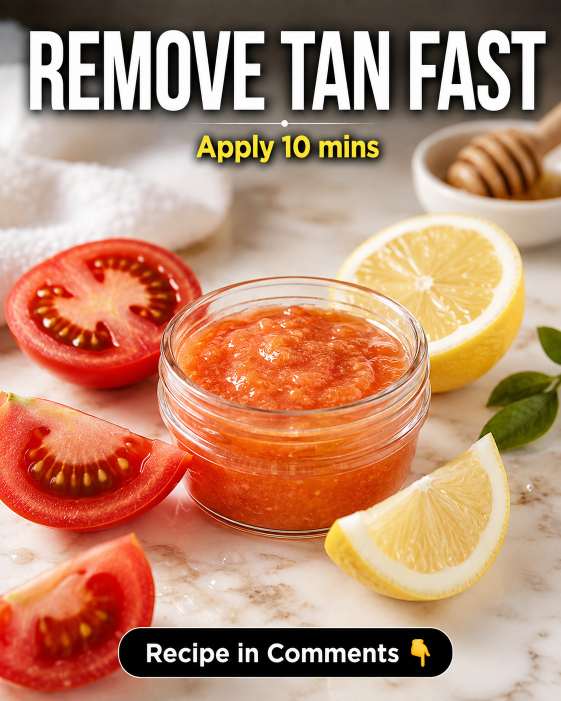
The uploaded image shows a tomato, lemon and honey mixture promoted as a fast tan-removal mask to be applied for 10 minutes. The ingredients may make skin feel fresh and temporarily smoother, but a tan is increased melanin produced after ultraviolet exposure. A kitchen mask cannot safely erase that pigment in one application, change natural skin colour or prevent further tanning. The most effective first step is reducing continued sun exposure with shade, protective clothing and broad-spectrum sunscreen.[1]
Tomato contains lycopene and other carotenoids. Human studies support possible photoprotective effects from eating tomato-rich products over time, but dietary protection is not the same as rubbing raw tomato on the face.[2] Lemon provides acidity and vitamin C, yet citrus juice on skin can cause irritation and phototoxic reactions after sunlight exposure, sometimes followed by darker pigmentation.[3] Honey is a humectant and has dermatology evidence mainly in wound-care products, not as a proven tan remover.[4] The recipes below are cautious, short-contact options; they are not treatments for melasma, burns, acne or post-inflammatory hyperpigmentation.
How to Prepare and Apply the Base Mask Safely
Mash 1 tablespoon ripe tomato and mix it with ½ teaspoon honey. Do not add lemon to a facial mask; its acidity and photoreactive compounds can cause harm. Apply a thin layer to clean, intact skin for 5–10 minutes, rinse with lukewarm water and moisturise. Make one fresh portion only, use clean utensils and discard leftovers.
Patch-test behind the ear or on the inner arm for 24–48 hours. Avoid the eyes, lips, broken skin, active rash, sunburn and freshly exfoliated areas. Never go into sunlight with tomato or lemon residue on the skin. Stop for burning, swelling, itching, hives or blistering. If a painful rash or blisters appear after citrus exposure, seek medical care.
Remedy 1: For Normal Skin — Tomato, Honey and Oat Mask
Ingredients and scientific benefit
Use 1 tablespoon tomato pulp, ½ teaspoon honey, 1 teaspoon colloidal oatmeal, ½ teaspoon aloe gel from a preserved cosmetic product and 1 teaspoon clean water. Tomato supplies a mildly acidic, water-rich pulp; honey attracts moisture; oatmeal supports barrier comfort; aloe may feel soothing. None has been proven to remove a tan quickly, and the lycopene evidence is stronger for dietary intake than topical kitchen use.[2]
Procedure
Mix a smooth single-use paste. Apply a thin layer to the cheeks, forehead and jaw, avoiding the eye area. Leave for 8–10 minutes, rinse gently without scrubbing and apply fragrance-free moisturiser.
How Often to Apply
Use once every other day for five days. Do not use it daily if the skin feels dry or warm.
Initial Results
Skin may feel softer and look temporarily brighter within one to three days. The tan and uneven pigment will not disappear that quickly.
Remedy 2: For Combination Skin — Tomato, Yoghurt and Oat Balance Mask
Ingredients and scientific benefit
Combine 1 tablespoon strained tomato pulp, 1 teaspoon plain unsweetened yoghurt, ½ teaspoon colloidal oatmeal, ¼ teaspoon honey and ½ teaspoon aloe gel. Oatmeal supports the barrier, yoghurt adds a creamy texture and contains lactic acid, and honey reduces a tight after-feel. The small amount of tomato is intended to limit sting. This mixture has not been clinically validated for tan removal.
Procedure
Apply mainly to the cheeks and dry areas, using a very thin layer or skipping the oily T-zone. Leave for 5–8 minutes, rinse with lukewarm water and moisturise. Do not massage the oats as a scrub.
How Often to Apply
Apply once during the five-day trial. If completely comfortable, repeat no more than weekly.
Initial Results
Dry areas may feel smoother and the face may look less dull. Oiliness and sun-related pigmentation are unlikely to change within 72 hours.
Remedy 3: For Oily Skin — Tomato, Green Tea and Aloe Oil-Free Mask
Ingredients and scientific benefit
Use 1 tablespoon tomato pulp, 1 tablespoon cooled green tea, 1 teaspoon colloidal oatmeal, ½ teaspoon preserved aloe gel and no honey or facial oil. Green tea contains polyphenols studied for antioxidant and anti-inflammatory activity; oatmeal and aloe can support comfort. The oil-free formula feels lighter, but it will not regulate sebum, unclog pores or reliably remove a tan.
Procedure
Mix and apply for 5–8 minutes. Rinse thoroughly, pat dry and use a non-comedogenic moisturiser. Do not add lemon, baking soda or toothpaste.
How Often to Apply
Use once during five days, then wait a week before repeating. Stop if stinging, dryness or bumps occur.
Initial Results
The face may feel clean and less shiny. Dark marks, acne and tanning will not be permanently corrected.
Remedy 4: For Dry Skin — Tomato, Honey and Squalane Comfort Mask
Ingredients and scientific benefit
Mix 1 tablespoon tomato pulp, 1 teaspoon honey, 1 teaspoon colloidal oatmeal, 2 drops squalane and ½ teaspoon plain yoghurt. Honey and squalane help reduce the feeling of tightness; oatmeal supports the barrier; yoghurt adds moisture to the mask. The ingredients may improve surface softness, but moisturisation does not mean pigment has been removed.
Procedure
Apply to damp cheeks and other dry areas, avoiding irritated skin. Leave for 5–10 minutes, rinse gently and immediately apply a plain moisturiser. Do not allow the mixture to dry into a tight film.
How Often to Apply
Use once during the five-day trial, then weekly if tolerated. Stop if redness or increased flaking develops.
Initial Results
Tightness may feel reduced after one use. A lasting change in tan requires sun protection and time, not stronger acidity.
Remedy 5: For Sensitive Skin — Diluted Tomato-Free Oat and Aloe Compress
Ingredients and scientific benefit
Use 1 teaspoon colloidal oatmeal, 2 tablespoons clean water and ½ teaspoon preserved cosmetic aloe gel. Oatmeal and aloe are chosen instead of tomato, lemon and honey to reduce exposure to acids and potential allergens. This is a comfort compress, not a tan-removal treatment. People with very reactive skin should still patch-test.
Procedure
Stir into a thin suspension and apply to one small cheek area with clean fingers or cotton for 3–5 minutes. Rinse and moisturise. Do not apply during rosacea, eczema, sunburn or an unexplained flare unless a clinician approves it.
How Often to Apply
Try once during five days. Do not repeat if itching, burning, swelling or worsening redness occurs.
Initial Results
The likely early result is temporary comfort and less dryness, not rapid fading of tan or dark spots.
Final Tips
Do not rub lemon juice directly onto the skin. Citrus-associated phytophotodermatitis can cause redness, blisters and later hyperpigmentation, especially when exposed to sunlight.[3] Do not use harsh scrubs, undiluted acids, bleach or baking soda to speed results. Irritation can trigger post-inflammatory hyperpigmentation, particularly in deeper skin tones.
Use broad-spectrum SPF 30 or higher, reapply as directed and wear a hat or protective clothing outdoors.[1] Keep masks away from broken skin and make them fresh rather than storing food mixtures. “Natural” does not mean non-irritating or sterile. Seek medical advice for painful or spreading rash, blisters, facial swelling, rapidly changing spots, persistent melasma or pigmentation that does not improve with sun protection. Freshness may appear within one to three days, but pigment changes generally require weeks or months of consistent protection and appropriate treatment.
Diet Plan
For five days, eat regular meals containing vegetables, fruit, legumes, whole grains, protein and healthy fats, and drink adequate fluids. Tomato-rich foods may contribute carotenoids to the diet, but eating them does not replace sunscreen or directly erase a tan.[2] Vitamin C-rich foods support normal nutrition; they do not make topical lemon safe. Avoid smoking, crash dieting and excessive alcohol, and do not take high-dose supplements for complexion changes without professional advice.
Continue sun protection and gentle skincare for four to eight weeks. If the tan or dark spots persist, worsen or affect your confidence, see a dermatologist instead of increasing mask frequency. A clinician should evaluate possible melasma, medication-related pigmentation, eczema or post-inflammatory marks.
References for the above remedy
- American Academy of Dermatology. “Sun Protection.” https://www.aad.org/public/everyday-care/sun-protection
- Stahl W, et al. “Lycopene-Rich Products and Dietary Photoprotection.” Photochemical & Photobiological Sciences (2006 ). https://pubmed.ncbi.nlm.nih.gov/16465309/
- Mioduszewski M, et al. “Phytophotodermatitis: A Phototoxic Reaction to Lime and Lemon Juice.” CMAJ (2015 ). https://pmc.ncbi.nlm.nih.gov/articles/PMC4500699/
- Burlando B, Cornara L. “Honey in Dermatology and Skin Care: A Review.” Journal of Cosmetic Dermatology (2013 ). https://pubmed.ncbi.nlm.nih.gov/24305429/
- American Academy of Dermatology. “How to Fade Dark Spots in Darker Skin Tones.” https://www.aad.org/public/everyday-care/skin-care-secrets/routine/fade-dark-spots
- National Center for Complementary and Integrative Health. “Aloe Vera: Usefulness and Safety.” https://www.nccih.nih.gov/health/aloe-vera
Note: These references support selected tomato, sun-protection, honey and citrus-safety claims; they do not prove that a homemade tomato mask rapidly removes a tan.