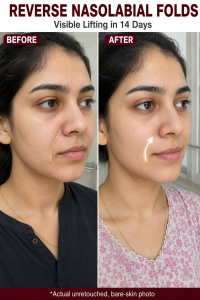
Nasolabial folds are the smile lines that run from the sides of the nose toward the corners of the mouth. They become more visible when skin loses moisture, collagen support, cheek fullness, and elasticity. Sun exposure, dehydration, stress, smoking, rapid weight changes, and repeated facial movement can make these folds look deeper. Natural remedies cannot permanently erase deep structural folds in 14 days, but they can help the skin look plumper, smoother, calmer, and more lifted when used consistently. The goal is to hydrate the fold area, support collagen protection, reduce oxidative stress, and improve skin texture according to your skin type.
Remedy 1: For Normal Skin
Aloe, Green Tea and Rosehip Soft-Lift Mask
Ingredients:
Aloe vera gel: 1 tablespoon, supports hydration and skin recovery.
Cooled green tea: 1 teaspoon, provides antioxidant catechins.
Rosehip oil: 3 drops, supports softness and skin barrier comfort.
Plain yogurt: 1 teaspoon, gives mild lactic acid exfoliation.
Raw honey: ½ teaspoon, helps retain moisture.
Fine oat powder: 1 teaspoon, calms and smooths the skin.
Scientific Working of Each Ingredient
Aloe vera helps the skin hold water and supports collagen-related repair pathways, making the fold area look fresher. Green tea contains EGCG, an antioxidant that helps protect skin from oxidative stress linked with premature aging. Rosehip oil contains fatty acids and antioxidant compounds that support a smoother skin surface. Yogurt contains lactic acid, which gently loosens dull dead cells so the skin reflects light better. Honey works as a natural humectant, while oats reduce roughness and help the skin barrier stay calm.
Procedure:
Mix all ingredients into a creamy paste. Clean the face and apply the mask over the nasolabial folds, cheeks, and smile-line area. Do not rub hard. Leave for 12 minutes, then rinse with cool water. Pat dry and apply a gentle moisturizer.
How Often to Apply:
Use once daily for 5 days, then 3 times weekly for 14 days.
Initial Results:
Within 1–3 days, the skin may feel softer and more hydrated. Smile lines may look slightly less sharp because of better surface moisture.
Remedy 2: For Combination Skin
Soy Milk, Aloe and Oat Firming Pack
Ingredients:
Unsweetened soy milk: 1 tablespoon, supports skin softness with isoflavones.
Aloe vera gel: 1 teaspoon, hydrates without heaviness.
Fine oat powder: 1 teaspoon, balances dry and oily areas.
Green tea: 1 teaspoon, gives antioxidant support.
Honey: ½ teaspoon, prevents dryness around the folds.
Rosehip oil: 2 drops, nourishes the cheek area.
Scientific Working of Each Ingredient
Soy isoflavones are studied for their role in improving the look of photoaged skin and supporting firmness. Aloe gives lightweight hydration, which is useful for combination skin that can feel oily in some areas and dry near the mouth. Oats help reduce irritation and keep the skin barrier balanced. Green tea helps defend against environmental stress. Honey adds moisture without making the mask too greasy. Rosehip oil supports the lipid barrier, especially around the fold where dryness can exaggerate lines.
Procedure:
Mix the ingredients well until smooth. Apply a thin layer only on the cheeks, nasolabial folds, and mouth-corner area. Leave it for 10 minutes. Rinse gently and avoid stretching the skin while drying.
How Often to Apply:
Apply every other day for 5 days, then continue 3 times a week for 2–4 weeks.
Initial Results:
In 1–3 days, the face may look more balanced and less tired. The folds may appear softer when the skin is well hydrated.
Remedy 3: For Oily Skin
Green Tea, Yogurt and Cucumber Line-Smoothing Gel
Ingredients:
Cooled green tea: 1 tablespoon, helps reduce oxidative stress.
Plain yogurt: 1 teaspoon, provides mild lactic acid exfoliation.
Fresh cucumber juice: 1 teaspoon, cools and hydrates lightly.
Aloe vera gel: 1 teaspoon, soothes without clogging.
Fine oat powder: ½ teaspoon, absorbs excess oil gently.
Honey: ¼ teaspoon, gives light moisture.
Scientific Working of Each Ingredient
Oily skin can still become dehydrated, which makes nasolabial folds look deeper. Green tea supports antioxidant protection and helps the skin look calmer. Yogurt’s lactic acid improves dull texture, but it should be used in a mild amount to avoid irritation. Cucumber gives water-based freshness without oiliness. Aloe hydrates and cools the skin. Oat powder reduces greasy shine while calming the skin barrier. A small amount of honey keeps the skin from becoming tight after rinsing.
Procedure:
Mix all ingredients into a light gel-like paste. Apply around the smile lines and cheeks. Keep it on for 8 minutes only. Rinse with cool water and pat dry. Avoid applying heavy oils afterward.
How Often to Apply:
Use daily for 3 days, then alternate days for the next 11 days.
Initial Results:
Within 1–3 days, oily skin may feel cleaner, smoother, and less sticky. The fold area may look fresher due to improved hydration and reduced dull buildup.
Remedy 4: For Dry Skin
Honey, Rosehip and Aloe Deep Moisture Mask
Ingredients:
Raw honey: 1 teaspoon, pulls moisture into the skin.
Aloe vera gel: 1 tablespoon, hydrates and soothes.
Rosehip oil: 4 drops, supports barrier repair and softness.
Mashed ripe avocado: 1 teaspoon, gives fatty acids and a creamy texture.
Fine oat powder: 1 teaspoon, reduces dryness-related irritation.
Cooled green tea: 1 teaspoon, adds antioxidant support.
Scientific Working of Each Ingredient
Dry skin often makes nasolabial folds look more visible because the surface becomes tight and creased. Honey works as a humectant and supports repair. Aloe adds water-rich hydration. Rosehip oil and avocado help restore a comfortable lipid layer, making dry folds look less harsh. Oat powder calms roughness and supports the skin barrier. Green tea helps protect against free-radical stress that contributes to collagen breakdown.
Procedure:
Mash avocado until smooth, then mix with the remaining ingredients. Apply a thin layer around the mouth lines, cheeks, and lower face. Leave for 12–15 minutes. Rinse gently with lukewarm water and apply moisturizer while the skin is slightly damp.
How Often to Apply:
Use once daily for 5 days, then 3 times weekly for at least 4 weeks.
Initial Results:
Within 1–3 days, dry skin may feel more comfortable and plump. The folds can look softer because hydrated skin reflects light more evenly.
Remedy 5: For Sensitive Skin
Oat, Aloe and Chamomile Calm-Firm Compress
Ingredients:
Fine oat powder: 1 tablespoon, supports the skin barrier.
Aloe vera gel: 1 tablespoon, calms sensitive skin.
Cooled chamomile tea: 1 teaspoon, gives a soothing effect.
Honey: ¼ teaspoon, adds gentle moisture.
Sunflower seed oil: 2 drops, supports barrier comfort.
Green tea: ½ teaspoon, provides mild antioxidant support.
Scientific Working of Each Ingredient
Sensitive skin must be treated gently because irritation can make lines and redness more visible. Oats are well studied for calming and barrier-supporting effects. Aloe hydrates while reducing discomfort. Chamomile can soothe, but people allergic to ragweed or daisies should avoid it. Honey gives light moisture and supports recovery. Sunflower seed oil contains linoleic acid, which helps barrier function. Green tea provides antioxidant support in a very mild amount.
Procedure:
Mix all ingredients into a soft paste. Apply only a thin layer over the folds and cheeks. Leave for 5–7 minutes. Rinse with cool water and press the skin dry. Do not massage strongly.
How Often to Apply:
Use every other day for 5 days. If no irritation appears, continue twice weekly for 14 days.
Initial Results:
Within 1–3 days, sensitive skin may look calmer, less dry, and less stressed. Softening of folds will be gradual and gentle.
Final Tips
Use sunscreen every morning because UV exposure breaks down collagen and makes folds deeper over time. Sleep well, drink enough water, and avoid smoking because smoke-related oxidative stress can worsen facial aging. Do not pull the skin downward during cleansing. Apply remedies with upward strokes from the mouth corner toward the cheekbone. Keep towels, brushes, and hands clean. Always do a patch test for 24 hours before applying any remedy to the face. Visible freshness may begin within 2–3 days, while wrinkle softening and glow usually need 2–6 weeks of consistent care.
Diet Plan
Continue the selected home remedy for 14 days, then maintain it 2–3 times weekly for 4–6 weeks. For skin support, eat protein with every meal, such as eggs, lentils, beans, fish, chicken, yogurt, tofu, or chickpeas. Add vitamin C foods like guava, oranges, lemon water, berries, kiwi, amla, and bell peppers because vitamin C supports collagen formation. Include omega-rich foods such as walnuts, chia seeds, flaxseeds, and fatty fish. Eat colorful vegetables, especially spinach, carrots, tomatoes, and broccoli. Reduce excess sugar, fried foods, smoking, and alcohol because they can increase glycation and oxidative stress, making lines look deeper. If nasolabial folds suddenly worsen, become one-sided, come with swelling, facial weakness, major weight loss, or persistent skin irritation, see a doctor or dermatologist.
References for the above remedy
- Cho, S. et al. “Dietary Aloe Vera Supplementation Improves Facial Wrinkles and Elasticity.” URL: https://pmc.ncbi.nlm.nih.gov/articles/PMC2883372/ (PMC)
- Chiu, A. E. et al. “Double-blinded, Placebo-controlled Trial of Green Tea Extracts in the Clinical and Histologic Appearance of Photoaging Skin.” URL: https://pubmed.ncbi.nlm.nih.gov/16029678/ (PubMed)
- Tran, D. et al. “An Antiaging Skin Care System Containing Alpha Hydroxy Acids and Vitamins Improves the Biomechanical Parameters of Facial Skin.” URL: https://pmc.ncbi.nlm.nih.gov/articles/PMC4277239/ (PMC)
- Pullar, J. M. et al. “The Roles of Vitamin C in Skin Health.” URL: https://pmc.ncbi.nlm.nih.gov/articles/PMC5579659/ (PMC)
- Natarelli, N. et al. “Clinical Efficacy of Topical or Oral Soy Supplementation in Skin Aging.” URL: https://pmc.ncbi.nlm.nih.gov/articles/PMC10299547/ (PMC)
- Oargă, D. P. et al. “The Effectiveness of a Topical Rosehip Oil Treatment on Skin Conditions.” URL: https://www.mdpi.com/2079-9284/12/3/125 (MDPI)
- Sobhan, M. et al. “The Efficacy of Colloidal Oatmeal Cream 1% as Add-on Therapy.” URL: https://pmc.ncbi.nlm.nih.gov/articles/PMC7103792/ (PMC)
- Tashkandi, H. “Honey in Wound Healing: An Updated Review.” URL: https://pmc.ncbi.nlm.nih.gov/articles/PMC8496555/ (PMC)
- Lin, T. K. et al. “Anti-Inflammatory and Skin Barrier Repair Effects of Topical Application of Some Plant Oils.” URL: https://pmc.ncbi.nlm.nih.gov/articles/PMC5796020/ (PMC)
- Alam, M. et al. “Association of Facial Exercise With the Appearance of Aging.” URL: https://pmc.ncbi.nlm.nih.gov/articles/PMC5885810/ (PMC)