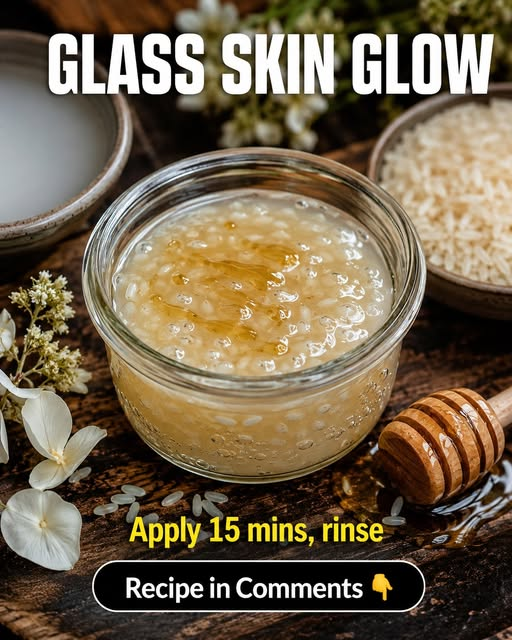
Glass skin describes a complexion that looks smooth, evenly hydrated and naturally reflective. Fresh rice water is often promoted as a quick route to this appearance, especially when combined with honey. Research supports the skincare potential of rice-derived starches and professionally formulated rice-bran extracts, but it does not prove that a homemade rice mask can permanently lighten skin, close pores or remove wrinkles in 15 minutes. A realistic homemade routine may temporarily soften roughness, reduce a dry or tired appearance and create a healthier glow by improving surface hydration. (PubMed)
The remedies below use freshly prepared rice-starch water with scientifically studied moisturizing ingredients. The complete homemade mixtures have not undergone clinical trials, so they should be considered supportive skincare rather than medical treatment.
How to Prepare Fresh Rice-Starch Water
Place one tablespoon of rinsed white rice and one cup of clean water in a small pan. Cook for approximately 10 minutes until the water becomes cloudy but the rice is not completely dry. Strain the liquid into a clean container and allow it to cool fully.
Use only the amount needed that day. Discard the remainder rather than fermenting or storing it for several days. Fresh preparation reduces the risk of microbial contamination.
Remedy 1: Rice, Honey and Oat Glow Mask for Normal Skin
This balanced remedy combines light hydration with enough nourishment to create a soft, luminous finish without leaving normal skin excessively oily.
Ingredients and Scientific Working
- Fresh rice-starch water: 1 tablespoon. Rice starch has been studied for its ability to support the recovery of a damaged skin barrier.
- Colloidal oatmeal: 1 teaspoon. Oat compounds help soothe irritation and support hydration.
- Pure honey: ½ teaspoon. Honey helps hold water within a formula and provides a soft, conditioned skin feel.
- Pure aloe vera gel: ½ teaspoon. Aloe creates a cooling, water-rich layer and may calm mild irritation.
- Vegetable glycerin: 2 drops. Glycerin attracts water into the outer layer of the skin.
- Cooled green tea: 1 teaspoon. Green tea supplies antioxidant polyphenols.
Clinical studies support the hydrating effects of glycerin and colloidal oatmeal. Honey-containing formulations have also demonstrated improvements in measured skin hydration, although a kitchen mixture cannot be expected to produce identical results to a professionally preserved cream. (PubMed)
Procedure
Mix all the ingredients in a clean bowl until a soft gel-like paste forms. Apply a thin, even layer to freshly cleansed skin. Avoid the eyelids, lips and hairline.
Leave the mask on for 10–15 minutes. Wet your fingertips and loosen the mixture without scrubbing. Rinse with lukewarm water and pat the face dry.
How Often to Apply
Apply once daily in the evening for three days. Continue two or three times weekly if the skin remains comfortable.
Initial Results
Within one to three days, the skin may feel softer and look more refreshed. Fine dehydration lines may temporarily appear smoother, but permanent wrinkle removal should not be expected.
Remedy 2: Zone-Balancing Rice and Green Tea Mask for Combination Skin
Combination skin usually needs lightweight hydration across the face and slightly more nourishment on dry cheek areas.
Ingredients and Scientific Working
- Fresh rice-starch water: 1 tablespoon for a soothing, starch-based liquid.
- Cooled green tea: 2 teaspoons for antioxidant support.
- Colloidal oatmeal: 1 teaspoon to reduce roughness and support the barrier.
- Aloe vera gel: 1 teaspoon for water-based hydration.
- Vegetable glycerin: 2 drops to help the skin retain moisture.
- Jojoba oil: 1 drop for dry zones only, providing massage slip and emollient support.
Controlled research has examined standardized green-tea preparations for reducing facial sebum, while rice starch and oatmeal have demonstrated barrier-supporting properties. Homemade tea is less concentrated and less predictable than a tested extract, so it should be used as a gentle supportive ingredient rather than an acne treatment. (PubMed)
Procedure
Combine the rice water, green tea, oatmeal, aloe and glycerin. Apply the mixture across the face and leave it for 10 minutes.
Rinse carefully. While the cheeks are still slightly damp, press one drop of jojoba oil onto dry areas. Do not spread the oil heavily across the nose, forehead or acne-prone zones.
How Often to Apply
Use on alternate evenings for five days. Afterward, apply two or three times per week.
Initial Results
The dry zones may feel more comfortable after one or two applications. The overall complexion may appear more balanced because flaky areas reflect light more evenly.
Remedy 3: Lightweight Rice Glow Mask for Oily Skin
Oily skin still needs hydration, but thick oils and sticky masks may feel uncomfortable or contribute to congestion in some people.
Ingredients and Scientific Working
- Fresh rice-starch water: 1½ tablespoons to create the main lightweight base.
- Cooled green tea: 1 tablespoon to provide antioxidant tea polyphenols.
- Colloidal oatmeal: ½ teaspoon to soothe without harsh scrubbing.
- Aloe vera gel: 1 teaspoon to supply lightweight moisture.
- Vegetable glycerin: 1 drop to reduce tightness without creating a greasy coating.
Topical green-tea extracts have shown potential for reducing sebum and improving acne in clinical studies. However, brewed tea does not contain a standardized concentration, and this mask should not replace proven acne treatment. (PubMed)
Procedure
Mix the ingredients into a thin paste. Apply a light layer, concentrating on dull or dehydrated areas rather than heavily coating active pimples.
Leave it on for eight to ten minutes. Rinse thoroughly and pat dry. Do not rub the mask into the skin like a scrub.
How Often to Apply
Apply once daily for three days. Continue two evenings per week if the skin remains clear.
Initial Results
Oily skin may feel hydrated without feeling coated. Temporary surface smoothness can make pores look less obvious, but the mask cannot permanently shrink pores or clear acne within three days.
Remedy 4: Deep-Hydration Rice and Honey Mask for Dry Skin
Dry skin benefits from a water-based mask followed by a small amount of oil to slow moisture evaporation.
Ingredients and Scientific Working
- Fresh rice-starch water: 1 tablespoon to soften the oatmeal and support the skin barrier.
- Colloidal oatmeal: 1 teaspoon to soothe flaking and roughness.
- Pure honey: 1 teaspoon to support hydration within the wash-off mixture.
- Aloe vera gel: 1 teaspoon to provide immediate water-based moisture.
- Vegetable glycerin: 3 drops to attract and retain water.
- Sunflower seed oil: 2 drops to soften the skin after rinsing.
Research has found that sunflower seed oil can preserve barrier integrity better than repeated olive-oil application. Glycerin, oatmeal and honey-containing formulations have also demonstrated measurable hydration benefits. (PubMed)
Procedure
Mix the rice water, oatmeal, honey, aloe and glycerin. Spread the mixture gently over clean skin and leave it for 15 minutes.
Rinse with lukewarm water. While the face remains slightly damp, press two drops of sunflower oil over the cheeks and other dry areas.
How Often to Apply
Use every evening for five days. Continue three times weekly for two to four weeks.
Initial Results
Tightness and superficial flaking may begin improving within one to three days. Better hydration may soften the appearance of very fine dryness lines, while deeper wrinkles require longer-term treatment.
Remedy 5: Minimal Rice and Oat Mask for Sensitive Skin
Sensitive skin usually responds best to a shorter ingredient list, minimal friction and careful patch testing.
Ingredients and Scientific Working
- Fresh rice-starch water: 1 tablespoon for a mild starch-based base.
- Cooled boiled water: 1 tablespoon to dilute the mixture.
- Colloidal oatmeal: 1 teaspoon to soothe and support the barrier.
- Vegetable glycerin: 1 drop for controlled hydration.
- Sunflower seed oil: 1 drop for dry areas after rinsing.
Rice-starch baths have been studied on damaged and atopic skin, while colloidal oatmeal has clinical evidence for supporting the barrier in people with dry, eczema-prone skin. These results do not guarantee that every sensitive person will tolerate rice or oats, so patch testing remains essential. (PubMed)
Procedure
Mix the rice water, boiled water, oatmeal and glycerin. Apply a very thin layer without massaging.
Leave it for five minutes during the first application. When no irritation develops, later applications can remain on the skin for up to ten minutes. Rinse and press one drop of sunflower oil onto damp, dry areas.
How Often to Apply
Use once daily for three days. Continue on alternate days when the skin remains calm.
Initial Results
The skin may feel less tight after the first few applications. Stop immediately if burning, swelling, persistent itching or increased redness occurs.
Important Safety Note About Aloe, Honey and Rice
Natural ingredients can still cause allergic or irritant reactions. Honey should be avoided by anyone with a known allergy to honey, pollen or bee-related substances. Aloe may occasionally cause burning, itching, rash or eczema. Do not use any of these masks on broken skin, infected acne, open wounds or a severe eczema flare. (NCCIH)
Final Tips for Maintaining a Glass Skin Glow
Patch-test each complete remedy on the inner arm for 24–48 hours. Use clean utensils, prepare only one fresh portion and discard leftovers. Never use coarse rice grains as a facial scrub because rubbing can worsen redness and irritation.
Cleanse gently, sleep adequately and apply moisturizer according to your skin type. Use a broad-spectrum, water-resistant sunscreen with SPF 30 or higher every morning. Sun protection helps prevent premature ageing and the worsening of dark spots, while rice water itself provides no sun protection. (American Academy of Dermatology)
Visible softness and glow may begin within two to three days. Continued hydration can make fine dryness lines look less noticeable, but rice masks cannot permanently whiten skin, erase scars, remove deep wrinkles or create poreless skin.
Diet Plan for Healthy, Glowing Skin
Follow the suitable home remedy for one to two weeks while maintaining the following balanced eating plan for at least four weeks.
Breakfast: Eat oatmeal, whole-grain bread or porridge with eggs, plain yogurt or lentils. Add a vitamin-C-rich fruit such as guava, orange, kiwi, berries or papaya.
Mid-morning snack: Choose a small handful of almonds, walnuts, pumpkin seeds or roasted chickpeas.
Lunch: Eat whole-grain roti or brown rice with lentils, beans, fish or chicken. Include a generous portion of leafy vegetables and salad.
Evening snack: Choose fresh fruit, plain yogurt or unsweetened milk instead of sweetened drinks and fried snacks.
Dinner: Eat cooked vegetables with a moderate serving of protein and whole grains. Avoid making highly processed foods and sugary desserts part of the daily routine.
Hydration: Drink fluids regularly according to thirst, climate, activity level and medical needs. Water requirements are different for every person.
A healthy eating pattern should include varied vegetables, fruits, pulses, whole grains, nuts and appropriate protein while limiting excessive salt, free sugars and unhealthy fats. (World Health Organization)
Continue the remedy for 7–14 days only if it remains comfortable. Consult a dermatologist if acne is painful or scarring, pigmentation continues to spread, itching and redness persist, or a dark mark changes in shape, size or colour.
References for the above remedy
- De Paepe K, et al. Effect of rice starch as a bath additive on the barrier function of healthy but damaged skin and atopic skin.
URL: https://pubmed.ncbi.nlm.nih.gov/12353708/ - Manosroi A, et al. Anti-aging efficacy of topical formulations containing rice bran bioactive compounds.
URL: https://pubmed.ncbi.nlm.nih.gov/22235888/ - Zamil DH, et al. Dermatological uses of rice products: Trend or true?
URL: https://pubmed.ncbi.nlm.nih.gov/35587098/ - Capone K, et al. Effects of colloidal oatmeal topical cream on skin barrier properties.
URL: https://pubmed.ncbi.nlm.nih.gov/32484623/ - Korponyai C, et al. Effects of locally applied glycerol on skin hydration and barrier function.
URL: https://pubmed.ncbi.nlm.nih.gov/27349297/ - Danby SG, et al. Effect of olive and sunflower seed oil on the adult skin barrier.
URL: https://pubmed.ncbi.nlm.nih.gov/22995032/ - Mahmood T, et al. Comparison of topical green tea and lotus on facial sebum control.
URL: https://pubmed.ncbi.nlm.nih.gov/23935347/ - Kim S, et al. The effects of green tea on acne vulgaris: A systematic review and meta-analysis.
URL: https://pubmed.ncbi.nlm.nih.gov/32812270/ - Gál P, et al. Honey-based formulation and its effects on skin hydration and barrier measurements.
URL: https://pubmed.ncbi.nlm.nih.gov/39770550/ - American Academy of Dermatology. How to choose the right sunscreen.
URL: https://www.aad.org/public/everyday-care/sun-protection/shade-clothing-sunscreen/choosing-right-sunscreen