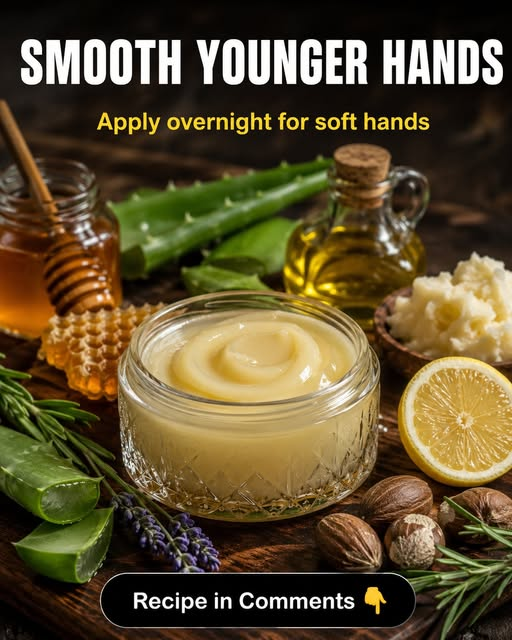
Hands often appear dry, rough, wrinkled, or older than the face because they are repeatedly exposed to soap, detergents, hot water, cold weather, sanitizers, and sunlight. Overnight hand remedies can reduce moisture loss and make fine dehydration lines look less noticeable by morning. However, no home mixture can permanently reverse ageing overnight. Realistic early results include softer texture, improved comfort, reduced ashiness, and a temporarily plumper appearance within one to three days. Because scientific evidence is stronger for a limited number of natural moisturising ingredients, the remedies below intentionally use proven ingredients such as colloidal oatmeal, aloe vera, glycerin, sunflower oil, coconut oil, argan oil, and green tea instead of harsh kitchen treatments.
Remedy 1: Aloe, Argan and Green Tea Cream for Normal Skin
Ingredients
- 2 tablespoons pure inner-leaf aloe vera gel: attracts water and supports surface hydration.
- 1 teaspoon cooled green tea: supplies antioxidant polyphenols and may help calm environmental irritation.
- 1 teaspoon finely milled colloidal oatmeal: supports the protective skin barrier and relieves roughness.
- ½ teaspoon vegetable glycerin: acts as a humectant that increases water in the outer skin layer.
- ½ teaspoon cold-pressed argan oil: provides fatty acids and helps improve softness and elasticity.
Procedure
- Brew plain green tea, allow it to cool completely, and measure one teaspoon.
- Mix it with the aloe vera gel and vegetable glycerin.
- Add the colloidal oatmeal gradually until the mixture becomes creamy.
- Stir in the argan oil immediately before application.
- Massage a thin layer over freshly washed, slightly damp hands.
- Cover with clean cotton gloves and leave the treatment on overnight.
- Rinse with lukewarm water the following morning.
Prepare only enough for one application because homemade water-based mixtures can become contaminated when stored.
Scientific Working of the Ingredients
Aloe vera contains water-binding compounds that can improve skin hydration through a humectant effect. Glycerin draws and holds water in the stratum corneum, helping the surface feel smoother. Argan oil supplies emollient lipids, and a human study reported improvements in skin elasticity following cosmetic use. Green-tea polyphenols have antioxidant and anti-inflammatory activity, while colloidal oatmeal contains beta-glucans, lipids, and avenanthramides that support barrier recovery and soothe dryness. The complete homemade mixture has not been clinically tested, but its main ingredients have supporting research. (PubMed)
How Often to Apply
Apply nightly for three consecutive days. After that, use it two nights per week for maintenance.
Initial Results
Within one to three days, normal hands may feel softer, smoother, and less tight. Dryness lines may look temporarily reduced because well-hydrated skin reflects light more evenly.
Remedy 2: Zone-Based Sunflower and Oat Treatment for Combination Skin
Combination hand skin may feel comfortable on the palms but dry around the knuckles, fingertips, and backs of the hands. A zone-based method prevents unnecessarily heavy oil application.
Ingredients
- 1 tablespoon aloe vera gel: provides lightweight hydration.
- 1 teaspoon colloidal oatmeal: helps reduce rough, flaky texture.
- 1 teaspoon cooled boiled water: creates a spreadable hydrating base.
- ½ teaspoon vegetable glycerin: helps retain water in dehydrated areas.
- ½ teaspoon high-linoleic sunflower-seed oil: supplies barrier-supporting fatty acids.
Procedure
- Mix the aloe vera, cooled water, glycerin, and oatmeal into a smooth paste.
- Spread a thin layer across the entire hand.
- Massage sunflower oil only onto dry areas, particularly the knuckles, fingertips, and backs of the hands.
- Wait five minutes for the mixture to settle.
- Wear clean cotton gloves overnight.
- Wash gently the next morning and pat dry.
Scientific Working of the Ingredients
Glycerin and aloe provide water-based hydration without making the whole hand excessively greasy. Oatmeal forms a soothing film and supports the damaged outer barrier. Sunflower oil is rich in linoleic acid, an important component of epidermal lipids. In an adult skin-barrier study, sunflower-seed oil preserved barrier integrity and improved hydration, while olive oil showed potentially damaging effects. For this reason, sunflower oil is preferred over olive oil in these recipes. (PubMed)
How Often to Apply
Use on alternate nights for four to five days. Continue applying a tiny amount of sunflower oil to dry zones after handwashing when necessary.
Initial Results
The tight or chalky areas may begin to feel more flexible after the first night. By days two or three, the contrast between dry knuckles and comfortable palms should become less noticeable.
Remedy 3: Oil-Free Green Tea and Oat Gel for Oily or Sweaty Hands
People who describe their hands as oily may actually be experiencing perspiration, heavy product residue, or discomfort from occlusive creams. This lightweight treatment avoids a thick oil layer.
Ingredients
- 2 tablespoons pure aloe vera gel: delivers lightweight hydration.
- 2 teaspoons cooled green tea: provides antioxidant compounds.
- 1 teaspoon colloidal oatmeal: calms roughness without creating a greasy finish.
- ¼ teaspoon vegetable glycerin: adds controlled humectant activity.
- 1 teaspoon cooled boiled water: thins the mixture for a lighter application.
Procedure
- Combine the aloe vera, green tea, water, and glycerin.
- Whisk in the oatmeal until no dry lumps remain.
- Apply a very thin layer to clean hands, concentrating on the backs rather than the palms.
- Leave it uncovered for 30 minutes.
- Blot away any excess with a clean soft cloth, leaving a light film overnight.
- Rinse in the morning.
Avoid wearing gloves if they make the hands excessively warm or sweaty.
Scientific Working of the Ingredients
Aloe vera and diluted glycerin increase hydration without relying on a thick butter or oil. Green-tea polyphenols can help limit oxidative stress and may support recovery after mild environmental irritation. Oatmeal adds soothing beta-glucans and antioxidant avenanthramides. Clinical research on colloidal-oat formulations has demonstrated improvements in dryness, itching, roughness, hydration, and barrier function. (PubMed)
How Often to Apply
Apply nightly for three to five nights. Reduce the glycerin further if the mixture feels sticky.
Initial Results
Hands may feel hydrated but cleaner and less coated after the first use. Rough patches can begin to look smoother within two to three days.
Remedy 4: Coconut, Sunflower and Oat Recovery Balm for Dry Skin
This richer overnight treatment is designed for very dry, weather-exposed hands without open wounds or signs of infection.
Ingredients
- 1 teaspoon virgin coconut oil: works as an emollient and reduces dryness.
- 1 teaspoon high-linoleic sunflower oil: supports barrier lipids.
- 1 tablespoon aloe vera gel: supplies water and humectant compounds.
- 2 teaspoons colloidal oatmeal: soothes scaling and irritation.
- ½ teaspoon vegetable glycerin: improves water retention.
- ½ teaspoon argan oil: conditions rough skin and supports elasticity.
Procedure
- Warm the coconut oil between clean fingertips until it becomes liquid.
- Combine the aloe, glycerin, and oatmeal in a small bowl.
- Mix in the coconut, sunflower, and argan oils.
- Apply generously to damp hands, including the nails, cuticles, and knuckles.
- Wear clean cotton gloves and leave the balm on overnight.
- Rinse only if necessary in the morning; otherwise, massage in any remaining residue.
Scientific Working of the Ingredients
Virgin coconut oil has performed favourably as a moisturiser in controlled studies involving xerosis and atopic dermatitis. Sunflower oil supplies linoleic acid and helps reduce moisture loss without the barrier-damaging findings associated with topical olive oil. Glycerin increases hydration, aloe contributes humectant activity, and oatmeal soothes dryness. Argan oil adds emollient fatty acids and may improve the appearance of elasticity with continued use. (PubMed)
How Often to Apply
Use every night for five to seven days, followed by two or three applications weekly.
Initial Results
Severe dryness may feel more comfortable after one night. Flaking, ashiness, and fine dehydration lines can begin improving after two to three days, although painful cracks require professional assessment.
Remedy 5: Minimal Oat Barrier Wrap for Sensitive Skin
Sensitive hands benefit from fewer ingredients, no fragrance, and no essential oils. Even natural substances can trigger irritation, so patch testing is essential.
Ingredients
- 2 tablespoons cooled boiled water: creates a gentle, fragrance-free base.
- 1 tablespoon colloidal oatmeal: supports the barrier and reduces itching.
- 1 tablespoon pure inner-leaf aloe vera gel: provides soothing hydration.
- ¼ teaspoon vegetable glycerin: retains moisture at a low concentration.
- ¼ teaspoon high-linoleic sunflower oil: forms a light protective layer.
Procedure
- Mix the water and oatmeal and allow them to stand for five minutes.
- Add the aloe vera and glycerin.
- Spread the mixture over the hands for 15 minutes.
- Rinse gently and pat the hands until slightly damp.
- Press the sunflower oil onto the skin without vigorous rubbing.
- Leave the final light layer on overnight.
When aloe causes stinging or redness, omit it and use additional cooled boiled water instead.
Scientific Working of the Ingredients
Colloidal oatmeal has clinical evidence in chronic irritant hand eczema and may improve dryness, itching, and barrier function. Sunflower oil supplies barrier-compatible fatty acids, while diluted glycerin supports hydration. Aloe may help moisturise, but it is not tolerated by everyone. The minimal formula reduces exposure to fragrances, citrus juice, spices, and essential oils that can complicate sensitive-skin reactions. (PubMed)
How Often to Apply
Use once daily for three days. Continue for up to seven days only when no burning, swelling, redness, or itching develops.
Initial Results
Sensitive hands may feel calmer and less tight within one to three days. Stop immediately if the condition becomes redder, hotter, itchier, or more painful.
Final Tips for Smooth Younger-Looking Hands
Apply remedies to slightly damp skin because humectants work best when water is available. Use lukewarm rather than hot water, choose a gentle fragrance-free cleanser, and wear protective gloves while washing dishes or handling detergents. Wash cotton gloves regularly and never share them.
Perform a patch test on a small area for 24 to 48 hours before covering both hands. Do not apply homemade mixtures to bleeding cracks, infected skin, burns, or active blisters. Avoid undiluted essential oils, baking soda, harsh scrubs, and direct lemon or lime juice. Citrus substances can react with ultraviolet light and cause blistering, inflammation, or long-lasting pigmentation on the hands. (PubMed)
Apply broad-spectrum sunscreen to the backs of the hands every morning and reapply after frequent handwashing or prolonged outdoor exposure. A randomized trial found that consistent sunscreen use significantly slowed visible photoageing over time. (PubMed)
Visible softness commonly begins within two to three days. Continued care may improve radiance and soften dehydration lines, but permanent wrinkles, loose skin, prominent veins, and age spots will not disappear with an overnight mask.
Diet Plan to Support Healthy Hand Skin
Follow this balanced pattern for at least four to six weeks while continuing the chosen hand remedy for five to seven days.
Breakfast: Eat eggs, unsweetened yogurt, lentils, or another protein source with a vitamin-C-rich fruit such as guava, kiwi, strawberries, or an orange.
Lunch: Choose chicken, fish, beans, chickpeas, or tofu with whole grains and colourful vegetables. Vitamin C is required for normal collagen formation, while protein supplies amino acids used in skin structure and repair. (Office of Dietary Supplements)
Snack: Have a small portion of walnuts, almonds, pumpkin seeds, or sunflower seeds. Avoid excessive sugary snacks, especially when they replace nutrient-rich foods.
Dinner: Include a protein source, cooked vegetables, and a healthy fat such as avocado, seeds, or a modest amount of vegetable oil.
Hydration: Drink according to thirst and increase fluids during hot weather, exercise, pregnancy, or breastfeeding unless a doctor has advised fluid restriction. Pale-yellow urine is generally a practical sign of adequate hydration.
Continue the overnight routine for up to one week, then use it two or three times weekly if beneficial. Consult a doctor or dermatologist when the problem persists beyond one to two weeks, repeatedly returns, or involves painful cracks, bleeding, intense itching, swelling, pus, blisters, spreading redness, nail changes, eczema, psoriasis, diabetes, or suspected allergy.
References for the above remedy
- Sobhan M, et al. The Efficacy of Colloidal Oatmeal Cream 1% as Add-on Therapy in the Management of Chronic Irritant Hand Eczema.
https://pubmed.ncbi.nlm.nih.gov/32273745/ - Dal’Belo SE, et al. Moisturizing Effect of Cosmetic Formulations Containing Aloe Vera Extract in Different Concentrations.
https://pubmed.ncbi.nlm.nih.gov/17026654/ - Danby SG, et al. Effect of Olive and Sunflower Seed Oil on the Adult Skin Barrier.
https://pubmed.ncbi.nlm.nih.gov/22995032/ - Agero ALC, Verallo-Rowell VM. A Randomized Double-Blind Controlled Trial Comparing Extra Virgin Coconut Oil with Mineral Oil as a Moisturizer for Mild to Moderate Xerosis.
https://pubmed.ncbi.nlm.nih.gov/15724344/ - Breternitz M, et al. Placebo-Controlled, Double-Blind, Randomized Study of a Glycerol-Based Emollient for Atopic Skin.
https://pubmed.ncbi.nlm.nih.gov/18025807/ - Boucetta KQ, et al. The Effect of Dietary and Cosmetic Argan Oil on Skin Elasticity.
https://pubmed.ncbi.nlm.nih.gov/25673976/ - Wagemaker TAL, et al. Antioxidant-Based Topical Formulations Containing Green Tea Polyphenols and Skin-Barrier Recovery.
https://pubmed.ncbi.nlm.nih.gov/28385617/ - Hughes MCB, et al. Sunscreen and Prevention of Skin Aging: A Randomized Trial.
https://pubmed.ncbi.nlm.nih.gov/23732711/ - National Institutes of Health, Office of Dietary Supplements. Vitamin C: Health Professional Fact Sheet.
https://ods.od.nih.gov/factsheets/VitaminC-HealthProfessional/ - Kim J, et al. Citrus Fruits-Induced Phytophotodermatitis Presenting as Hand Hyperpigmentation.
https://pubmed.ncbi.nlm.nih.gov/29386836/