Strong, smooth nails can make the hands look healthier and better cared for, but nails often become weak because of repeated handwashing, cleaning chemicals, prolonged water exposure, acetone, gel manicures, nail biting and using the nails as tools. Health conditions such as iron deficiency, thyroid disease, psoriasis and fungal infection may also cause splitting, ridging, discoloration or slow growth.
Fingernails grow slowly and can take approximately six months to grow out completely. A home remedy cannot produce visibly longer nails within three days. The realistic goal is to improve flexibility, soften dry cuticles and prevent breakage so that existing growth can remain intact. Dermatologists recommend protecting nails from excessive water, moisturizing after handwashing, leaving cuticles alone and reducing repeated manicure-related trauma. (American Academy of Dermatology)
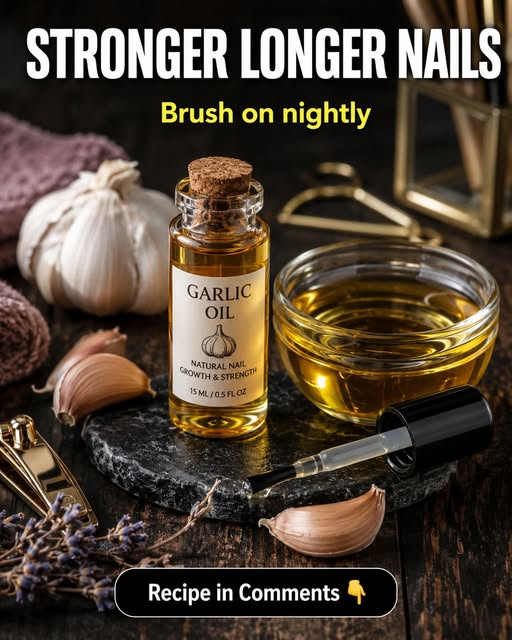
The garlic oil shown in the image is not supported by reliable human clinical evidence as a nail-growth treatment. Raw garlic may cause severe irritation, blisters or burn-like skin injuries, particularly when crushed garlic is covered or left on overnight. For this reason, the following remedies do not include garlic, lemon juice or concentrated essential oils. (PubMed)
The complete homemade mixtures below have not been tested as finished clinical formulations. They use evidence-supported nail-care principles, including moisturization, reduced trauma and protection from repeated wetting and drying.

Remedy 1: For Normal Hands and Nails
Ingredients
- Lukewarm water: 1 cup
- Colloidal oatmeal: 1 teaspoon
- Plant-derived glycerin: ¼ teaspoon
- Sunflower seed oil: ½ teaspoon
- Jojoba oil: ½ teaspoon
- Shea butter: ¼ teaspoon
Scientific Working of Each Ingredient
Lukewarm water briefly softens a dry nail plate so that an emollient can be applied afterward. Long or repeated soaking should be avoided because excessive water exposure can weaken nails.
Colloidal oatmeal contains beta-glucans and soothing avenanthramides that support the skin surrounding the nail.
Glycerin is a humectant that attracts water to dry cuticles and nail folds.
Sunflower oil supplies linoleic acid and helps support the protective skin barrier.
Jojoba oil contains wax esters that lubricate the nail surface and reduce friction.
Shea butter creates a light protective coating that limits moisture loss.
Moisturizing creams, oils and ointments are commonly recommended in reviews of brittle-nail management, particularly when dryness and repeated external exposure are contributing factors. (PubMed)
Procedure
Mix the oatmeal into the lukewarm water. Soak only the fingertips for five minutes, then dry the hands thoroughly.
Combine the glycerin, sunflower oil, jojoba oil and softened shea butter. Massage one small drop over each nail, cuticle and sidewall for approximately 30 seconds.
Do not rinse the oil mixture away. Avoid pushing or cutting the cuticles.
How Often to Apply
Use once nightly for five days. Afterward, continue three nights weekly for at least eight weeks.
Initial Results
Within one to three days, the cuticles may feel softer and the nails may look less dull. Greater resistance to splitting requires several weeks as healthier nail gradually grows forward.
Remedy 2: For Combination Hands with Dry Cuticles
Ingredients
- Pure aloe vera gel: 1 tablespoon
- Cooled oatmeal water: 1 teaspoon
- Rice starch: ½ teaspoon
- Plant-derived glycerin: 2 drops
- Jojoba oil: 3 drops
- Sunflower seed oil: 2 drops
Scientific Working of Each Ingredient
Combination hands may have sweaty palms but dry, peeling skin around the fingernails. The nail plate itself does not become oily in the same way facial skin does, so the aim is lightweight hydration.
Aloe gel forms a water-based base that does not leave the fingers heavily coated.
Oatmeal water calms dryness around the nail folds.
Rice starch creates a soft film and reduces the sticky feeling of the gel.
Glycerin helps retain water in the surrounding skin.
Jojoba and sunflower oils reduce friction and seal the lighter ingredients without creating a thick greasy layer.
The benefit comes from keeping the nail folds flexible and reducing cracking rather than accelerating nail-cell production.
Procedure
Prepare oatmeal water by stirring one teaspoon of colloidal oatmeal into two tablespoons of boiled and cooled water. Allow it to settle, then use one teaspoon of the liquid.
Mix it with aloe, rice starch and glycerin. Add both oils and stir immediately before application.
Brush a very thin layer over the nails and surrounding skin. Leave it on for 15 minutes, then wipe away any excess with a clean damp cloth.
How Often to Apply
Apply every evening for three to five days. Continue on alternate nights for two months.
Initial Results
Dry edges may feel smoother within two days. Peeling will improve only when the damaged section grows toward the free edge and is trimmed away.
Remedy 3: For Oily or Sweaty Hands
Ingredients
- Pure aloe vera gel: 1 tablespoon
- Rice starch: 1 teaspoon
- Colloidal oatmeal: ½ teaspoon
- Cooled green tea: 1 teaspoon
- Plant-derived glycerin: 1 drop
- Jojoba oil: 1 drop
Scientific Working of Each Ingredient
This treatment uses minimal oil and is suitable for people who dislike heavy overnight balms.
Rice starch absorbs a small amount of surface moisture and thickens the gel.
Aloe and glycerin hydrate the cuticle area without a heavy oily coating.
Oatmeal supports irritated skin around the nail.
Green tea provides antioxidant polyphenols, although it has not been clinically shown to speed nail growth.
One drop of jojoba oil reduces friction while keeping the formula lightweight.
Procedure
Mix the rice starch and oatmeal. Add green tea gradually, followed by aloe, glycerin and jojoba oil.
Apply a thin coating to each clean nail and cuticle. Leave it on for ten minutes, rinse briefly and dry the hands completely.
Wear protective gloves when washing dishes or handling cleaning solutions, but remove them if sweat builds up inside.
How Often to Apply
Use on day one, day three and day five. Continue three times weekly for eight weeks.
Initial Results
The skin around the nails may feel calmer within one to three applications. The nails will not grow visibly longer during this period, but reduced picking and cracking can protect new growth.
Remedy 4: For Dry, Peeling and Brittle Nails
Ingredients
- Shea butter: 1 teaspoon
- Virgin coconut oil: ½ teaspoon
- Sunflower seed oil: ½ teaspoon
- Jojoba oil: ½ teaspoon
- Pure beeswax: ¼ teaspoon
- Colloidal oatmeal: ¼ teaspoon
Scientific Working of Each Ingredient
Dry, peeling nails often need a thicker protective layer.
Shea butter and coconut oil soften rough nail surfaces and surrounding skin.
Sunflower and jojoba oils improve flexibility and reduce friction against clothing and daily objects.
Beeswax forms a semi-occlusive coating that slows water evaporation.
Finely milled oatmeal helps soothe cracked cuticles.
Clinical reviews of nail fragility support protective moisturizers and nail coatings as part of management, but they also emphasize that improvement is gradual because the damaged nail must grow out. (PMC)
Procedure
Place the shea butter, coconut oil and beeswax in a heat-safe bowl. Stand the bowl in warm water until the ingredients soften.
Remove it from the heat and mix in the sunflower oil, jojoba oil and finely milled oatmeal. Transfer the balm to a clean, dry container.
At bedtime, massage a rice-grain-sized amount over each nail and cuticle. Wear clean cotton gloves when desired, but do not cover irritated or infected skin.
How Often to Apply
Apply nightly for at least five days. Continue every night for eight to twelve weeks.
Initial Results
Dryness and rough cuticles may improve after one or two nights. Fewer breaks may become noticeable after several weeks, allowing nails to retain more length.
Remedy 5: For Sensitive Skin Around the Nails
Ingredients
- Colloidal oatmeal: 1 teaspoon
- Rice starch: 1 teaspoon
- Boiled and cooled water: 2 tablespoons
- Plant-derived glycerin: 1 drop
- Sunflower seed oil: 2 drops
Scientific Working of Each Ingredient
Sensitive nail folds should be treated with a short ingredient list.
Oatmeal supports dry and irritated skin.
Rice starch produces a smooth paste without abrasive grains.
Glycerin supplies gentle humectant hydration.
Sunflower oil helps slow moisture loss.
This formula excludes garlic, fragrances, essential oils, citrus juice and aggressive exfoliants, all of which may worsen irritation.
Procedure
Mix the oatmeal and rice starch. Add the cooled water gradually, then stir in the glycerin and sunflower oil.
Patch-test the paste on one finger first. When no burning, swelling or itching occurs, apply it around the remaining nails.
Leave it on for five minutes, rinse gently and dry carefully. Do not apply it to open cuts, pus-filled areas or bleeding skin.
How Often to Apply
Use on day one. If there is no reaction, repeat on day three and day five. Continue twice weekly.
Initial Results
Irritated skin may feel less tight within one to three days. Persistent redness or swelling requires medical assessment rather than continued home treatment.
Final Tips for Stronger and Longer Nails
Keep fingernails moderately short until peeling and breakage improve. Cut almost straight across, slightly round the corners and file rough edges in one direction. Filing repeatedly backward and forward may weaken the free edge. Do not cut or aggressively push the cuticles because they protect the nail root from microorganisms. (American Academy of Dermatology)
Wear lined household gloves for washing dishes, cleaning bathrooms and handling detergents. Remove the gloves afterward and dry the hands. Repeated cycles of soaking and drying can worsen splitting.
Take breaks from gel, acrylic and dip manicures. Acetone, filing and removal procedures may thin the nail plate and increase brittleness, peeling and cracking. (American Academy of Dermatology)
Do not use nails to open cans, remove labels or scrape hard surfaces. Avoid nail biting and picking because repeated trauma can damage the tissue responsible for growth.
Visible softness around the cuticles may begin within two or three days. Stronger nail tips usually require eight to twelve weeks, while growing an entirely new fingernail may take approximately six months.
Diet Plan for Strong Nail Growth
Follow a balanced diet for at least three months.
Breakfast: Eat eggs, plain yogurt, oatmeal or fortified whole-grain cereal. Eggs, salmon, nuts and seeds provide dietary biotin.
Lunch: Choose lentils, chickpeas, chicken, fish or lean meat with leafy vegetables and whole grains.
Snack: Have a small serving of almonds, walnuts, pumpkin seeds or roasted chickpeas.
Dinner: Include beans, tofu, eggs, fish or poultry with vegetables. Nails are made largely from keratin, so very low-protein diets and rapid weight loss may contribute to weakness.
Iron support: Combine lentils, meat or leafy vegetables with vitamin-C-rich foods such as guava, oranges, tomatoes or peppers.
Biotin has shown possible benefits in small studies of people with brittle nails, including increased thickness, but the evidence is limited and does not establish a benefit for everyone with normal biotin status. High-dose supplements can also interfere with thyroid, hormone and heart-related laboratory tests. Use supplements only after discussing them with a healthcare professional. (PubMed)
Continue topical care for eight to twelve weeks and the diet plan for at least three months. See a dermatologist or doctor if the nails remain weak, suddenly change, become painful or develop deep ridges, yellow thickening, separation, pits or dark streaks. Brittle nails may sometimes be associated with fungal infection, psoriasis, iron deficiency or thyroid disease and may require testing and medical treatment. (American Academy of Dermatology)
References for the above remedy
- American Academy of Dermatology Association. 11 Dermatologists’ Tips for Healthy Nails.
https://www.aad.org/public/everyday-care/nail-care-secrets/basics/healthy-nail-tips - American Academy of Dermatology Association. How to Trim Your Nails.
https://www.aad.org/public/everyday-care/nail-care-secrets/basics/how-to-trim-nails - Chessa MA, et al. Pathogenesis, Clinical Signs and Treatment Recommendations in Brittle Nails: A Review.
https://pmc.ncbi.nlm.nih.gov/articles/PMC6994568/ - Reinecke JK, Hinshaw MA. Nail Health in Women.
https://pmc.ncbi.nlm.nih.gov/articles/PMC7105659/ - Colombo VE, et al. Treatment of Brittle Fingernails and Onychoschizia with Biotin.
https://pubmed.ncbi.nlm.nih.gov/2273113/ - Lipner SR. Biotin for the Treatment of Nail Disease: What Is the Evidence?
https://pubmed.ncbi.nlm.nih.gov/29057689/ - National Institutes of Health, Office of Dietary Supplements. Biotin Fact Sheet for Consumers.
https://ods.od.nih.gov/factsheets/Biotin-Consumer/ - U.S. Food and Drug Administration. Biotin Interference with Laboratory Tests.
https://www.fda.gov/medical-devices/in-vitro-diagnostics/biotin-interference-troponin-lab-tests-assays-subject-biotin-interference - Xu S, et al. Chemical Burn Caused by Topical Application of Garlic.
https://pubmed.ncbi.nlm.nih.gov/24456964/ - American Academy of Dermatology Association. Nail Changes a Dermatologist Should Examine.
https://www.aad.org/public/everyday-care/nail-care-secrets/basics/nail-changes-dermatologist-should-examine