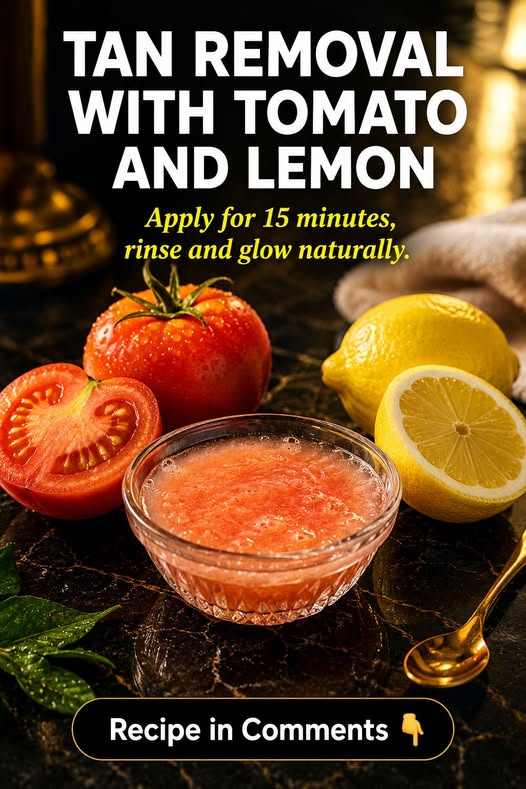
A suntan develops when ultraviolet radiation stimulates melanocytes to produce more melanin, the pigment that helps protect skin from further UV damage. Although social-media remedies often promise to “remove tan in 15 minutes,” a true suntan cannot safely disappear after one application. What natural care can do is hydrate dry skin, calm irritation, improve surface dullness, and support the gradual fading of excess pigmentation as skin naturally renews itself. The tomato-and-lemon combination shown in the image is popular, but applying lemon juice directly to sun-exposed skin is not recommended because citrus combined with sunlight can cause phytophotodermatitis and even additional hyperpigmentation. (PubMed)
The following five remedies are therefore designed according to skin type and use gentler ingredients. Tomato is included selectively, while lemon juice is replaced with less irritating ingredients.
Remedy 1: For Normal Skin – Tomato, Oat and Aloe Brightening Mask
Ingredients
- 1 tablespoon fresh tomato pulp
- 1 tablespoon pure aloe vera gel
- 1 teaspoon finely ground oats
- 1 teaspoon plain unsweetened yogurt
- ½ teaspoon honey
- 1 teaspoon cooled green tea
Scientific Working of Each Ingredient
Tomato: Tomatoes contain lycopene, a carotenoid antioxidant extensively investigated for photoprotection. Human research has found that consuming lycopene-rich tomato paste can reduce markers of UV-induced skin damage. However, this research involved dietary tomato rather than a homemade topical tomato mask, so tomato pulp should be considered a supportive ingredient rather than a clinically proven tan remover. (PubMed)
Oats: Colloidal oatmeal has demonstrated improvements in hydration and skin-barrier function in controlled research. (PubMed)
Aloe vera: Provides a water-rich, soothing base and reduces the need for harsh exfoliation.
Yogurt: Helps create a moisturizing mask and contains naturally occurring lactic acid, but homemade yogurt should not be considered equivalent to a standardized lactic-acid treatment.
Honey: Acts primarily as a humectant and helps prevent the mask from leaving the skin excessively dry.
Green tea: Supplies antioxidant catechins. Topical standardized green- and white-tea extracts have shown protective effects against some UV-induced changes in human skin, although brewed tea is much less standardized. (PubMed)
Procedure
Mash a ripe tomato and strain away excess liquid. Take one tablespoon of pulp and combine it with aloe vera.
Add powdered oats, yogurt, honey, and cooled green tea. Mix until creamy.
Apply a thin layer to clean skin without rubbing. Leave it for 10–15 minutes, then rinse with cool or lukewarm water.
How Often to Apply
Apply once daily or every other day for 5–7 days.
Initial Results
Within 1–3 days, skin may feel softer, better hydrated, and less dull. A genuine suntan should be expected to fade gradually rather than disappear immediately.
Remedy 2: For Combination Skin – Green Tea, Tomato and Oat Tan-Care Mask
Ingredients
- 2 teaspoons fresh tomato pulp
- 2 teaspoons cooled green tea
- 1 tablespoon aloe vera gel
- 1 teaspoon finely ground oats
- ½ teaspoon honey
- 1 teaspoon plain yogurt
Scientific Working: Antioxidant Care Without Over-Drying
Combination skin needs a balance between removing surface dullness and maintaining hydration.
Tomato provides carotenoids, particularly lycopene. A systematic review and meta-analysis of intervention trials found that tomato and lycopene interventions were associated with improvements in several measures related to UV-induced skin damage and pigmentation. Importantly, much of this evidence concerns dietary supplementation, not rubbing raw tomatoes onto skin. (PubMed)
Green tea contributes polyphenols with antioxidant activity. Human studies have investigated green-tea polyphenols for photoprotection, although results differ depending on formulation and route of administration. (PubMed)
Oats provide the barrier-supporting component, helping prevent the dry cheek areas of combination skin from becoming irritated.
Procedure
Mix tomato pulp with cooled green tea. Stir in aloe and yogurt before adding finely powdered oats and honey.
Apply evenly, paying particular attention to tanned areas without aggressively massaging them.
Leave for 10 minutes and rinse thoroughly.
How Often to Apply
Use every other day for 5–7 days.
Initial Results
Skin may look fresher and feel smoother after a few applications. Uneven pigmentation caused by tanning usually requires weeks to fade significantly.
Remedy 3: For Oily Skin – Tomato, Green Tea and Aloe Cooling Mask
Ingredients
- 1 tablespoon tomato pulp
- 1 tablespoon aloe vera gel
- 2 teaspoons cooled green tea
- 1 teaspoon finely ground oats
- ½ teaspoon honey
- 1 teaspoon grated cucumber
Scientific Working: Lightweight Antioxidant and Barrier Support
This mask avoids heavy oils that some people with oily skin dislike.
Tomato lycopene is an antioxidant associated with photoprotective effects. In a randomized controlled trial, regular consumption of lycopene-rich tomato paste provided measurable protection against UV-induced photodamage. (PubMed)
Green tea polyphenols have also been investigated for their ability to reduce some harmful effects of UV radiation. Topical green- and white-tea extracts showed protection against UV-related effects on cutaneous immunity in human research. (PubMed)
Aloe and cucumber create a lightweight, water-rich base, while oatmeal helps maintain the skin barrier.
Procedure
Finely grate cucumber and combine one teaspoon with tomato pulp.
Add aloe and cooled green tea, followed by oats and honey.
Apply a thin layer for 8–10 minutes. Rinse without using a scrub or cleansing brush.
How Often to Apply
Use every other evening for 5 days.
Initial Results
The skin may feel calmer and less rough within 1–3 days. Do not expect complete tan removal during this period.
Remedy 4: For Dry Skin – Oat, Honey, Avocado and Tomato Recovery Mask
Ingredients
- 2 teaspoons fresh tomato pulp
- 1 tablespoon finely ground oats
- 1 tablespoon aloe vera gel
- 1 teaspoon honey
- 1 teaspoon mashed ripe avocado
- 1 teaspoon plain yogurt
Scientific Working: Repair First, Brighten Second
Dry tanned skin often appears darker and duller because UV exposure and dehydration can make its surface rough.
The primary goal should therefore be restoring hydration rather than aggressively exfoliating pigmentation.
Colloidal oatmeal is supported by clinical evidence for improving skin hydration, barrier function, dryness, and roughness. (PubMed)
Avocado supplies emollient lipids, while honey contributes humectant properties. Aloe and yogurt add water and improve the moisturizing texture of the mixture.
Tomato supplies antioxidant carotenoids, but again, evidence for tomato’s photoprotective effects should not be misrepresented as proof that raw tomato directly bleaches tanned skin.
Procedure
Mash the avocado until completely smooth.
Add tomato pulp, aloe, honey, and yogurt. Finally, stir in the finely powdered oats.
Spread over clean skin and leave for 10–15 minutes.
Rinse gently and immediately apply moisturizer while the skin remains slightly damp.
How Often to Apply
Use once daily or every other day for 5–7 days.
Initial Results
Dry skin can become noticeably softer after the first few applications. Improved hydration may make the complexion appear brighter, while actual tanning will take longer to fade.
Remedy 5: For Sensitive Skin – Oat, Aloe and Cucumber Soothing Mask
Ingredients
- 1 tablespoon finely ground oats
- 1½ tablespoons aloe vera gel
- 1 tablespoon grated cucumber
- 1 teaspoon cool water
- ½ teaspoon honey
Scientific Working: Avoiding Acids on Sensitive Skin
Sensitive skin needs a very different approach.
This remedy deliberately excludes both tomato and lemon because acidic plant juices can sting or irritate reactive skin.
Colloidal oatmeal contains compounds associated with anti-inflammatory and antioxidant activity. Clinical research has found significant improvements in dryness, scaling, roughness, and itching with colloidal-oat preparations. (PubMed)
Aloe and cucumber provide a simple, water-rich base, while honey contributes moisture retention.
Procedure
Combine powdered oats with cool water and let them soften for approximately two minutes.
Mix in aloe, finely grated cucumber, and honey.
Patch-test first. If there is no reaction, apply gently without rubbing.
Leave for 5–10 minutes, rinse, and moisturize.
How Often to Apply
Start every other day for 3–5 days.
Initial Results
Redness, tightness, and dryness may feel better relatively quickly. Stop immediately if the mixture causes burning, itching, swelling, or persistent redness.
Why Lemon Juice Is Not Included
The image suggests tomato and lemon, but direct lemon juice is not necessary for removing a tan and can actually work against your goal.
Citrus fruits contain photosensitizing compounds. When citrus residue on the skin is exposed to UVA radiation, phytophotodermatitis can occur. Published dermatological reports document citrus-associated pigmentation, including cases where hyperpigmentation occurred without obvious preceding inflammation. (PubMed)
Therefore, putting lemon juice on the face and subsequently going into sunlight is particularly inappropriate.
The Most Important Tan-Removal Step: Stop Creating New Tan
No home remedy can fade pigmentation effectively if your skin is repeatedly exposed to substantial UV radiation without protection.
Use a broad-spectrum SPF 30 or higher sunscreen on exposed skin, seek shade during intense sunlight, and use protective clothing where practical. Sunscreen does not “remove” the existing tan; it helps prevent additional UV-induced pigmentation while natural skin turnover gradually reduces the existing tan.
Tomatoes and green tea are also not substitutes for sunscreen, regardless of their antioxidant properties.
Final Tips for Naturally Fading a Suntan
Do not scrub the skin with sugar, salt, coffee grounds, lemon peels, or rough brushes. A tan is produced by melanin inside the epidermis, so physically scrubbing harder does not safely scrape it away.
Keep your skincare tools and towels clean, moisturize regularly, sleep adequately, and maintain sufficient hydration. Patch-test every new ingredient before applying it to the face.
You may see improved hydration, smoothness, and glow within 2–3 days, but significant reduction in a true suntan normally requires longer. Avoid any remedy promising to permanently bleach or dramatically change natural skin color.
Diet Plan to Support Skin Recovery From Sun Exposure
Breakfast: Have oatmeal or whole-grain toast with eggs or unsweetened yogurt. Add tomatoes, berries, guava, kiwi, oranges, or another vitamin-C-rich fruit.
Mid-morning: Choose watermelon, papaya, berries, guava, or citrus fruit along with a modest handful of nuts or seeds.
Lunch: Include cooked tomatoes or other colorful vegetables with lentils, chickpeas, beans, chicken, eggs, or fish and a whole-grain carbohydrate.
Interestingly, the strongest evidence discussed above for tomatoes and photoprotection involves eating tomato products rather than applying raw tomato to the skin. A randomized controlled trial found that regular tomato-paste consumption increased protection against UV-induced skin changes. (PubMed)
Afternoon: Choose unsweetened yogurt, fresh fruit, cucumber, carrots, or nuts rather than frequently consuming highly processed sugary snacks.
Dinner: Eat vegetables with protein from beans, lentils, eggs, fish, or lean meat. Include healthy fats from nuts, seeds, avocado, or similar whole foods.
Maintain a varied diet rather than consuming excessive amounts of one “skin-brightening” ingredient.
Continue your selected home remedy for approximately 1–2 weeks if your skin tolerates it, but maintain sun protection consistently for the long term.
If pigmentation persists for several months, becomes patchy or progressively darker, appears without obvious sun exposure, or you develop burning, blistering, severe redness, or unusual skin lesions, see a doctor or dermatologist. Persistent pigmentation may be something other than a simple suntan.
References for the above remedy
- Rizwan M, et al. Tomato paste rich in lycopene protects against cutaneous photodamage in humans in vivo: a randomized controlled trial. British Journal of Dermatology. 2011.
https://pubmed.ncbi.nlm.nih.gov/20854436/ - Zhang X, et al. The effect of tomato and lycopene on clinical characteristics and molecular markers of UV-induced skin deterioration: A systematic review and meta-analysis of intervention trials. Critical Reviews in Food Science and Nutrition. 2024.
https://pubmed.ncbi.nlm.nih.gov/36606553/ - Camouse MM, et al. Topical application of green and white tea extracts provides protection from solar-simulated ultraviolet light in human skin. Experimental Dermatology.
https://pubmed.ncbi.nlm.nih.gov/19492999/ - Capone K, et al. Effects of Colloidal Oatmeal Topical Atopic Dermatitis Cream on Skin Microbiome and Skin Barrier Properties. Journal of Drugs in Dermatology. 2020.
https://pubmed.ncbi.nlm.nih.gov/32484623/ - Reynertson KA, et al. Anti-inflammatory activities of colloidal oatmeal contribute to the effectiveness of oats in treatment of itch associated with dry, irritated skin. Journal of Drugs in Dermatology. 2015.
https://pubmed.ncbi.nlm.nih.gov/25607907/ - Gunt HB, Levy SB, Lutrario CA. Clinical Improvements in Very Dry Skin from a Natural Ingredient-Based Moisturizing Cream Compared With a Leading Colloidal Oatmeal Control. Journal of Drugs in Dermatology. 2018.
https://pubmed.ncbi.nlm.nih.gov/30005098/ - Choi JY, et al. Asymptomatic Hyperpigmentation without Preceding Inflammation as a Clinical Feature of Citrus Fruits-Induced Phytophotodermatitis. Annals of Dermatology. 2018.
https://pubmed.ncbi.nlm.nih.gov/29386836/ - Heinrich U, et al. Green tea polyphenols provide photoprotection, increase microcirculation, and modulate skin properties of women. Journal of Nutrition. 2011.
https://pubmed.ncbi.nlm.nih.gov/21525260/ - Stahl W, et al. Supplementation with tomato-based products increases lycopene, phytofluene, and phytoene levels in human serum and protects against UV-light-induced erythema.
https://pubmed.ncbi.nlm.nih.gov/15830922/