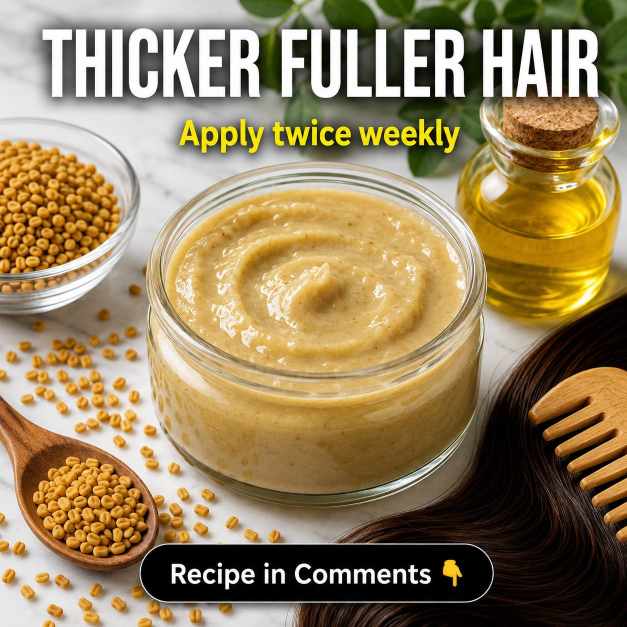
Thin-looking hair can result from excessive shedding, breakage, genetic pattern hair loss, nutritional deficiencies, hormonal changes, illness, stress, harsh chemical treatments or tight hairstyles. Natural masks can improve softness, reduce breakage and make existing strands appear fuller, but they cannot create instant new follicles. Genuine hair-density changes usually require at least three to six months because scalp hair grows slowly. The remedies below are adapted for different scalp types and use ingredients supported by human research for hair growth, reduced breakage, dandruff control or scalp-barrier care.
It is important to clarify that these complete homemade mixtures have not been clinically tested as finished formulas. The evidence relates to individual ingredients such as rosemary oil, pumpkin seed oil, coconut oil, tea tree oil and fenugreek gel. Fenugreek may help condition fragile hair and reduce split ends, but evidence that an ordinary homemade fenugreek paste regrows thinning hair remains limited. (PubMed)
Remedy 1: Rosemary and Pumpkin Seed Scalp Oil for Normal Scalp
Ingredients
- 1 teaspoon pumpkin seed oil
- 1 teaspoon virgin coconut oil
- 1 teaspoon jojoba oil
- ½ teaspoon sunflower seed oil
- 5 drops rosemary essential oil
- 2 drops lavender essential oil
Scientific Working of Each Ingredient
Pumpkin seed oil has demonstrated promising effects in a three-month randomized trial involving women with pattern hair loss. Rosemary oil was studied for six months in people with androgenetic alopecia, with improvements appearing at six months rather than during the first three months. Coconut oil penetrates the hair shaft and can reduce protein loss, which helps protect strands from breakage. Jojoba and sunflower oils provide lightweight lubrication, while the small amount of lavender oil adds fragrance but should not be considered a proven hair-growth treatment. (PubMed)
Procedure
Combine the carrier oils in a clean glass bowl. Add the rosemary and lavender oils and mix well. Part dry hair into several sections and apply a small amount to the scalp. Massage gently with the pads of the fingers for four minutes without scratching.
Spread the remaining oil lightly through the mid-lengths and ends. Leave it on for 30 to 45 minutes, then shampoo thoroughly. Do not leave essential-oil mixtures overnight.
How Often to Apply
Apply twice weekly for at least 12 weeks. Continue for up to six months when it is well tolerated.
Initial Results
Within one to three days, hair may feel softer and look shinier. Reduced breakage may become noticeable after several weeks. New growth or increased density should not be expected during the first few days.
Remedy 2: Fenugreek Conditioning Mask for Combination Scalp
Ingredients
- 1 tablespoon soaked fenugreek-seed gel
- 1 tablespoon pure aloe vera gel
- 1 teaspoon pasteurised honey
- 1 teaspoon finely milled oats
- ½ teaspoon virgin coconut oil
- 1 tablespoon cooled boiled water
Scientific Working of Each Ingredient
Fenugreek seeds become slippery after soaking because they contain mucilage. This coating can improve manageability and reduce friction during detangling. A placebo-controlled clinical trial investigated fenugreek seed gel for trichoptilosis, commonly called split ends, rather than genetic hair loss. Coconut oil reduces protein loss, while oats and aloe provide a soothing base. Honey has been studied for dandruff and seborrheic dermatitis, although the study used a different concentration and application method from this mask. (Directory of Open Access Journals)
Procedure
Soak one tablespoon of fenugreek seeds overnight. Blend them with a little cooled boiled water and strain the mixture carefully to remove coarse particles.
Measure one tablespoon of the smooth gel and mix it with aloe, honey, oats and coconut oil. Apply a thin layer to the dry ends and rough sections. Use only a small amount on the scalp’s oilier areas.
Leave it on for 15 to 20 minutes. Rinse thoroughly and shampoo gently. Do not allow the paste to dry hard because dried seeds can become difficult to remove and may encourage breakage.
How Often to Apply
Use twice weekly for three to four weeks.
Initial Results
The lengths may feel smoother after the first treatment. Frizz and rough ends can appear less obvious within one to three applications, but the mask will not produce new follicles within this period.
Remedy 3: Tea Tree and Aloe Pre-Shampoo Gel for Oily or Flaky Scalp
Ingredients
- 2 tablespoons pure aloe vera gel
- 1 teaspoon jojoba oil
- 2 drops tea tree essential oil
- 1 teaspoon pasteurised honey
- 1 teaspoon finely milled oats
- 1 teaspoon cooled green tea
Scientific Working of Each Ingredient
Tea tree oil possesses antifungal activity and has been clinically evaluated for dandruff in a 5% shampoo. Participants using that shampoo for four weeks experienced greater improvement than those using a placebo. This milder homemade preparation is not equivalent to the clinical formula, but it reduces the risk associated with applying undiluted essential oil.
Aloe provides a lightweight gel base, jojoba reduces friction, oats help soothe the scalp and honey has demonstrated potential benefits for scaling and itching associated with seborrheic dermatitis. These effects may improve the scalp environment, but they do not directly treat hereditary baldness. (PubMed)
Procedure
Mix the tea tree oil into the jojoba oil first. In another bowl, combine the aloe, honey, oats and cooled tea. Add the diluted oil and stir immediately before applying.
Spread a thin layer over flaky areas of the scalp. Leave it on for no longer than 10 minutes, then rinse and shampoo thoroughly. Never apply undiluted tea tree oil directly to the scalp.
How Often to Apply
Begin once weekly. When no irritation occurs, use up to twice weekly for three to four weeks.
Initial Results
Greasy residue and mild itching may feel reduced after one to three uses. Persistent thick scales, severe redness or recurring dandruff may require a medicated treatment from a dermatologist.
Remedy 4: Coconut, Pumpkin and Oat Mask for Dry, Breakage-Prone Hair
Ingredients
- 1 tablespoon virgin coconut oil
- 1 teaspoon pumpkin seed oil
- 1 tablespoon aloe vera gel
- 1 teaspoon pasteurised honey
- 1 teaspoon colloidal oatmeal
- 1 teaspoon fenugreek gel
Scientific Working of Each Ingredient
Coconut oil is particularly useful for damaged hair because its structure allows it to enter the hair shaft and reduce protein loss before or after washing. Pumpkin seed oil has clinical evidence related to pattern hair loss, but its ability to penetrate the scalp can differ according to formulation.
Honey, aloe and oats help the mixture spread over dry areas, while fenugreek mucilage coats the strands and may reduce tangling. This combination primarily improves hair-fibre condition and fullness by limiting breakage rather than rapidly accelerating follicular growth. (PubMed)
Procedure
Warm the coconut oil between the palms; do not heat it until hot. Mix it with the pumpkin seed oil. Add the aloe, honey, oats and freshly prepared fenugreek gel.
Apply mainly to the mid-lengths and ends. Place only a thin coating on the scalp. Cover the hair with a clean shower cap and leave the mask on for 20 minutes. Rinse and shampoo until no residue remains.
How Often to Apply
Apply twice weekly for four weeks, followed by once weekly for maintenance.
Initial Results
Dry strands may feel softer after the first use. Reduced tangling and a fuller surface appearance may develop within two or three applications. Improvement in actual density will take considerably longer.
Remedy 5: Fragrance-Free Oat Scalp Pack for Sensitive Scalp
Ingredients
- 1 tablespoon colloidal oatmeal
- 1 tablespoon pure aloe vera gel
- 1 teaspoon vegetable glycerin
- ½ teaspoon sunflower seed oil
- 2 tablespoons cooled boiled water
Scientific Working of Each Ingredient
A sensitive scalp often becomes uncomfortable after fragranced oils, strong herbal extracts or repeated washing. Colloidal oatmeal contains lipids, starches and soothing avenanthramides that support the skin barrier. Diluted glycerin attracts moisture, while sunflower oil reduces roughness and provides lightweight emollience.
This pack is designed to calm dryness and minimise breakage caused by scratching. It does not stimulate rapid hair growth. Avoid adding rosemary, tea tree, lemon, onion or other potentially irritating ingredients when the scalp is already inflamed.
Procedure
Combine the oatmeal with the water and allow it to soften for five minutes. Add aloe and glycerin, followed by the sunflower oil. Mix until smooth.
Apply a thin layer to a small section of the scalp first. After successful patch-testing, spread it over dry areas without vigorous massage. Leave it on for five to eight minutes and rinse thoroughly.
How Often to Apply
Use every third day for one week and then once or twice weekly when needed.
Initial Results
Tightness may decrease within one or two applications. Stop using the mixture if it causes burning, swelling, increased itching or bumps.
Four-Minute Scalp Massage for Fuller-Looking Hair
Use the fingertips rather than the nails and gently move the scalp in small circles for four minutes daily. In a small study involving nine men, daily standardized massage was associated with increased hair thickness after 24 weeks, although it did not significantly increase hair density. The study was too small to establish massage as a treatment for hair loss, but gentle massage may be included without pulling the strands. (PubMed)
Final Tips
Wash the scalp according to its oil level instead of avoiding shampoo for long periods. Persistent oil, sweat and product residue can aggravate itching and flakes. Detangle from the ends upward, limit tight ponytails and avoid brushing wet hair aggressively.
Patch-test every remedy before full application. Prepare water-containing masks fresh and discard leftovers because homemade mixtures lack tested preservatives. Keep bowls, combs, towels and applicators clean.
Do not expect visible new hair within three to five days. Early improvements will usually involve softness, shine, less tangling and reduced breakage. Clinical studies involving rosemary oil, pumpkin seed oil and scalp massage generally evaluated results after three to six months. (PubMed)
Diet Plan for Thicker and Healthier Hair
Breakfast
Choose eggs with whole-grain bread, or plain yoghurt with oats, berries and pumpkin seeds. These meals provide protein, iron, zinc and other nutrients involved in normal hair formation.
Lunch
Eat lentils, beans, chicken or fish with leafy vegetables, salad and brown rice or whole-grain bread. Add a vitamin-C-rich food such as guava, oranges, tomatoes or bell peppers to improve the absorption of plant-based iron.
Snack
Choose a small handful of pumpkin seeds, walnuts or almonds with fresh fruit. Seeds support overall nutrition but should not be treated as a replacement for medical hair-loss therapy.
Dinner
Include fish, tofu, beans, chicken or another protein source with cooked vegetables and a moderate portion of complex carbohydrates.
Important Supplement Advice
Do not take high-dose iron, zinc, vitamin D or biotin without confirmed deficiency or professional advice. Research links some forms of hair loss with low iron or vitamin D, but associations do not prove that unnecessary supplementation will restore hair. Excessive nutrient intake can also cause harm. (PubMed)
Continue the topical routine and balanced diet for at least three months. Seek a doctor or dermatologist if shedding persists, the part continues widening, bald patches develop, the scalp becomes painful or scarred, or hair loss follows illness, childbirth, medication changes or rapid weight loss. A dermatologist can distinguish temporary shedding from a condition that requires treatment. (American Academy of Dermatology)
References for the above remedy
- Panahi Y, et al. Rosemary oil versus minoxidil 2% for androgenetic alopecia.
https://pubmed.ncbi.nlm.nih.gov/25842469/ - Ibrahim IM, et al. Pumpkin seed oil versus minoxidil for female pattern hair loss.
https://pubmed.ncbi.nlm.nih.gov/33544448/ - Rele AS, Mohile RB. Effect of coconut oil, sunflower oil and mineral oil on prevention of hair damage.
https://pubmed.ncbi.nlm.nih.gov/12715094/ - Hajizadeh M, et al. Fenugreek seed gel for the prevention of trichoptilosis: randomized placebo-controlled trial.
https://doaj.org/article/42a6d1d070ba4bb4b8cf4ca7f972639e - Satchell AC, et al. Treatment of dandruff with 5% tea tree oil shampoo.
https://pubmed.ncbi.nlm.nih.gov/12451368/ - Al-Waili NS. Therapeutic and preventive effects of crude honey on seborrheic dermatitis and dandruff.
https://pubmed.ncbi.nlm.nih.gov/11485891/ - Koyama T, et al. Standardized scalp massage and hair thickness.
https://pubmed.ncbi.nlm.nih.gov/26904154/ - American Academy of Dermatology. Hair loss versus excessive hair shedding.
https://www.aad.org/public/diseases/hair-loss/insider/shedding - Yongpisarn T, et al. Vitamin D deficiency in scarring and non-scarring alopecias.
https://pubmed.ncbi.nlm.nih.gov/39416654/ - Treister-Goltzman Y, et al. Iron deficiency and non-scarring alopecia in women: systematic review and meta-analysis.
https://pubmed.ncbi.nlm.nih.gov/35415182/