Younger-looking skin usually appears smooth, evenly hydrated, calm and protected from excess sun exposure. A homemade mask may soften roughness, reduce temporary dullness and make dehydration lines less noticeable, but it cannot rebuild lost collagen or erase established wrinkles within 15–20 minutes. Dermatologists identify daily sunscreen and consistent moisturising as the most effective foundations of an anti-ageing routine because ultraviolet exposure accelerates wrinkles, pigmentation and loss of elasticity. Research on soy, green tea, colloidal oatmeal, glycerin and certain botanical extracts supports their effects on hydration, inflammation or visible photoageing, although the exact kitchen mixtures below have not been tested as complete clinical formulations. (American Academy of Dermatology)
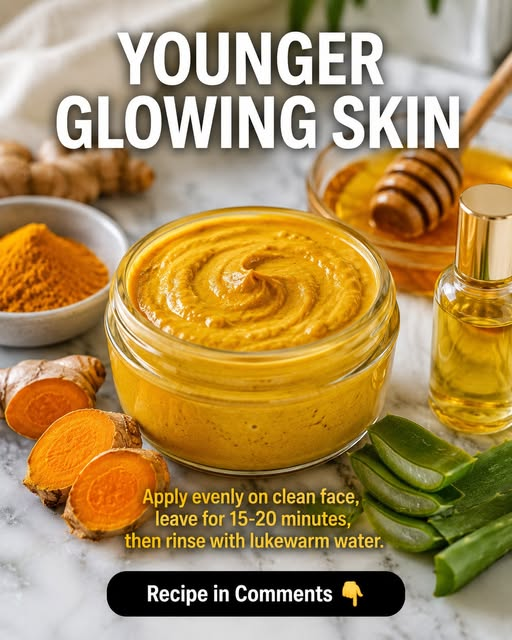
The turmeric-and-honey mixture shown in the image may temporarily soften the skin, but ordinary turmeric is not clinically proven to reverse ageing and can stain or irritate the face. The following remedies use small, fresh batches and more realistic application times.
Remedy 1: Soy, Green Tea and Flaxseed Glow Mask for Normal Skin
Ingredients and Their Scientific Working
- Unsweetened soy milk – 1 tablespoon: Soy compounds may reduce pigment transfer and improve dullness, uneven tone and fine lines when used consistently.
- Cooled green tea – 1 tablespoon: Green-tea polyphenols provide antioxidant and anti-inflammatory activity against ultraviolet-related stress.
- Fresh flaxseed gel – 1 tablespoon: Its natural mucilage creates a moisture-holding film that makes the surface feel smoother.
- Colloidal oatmeal – 1 teaspoon: Oat lipids and beta-glucans support the protective barrier and reduce dryness.
- Vegetable glycerin – ¼ teaspoon: Glycerin attracts water into the outer skin layer, temporarily plumping dehydration lines.
- Raw honey – ½ teaspoon: Honey acts mainly as a humectant, preventing the mask from becoming dry and tight.
How This Remedy Supports Younger-Looking Skin
Clinical studies of formulated soy moisturisers have reported improvements in dullness, pigmentation, texture and fine lines after approximately three months. Green-tea extracts can reduce some ultraviolet-induced changes, but neither homemade tea nor soy milk replaces sunscreen. Oatmeal and glycerin create the faster visible effect by increasing surface hydration. (PubMed)
Procedure
Mix all ingredients until smooth. Apply a thin layer to clean skin, avoiding the eyes and lips. Leave it on for 10 minutes, rinse with lukewarm water and apply moisturiser while the skin is slightly damp. Discard the leftover mixture.
How Often to Apply
Use three times weekly for six to eight weeks.
Initial Results
The face may feel softer after one application. Within one to three days, mild dryness and dehydration lines may look less obvious. Changes in pigmentation or structural wrinkles require several weeks or months.
Remedy 2: Licorice, Cucumber and Rice Balancing Gel for Combination Skin
Ingredients and Their Scientific Working
- Fresh cucumber juice – 1 tablespoon: Supplies water and produces a temporary cooling sensation, although it is not a proven wrinkle treatment.
- Cooled licorice-root infusion – 1 tablespoon: Licorice contains anti-inflammatory compounds associated with reduced redness and uneven pigmentation.
- Pure aloe vera gel – 1 tablespoon: Aloe provides lightweight hydration without heavily coating the T-zone.
- Rice starch – 1 teaspoon: Creates a soft film and helps absorb excess surface oil.
- Colloidal oatmeal – ½ teaspoon: Protects drier areas around the cheeks and mouth.
- Jojoba oil – 2 drops: Adds light emollient support to dry areas without requiring a heavy facial oil.
How This Remedy Supports Younger-Looking Skin
Standardised licorice extracts, particularly licochalcone-containing preparations, have reduced irritation and ultraviolet-related redness in human studies. A homemade infusion is much less concentrated and should be viewed as gentle supportive care. Aloe, oatmeal and rice starch improve the feel of dehydrated skin, helping light reflect more evenly from the surface. (PubMed)
Procedure
Mix the rice starch and oatmeal before adding the cucumber juice, licorice infusion and aloe. Add two drops of jojoba oil. Apply more over dry cheeks and less over the forehead and nose. Leave for eight to ten minutes and rinse without scrubbing.
How Often to Apply
Apply on alternate days for five days, then continue twice weekly.
Initial Results
Dry sections may feel more comfortable after one or two applications. The complexion may look temporarily fresher within two or three days, but persistent pigmentation will fade much more slowly.
Remedy 3: Green Tea, Aloe and Oat Clarifying Gel for Oily Skin
Ingredients and Their Scientific Working
- Strong cooled green tea – 2 tablespoons: Catechins provide antioxidant activity and may help calm oily, inflamed skin.
- Pure aloe vera gel – 1 tablespoon: Adds water-based hydration without a rich oily residue.
- Rice starch – 1 teaspoon: Absorbs some surface oil and thickens the treatment.
- Colloidal oatmeal – ½ teaspoon: Helps prevent tightness caused by excessive cleansing.
- Unsweetened soy milk – 1 teaspoon: Offers mild tone-supporting soy compounds.
- Vegetable glycerin – ⅛ teaspoon: Maintains hydration without making the mixture excessively sticky.
How This Remedy Supports Younger-Looking Skin
Oily skin can still be dehydrated. When the barrier is irritated, the complexion may look rough, shiny and uneven rather than healthy and luminous. Topical green- and white-tea extracts have demonstrated protection against certain ultraviolet effects, although brewed tea is weaker than standardised research preparations. Soy and oatmeal support a more even, comfortable appearance. (PubMed)
Procedure
Combine the rice starch and oatmeal. Add the soy milk, green tea, aloe and glycerin. Apply a very thin layer without rubbing active pimples. Leave for eight minutes and rinse thoroughly.
How Often to Apply
Use three times weekly for four to six weeks.
Initial Results
Surface oil may look temporarily reduced after the first use. Skin may feel calmer and better hydrated within two or three days. Acne, deep pores and wrinkles will not disappear during this period.
Remedy 4: Avocado, Sunflower and Oat Comfort Mask for Dry Skin
Ingredients and Their Scientific Working
- Finely mashed ripe avocado – 1 tablespoon: Supplies emollient plant lipids that soften dry surface cells.
- Cold-pressed sunflower seed oil – ½ teaspoon: Its linoleic-acid-rich lipids help support the skin barrier.
- Colloidal oatmeal – 1 teaspoon: Reduces roughness and helps limit moisture loss.
- Vegetable glycerin – ¼ teaspoon: Increases water retention in the outer skin layer.
- Raw honey – ½ teaspoon: Holds moisture against the skin and keeps the mask flexible.
- Pure aloe vera gel – 1 tablespoon: Balances the richer ingredients with water-based hydration.
How This Remedy Supports Younger-Looking Skin
Dryness makes fine lines appear deeper because the surface becomes rough and reflects light unevenly. Glycerin-based emollients have increased skin hydration in controlled trials, while colloidal oatmeal improves barrier function. Sunflower oil may support barrier lipids; olive oil is not substituted because research found that repeated olive-oil use could weaken barrier integrity in some adults. (PubMed)
Procedure
Mash the avocado until no lumps remain. Stir in the oatmeal, aloe, honey, glycerin and sunflower oil. Apply to clean, slightly damp skin for 10–12 minutes. Rinse before the mask dries completely and follow with moisturiser.
How Often to Apply
Use three times weekly for three to four weeks.
Initial Results
Tightness may improve after the first application. The face may look smoother and more luminous within two or three days. These changes mainly reflect hydration rather than new collagen formation.
Remedy 5: Minimal Oat and Rice Barrier Mask for Sensitive Skin
Ingredients and Their Scientific Working
- Colloidal oatmeal – 1 tablespoon: Supports barrier repair and helps soothe dryness-related inflammation.
- Rice starch – 1 teaspoon: Creates a smooth protective film without fragrance.
- Cooled boiled water – 1½ tablespoons: Hydrates and produces a soft, non-abrasive paste.
- Vegetable glycerin – ⅛ teaspoon: Helps retain water at a low, gentle concentration.
- Sunflower seed oil – 2 drops: Provides a small amount of barrier-supporting lipid.
- Pure aloe vera gel – 1 teaspoon: Offers extra hydration but should be omitted when aloe has previously caused itching or redness.
How This Remedy Supports Younger-Looking Skin
Sensitive skin often looks dull when repeated irritation disrupts its protective barrier. A simple mixture is usually safer than combining turmeric, citrus juice, fragrances and several herbal extracts. Clinical studies of formulated colloidal oatmeal moisturisers show improvements in hydration and barrier function, but any ingredient can still trigger an individual reaction. (PubMed)
Procedure
Mix all ingredients and patch-test behind the ear or along the jaw for 24–48 hours. When no reaction occurs, apply the mask for five minutes during the first use. Rinse gently and pat dry.
How Often to Apply
Use every other day for five days, then twice weekly when well tolerated.
Initial Results
Tightness and rough texture may begin improving within one to three days. Stop immediately if burning, swelling, hives or worsening redness occurs.
Final Tips for a Younger, Lasting Glow
Use a gentle cleanser, avoid coarse scrubs and apply moisturiser to slightly damp skin. Every morning, use broad-spectrum, water-resistant sunscreen with SPF 30 or higher. Sunscreen is more important for long-term wrinkle prevention than any homemade mask. Wear a hat and seek shade during strong sunlight. (American Academy of Dermatology)
Do not apply lemon juice, baking soda, undiluted essential oils or a thick layer of turmeric. These ingredients may cause irritation, staining or worsening pigmentation. Prepare food-based masks fresh, wash applicators carefully and never store water-containing mixtures at room temperature.
Visible hydration and glow usually begin within two to three days. Continue a suitable routine for six to twelve weeks for more meaningful improvement in texture and uneven tone. Superficial dehydration lines may soften, but established wrinkles, sagging and sun spots commonly require dermatologist-guided treatment.
Diet Plan for Healthy, Glowing Skin
Follow this plan for at least four to eight weeks:
Breakfast: Oatmeal with berries and seeds, or eggs with vegetables and whole-grain bread.
Mid-morning: Guava, orange, kiwi, papaya or another vitamin-C-rich fruit.
Lunch: Lentils, beans, chicken or fish with leafy vegetables, salad and whole-grain rice or roti.
Snack: A small serving of walnuts, almonds, pumpkin seeds or unsweetened yoghurt.
Dinner: Fish, tofu, beans, eggs or lean meat with colourful vegetables.
Hydration: Drink according to thirst, physical activity and weather. Water supports normal hydration but excessive intake will not erase wrinkles.
A varied diet containing vegetables, fruits, legumes, whole grains, nuts, seeds and appropriate protein sources supplies nutrients required for normal skin function. No single “anti-ageing food” can replace sunscreen, sleep and medical care. (World Health Organization)
Continue the home remedy for four to eight weeks and maintain sunscreen, moisturising and the diet plan long term. See a dermatologist if dullness or premature ageing occurs with persistent redness, severe acne, itching, scaling, facial swelling, sudden pigmentation changes or a mole that changes colour, shape or size.
References for the above remedy
- American Academy of Dermatology Association. “11 Ways to Reduce Premature Skin Aging.”
https://www.aad.org/public/everyday-care/skin-care-secrets/anti-aging/reduce-premature-aging-skin - American Academy of Dermatology Association. “How to Select Anti-Aging Skin-Care Products.”
https://www.aad.org/public/everyday-care/skin-care-secrets/anti-aging/selecting-anti-aging-products - Leyden J, et al. “The Mechanism of Action and Clinical Benefits of Soy for the Treatment of Hyperpigmentation.”
https://pubmed.ncbi.nlm.nih.gov/21332714/ - Camouse MM, et al. “Topical Application of Green and White Tea Extracts Provides Protection from Solar-Simulated Ultraviolet Light.”
https://pubmed.ncbi.nlm.nih.gov/19492999/ - Capone K, et al. “Effects of Colloidal Oatmeal on Skin Barrier Function and Hydration.”
https://pubmed.ncbi.nlm.nih.gov/32484623/ - Breternitz M, et al. “Placebo-Controlled, Double-Blind Study of Glycerol-Based Emollients.”
https://pubmed.ncbi.nlm.nih.gov/18025807/ - Dal’Belo SE, et al. “Moisturizing Effect of Cosmetic Formulations Containing Aloe Vera Extract.”
https://pubmed.ncbi.nlm.nih.gov/17026654/ - Danby SG, et al. “Effect of Olive and Sunflower Seed Oil on the Adult Skin Barrier.”
https://pubmed.ncbi.nlm.nih.gov/22995032/ - Kolbe L, et al. “Anti-Inflammatory Efficacy of Licochalcone A.”
https://pubmed.ncbi.nlm.nih.gov/16552540/ - World Health Organization. “Healthy Diet.”
https://www.who.int/news-room/fact-sheets/detail/healthy-diet