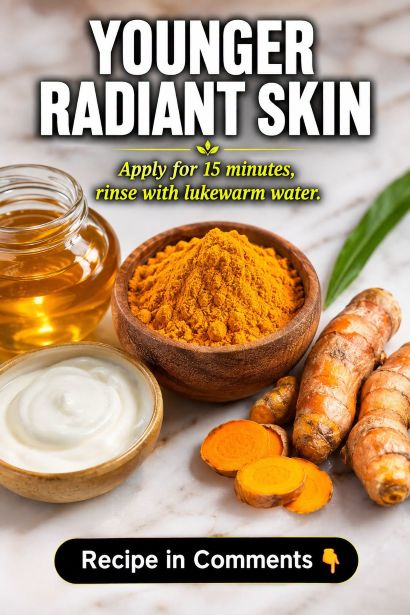
Skin naturally becomes drier, thinner, and less elastic with age, while years of sun exposure can contribute to uneven pigmentation, fine lines, roughness, and a dull appearance. A home mask cannot literally reverse aging or produce permanently younger skin, but carefully selected natural ingredients can improve hydration, support the skin barrier, reduce the appearance of dryness, and make the complexion look smoother and more radiant. Turmeric is particularly interesting because curcumin and related compounds have antioxidant and anti-inflammatory properties. A systematic review of human clinical research found promising evidence for turmeric/curcumin in several dermatological applications, including facial photoaging, although the researchers emphasized that stronger clinical studies are still needed. (PubMed)
The turmeric, honey, and yogurt combination shown in the image can be useful as a gentle cosmetic mask for some people, but it should not be presented as a proven wrinkle cure. The following five recipes use different combinations according to skin type and emphasize ingredients with reasonable scientific support.

Remedy 1: Turmeric, Honey and Oat Radiance Mask for Normal Skin
Ingredients
- 1/8 teaspoon turmeric powder
- 1 teaspoon honey
- 1 tablespoon finely ground colloidal oatmeal
- 1 tablespoon plain unsweetened yogurt
- 1 teaspoon cooled green tea
- 1/2 teaspoon vegetable glycerin
Scientific Working of Each Ingredient
Turmeric: Curcumin has antioxidant and anti-inflammatory properties. A systematic review identified 18 human studies investigating turmeric/curcumin and skin health, with several reporting significant improvements, although the overall evidence remains preliminary. (PubMed)
Honey: Honey contains sugars, enzymes, organic acids, and antioxidant compounds and has documented antimicrobial and wound-healing properties. (PubMed)
Colloidal oatmeal: Oats contain compounds such as avenanthramides and can support hydration and barrier function. Clinical research has demonstrated improved skin hydration and barrier measures with colloidal-oat formulations. (PubMed)
Green tea: Its polyphenols have antioxidant and anti-inflammatory properties. Human photoaging research has produced mixed clinical results, so it is best considered supportive rather than an anti-aging cure. (PubMed)
Yogurt: It provides a creamy moisturizing base. However, evidence for homemade yogurt masks specifically reversing facial aging is limited.
Glycerin: A well-established humectant that attracts water into the outer skin layers and supports hydration.
Procedure
Mix all ingredients into a smooth paste. Cleanse the face gently and apply a thin layer, avoiding the eyes and lips. Leave it for 10–15 minutes rather than waiting for the mask to become completely dry. Rinse with lukewarm water and pat dry.
How Often to Apply
Apply once every other day for 3–5 days initially. If well tolerated, continue 2–3 times per week.
Initial Results
Within 1–3 days, you may notice softer, more hydrated skin and temporary improvement in radiance. Wrinkles will not disappear within three days.
Remedy 2: Green Tea, Turmeric and Aloe Mask for Combination Skin
Ingredients
- 1/8 teaspoon turmeric
- 1 tablespoon aloe vera gel
- 1 tablespoon cooled green tea
- 1 teaspoon colloidal oatmeal
- 1 teaspoon plain yogurt
- 1/2 teaspoon honey
Scientific Working of Each Ingredient
Combination skin needs hydration without making the oily T-zone feel heavier.
Green tea is particularly useful because a placebo-controlled study found significant reductions in facial sebum with topical green-tea formulations during 60 days of treatment. (PubMed)
Turmeric provides curcuminoids with antioxidant and anti-inflammatory activity, while oatmeal helps maintain barrier function.
Aloe vera provides a lightweight moisturizing base, while honey contributes humectant and biologically active compounds.
The important point is balance: excessively drying the forehead and nose may irritate the skin while doing nothing to address dryness on the cheeks.
Procedure
Combine everything thoroughly. Apply a slightly thicker layer to dry areas and a thinner layer across the forehead, nose, and chin.
Leave for 10 minutes and rinse thoroughly with lukewarm water. Do not scrub the turmeric particles against the skin.
How Often to Apply
Use on alternate days for the first 3–5 days and then 2–3 times weekly.
Initial Results
The skin may appear more refreshed and feel softer within several applications. Oil-control benefits from ingredients such as green tea should be expected over weeks rather than overnight. (PubMed)
Remedy 3: Green Tea, Oat and Turmeric Mask for Oily Skin
Ingredients
- 2 tablespoons strongly brewed cooled green tea
- 1 tablespoon colloidal oatmeal
- 1 teaspoon aloe vera gel
- 1/8 teaspoon turmeric powder
- 1/2 teaspoon honey
- 1 teaspoon plain unsweetened yogurt
Scientific Working of Each Ingredient
Green tea: This is the key ingredient for oily skin. Human research has demonstrated significant reductions in facial sebum after topical green-tea treatment. (PubMed)
Another randomized clinical trial using EGCG, an important green-tea polyphenol, also reported significant reductions in sebum during four weeks of treatment, although the study used formulated moisturizers rather than homemade tea. (PubMed)
Turmeric: Curcumin provides antioxidant and anti-inflammatory activity that may complement a gentle routine. (PubMed)
Oatmeal and aloe: These help maintain hydration and reduce the need for harsh, oil-stripping ingredients.
Honey: Its antimicrobial properties are well documented, although evidence is much stronger for wound care and certain dermatological applications than for ordinary anti-aging masks. (PubMed)
Procedure
Mix the oatmeal with green tea first and allow it to soften for two minutes. Add aloe, turmeric, honey, and yogurt.
Spread a thin layer across the face and leave for 8–10 minutes. Rinse gently.
How Often to Apply
Use once daily for the first 3 days if tolerated, then reduce to approximately 3 applications weekly.
Initial Results
The skin may feel cleaner and less greasy after several applications. Meaningful changes in sebum production generally require consistent treatment for several weeks.
Remedy 4: Honey, Oat and Turmeric Moisture Mask for Dry Skin
Ingredients
- 1 tablespoon colloidal oatmeal
- 1 tablespoon aloe vera gel
- 1 teaspoon honey
- 1/8 teaspoon turmeric
- 1 teaspoon plain full-fat unsweetened yogurt
- 1/2 teaspoon vegetable glycerin
Scientific Working of Each Ingredient
Dry mature-looking skin benefits more from improving hydration than from aggressive exfoliation.
Colloidal oatmeal has useful clinical evidence. A controlled study found significant improvements in hydration, pH, and skin-barrier function with a colloidal-oat preparation. (PubMed)
Glycerin acts as a humectant and helps the stratum corneum retain moisture.
Honey combines humectant properties with antioxidant and antimicrobial compounds. Reviews of dermatological research describe anti-inflammatory and tissue-healing effects, although these should not be interpreted as evidence that kitchen honey erases wrinkles. (PubMed)
Turmeric contributes antioxidant compounds, while aloe and yogurt make the mask less drying.
Procedure
Combine all ingredients until creamy. Apply without rubbing and leave for approximately 10 minutes.
Rinse with lukewarm water. Avoid hot water, which can make already-dry skin feel tighter.
How Often to Apply
Use once daily for the first 3 days if tolerated and then 2–3 times per week.
Initial Results
Hydration can make fine dehydration lines temporarily less noticeable and the skin may feel softer within 1–3 days. Structural wrinkles require substantially longer-term approaches.
Remedy 5: Ultra-Gentle Oat, Honey and Turmeric Mask for Sensitive Skin
Ingredients
- 1 tablespoon colloidal oatmeal
- 2 tablespoons cool boiled water
- 1 teaspoon aloe vera gel
- 1/4 teaspoon honey
- A tiny pinch of turmeric, approximately 1/16 teaspoon
- 1/2 teaspoon vegetable glycerin
Scientific Working of Each Ingredient
Sensitive skin requires a simpler formula because irritation itself can make the complexion look red, dry, and uneven.
Colloidal oatmeal is the primary ingredient. Clinical evidence supports its ability to improve hydration and barrier function. (PubMed)
Glycerin supplies additional moisture, while aloe creates a lightweight hydrating base.
Only a very small quantity of turmeric is included because natural ingredients can still cause irritation or allergic contact dermatitis.
Honey should likewise be omitted if you have previously reacted to honey, pollen, propolis, or bee-related products.
Procedure
Soak the oatmeal in cool boiled water until it forms a soft paste. Stir in aloe, glycerin, honey, and finally the tiny amount of turmeric.
Patch-test first. If tolerated, apply for only 5–8 minutes and rinse without scrubbing.
How Often to Apply
Start every other day for 3–5 days. If there is any persistent burning, itching, swelling, or redness, stop using it.
Initial Results
Sensitive skin may feel softer and better hydrated after several applications. The goal is improved comfort and surface smoothness rather than rapid wrinkle removal.
What Can Turmeric Actually Do for Younger-Looking Skin?
Turmeric deserves attention, but claims such as “erase wrinkles overnight” or “look ten years younger” are not supported by good clinical evidence.
A systematic review found encouraging human evidence for turmeric and curcumin in dermatology, including research involving photoaging, but the authors specifically concluded that further studies are required. (PubMed)
Likewise, antioxidants such as green-tea polyphenols are scientifically interesting, but clinical trials have produced mixed results. An eight-week randomized trial found histological improvement in elastic tissue but no major difference in clinical photoaging scores. (PubMed)
Natural remedies are therefore best used for hydration, soothing, temporary brightness, and general skin conditioning, not as replacements for evidence-based treatment of significant wrinkles or sun damage.
Final Tips for Maintaining Radiant, Younger-Looking Skin
Sun protection is far more important for preventing premature skin aging than any turmeric mask. Limit excessive UV exposure and use appropriate sun protection. Get adequate sleep, drink according to thirst, and avoid smoking.
Wash the face gently rather than repeatedly scrubbing it. Keep pillowcases, towels, brushes, and skincare tools clean. Always patch-test turmeric, honey, aloe, and other botanicals before facial application.
Turmeric can temporarily stain pale skin, nails, towels, and clothing yellow, so use only a small quantity.
A healthier glow from improved hydration can sometimes become noticeable within 2–3 days, but wrinkle reduction, pigmentation improvement, and changes in photoaged skin require considerably longer. Do not expect a homemade mask to permanently reverse established wrinkles.
Home Remedy and Diet Plan: How Long to Continue?
Use the appropriate mask for 3–5 days initially to establish tolerance. If your skin responds well, continue approximately 2–3 times per week for 4–6 weeks while maintaining a gentle daily skincare routine.
For breakfast, choose oatmeal with berries, kiwi, guava, or another vitamin-C-rich fruit, plus plain yogurt if tolerated. At lunch, combine vegetables with lentils, beans, eggs, fish, or another lean protein and whole grains. A snack can consist of fresh fruit with a small serving of unsalted nuts or seeds. Dinner should emphasize vegetables and a good protein source rather than heavily processed foods. Include healthy dietary fats from foods such as nuts, seeds, and fish where appropriate.
There is no scientifically proven “anti-aging food” capable of reversing wrinkles by itself. A varied diet provides protein, vitamins, minerals, essential fats, and antioxidant-rich plant foods needed for normal skin health.
If pigmentation changes suddenly, a skin lesion changes appearance, you develop persistent irritation, severe acne, dermatitis, or your skin problem continues despite several weeks of appropriate care, see a doctor or dermatologist.
References for the above remedy
- Vaughn AR, Branum A, Sivamani RK. Effects of Turmeric (Curcuma longa) on Skin Health: A Systematic Review of the Clinical Evidence. Phytotherapy Research.
URL: https://pubmed.ncbi.nlm.nih.gov/27213821/ - Chiu AE, et al. Double-blinded, placebo-controlled trial of green tea extracts in the clinical and histologic appearance of photoaging skin. Dermatologic Surgery.
URL: https://pubmed.ncbi.nlm.nih.gov/16029678/ - Mahmood T, et al. A comparison of the effects of topical green tea and lotus on facial sebum control in healthy humans. Hippokratia.
URL: https://pubmed.ncbi.nlm.nih.gov/23935347/ - Capone K, Kirchner F, Klein SL, Tierney NK. Effects of Colloidal Oatmeal Topical Atopic Dermatitis Cream on Skin Microbiome and Skin Barrier Properties. Journal of Drugs in Dermatology.
URL: https://pubmed.ncbi.nlm.nih.gov/32484623/ - Gunt HB, Levy SB, Lutrario CA. Clinical Improvements in Very Dry Skin from a Natural Ingredient-Based Moisturizing Cream Compared With a Leading Colloidal Oatmeal Control.
URL: https://pubmed.ncbi.nlm.nih.gov/30005098/ - McLoone P, Warnock M, Fyfe L. Honey: A realistic antimicrobial for disorders of the skin. Journal of Microbiology, Immunology and Infection.
URL: https://pubmed.ncbi.nlm.nih.gov/25732699/ - Lee DS, Sinno S, Khachemoune A. Honey and wound healing: an overview. American Journal of Clinical Dermatology.
URL: https://pubmed.ncbi.nlm.nih.gov/21469763/ - Janjua R, et al. A two-year, double-blind, randomized placebo-controlled trial of oral green tea polyphenols on the long-term clinical and histologic appearance of photoaging skin. Dermatologic Surgery.
URL: https://pubmed.ncbi.nlm.nih.gov/19469799/