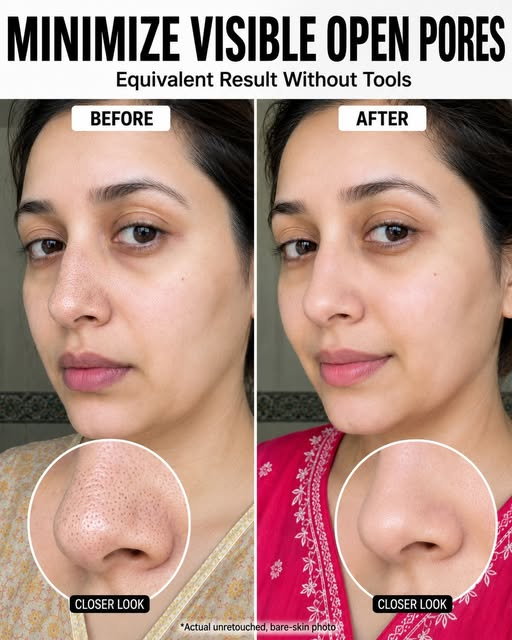
Visible open pores are common around the nose, cheeks, and T-zone. They can make the skin look uneven, oily, rough, or less smooth in photos. Pores do not truly “open” and “close” like doors, and genetics also play a role, but their appearance can be reduced when excess oil, dead skin buildup, dehydration, and low skin elasticity are managed carefully. Research links enlarged-looking facial pores with sebum production, reduced skin elasticity around follicles, and follicle size. (PubMed) The following natural remedies are designed by skin type to help the skin look cleaner, tighter, smoother, and more refined without harsh scrubbing or beauty tools.
Remedy 1: For Normal Skin
Ingredients
- Cooled green tea, 2 tablespoons: helps reduce excess sebum and protects skin with antioxidant polyphenols.
- Fresh aloe vera gel, 1 tablespoon: hydrates the skin and supports a smoother surface.
- Raw honey, 1 teaspoon: works as a natural humectant and softens rough texture.
- Plain yogurt, 1 teaspoon: provides gentle lactic-acid exfoliation for dull surface cells.
- Finely ground oatmeal, 1 teaspoon: supports the skin barrier and calms mild roughness.
- Rice powder, ½ teaspoon: gives very mild polishing without strong abrasion.
Scientific Working of This Remedy
Green tea helps control the oily shine that makes pores look larger; studies have found topical green tea can reduce sebum over several weeks. (PMC) Yogurt contains lactic acid, an alpha-hydroxy acid that helps improve skin texture and smoothness. (PMC) Aloe and honey add hydration, so the skin looks plumper and less uneven, while oatmeal supports barrier comfort.
Procedure
Mix all ingredients into a smooth paste. Wash the face with lukewarm water and pat dry. Apply a thin layer on the nose, cheeks, and forehead. Leave for 10–12 minutes. Wet your fingers and massage very gently for 20 seconds, then rinse with cool water.
How Often to Apply
Use once daily for 3 days, then 3 times a week.
Initial Results
Within 1–3 days, the skin may feel cleaner, softer, and less shiny. Pores may look slightly blurred because surface oil and dryness are reduced.
Remedy 2: For Combination Skin
Ingredients
- Green tea, 1 tablespoon: targets oily areas without drying the whole face.
- Aloe vera gel, 1 tablespoon: hydrates both oily and dry zones lightly.
- Cucumber juice, 1 teaspoon: cools the skin and reduces a tired appearance.
- Honey, ½ teaspoon: prevents tightness on dry patches.
- Oatmeal powder, 1 teaspoon: soothes and supports barrier balance.
- Yogurt, ½ teaspoon: provides mild exfoliation only where pores look congested.
Scientific Working of This Remedy
Combination skin often has oily pores on the nose and cheeks but dryness around the mouth or jaw. Green tea helps reduce the greasy look, while aloe and honey maintain water balance. Oatmeal reduces irritation risk and helps the skin barrier stay calm. Colloidal oatmeal has clinical support for improving dryness, moisturization, and barrier function. (ResearchGate)
Procedure
Mix the ingredients well. Apply a slightly thicker layer on the nose and inner cheeks, and a very thin layer on dry areas. Keep it on for 8–10 minutes. Rinse with cool water and avoid rubbing.
How Often to Apply
Apply on alternate days for 5 days.
Initial Results
In 2–3 days, oily areas may look less greasy, while dry areas should feel less tight. The face can look more balanced and smoother.
Remedy 3: For Oily Skin
Ingredients
- Multani mitti, 1 teaspoon: absorbs extra oil from the skin surface.
- Cooled green tea, 2 tablespoons: helps reduce sebum and supports antioxidant protection.
- Aloe vera gel, 1 teaspoon: hydrates without making skin greasy.
- Oatmeal powder, ½ teaspoon: reduces the chance of dryness from clay.
- Honey, ½ teaspoon: keeps the skin soft and prevents over-drying.
- Cucumber pulp, 1 teaspoon: adds cooling freshness.
Scientific Working of This Remedy
Oily skin makes pores look more visible because excess sebum collects around follicle openings. Green tea is the key evidence-backed ingredient here for sebum control. Clay ingredients such as multani mitti can absorb surface oil, but they must not be allowed to crack fully because over-drying can irritate the skin. Aloe, oatmeal, and honey balance the clay by keeping the skin hydrated.
Procedure
Mix the ingredients into a thin, spreadable mask. Apply only on oily and pore-prone areas such as the nose, cheeks, chin, and forehead. Leave for 7–8 minutes. Rinse before the mask becomes fully dry and tight.
How Often to Apply
Use daily for 3 days if the skin is very oily, then reduce to 2–3 times weekly.
Initial Results
After the first use, shine may decrease. By day 3, pores may look cleaner and less dark because oil and surface buildup are reduced.
Remedy 4: For Dry Skin
Ingredients
- Aloe vera gel, 1 tablespoon: adds lightweight hydration.
- Raw honey, 1 teaspoon: attracts moisture to the skin surface.
- Mashed ripe banana, 1 teaspoon: gives a soft, creamy texture and mild nourishment.
- Oatmeal powder, 1 tablespoon: supports the barrier and reduces roughness.
- Plain yogurt, ½ teaspoon: gives very gentle exfoliation without strong scrubbing.
- Sunflower seed oil, 3 drops: helps seal moisture and reduce water loss.
Scientific Working of This Remedy
Dry skin can make pores look stretched, rough, and more obvious because the surrounding skin is dehydrated. Aloe has evidence for improving skin hydration through a humectant-like effect. (PubMed) Honey has dermatology research supporting its use in skin care, including moisturizing and soothing properties. (PubMed) Oatmeal and sunflower oil help support the skin barrier, while a tiny amount of yogurt smooths dull surface buildup.
Procedure
Mash and mix all ingredients until creamy. Apply a medium layer on the face, especially cheeks and nose sides. Leave for 12–15 minutes. Remove gently with wet hands and rinse with cool water. Do not use hot water.
How Often to Apply
Apply once daily for 5 days, then 3 times weekly.
Initial Results
Within 1–2 days, the skin may feel softer and less tight. By day 3, pores may look less harsh because the surrounding skin is better hydrated.
Remedy 5: For Sensitive Skin
Ingredients
- Colloidal oatmeal or very finely ground oats, 1 tablespoon: calms and protects the skin barrier.
- Aloe vera gel, 1 teaspoon: provides gentle hydration.
- Cucumber juice, 1 tablespoon: cools the skin.
- Honey, ½ teaspoon: softens the skin, but skip if allergic to honey or bee products.
- Green tea, 1 teaspoon: gives mild antioxidant support.
- Boiled and cooled water, as needed: keeps the mixture mild and thin.
Scientific Working of This Remedy
Sensitive skin should not be treated with strong acids, lemon, baking soda, harsh scrubs, or strong essential oils. Oatmeal is the main calming ingredient because it supports the barrier and reduces dryness. Aloe and cucumber hydrate gently, while a small amount of green tea supports oil balance without aggressive exfoliation.
Procedure
Mix everything into a soft, thin paste. Patch test behind the ear for 24 hours before full use. Apply for only 6–8 minutes. Rinse with cool water and pat dry with a clean towel.
How Often to Apply
Use every other day for 5 days. Continue twice weekly if there is no redness or burning.
Initial Results
In 1–3 days, the skin may feel calmer, smoother, and less irritated. Pores may look less noticeable because redness and dryness are reduced.
Final Tips
Use these remedies consistently but gently. Do not squeeze pores, scrub with sugar, apply lemon juice, or use toothpaste on the skin. Keep pillowcases, towels, makeup brushes, and face razors clean. Wash the face after sweating, but avoid over-cleansing because damaged skin can produce more oil. Use sunscreen daily because sun damage reduces skin elasticity and can make pores look larger over time. Visible improvement usually begins within 2–3 days as oil, dryness, and dullness improve, but a more refined look usually needs 4–6 weeks of steady care. Always do a patch test before applying any remedy to the full face. If pores are linked with severe acne, painful bumps, sudden skin changes, infection, burning, or persistent irritation, see a dermatologist.
Diet Plan
Continue this diet plan for 4–6 weeks along with the home remedies. In the morning, drink water and eat a protein-rich breakfast such as eggs, yogurt, lentils, chickpeas, or oats with nuts and seeds. Add one vitamin C food daily, such as guava, orange, kiwi, lemon in food, strawberries, or bell pepper, because vitamin C supports normal collagen formation. For lunch, eat vegetables with chicken, fish, beans, tofu, or lentils, plus whole grains such as brown rice, oats, or roti. For snacks, choose cucumber, carrots, fruit, walnuts, almonds, pumpkin seeds, or plain yogurt. For dinner, keep the meal lighter with soup, vegetables, lean protein, and healthy fats from olive oil, flaxseed, chia seeds, or fish. Reduce sugary snacks, fried foods, and excessive dairy if they trigger oiliness or acne for your skin. If the problem persists after 6–8 weeks, or if enlarged pores come with acne scars, deep blackheads, or inflamed acne, consult a doctor or dermatologist.
References for the above remedy
- Lee SJ, Seok J, Jeong SY, et al. “Facial Pores: Definition, Causes, and Treatment Options.” PubMed. URL: https://pubmed.ncbi.nlm.nih.gov/26918966/
- Kim BY, Choi JW, Park KC, Youn SW. “Sebum, acne, skin elasticity, and gender difference.” PubMed. URL: https://pubmed.ncbi.nlm.nih.gov/22211382/
- Mahmood T, Akhtar N, Khan BA, Khan HMS, Saeed T. “A comparison of the effects of topical green tea and lotus on facial sebum control in healthy humans.” URL: https://pmc.ncbi.nlm.nih.gov/articles/PMC3738281/
- Saric S, Notay M, Sivamani RK. “Green Tea and Other Tea Polyphenols: Effects on Sebum Production and Acne Vulgaris.” URL: https://pmc.ncbi.nlm.nih.gov/articles/PMC5384166/
- Ilnytska O, Kaur S, Chon S, et al. “Colloidal Oatmeal (Avena sativa) Improves Skin Barrier Through Multi-Therapy Activity.” URL: https://pubmed.ncbi.nlm.nih.gov/27272074/
- Capone K, Kirchner F, Klein SL, Tierney NK. “Effects of Colloidal Oatmeal Topical Atopic Dermatitis Cream on Skin Microbiome and Skin Barrier Properties.” URL: https://pubmed.ncbi.nlm.nih.gov/32484623/
- Almeman AA. “Evaluating the Efficacy and Safety of Alpha-Hydroxy Acids in Dermatology.” URL: https://pmc.ncbi.nlm.nih.gov/articles/PMC11268769/
- Dal’Belo SE, Gaspar LR, Maia Campos PMBG. “Moisturizing effect of cosmetic formulations containing Aloe vera extract in different concentrations.” URL: https://pubmed.ncbi.nlm.nih.gov/17026654/
- Burlando B, Cornara L. “Honey in dermatology and skin care: a review.” URL: https://pubmed.ncbi.nlm.nih.gov/24305429/
- Harwood A, Nassereddin A, Krishnamurthy K. “Moisturizers.” StatPearls, NCBI Bookshelf. URL: https://www.ncbi.nlm.nih.gov/books/NBK545171/