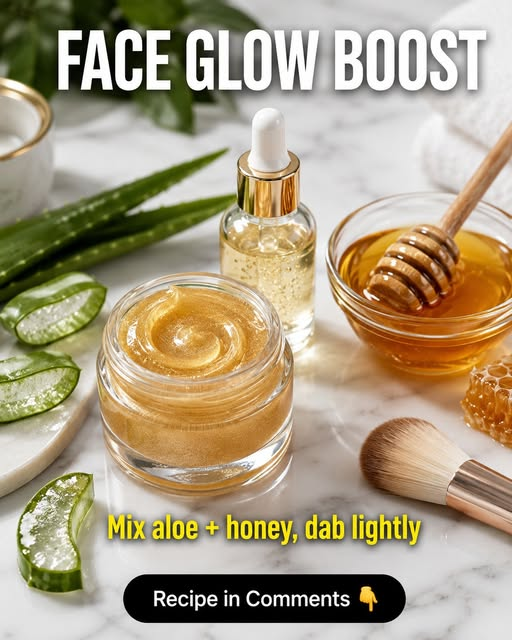
A dull face often looks tired, dry, uneven, or less fresh, even when the skin is generally healthy. The goal of a natural face glow remedy is not to bleach the skin or give overnight perfection. A real glow usually comes from better hydration, smoother dead-skin buildup, calmer irritation, and a healthier skin barrier. Aloe vera and honey are popular because aloe helps cool and hydrate the skin, while honey works as a moisture-binding ingredient with antioxidant and antimicrobial properties. The remedies below are adjusted for different skin types, using gentle natural ingredients with scientific support for hydration, soothing, barrier repair, and surface smoothness.
No homemade mask can replace medical treatment for acne, eczema, melasma, infection, or severe pigmentation. Always patch test first.
Remedy 1: For Normal Skin
Aloe, Honey, Green Tea and Oat Glow Gel
Ingredients
- 1 tablespoon fresh aloe vera gel: provides water-binding polysaccharides that help skin look plump and fresh.
- 1 teaspoon raw honey: acts as a humectant and helps keep the skin surface soft.
- 1 teaspoon cooled green tea: contains catechins that help protect skin from oxidative stress.
- 1 teaspoon finely ground oatmeal: supports the skin barrier and calms mild dryness.
- ½ teaspoon rose water: gives light freshness and mild soothing support.
- 3 drops jojoba oil: adds a light emollient layer without making skin greasy.
Scientific Working of This Remedy
Aloe hydrates the upper skin layer, honey pulls moisture toward the skin, green tea helps reduce dullness caused by environmental stress, and oatmeal softens rough texture. Jojoba oil seals the hydration lightly, so the skin looks smoother and more reflective.
Procedure
Mix aloe gel, honey, green tea, oatmeal, and rose water into a soft gel. Add jojoba oil at the end. Apply a thin layer to clean skin. Leave it for 15 minutes, then rinse with cool water. Pat dry and avoid rubbing.
How Often to Apply
Use once daily for 3–5 days, preferably in the evening.
Initial Results
Within 1–3 days, normal skin may look fresher, softer, and more hydrated. The glow is usually due to smoother texture and better moisture, not permanent skin lightening.
Remedy 2: For Combination Skin
Aloe, Honey, Cucumber and Yogurt Balancing Mask
Ingredients
- 2 teaspoons aloe vera gel: hydrates dry cheek areas without feeling heavy.
- ½ teaspoon honey: supports moisture balance and surface softness.
- 1 teaspoon plain unsweetened yogurt: contains lactic acid, which gently smooths dead surface cells.
- 1 teaspoon cucumber juice: cools the skin and adds light hydration.
- 1 teaspoon cooled green tea: helps oily-looking areas feel fresher.
- ½ teaspoon finely ground oatmeal: reduces roughness and supports barrier comfort.
Scientific Working of This Remedy
Combination skin needs both hydration and balance. Yogurt gives mild exfoliating action because of lactic acid, while aloe and cucumber prevent the mask from feeling too drying. Honey and oatmeal help the dry areas stay comfortable, and green tea is useful for the oilier T-zone.
Procedure
Mix all ingredients until smooth. Apply a thin layer over the face, using slightly less on the oily T-zone and slightly more on dry cheeks. Leave for 10–12 minutes only. Rinse gently and pat dry.
How Often to Apply
Apply every other day for 5 days. After that, use twice weekly.
Initial Results
Within 1–3 days, the face may look less patchy. Dry areas may feel softer, while oily areas may look less dull and sticky.
Remedy 3: For Oily Skin
Aloe, Honey, Green Tea and Cucumber Light Glow Gel
Ingredients
- 1 tablespoon aloe vera gel: gives oil-free hydration.
- ½ teaspoon honey: softens skin without needing heavy oils.
- 2 teaspoons strong cooled green tea: supports a fresher look and may help reduce excess oily appearance.
- 1 teaspoon cucumber juice: cools and refreshes the skin.
- 1 teaspoon colloidal oatmeal or very fine oat powder: calms the skin barrier.
- 1 pinch turmeric powder: adds antioxidant support, but use very little because it can stain.
Scientific Working of This Remedy
Oily skin can look dull when excess sebum mixes with dead cells. Green tea provides antioxidant support and is studied for sebum-related skin benefits. Aloe and cucumber hydrate without heaviness. Honey keeps the skin from feeling stripped, while oatmeal reduces the risk of over-drying.
Procedure
Mix aloe, honey, green tea, cucumber juice, and oat powder. Add only a tiny pinch of turmeric and mix well. Apply for 8–10 minutes. Rinse thoroughly. Do not leave turmeric on for too long.
How Often to Apply
Use 3 times in 5 days, ideally at night.
Initial Results
In 1–3 days, oily skin may look cleaner, calmer, and less tired. If acne is painful, cystic, or spreading, do not rely only on home remedies.
Remedy 4: For Dry Skin
Aloe, Honey, Glycerin and Sunflower Moisture Mask
Ingredients
- 1 tablespoon aloe vera gel: adds water-based hydration.
- 1 teaspoon honey: binds moisture and helps reduce dry tightness.
- ¼ teaspoon vegetable glycerin: a strong humectant that supports skin hydration.
- 1 teaspoon finely ground oatmeal: soothes dryness and rough patches.
- ½ teaspoon sunflower seed oil: supports the skin barrier with linoleic acid.
- ½ teaspoon mashed ripe banana: gives a soft, creamy texture and mild conditioning feel.
Scientific Working of This Remedy
Dry skin loses glow because the surface becomes rough and reflects light unevenly. Aloe, honey, and glycerin increase moisture. Oatmeal reduces dryness-related irritation, while sunflower oil helps protect the skin barrier. Banana gives a creamy base that makes the mask comfortable.
Procedure
Mash banana until smooth. Add aloe, honey, glycerin, oatmeal, and sunflower oil. Apply a thin layer to clean skin. Leave for 15 minutes. Rinse with lukewarm water, then splash cool water.
How Often to Apply
Use daily for 3 days, then every other day for 2 weeks.
Initial Results
Within 1–3 days, dry skin may feel less tight and look more supple. Fine dehydration lines may appear softer with regular hydration.
Remedy 5: For Sensitive Skin
Aloe, Oat, Chamomile and Minimal Honey Comfort Mask
Ingredients
- 2 teaspoons aloe vera gel: cools and hydrates sensitive-looking skin.
- ¼ teaspoon honey: gives mild moisture support; keep the amount low.
- 1 tablespoon colloidal oatmeal or finely powdered oats: helps calm dryness and supports the barrier.
- 1 teaspoon cooled chamomile tea: gives a gentle soothing base.
- 1 teaspoon cucumber juice: adds cooling hydration.
- 2 drops sunflower seed oil: helps reduce dryness without strong fragrance.
Scientific Working of This Remedy
Sensitive skin needs fewer active ingredients. Oatmeal is one of the best natural barrier-support ingredients. Aloe and cucumber cool the skin, while sunflower oil gives light emollient protection. Honey is kept low because some sensitive skin types may react to it.
Procedure
Mix oatmeal with chamomile tea and cucumber juice. Add aloe gel, honey, and sunflower oil. Apply for 8–10 minutes only. Rinse gently without scrubbing.
How Often to Apply
Use once daily for 3 days. If skin stays calm, continue 2–3 times weekly.
Initial Results
Within 1–3 days, sensitive skin may feel less dry and more comfortable. Stop immediately if burning, itching, swelling, or rash appears.
Final Tips
Use these remedies on clean skin and never apply them over cuts, active infection, or severe acne wounds. Do a patch test for 24 hours before using any face mask. Avoid lemon juice, baking soda, toothpaste, and harsh scrubs because they can damage the skin barrier. Keep towels, brushes, and mixing bowls clean. Drink enough water, sleep well, and avoid sleeping with sweat, dust, or makeup on the face. Visible improvement usually begins within 2–3 days as hydration improves. Continued glow and softening of dehydration lines may take 2–4 weeks. Deeper wrinkles, melasma, scars, and persistent pigmentation need professional dermatology care.
Diet Plan for Face Glow
Continue the diet plan for at least 4–6 weeks along with the home remedies.
Morning: Start with water, then eat yogurt, oats, eggs, or chia seeds. These provide protein, zinc, and nutrients that support skin repair.
Lunch: Eat lentils, beans, fish, chicken, tofu, or paneer with vegetables and whole grains. Protein is important because skin needs amino acids for repair.
Snack: Choose oranges, guava, berries, papaya, or apples with almonds or walnuts. Vitamin C supports collagen formation, while nuts provide healthy fats.
Dinner: Add leafy greens, carrots, sweet potatoes, cucumbers, tomatoes, and a good protein source. These foods support antioxidant intake and hydration.
Avoid excess: Reduce sugary drinks, deep-fried foods, and too much refined flour, because these may worsen dullness or breakouts in some people.
If dullness, itching, acne, pigmentation, peeling, or redness continues for more than 3–4 weeks, or if the problem becomes painful or spreads, see a doctor or dermatologist.
References for the above remedy
- Surjushe A, Vasani R, Saple DG. “Aloe Vera: A Short Review.” Indian Journal of Dermatology. URL: https://pmc.ncbi.nlm.nih.gov/articles/PMC2763764/ (PMC)
- Hekmatpou D, et al. “The Effect of Aloe Vera Clinical Trials on Prevention and Healing of Skin Wound.” Iranian Journal of Medical Sciences. URL: https://pmc.ncbi.nlm.nih.gov/articles/PMC6330525/ (PMC)
- Tashkandi H. “Honey in Wound Healing: An Updated Review.” Open Life Sciences. URL: https://pmc.ncbi.nlm.nih.gov/articles/PMC8496555/ (PMC)
- Yaghoobi R, et al. “Evidence for Clinical Use of Honey in Wound Healing as an Anti-bacterial, Anti-inflammatory, Anti-oxidant and Anti-viral Agent.” Jundishapur Journal of Natural Pharmaceutical Products. URL: https://pmc.ncbi.nlm.nih.gov/articles/PMC3941901/ (PMC)
- Saric S, et al. “Green Tea and Other Tea Polyphenols: Effects on Sebum Production and Acne Vulgaris.” Antioxidants. URL: https://pmc.ncbi.nlm.nih.gov/articles/PMC5384166/ (PMC)
- Mahmood T, Akhtar N. “A Comparison of the Effects of Topical Green Tea and Lotus on Facial Sebum Control in Healthy Humans.” Hippokratia. URL: https://europepmc.org/article/pmc/pmc3738281 (Europe PMC)
- Sobhan M, et al. “The Efficacy of Colloidal Oatmeal Cream 1% as Add-on Therapy.” Clinical, Cosmetic and Investigational Dermatology. URL: https://pmc.ncbi.nlm.nih.gov/articles/PMC7103792/ (PMC)
- Lin TK, Zhong L, Santiago JL. “Anti-Inflammatory and Skin Barrier Repair Effects of Topical Application of Some Plant Oils.” International Journal of Molecular Sciences. URL: https://pmc.ncbi.nlm.nih.gov/articles/PMC5796020/ (PMC)
- Chen HJ, et al. “Moisture Retention of Glycerin Solutions with Various Concentrations.” Scientific Reports. URL: https://pmc.ncbi.nlm.nih.gov/articles/PMC9205919/ (PMC)
- Tran T, et al. “Fermentation of Cucumber Extract with Hydromagnesite as a Novel Cosmetic Ingredient.” Molecules. URL: https://pmc.ncbi.nlm.nih.gov/articles/PMC6566975/ (PMC)