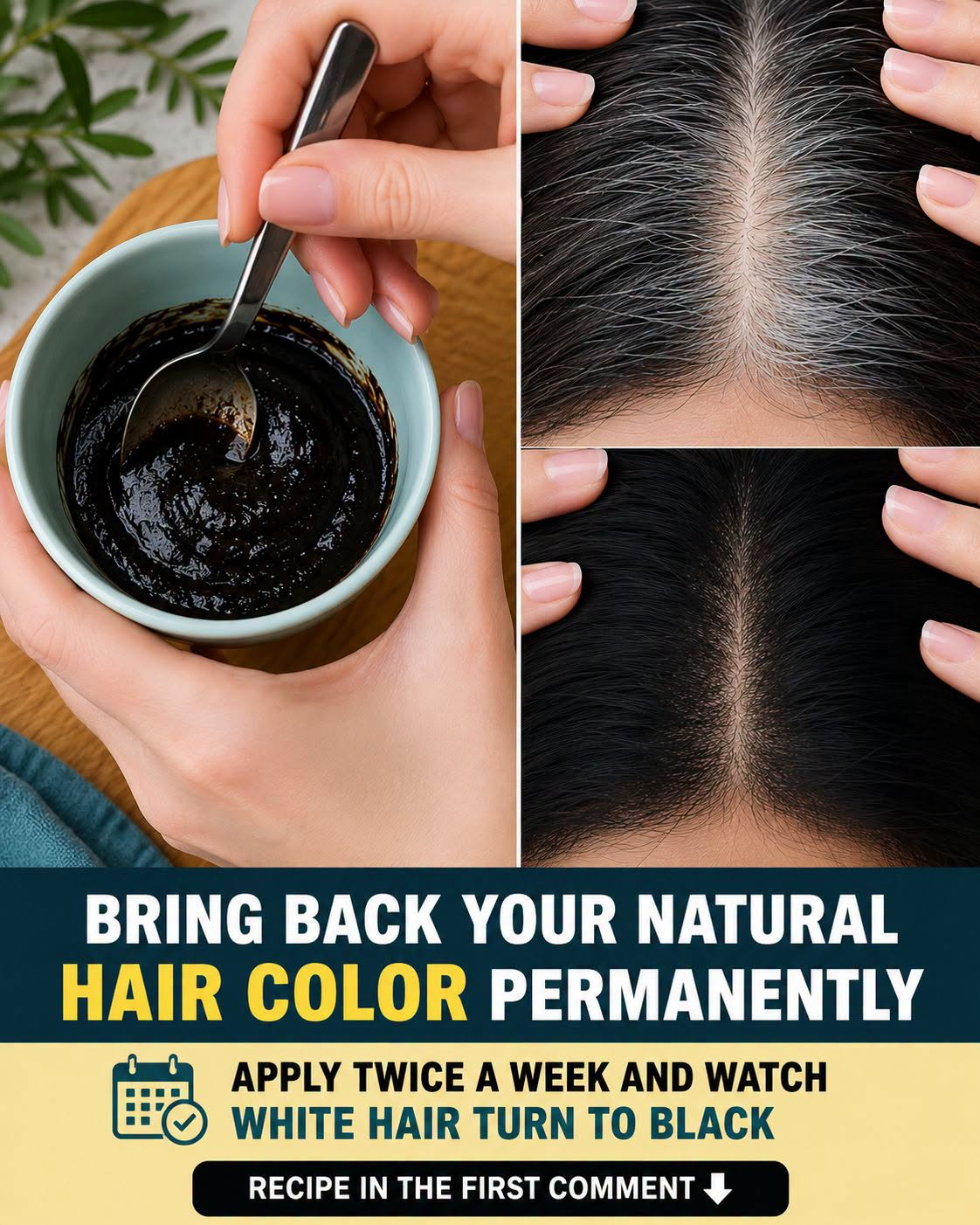
White or gray hair can change the way a person feels about appearance and may affect confidence, especially when graying begins earlier than expected. Many online posts claim that applying a dark herbal paste twice a week can permanently restore natural black hair. Current research does not support that promise. Hair turns gray when pigment-producing cells in the follicle produce less melanin, and no homemade oil, mask or herbal paste has been clinically proven to permanently restart melanin production in age-related gray hair. However, correcting an underlying deficiency may help selected people with premature graying, while pure plant dyes such as henna and indigo can provide natural-looking cosmetic coverage. (American Academy of Dermatology)
The routines below are designed for different scalp and hair types. Their scientifically supported purpose is to color gray strands temporarily, reduce dryness, improve shine and protect the hair shaft. They should not be described as permanent biological cures. Plant colorants deposit pigment on the hair, while oils and soothing ingredients improve hair condition rather than changing the follicle’s genetic color program. (PubMed)
Remedy 1: Two-Step Henna and Indigo Color Treatment for Normal Scalp
Ingredients and Scientific Benefits
- Pure henna powder: 4 tablespoons
Henna contains lawsone, a natural pigment that binds to hair keratin and produces copper, reddish-brown or warm brown tones. - Pure indigo powder: 4 tablespoons
Indigo deposits blue-toned plant pigment. When applied after henna, it can create medium-brown, dark-brown or nearly black color. - Amla powder: 1 teaspoon
Amla contains polyphenols and antioxidants. It may slightly cool the warmth of henna, but it has not been proven to restore melanin in gray follicles. - Warm water: approximately 1 cup, divided
Water releases and spreads the plant pigments evenly through the paste. - Virgin coconut oil: 1 teaspoon
Coconut oil can reduce hair protein loss and improve smoothness when used on the hair shaft. (PubMed) - Plain cool water: as required for rinsing
A gentle water rinse removes excess powder without immediately stripping newly deposited color.
Scientific Working of This Remedy
Henna and indigo do not make white hair biologically produce black pigment again. Instead, their plant color molecules attach to or accumulate within the outer hair structure. Henna creates a warm base, while fresh indigo placed over that base produces a deeper brown or black appearance. Research on natural plant colorants supports their ability to color hair through direct pigment deposition. (PubMed)
Procedure
Perform a skin patch test and a small hidden-strand test at least 48 hours before full application. Mix the henna and amla with enough warm water to create a smooth yogurt-like paste. Prepare it according to the instructions supplied with the pure plant powder.
Apply the henna mixture to clean gray roots and strands. Leave it only for the recommended time on the label, usually about 45–90 minutes, then rinse thoroughly.
Mix indigo with warm water immediately before use because fresh indigo releases color quickly. Apply it over the henna-colored areas, leave it for the labeled application time and rinse well. After the hair has dried, use a small amount of coconut oil on the ends.
How Often to Apply
Repeat root coloring every three to five weeks rather than twice weekly. Frequent full-length application may make some hair feel dry or heavily coated.
Initial Results
Gray strands may first appear copper after henna. The indigo step can make them brown or dark brown, and the shade may continue deepening during the next 24–48 hours. This is cosmetic coloring, not permanent repigmentation.
Remedy 2: Root-Focused Botanical Color Routine for Combination Scalp
Ingredients and Scientific Benefits
- Pure henna powder: 3 tablespoons
Provides the warm plant-pigment base required for deeper color. - Pure indigo powder: 3 tablespoons
Adds darker pigment to the henna-coated gray strands. - Pure aloe vera gel: 1 tablespoon
Provides lightweight moisture and may reduce the dry feel experienced after herbal powders. - Warm water: ¾ cup, divided
Helps create smooth, easily spreadable pastes. - Virgin coconut oil: 1 teaspoon
Protects dry mid-lengths and ends from excessive roughness. - Amla powder: ½ teaspoon
Adds plant polyphenols and may slightly modify the warmth of the final color.
Scientific Working of This Remedy
Combination hair often has oily roots but dry ends. Applying heavy oil to the entire scalp may leave roots greasy, while repeatedly covering all the hair with plant powder can make the ends feel stiff. This routine limits the main color application to visible gray roots while using coconut oil only on dry lengths. Coconut oil has shown an ability to reduce protein loss from both damaged and undamaged hair. (PubMed)
Procedure
Apply coconut oil lightly from the middle of the hair to the ends, avoiding oily roots. Prepare henna, amla and warm water according to the powder directions. Apply mainly to visible gray roots.
Rinse after the recommended contact time. Prepare fresh indigo with warm water and apply it over the same gray-root areas. Rinse thoroughly. After 24–48 hours, aloe vera gel may be used as a short five-minute moisture treatment if the hair feels dry.
How Often to Apply
Touch up new gray roots every four weeks. Apply color through the full length only every two or three months when needed.
Initial Results
The root color may become richer during the first two days. Dry ends may feel smoother after one to three uses of the separate coconut conditioning step.
Remedy 3: Lightweight Black Tea, Henna and Indigo Routine for Oily Scalp
Ingredients and Scientific Benefits
- Pure henna powder: 3 tablespoons
Provides the primary warm color deposit on white strands. - Pure indigo powder: 3 tablespoons
Creates darker brown-to-black tones when layered over henna. - Strong black tea: ½ cup, cooled
Tea contains tannins that may add temporary depth to the hair surface, although tea alone is not a proven treatment for gray-hair reversal. - Amla powder: 1 teaspoon
Provides antioxidant plant compounds but should not be considered a proven repigmentation treatment. - Warm water: as required
Used to mix fresh indigo separately. - Pure aloe vera gel: 1 teaspoon
Provides light hydration without coating an oily scalp with heavy oil.
Scientific Working of This Remedy
The actual visible coverage in this routine comes mainly from henna and indigo. Tannins in tea are among the plant compounds studied for natural coloration, but black tea rinses do not have strong clinical evidence for turning white follicles black. (PubMed)
Avoiding heavy oils before coloring may help plant pigment contact clean gray strands more evenly. Aloe provides a lighter moisturizing option for hair that becomes greasy quickly.
Procedure
Wash the scalp gently and allow the hair to become slightly damp. Mix henna and amla with cooled black tea. Apply to the gray roots and leave according to the plant powder instructions.
Rinse well. Prepare indigo freshly with warm water and apply it to the henna-treated areas. Rinse after the recommended time. When the hair is completely dry, use a small quantity of aloe only on dry areas if necessary.
How Often to Apply
Use the complete coloring treatment every three to five weeks. Do not apply it twice weekly.
Initial Results
Color may appear deeper within one or two days. The scalp may feel cleaner and less heavily coated than it would after an oil-rich treatment.
Remedy 4: Coconut Pre-Oil and Botanical Color Routine for Dry Hair
Ingredients and Scientific Benefits
- Virgin coconut oil: 1 tablespoon
Penetrates the hair shaft better than many oils and helps reduce protein loss. (PubMed) - Pure henna powder: 3 tablespoons
Deposits warm reddish-brown pigment on gray strands. - Pure indigo powder: 3 tablespoons
Deepens the henna base toward brown or black. - Pure aloe vera gel: 2 teaspoons
Adds temporary hydration and slip. - Colloidal oatmeal: 1 teaspoon
Contains soothing oat compounds that may help a dry, easily irritated scalp. - Warm water: approximately ¾ cup
Used to prepare the botanical color pastes.
Scientific Working of This Remedy
Dry hair needs protection from roughness as well as gray coverage. Coconut oil helps reduce protein loss caused by washing and grooming, while henna and indigo provide external color. Aloe and oatmeal support moisture and comfort but do not stimulate new melanin production. (PubMed)
Procedure
Apply coconut oil only to the lengths and ends for 20–30 minutes before washing. Shampoo gently and allow the hair to remain slightly damp.
Complete the two-step henna and indigo application as described for normal hair. Wait about 48 hours before using a short aloe-and-oat moisture mask. Mix the aloe and oatmeal, apply for five minutes, rinse and condition the ends with a very small amount of coconut oil.
How Often to Apply
Use the color routine every four to six weeks. The coconut pre-wash treatment may be used once or twice weekly.
Initial Results
Hair may feel softer and look shinier after the first few treatments. Botanical color usually settles and deepens during the first 24–48 hours.
Remedy 5: Minimal Botanical Routine for Sensitive Scalp
Ingredients and Scientific Benefits
- Pure henna powder: 2 tablespoons
Provides warm copper-to-brown coverage but may still cause sensitivity in some people. - Pure indigo powder: 2 tablespoons
Can deepen henna color but should be used only after successful patch testing. - Pure aloe vera gel: 1 tablespoon
Offers light moisture and a cooling feel. - Colloidal oatmeal: 1 teaspoon
Supports a simple soothing scalp treatment. - Warm water: ½ cup, divided
Creates the plant pastes without fragrance or essential oils. - Virgin coconut oil: ½ teaspoon
Softens dry ends and reduces friction.
Scientific Working of This Remedy
“Natural” does not mean allergy-free. Henna, indigo and even plant-based rinses can cause contact reactions. Products labeled “black henna” may contain added p-phenylenediamine, commonly called PPD, which can cause serious skin reactions. Use only clearly labeled pure plant powders and never apply any dye when the scalp is inflamed, scratched or damaged. (U.S. Food and Drug Administration)
Procedure
Patch-test every ingredient for at least 48 hours. Also test the final mixture on a hidden strand. When there is no itching, swelling, burning or rash, apply a small amount to a limited gray section first.
Use henna according to the package directions. Apply indigo only when the separate indigo patch test is also negative. Do not exceed the recommended application time. Rinse immediately if burning or intense itching occurs.
Use the aloe-and-oat mixture as a separate five-minute treatment several days later, not inside the dye paste.
How Often to Apply
Color no more frequently than every four to six weeks. Use the gentle aloe-and-oat treatment once weekly if well tolerated.
Initial Results
Botanical color may become more noticeable within one to two days. Sensitive scalps should prioritize comfort and safety rather than trying to achieve rapid black color.
Final Tips
Do not believe claims that a black homemade paste can permanently turn all white hair black in a few days. Genetics and normal aging are major causes of graying. Researchers continue to study biological reversal, but there is currently no proven home treatment that reliably restores pigment to age-related gray hair. (American Academy of Dermatology)
Keep dye bowls, brushes and towels clean. Always perform a patch test and strand test. Do not use unknown “black henna,” unlabeled powders or mixtures containing hidden chemical dyes. Avoid scratching the scalp before coloring, wear gloves and rinse thoroughly. (U.S. Food and Drug Administration)
Get enough sleep, avoid smoking, manage long-term stress and eat a balanced diet. Some research has observed rare repigmentation in individual hairs alongside reduced stress, but this finding does not prove that relaxation alone can reverse widespread gray hair. (eLife)
Limit excessive heat, tight hairstyles and rough towel drying. These habits do not cause every case of graying, but they can worsen breakage and make gray hair look dry and dull. (American Academy of Dermatology)
Diet Plan to Support Healthy Hair Pigmentation
Diet cannot guarantee that white hair will become black, but adequate nutrition supports normal follicle function. Premature graying has been associated in some studies with low vitamin B12, low ferritin and other nutritional or medical factors. (PubMed)
Breakfast
Choose two eggs with whole-grain bread, or fortified cereal with milk or yogurt. Add guava, orange or another vitamin-C-rich fruit.
Mid-Morning
Eat a small handful of almonds, walnuts, pumpkin seeds or sesame seeds. These foods provide protein, minerals and healthy fats.
Lunch
Include lentils, beans, chicken, fish or lean meat with leafy green vegetables. Add a vitamin-C-rich food such as tomatoes, lemon in food or bell peppers to support dietary iron absorption.
Evening Snack
Choose plain yogurt, fruit, roasted chickpeas or nuts instead of highly processed sugary foods.
Dinner
Eat fish, eggs, chicken, beans or lentils with vegetables and whole grains. People following vegan diets should include reliable vitamin B12-fortified foods and discuss supplementation with a healthcare professional.
Do not begin high-dose iron, vitamin B12, copper, zinc or other supplements only because of gray hair. Excess supplementation can be harmful, and treatment should be based on medical history and laboratory testing. (PubMed)
How Long Should You Continue?
Continue healthy eating and gentle hair care as long-term habits. Coconut-oil conditioning may improve softness and shine within a few uses. Botanical color usually needs repeating every three to six weeks because hair grows and plant pigments gradually fade.
When graying begins unusually early, progresses suddenly or appears with heavy hair loss, fatigue, weakness, numbness, weight changes or menstrual problems, consult a doctor or dermatologist. A healthcare professional may consider tests for vitamin B12, folate, iron stores and thyroid function, especially when premature graying occurs without a strong family history. (PMC)
References for the above remedy
- American Academy of Dermatology. “What Causes Gray Hair, and Can I Stop It?”
https://www.aad.org/public/everyday-care/hair-scalp-care/hair/gray-hair-causes - Poonia K, et al. “Premature Graying of Hair: A Comprehensive Review and Recent Insights.”
https://pmc.ncbi.nlm.nih.gov/articles/PMC11444426/ - Mahendiratta S, et al. “Premature Graying of Hair: Risk Factors, Co-Morbid Conditions and Possible Association with Coronary Artery Disease.”
https://pubmed.ncbi.nlm.nih.gov/32654282/ - Cui H, et al. “Recent Advancements in Natural Plant Colorants Used for Hair Dye Applications.”
https://pubmed.ncbi.nlm.nih.gov/36432162/ - Rele AS, Mohile RB. “Effect of Mineral Oil, Sunflower Oil, and Coconut Oil on Prevention of Hair Damage.”
https://pubmed.ncbi.nlm.nih.gov/12715094/ - Rosenberg AM, et al. “Quantitative Mapping of Human Hair Greying and Reversal in Relation to Life Stress.”
https://elifesciences.org/articles/67437 - U.S. Food and Drug Administration. “Hair Dyes.”
https://www.fda.gov/cosmetics/cosmetic-products/hair-dyes - U.S. Food and Drug Administration. “Temporary Tattoos, Henna/Mehndi, and ‘Black Henna.’”
https://www.fda.gov/cosmetics/cosmetic-products/temporary-tattoos-hennamehndi-and-black-henna-fact-sheet - Chakrabarty S, et al. “Factors Associated with Premature Hair Graying in a Young Indian Population.”
https://pmc.ncbi.nlm.nih.gov/articles/PMC4830165/ - Almohanna HM, et al. “The Role of Vitamins and Minerals in Hair Loss: A Review.”
https://pubmed.ncbi.nlm.nih.gov/30547302/