Fine lines and wrinkles develop gradually as the skin produces less collagen, elastin, and natural oil with age. Sun exposure, smoking, dehydration, repeated facial movement, poor sleep, environmental damage, and a weakened moisture barrier can make them more noticeable. A homemade mask cannot permanently erase deep wrinkles in a few days, but improved hydration can temporarily plump fine lines and make the face look smoother, softer, and more radiant. Dermatologists note that moisturizers may soften the appearance of fine lines within a few days, while meaningful changes from active anti-aging treatments usually require at least six weeks. (American Academy of Dermatology)
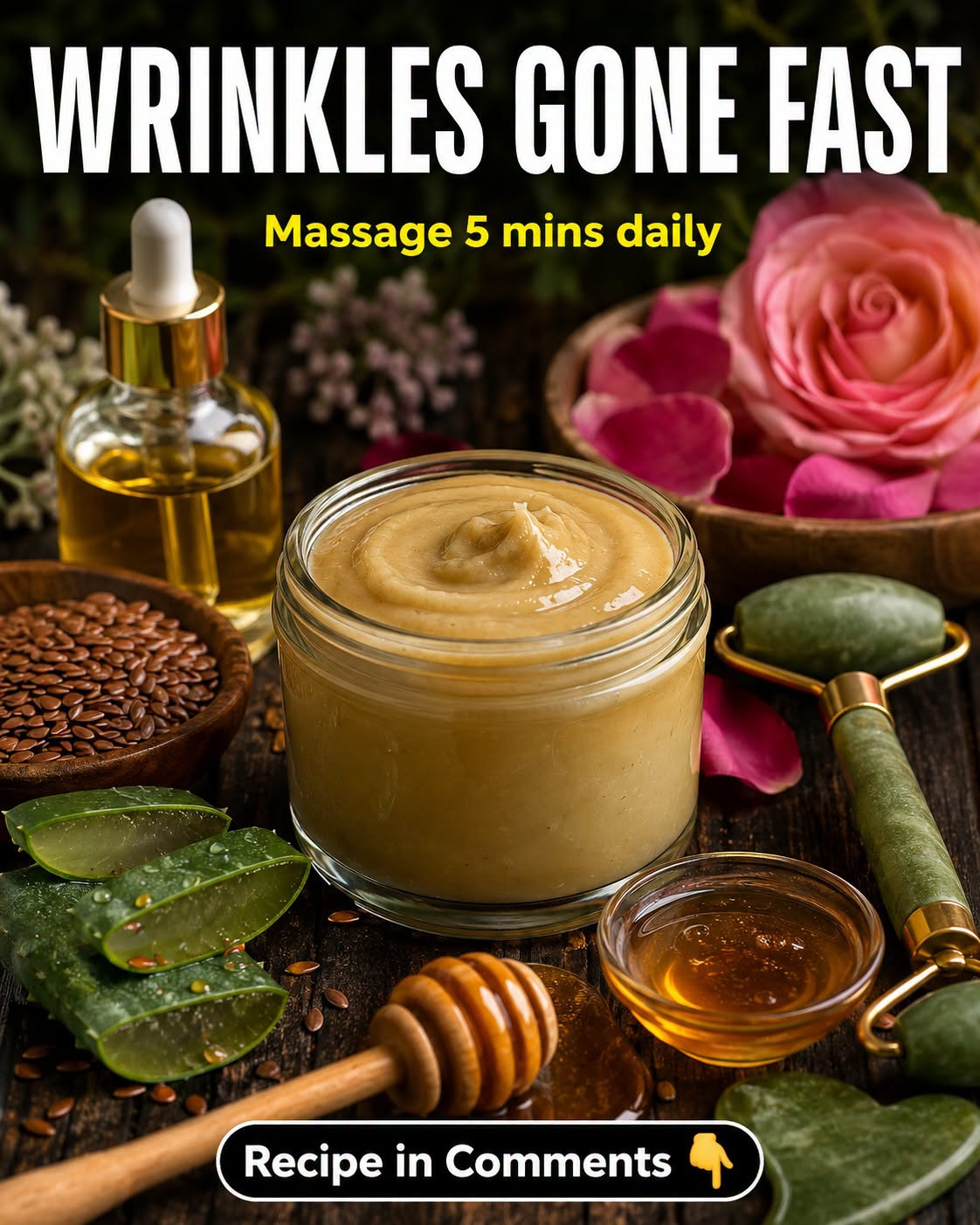
The image shows flaxseed, aloe vera, honey, facial oil, and a massage tool. These ingredients may provide moisture and massage slip, but they should not be described as an instant alternative to professional wrinkle treatment. Research on facial massage is promising: a recent study found changes in facial contour, muscle tone, and elasticity after regular roller or gua sha routines over eight weeks rather than after a single five-minute session. (PubMed)
The following remedies are designed for different skin types. Individual ingredients have research supporting hydration, elasticity, antioxidant activity, or barrier repair, but the exact homemade mixtures have not been tested as complete clinical wrinkle treatments. Patch-test every remedy for 24 hours and prepare water-based mixtures fresh.
Remedy 1: Flaxseed, Aloe, and Rosehip Massage Gel for Normal Skin
This lightweight gel provides enough slip for gentle facial massage while helping normal skin retain moisture.
Ingredients and Their Scientific Working
Fresh flaxseed gel — 1 tablespoon: Flaxseed releases a smooth plant mucilage when boiled. The gel forms a light moisturizing film and reduces friction during massage. Evidence for wrinkle improvement is stronger for dietary flaxseed oil than for homemade topical gel; oral flaxseed oil has improved skin hydration, smoothness, and barrier measurements in clinical research. (PubMed)
Pure aloe vera gel — 1 tablespoon: Aloe contains water-binding compounds that support hydration. Research on aloe-containing preparations has demonstrated moisturizing effects, while studies of standardized oral aloe sterols have reported improvements in wrinkles and skin elasticity. (PubMed)
Cooled green tea — 1 tablespoon: Green tea supplies antioxidant polyphenols. Clinical research has investigated green-tea preparations for photoaged skin, although ordinary brewed tea is less concentrated than researched formulas. (PubMed)
Rosehip seed oil — 3 drops: Rosehip oil supplies emollient fatty acids that reduce roughness. Clinical wrinkle evidence is stronger for standardized oral rosehip powder, which improved crow’s-feet, moisture, and elasticity after eight weeks. (PubMed)
Vegetable glycerin — 1/4 teaspoon: Glycerin attracts water into the outer layer of skin and temporarily creates a plumper, smoother appearance.
Finely powdered colloidal oatmeal — 1/2 teaspoon: Colloidal oatmeal supports the protective barrier and helps reduce dryness and irritation.
Procedure
To make flaxseed gel, simmer one teaspoon of whole flaxseeds in half a cup of water for approximately five minutes. Strain while warm and allow the gel to cool completely.
Mix one tablespoon of gel with aloe, green tea, glycerin, and oatmeal. Apply a thin layer. Massage gently from the centre of the face outward for three to five minutes. Use light upward movements along the cheeks and jaw, but do not pull the skin. Rinse after ten minutes and press three drops of rosehip oil over slightly damp skin.
How Often to Apply
Use nightly for five days, then three evenings weekly for six to eight weeks.
Initial Results
Within one to three days, the skin may feel softer and fine dehydration lines may look temporarily smoother. Deep wrinkles will not disappear during this period.
Remedy 2: Soy and Centella Dual-Zone Firming Mask for Combination Skin
Combination skin requires hydration on the cheeks without placing a heavy treatment over an oily forehead, nose, and chin.
Ingredients and Their Scientific Working
Plain unsweetened soy milk — 2 tablespoons: Research on standardized topical soy preparations suggests benefits for uneven tone, fine texture, and photoaged skin. Homemade soy milk is much less concentrated and should be considered a moisturizing support rather than an equivalent clinical treatment.
Weak cooled gotu kola or Centella infusion — 1 tablespoon: Centella asiatica contains plant compounds involved in collagen-related activity. A systematic review found possible improvements in lip and eye-area wrinkles, but it also emphasized the need for standardized preparations. (PubMed)
Pure aloe vera gel — 1 tablespoon: Aloe provides lightweight hydration to both oily and dry areas.
Finely powdered colloidal oatmeal — 1 teaspoon: Oatmeal helps reduce roughness and supports moisture retention on the cheeks.
White kaolin clay — 1/2 teaspoon: Kaolin absorbs temporary surface oil. It does not stimulate collagen or permanently tighten skin.
Jojoba oil — 3 drops: Jojoba acts as a lightweight emollient and reduces friction over dry areas.
Procedure
Mix soy milk, Centella infusion, aloe, and oatmeal. Divide the mixture into two bowls. Add kaolin to the portion for the forehead, nose, and chin. Add jojoba oil to the portion for the cheeks.
Apply each mixture to its appropriate area. Leave for seven minutes and rinse before the clay becomes completely hard. Finish with one minute of gentle outward fingertip massage.
How Often to Apply
Use on alternate nights for five days, then twice weekly.
Initial Results
The cheeks may feel smoother within two or three uses, while oily areas may look less shiny. Better hydration can make fine lines appear softer without permanently lifting the face.
Remedy 3: Chilled Green Tea and Rice Gel for Oily Skin
Oily skin can still become dehydrated. Harsh cleansers and repeated drying masks may increase irritation and make surface texture more noticeable. Dermatologists recommend maintaining hydration even when the skin produces excess oil. (American Academy of Dermatology)
Ingredients and Their Scientific Working
Strong cooled green tea — 2 tablespoons: Green-tea polyphenols provide antioxidant activity and have been studied for photoaging and skin quality.
Rice starch water — 2 tablespoons: Rice-derived ingredients have demonstrated moisturizing, anti-inflammatory, antioxidant, and possible anti-aging properties in scientific reviews. (PubMed)
Pure aloe vera gel — 1 tablespoon: Aloe hydrates without the heaviness of a thick facial oil.
Colloidal oatmeal — 1/2 teaspoon: Oatmeal supports the barrier and helps prevent tightness.
Vegetable glycerin — 1/8 teaspoon: A small amount helps retain water without creating an excessively sticky texture.
White kaolin clay — 1/4 teaspoon: This small quantity temporarily absorbs surface oil and reduces shine.
Procedure
Combine all ingredients and refrigerate for five minutes. Do not freeze. Apply a thin layer and leave it on for five to seven minutes.
Rinse gently. While the skin is slightly damp, massage with clean fingertips for two minutes using slow outward strokes. Do not massage active, painful acne.
How Often to Apply
Apply nightly for three days, then every other evening for three weeks.
Initial Results
The face may look fresher and less greasy after one or two applications. Better hydration may soften the appearance of tiny surface lines.
Remedy 4: Argan, Honey, and Castor Comfort Cream for Dry Skin
Dry skin often makes wrinkles appear deeper because rough surface cells and low moisture emphasize lines. This richer treatment combines humectants with emollient oils.
Ingredients and Their Scientific Working
Pure aloe vera gel — 1 tablespoon: Aloe supplies water-rich hydration.
Colloidal oatmeal — 2 teaspoons: Oat compounds support barrier recovery and improve dry, rough skin.
Pure honey — 1 teaspoon: Honey has humectant and skin-conditioning properties and has been widely studied in dermatology, particularly for skin repair. (PubMed)
Vegetable glycerin — 1/2 teaspoon: Glycerin draws water into the outer skin and can temporarily plump dehydration lines.
Cold-pressed argan oil — 1/2 teaspoon: Human research found improvement in skin-elasticity measurements after regular topical argan-oil use. (PubMed)
Castor oil — 2 drops: A small clinical study of a formulated castor-oil cream reported improvements in under-eye wrinkles and skin laxity. This does not prove that plain castor oil produces the same effect, so use only a very small amount and keep it out of the eyes. (PubMed)
Procedure
Mix aloe, oatmeal, honey, and glycerin. Apply for eight minutes without rubbing. Rinse and pat dry.
Blend argan oil with two drops of castor oil. Press two or three drops of the blend over the cheeks, forehead, and jaw. Massage for three minutes using light pressure. Avoid the eyelids and lash line.
How Often to Apply
Use nightly for five days, then three times weekly for at least eight weeks.
Initial Results
Dryness may improve after the first application. Within two or three days, skin may feel more flexible and fine dehydration lines may appear less pronounced.
Remedy 5: Rice and Oat Barrier Compress for Sensitive Skin
Sensitive skin can become more irritated by strong botanicals, fragrances, essential oils, facial scraping, and complicated mixtures. A shorter ingredient list is safer.
Ingredients and Their Scientific Working
Colloidal oatmeal — 2 teaspoons: Oat compounds have soothing, antioxidant, and barrier-supporting activity.
Rice starch water — 2 tablespoons: Rice starch provides a soft, non-exfoliating base and supports surface hydration.
Pure aloe vera gel — 1 teaspoon: Aloe provides lightweight moisture but should be omitted if it has caused itching previously.
Vegetable glycerin — 1/4 teaspoon: Glycerin supports moisture retention without exfoliating the skin.
Cold-pressed sunflower seed oil — 3 drops: Sunflower oil contains linoleic-acid-rich lipids that support the skin barrier. Plant-oil research suggests that the fatty-acid composition of an oil influences its effect on inflammation and barrier repair. (PubMed)
Boiled and cooled water — 2 tablespoons: Water dilutes the mixture and creates a gentle compress.
Procedure
Combine all ingredients except the sunflower oil and allow the oatmeal to soften for ten minutes. Dip a clean, soft cotton cloth into the liquid and place it gently over the face for three to five minutes.
Do not rub or use a gua sha tool. Rinse with cool-to-lukewarm water and press three drops of sunflower oil over dry areas.
How Often to Apply
Use once daily for three days. Continue every other day only if no burning, itching, swelling, or increased redness develops.
Initial Results
The skin may feel calmer and less tight within one to three applications. The aim is gradual barrier improvement rather than rapid wrinkle removal.
How to Perform a Safe Five-Minute Facial Massage
Apply enough aloe gel or facial oil to allow the fingers to move without dragging. Begin at the chin and glide gently toward the ears. Move from the sides of the nose across the cheeks, then massage the forehead from the centre toward the temples. Use light pressure around the eyes and do not massage directly over irritated acne, rashes, broken skin, or recent cosmetic procedures.
Massage may increase circulation temporarily. Research on facial rollers found short-term changes in skin blood flow, while longer routines influenced vascular response. (PubMed) However, evidence does not show that five minutes of massage can permanently erase wrinkles. Consistency over several weeks is more realistic.
Final Tips for Preventing Premature Wrinkles
Apply broad-spectrum, water-resistant SPF 30 or higher every morning. In a randomized trial, regular sunscreen use was associated with significantly less visible skin aging over four and a half years. (PubMed)
Use a gentle cleanser, moisturize daily, and avoid scrubbing with sugar, coffee grounds, salt, or rough facial tools. Products or remedies that repeatedly sting and burn can increase irritation and make skin appear older. (American Academy of Dermatology)
Do not apply raw lemon juice, undiluted vinegar, concentrated essential oils, or harsh egg-white masks. Keep facial tools, towels, pillowcases, and applicators clean.
Aim for regular sleep. Research has linked poor sleep quality with higher skin-aging scores and slower recovery of the protective skin barrier. (PubMed)
Visible hydration and glow may begin within two to three days. Fine dehydration lines can appear softer, but collagen-related improvements generally require weeks or months.
Diet Plan for Healthy, Youthful-Looking Skin
Follow the home remedy together with a balanced diet for at least eight to twelve weeks.
Breakfast: Choose eggs with whole-grain bread, unsweetened oatmeal with nuts, or plain yogurt with fruit.
Mid-morning: Eat guava, orange, kiwi, papaya, berries, or another vitamin-C-rich fruit. Vitamin C contributes to normal collagen formation and antioxidant protection. (PubMed)
Lunch: Include vegetables with lentils, chickpeas, beans, fish, eggs, chicken, tofu, or lean meat. Add whole-wheat roti or a moderate portion of rice.
Evening snack: Choose fruit with walnuts, almonds, pumpkin seeds, or one teaspoon of ground flaxseed.
Dinner: Eat colorful vegetables with a protein source such as lentils, beans, fish, eggs, tofu, or chicken.
Healthy fats: Include flaxseeds, walnuts, olive oil, seeds, or oily fish in balanced portions. Clinical research found that dietary flaxseed oil improved hydration, smoothness, scaling, and skin-barrier measurements after consistent intake. (PubMed)
Hydration: Drink according to thirst, activity, climate, and medical needs. Water supports overall hydration but does not erase wrinkles.
Continue the chosen remedy for three to five days initially. If it suits your skin, use it two or three times weekly for six to eight weeks. See a dermatologist if wrinkles are accompanied by sudden skin changes, persistent itching, swelling, unusual discoloration, or a non-healing area. Professional treatments may be required for deep wrinkles or significant skin laxity.
References for the above remedy
- American Academy of Dermatology. How to Select Anti-Aging Skin Care Products.
https://www.aad.org/public/everyday-care/skin-care-secrets/anti-aging/selecting-anti-aging-products - Ahn SH, et al. Comparative Effects of Facial Roller and Gua Sha Massage on Facial Contour, Muscle Tone, and Skin Elasticity.
https://pubmed.ncbi.nlm.nih.gov/40439289/ - Hughes MCB, et al. Sunscreen and Prevention of Skin Aging: A Randomized Trial.
https://pubmed.ncbi.nlm.nih.gov/23732711/ - Neukam K, et al. Supplementation of Flaxseed Oil Diminishes Skin Sensitivity and Improves Skin Barrier Function and Condition.
https://pubmed.ncbi.nlm.nih.gov/21088453/ - Kongkaew C, et al. Efficacy and Safety of Centella Asiatica on Wrinkles: A Systematic Review.
https://pubmed.ncbi.nlm.nih.gov/33413787/ - Boucetta KQ, et al. The Effect of Dietary and Cosmetic Argan Oil on Skin Elasticity.
https://pubmed.ncbi.nlm.nih.gov/25673976/ - Parvizi MM, et al. Efficacy of Castor Oil Cream in Treating Infraorbital Hyperpigmentation and Wrinkles.
https://pubmed.ncbi.nlm.nih.gov/37927123/ - Phetcharat L, et al. The Effectiveness of Standardized Rosehip Powder on Skin Wrinkles, Moisture, and Elasticity.
https://pubmed.ncbi.nlm.nih.gov/26604725/ - Zamil DH, et al. Dermatological Uses of Rice Products: Trend or True?
https://pubmed.ncbi.nlm.nih.gov/35587098/ - Oyetakin-White P, et al. Does Poor Sleep Quality Affect Skin Ageing?
https://pubmed.ncbi.nlm.nih.gov/25266053/