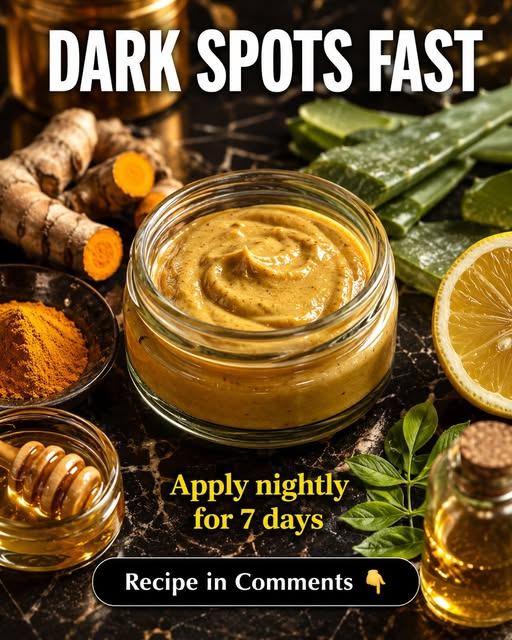
Dark spots can appear after acne, insect bites, cuts, burns, friction, sun exposure or irritating skincare. These flat brown, grey or bluish marks are often caused by excess melanin produced during inflammation, a condition known as post-inflammatory hyperpigmentation. Natural remedies may calm irritation, strengthen the skin barrier and gradually improve superficial discoloration, but they cannot erase established pigmentation in seven days. Early softness and brightness may appear within two or three days, while noticeable fading commonly requires several weeks or months. The American Academy of Dermatology notes that some superficial spots may take six to twelve months to fade after their cause has been controlled. (American Academy of Dermatology)
Clinical research generally examines standardized botanical extracts rather than kitchen mixtures. Soy and licorice have some of the strongest evidence among natural pigmentation ingredients, while aloe, green tea and turmeric have more limited or formulation-dependent evidence. The remedies below are therefore supportive, evidence-informed options—not guaranteed cures. (PMC)
Remedy 1: Soy, Aloe and Turmeric Mask for Normal Skin
Ingredients
Use two teaspoons of unsweetened soy milk, one teaspoon of pure inner-leaf aloe vera gel, one teaspoon of strongly brewed and cooled green tea, one teaspoon of finely ground colloidal oatmeal, half a teaspoon of honey and one very small pinch of turmeric powder.
Scientific Working of Each Ingredient
Soy contains proteins that may reduce the transfer of melanin-containing structures into surface skin cells. Randomized clinical research supports properly formulated soy preparations for improving uneven pigmentation, although ordinary soy milk is considerably less concentrated. (PubMed)
Aloe contains aloesin, which has been studied for inhibiting tyrosinase, an enzyme involved in melanin production. Green tea and turmeric supply antioxidant and anti-inflammatory compounds that may help limit irritation responsible for fresh marks. Oatmeal supports the protective barrier, while honey helps retain moisture. (PubMed)
Procedure
Mix the soy milk, aloe and green tea. Stir in the oatmeal and honey until a smooth paste forms. Add only a pinhead-sized amount of turmeric to minimize staining.
Apply a thin layer to clean skin, avoiding the eyes, broken pimples and open wounds. Leave it on for eight to ten minutes. Wet the mask before rinsing so that no scrubbing is required.
How Often to Apply
Use it on days one, three and five. When the skin remains comfortable, continue twice weekly for eight weeks.
Initial Results
Within one to three days, the face may feel softer and look temporarily brighter because dryness has improved. Dark spots will not permanently disappear during this period.
Remedy 2: Licorice and Cucumber Two-Zone Mask for Combination Skin
Ingredients
Use one tablespoon of fresh cucumber purée, one teaspoon of aloe vera gel, one teaspoon of colloidal oatmeal, one-eighth teaspoon of finely sifted licorice-root powder, one teaspoon of unsweetened soy milk and half a teaspoon of kaolin clay.
Scientific Working of Each Ingredient
Licorice contains compounds such as glabridin that can affect tyrosinase activity, inflammation and melanin production. Evidence is strongest for standardized licorice extracts rather than raw powder, so the effect of a homemade mask may be mild. Reviews identify soy and licorice among the better-supported natural options for hyperpigmentation. (PMC)
Cucumber and aloe create a lightweight hydrating base. Oatmeal helps protect dry cheek areas, while kaolin absorbs temporary excess oil from the forehead, nose and chin. Kaolin does not lighten pigmentation; its role is to balance the texture of the mask.
Procedure
Combine the cucumber, aloe, oatmeal, licorice and soy milk. Divide the mixture into two portions. Add the kaolin only to the portion intended for the T-zone.
Apply the clay-containing mixture to the forehead, nose and chin. Use the clay-free mixture on the cheeks and other dry areas. Leave it on for seven to eight minutes and rinse before the clay becomes hard or cracked.
How Often to Apply
Apply on alternate evenings during the first five days. Continue once or twice weekly for six to eight weeks.
Initial Results
The T-zone may look less shiny, while the cheeks may feel more comfortable within two or three applications. Pigmentation should be assessed after at least six weeks.
Remedy 3: Green Tea and Licorice Clarifying Pack for Oily Skin
Ingredients
Use two teaspoons of cooled green tea, one teaspoon of aloe vera gel, one teaspoon of kaolin clay, half a teaspoon of colloidal oatmeal, one-eighth teaspoon of licorice-root powder and half a teaspoon of honey.
Scientific Working of Each Ingredient
Oily and acne-prone skin can develop new pigmentation whenever pimples are squeezed, scratched or irritated. Green-tea polyphenols have antioxidant and anti-inflammatory properties, while licorice may interfere with processes involved in excessive pigment formation. Aloe and oatmeal reduce the drying effect of clay, and honey improves moisture retention.
Natural pigmentation reviews include green tea and licorice among potentially useful ingredients, but the strength of evidence varies and homemade preparations are not equivalent to standardized extracts. (PubMed)
Procedure
Mix the green tea and clay until no lumps remain. Add the aloe, oatmeal, licorice and honey. Spread a thin layer over oily areas and healed dark marks.
Do not apply it over inflamed, picked or bleeding pimples. Leave it on for five to seven minutes and rinse while it is still slightly moist.
Prepare a fresh portion for every application because this water-based mixture contains no preservative.
How Often to Apply
Use it three times over five days. Continue no more than twice weekly for eight weeks.
Initial Results
Surface oiliness and temporary redness may look reduced within one to three days. Established brown marks require much longer to fade.
Remedy 4: Soy, Oat and Rosehip Treatment for Dry Skin
Ingredients
Use one tablespoon of colloidal oatmeal, two teaspoons of unsweetened soy milk, one teaspoon of aloe vera gel, half a teaspoon of honey, four drops of pure sunflower-seed oil and two drops of rosehip-seed oil.
Scientific Working of Each Ingredient
Dryness and barrier damage can trigger inflammation, making discoloration appear darker or more uneven. Colloidal oatmeal has clinically demonstrated benefits for hydration and skin-barrier function. Sunflower-seed oil is rich in linoleic acid and has been shown to preserve barrier integrity while improving hydration. (PubMed)
Soy supplies the main pigmentation-supporting compounds. Aloe and honey hydrate the surface, while rosehip oil conditions dry skin. Rosehip oil may improve the appearance of roughness, but it should not be presented as a proven treatment for melasma or deep pigmentation.
Procedure
Soak the oatmeal in soy milk for five minutes. Add the aloe and honey, then mix in the sunflower and rosehip oils.
Apply the preparation to slightly damp skin. Leave it on for ten minutes and rinse gently with lukewarm water. Do not massage the oatmeal as a physical scrub.
How Often to Apply
Apply on days one, three and five. Continue twice weekly for eight to twelve weeks if no clogged pores or irritation develop.
Initial Results
Dryness, tightness and roughness may improve within one to three days. Better hydration can make the complexion appear more even, but this does not represent permanent pigment removal.
Remedy 5: Gentle Oat and Soy Compress for Sensitive Skin
Ingredients
Use one tablespoon of colloidal oatmeal, two teaspoons of boiled and completely cooled water, one teaspoon of unsweetened soy milk, one teaspoon of cooled green tea, one-quarter teaspoon of plant-derived glycerin and two drops of sunflower-seed oil.
Scientific Working of Each Ingredient
Sensitive skin can develop darker marks after even mild irritation. The first goal is therefore to protect the barrier and prevent inflammation. Oatmeal has antioxidant and anti-inflammatory activity, glycerin attracts water into the outer skin layer, and sunflower oil helps reduce moisture loss. Soy provides gentle pigmentation support, while green tea contributes antioxidant compounds. (PubMed)
This mixture should not be used by anyone with a soy allergy. Even natural ingredients can cause contact dermatitis, so careful patch testing is essential.
Procedure
Mix the oatmeal, water, soy milk, green tea and glycerin. Stir in the sunflower oil. Place the mixture inside clean, soft cotton gauze and rest it over the marked area for three to five minutes.
Remove the compress without rubbing and rinse with cool-to-lukewarm water. Prepare it freshly and discard all leftovers.
How Often to Apply
Patch-test first and wait 48 hours. When no reaction appears, apply on days one, three and five. Continue once weekly.
Initial Results
The skin may feel calmer and less tight within two or three applications. Stop immediately if itching, burning, swelling or persistent redness develops.
Final Tips for Fading Dark Spots Safely
Use a broad-spectrum, water-resistant sunscreen with SPF 30 or higher every morning. Tinted sunscreen containing iron oxide can provide additional protection against visible light, which may worsen pigmentation, particularly in deeper skin tones. (American Academy of Dermatology)
Do not apply lemon juice despite its appearance in many homemade-remedy images. Lemon and other citrus juices can cause irritation or a phototoxic reaction after sunlight exposure, sometimes leaving prolonged post-inflammatory pigmentation. (DermNet®)
Avoid baking soda, toothpaste, undiluted vinegar, rough sugar, salt scrubs and aggressive brushes. Keep bowls, cloths and applicators clean, make fresh mixtures each time, drink enough water and aim for seven to nine hours of sleep. Perform a patch test 24–48 hours before using any new ingredient.
Softer texture and temporary brightness may begin within two to three days. Superficial pigmentation generally needs several weeks or months, while deeper blue-grey pigmentation may take considerably longer. Continue the suitable routine for eight to twelve weeks before judging the result.
Diet Plan to Support Healthy Skin
Diet cannot directly erase dark spots, but adequate nutrition supports normal skin repair. Vitamin C is required for collagen synthesis and wound healing. Good sources include guava, oranges, kiwi, strawberries, bell peppers, tomatoes and green vegetables. (Office of Dietary Supplements)
For breakfast, choose eggs with wholegrain bread, plain yogurt with fruit and seeds, or oatmeal with nuts. Lunch can include lentils, beans, fish or chicken with vegetables and wholegrain roti or brown rice. For dinner, select fish, tofu, eggs, chicken, chickpeas or lentil soup with vegetables.
Choose whole fruit, cucumber, unsalted nuts, roasted chickpeas or plain yogurt as snacks. A balanced eating pattern should emphasize fruits, vegetables, legumes, whole grains and appropriate protein sources while limiting highly processed food and excessive free sugar. (World Health Organization)
Continue the home remedy, sunscreen and diet routine for eight to twelve weeks. See a dermatologist if the pigmentation persists, spreads rapidly or develops without an obvious cause. A new spot that changes in size, shape or colour, looks different from surrounding marks, bleeds, itches, hurts or fails to heal must be professionally examined because not every dark spot is harmless pigmentation. (American Academy of Dermatology)
References for the above remedy
- American Academy of Dermatology. How to Fade Dark Spots in Darker Skin Tones.
https://www.aad.org/public/everyday-care/skin-care-secrets/routine/fade-dark-spots - Hollinger JC, Angra K, Halder RM. Are Natural Ingredients Effective in the Management of Hyperpigmentation?
https://pubmed.ncbi.nlm.nih.gov/29552273/ - Leyden J, et al. The Mechanism of Action and Clinical Benefits of Soy for the Treatment of Hyperpigmentation.
https://pubmed.ncbi.nlm.nih.gov/21332714/ - Choi S, et al. Aloesin Inhibits Hyperpigmentation Induced by UV Radiation.
https://pubmed.ncbi.nlm.nih.gov/12372097/ - Capone K, et al. Effects of Colloidal Oatmeal Topical Treatment on Skin Barrier Function and Hydration.
https://pubmed.ncbi.nlm.nih.gov/32484623/ - Danby SG, et al. Effect of Olive and Sunflower Seed Oil on the Adult Skin Barrier.
https://pubmed.ncbi.nlm.nih.gov/22995032/ - Vaughn AR, et al. Effects of Turmeric on Skin Health: A Systematic Review.
https://pubmed.ncbi.nlm.nih.gov/27213821/ - DermNet. Phytophotodermatitis.
https://dermnetnz.org/topics/phytophotodermatitis - National Institutes of Health, Office of Dietary Supplements. Vitamin C Fact Sheet for Health Professionals.
https://ods.od.nih.gov/factsheets/VitaminC-HealthProfessional/ - American Academy of Dermatology. Melanoma Signs and Symptoms.
https://www.aad.org/public/diseases/skin-cancer/types/common/melanoma/symptoms