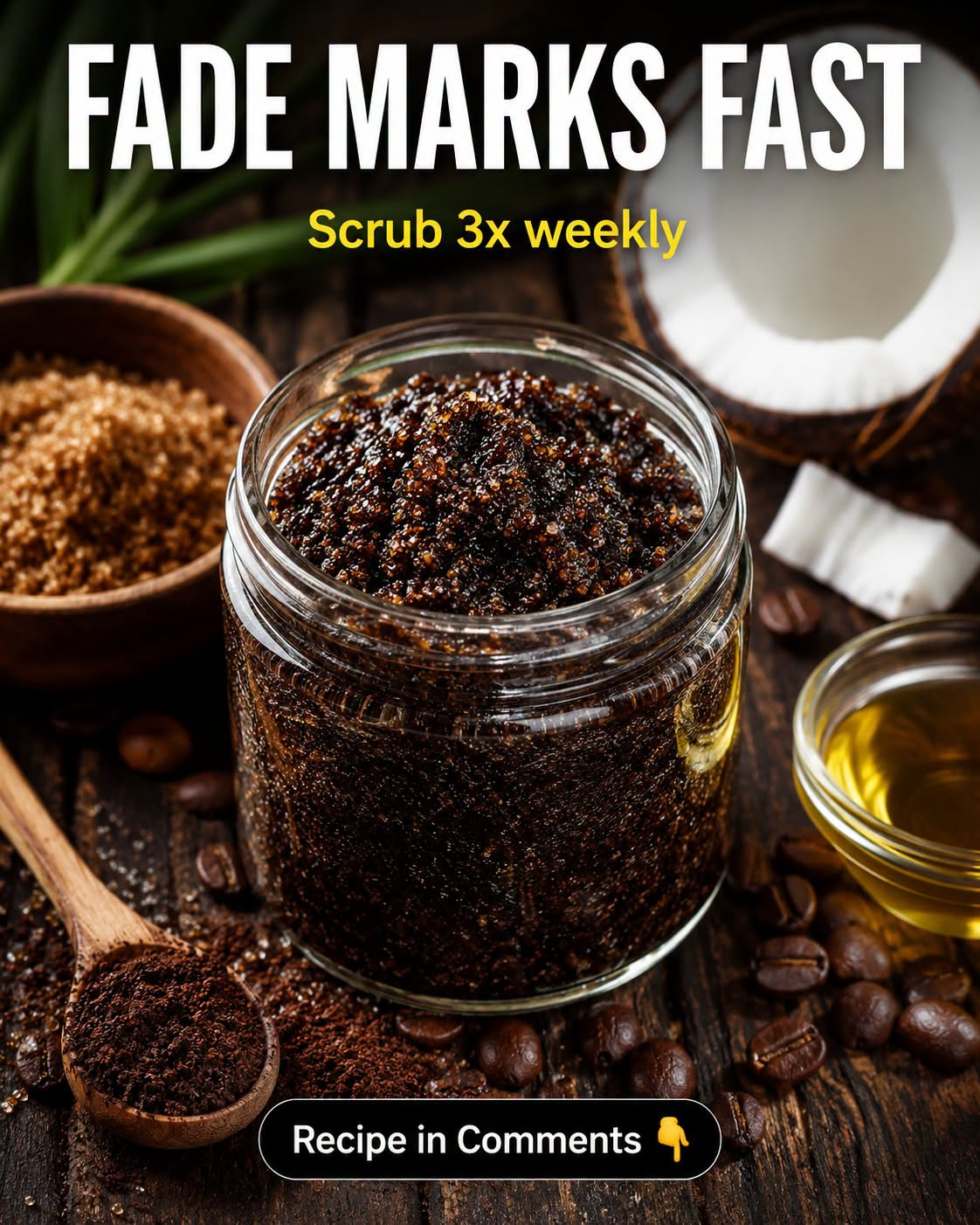
Stretch marks are narrow lines that commonly develop on the abdomen, thighs, hips, breasts, buttocks and upper arms after pregnancy, puberty, rapid weight change or muscle growth. They form below the surface when rapid stretching disrupts collagen, elastin and other connective tissues in the dermis. New marks may appear pink, red, purple or dark brown, while older marks usually become pale, silvery or slightly depressed. They are harmless and often fade naturally, but no coffee scrub, oil or homemade mask can erase them quickly. (American Academy of Dermatology)
Natural care may still improve hydration, softness and the contrast between the marks and surrounding skin. Evidence for stretch-mark prevention is limited, although standardized Centella asiatica preparations, hyaluronic acid and regular massage have shown some promise. The exact homemade mixtures below have not been clinically tested, so they should be viewed as supportive skincare rather than proven scar-removal treatments. (PubMed)
Why a Coffee Scrub Is Not the Best Treatment
Coffee grounds only exfoliate the outermost layer of skin, while stretch marks form much deeper in the dermis. Repeatedly scrubbing three times weekly cannot rebuild damaged collagen and may cause irritation, redness or darker post-inflammatory marks. Dermatologists warn that mechanical exfoliation can harm dry, sensitive or pigmentation-prone skin when performed aggressively. (American Academy of Dermatology)
Remedy 1: Centella and Rosehip Massage Gel for Normal Skin
Ingredients
Pure aloe vera gel: 1 tablespoon, providing lightweight hydration.
Centella asiatica extract powder: ⅛ teaspoon, supplying triterpenes studied in scar and stretch-mark preparations.
Vegetable glycerin: ½ teaspoon, attracting water into the skin’s outer layer.
Sunflower-seed oil: 1 teaspoon, supporting the protective skin barrier.
Jojoba oil: ½ teaspoon, improving softness without an excessively heavy finish.
Rosehip-seed oil: ½ teaspoon, supplying conditioning fatty acids and antioxidant compounds.
Scientific Working of the Ingredients
Standardized Centella preparations have shown limited promise in preventing pregnancy-related stretch marks and reducing their severity. Centella compounds may influence fibroblast activity and collagen-related repair, but homemade extract concentrations are not equivalent to clinical products. Rosehip oil has limited human evidence for improving redness and appearance in other scar types, not specifically mature stretch marks. Aloe and glycerin hydrate the surface, while sunflower and jojoba oils reduce roughness and moisture loss. (PubMed)
Procedure
Mix the aloe, Centella and glycerin until smooth. Slowly stir in the three oils. Apply a thin layer over clean, slightly damp skin and massage gently for three minutes. Leave it on without rinsing unless it feels sticky or uncomfortable.
Prepare a fresh amount for each application because the water-containing mixture has no preservative.
How Often to Apply
Apply once daily for five days. Continue once daily or on alternate days for eight to twelve weeks.
Initial Results
Within one to three days, the skin may feel softer and less tight. Stretch-mark colour or depth will not change significantly within this period.
Remedy 2: Two-Zone Oat and Squalane Treatment for Combination Skin
Ingredients
Colloidal oatmeal: 1 teaspoon, helping calm dry or irritated areas.
Pure aloe vera gel: 1 tablespoon, providing non-greasy hydration.
Vegetable glycerin: ½ teaspoon, improving surface moisture.
Plant-derived squalane: 1 teaspoon, providing lightweight emollience.
Sunflower-seed oil: ½ teaspoon, supporting drier areas.
Jojoba oil: ½ teaspoon, helping the mixture spread evenly.
Scientific Working of the Ingredients
Combination body skin may be oilier on the chest or back but dry around the hips, thighs and abdomen. Colloidal oatmeal contains antioxidant avenanthramides and has demonstrated benefits for hydration and barrier function. Glycerin and aloe increase surface water content, while squalane and jojoba provide lighter conditioning. Sunflower oil can improve hydration while preserving the outer skin barrier. These effects may temporarily make marks look smoother but do not reconstruct dermal scar tissue. (PubMed)
Procedure
Blend the oatmeal, aloe and glycerin. Add the oils and mix well. Apply a very thin layer to oilier areas and a slightly more generous layer to dry zones. Massage gently for two minutes and rinse after 15 minutes.
How Often to Apply
Use on days one, three and five. Continue three times weekly for eight weeks.
Initial Results
Dry zones may feel more comfortable within two or three applications. Oily areas should feel hydrated without being heavily coated.
Remedy 3: Lightweight Green-Tea Gel for Oily Skin
Ingredients
Strongly brewed and cooled green tea: 1 tablespoon, providing antioxidant polyphenols.
Pure aloe vera gel: 1 tablespoon, creating a lightweight base.
Colloidal oatmeal: ½ teaspoon, helping reduce dryness and irritation.
Centella asiatica extract powder: ⅛ teaspoon, supplying supportive botanical compounds.
Vegetable glycerin: ¼ teaspoon, retaining moisture without a thick oil layer.
Sunflower-seed oil: 3 drops, providing minimal barrier support.
Scientific Working of the Ingredients
This treatment is designed mainly to hydrate oily or breakout-prone body skin without using heavy butters. Centella is the ingredient with limited stretch-mark-specific evidence, while green tea and aloe mainly provide antioxidant and soothing support. Oatmeal and glycerin reduce the tightness that can follow frequent washing. The very small amount of sunflower oil helps limit water loss without leaving a greasy film.
Procedure
Combine the green tea and aloe. Stir in the oatmeal, Centella and glycerin, followed by three drops of sunflower oil. Spread a thin layer over the marks without scrubbing. Leave it on for ten minutes and rinse.
Prepare it immediately before use and discard any remainder.
How Often to Apply
Apply on alternate days for the first five days. Continue two or three times weekly for eight to twelve weeks.
Initial Results
Skin may feel calmer and less dehydrated within one to three days. Stop if new bumps, itching or folliculitis appear.
Remedy 4: Rich Shea and Sunflower Treatment for Dry Skin
Ingredients
Unrefined shea butter: 1 teaspoon, forming a rich emollient layer.
Sunflower-seed oil: 2 teaspoons, supporting hydration and barrier integrity.
Jojoba oil: 1 teaspoon, improving spreadability.
Rosehip-seed oil: 1 teaspoon, conditioning rough skin.
Vegetable glycerin: ¼ teaspoon, helping attract surface moisture.
Colloidal oatmeal: ½ teaspoon, soothing dry, itchy areas.
Scientific Working of the Ingredients
Dryness can make mature white stretch marks appear more textured and noticeable. Shea butter, glycerin and jojoba are among the moisturizing ingredients dermatologists recommend for very dry skin. Sunflower oil has been shown to improve hydration without the barrier damage associated with olive oil in a comparative human study. Rosehip oil may support scar appearance, although high-quality evidence remains scarce and relates mainly to wound or postsurgical scars. (American Academy of Dermatology)
Procedure
Soften the shea butter between clean fingertips. Blend in the sunflower, jojoba and rosehip oils. Add the glycerin and finely sifted oatmeal. Massage a thin layer over damp skin for three to five minutes.
Because glycerin and oil can separate, prepare a small fresh amount or mix thoroughly before every application.
How Often to Apply
Apply nightly for five days. Continue once daily for eight to twelve weeks.
Initial Results
Ashiness, roughness and tightness may improve within one to three days. Better hydration may make the lines look temporarily less obvious.
Remedy 5: Fragrance-Free Oat Compress for Sensitive Skin
Ingredients
Colloidal oatmeal: 1 tablespoon, providing calming barrier support.
Boiled and completely cooled water: 2 tablespoons, creating a gentle compress.
Vegetable glycerin: ¼ teaspoon, improving moisture retention.
Sunflower-seed oil: ½ teaspoon, reducing water loss.
Plant-derived squalane: ½ teaspoon, adding lightweight softness.
Shea butter: ¼ teaspoon, sealing dry areas after the compress.
Scientific Working of the Ingredients
Sensitive skin benefits from short, fragrance-free formulations. Oatmeal supports hydration and may reduce irritation, while glycerin attracts water to the surface. Sunflower oil, squalane and shea butter form a gentle emollient layer. None of these ingredients can remove stretch marks, but keeping sensitive skin calm prevents the additional redness or pigmentation that harsh scrubbing may cause. (American Academy of Dermatology)
Procedure
Mix the oatmeal, water and glycerin. Place the mixture inside clean, soft cotton gauze and rest it over the marks for five minutes. Remove without rubbing. Blend the sunflower oil, squalane and shea butter, then press a very thin layer onto the damp skin.
Patch-test on a small area and wait 24–48 hours before wider use.
How Often to Apply
Use once on the first day. When no reaction appears, repeat on days three and five. Continue once or twice weekly.
Initial Results
The treated area may feel calmer and smoother within two or three days. Stop immediately if burning, swelling, persistent redness or blistering develops.
Final Tips
Apply treatments after a brief warm shower while the skin is slightly damp. Massage gently rather than rubbing aggressively. Use broad-spectrum SPF 30 or higher on exposed marks because tanning can increase the contrast between stretch marks and surrounding skin.
Avoid lemon juice, baking soda, salt, coarse sugar, undiluted essential oils and rough coffee grounds. Cocoa butter and olive oil are also commonly promoted for stretch marks, but reviews have not found convincing evidence that they prevent or reduce them. (PubMed)
Softness and surface glow may improve within two to three days. Meaningful visual improvement should be assessed after eight to twelve weeks, and even then, older white marks may remain visible.
Diet Plan to Support Skin Health
Diet cannot erase existing stretch marks, but adequate nutrition supports normal collagen formation and general skin repair. Vitamin C is essential for collagen synthesis, while severe deficiency weakens connective tissue and delays healing. (Office of Dietary Supplements)
For breakfast, choose eggs with wholegrain bread, plain yogurt with fruit and seeds, or oatmeal with nuts. Lunch may include lentils, chickpeas, fish, chicken or beans with salad and wholegrain roti or brown rice. Add vitamin-C-rich foods such as guava, oranges, kiwi, tomatoes or bell peppers.
Dinner can include fish, eggs, tofu, chicken or lentils with vegetables. Include nuts, seeds, avocado and suitable plant oils for essential fats. Drink water regularly and avoid crash diets or repeated rapid weight changes, which may place additional stress on the skin.
Continue the suitable home remedy and diet plan for at least eight to twelve weeks. Consult a dermatologist when marks appear suddenly without weight change or pregnancy, become widespread, develop while using corticosteroids, or occur with unusual bruising, muscle weakness or other symptoms. Medical options such as prescription treatments, microneedling, laser therapy and radiofrequency may offer more noticeable improvement, although no treatment removes every stretch mark completely. (American Academy of Dermatology)
References for the above remedy
- American Academy of Dermatology. Stretch Marks: Why They Appear and How to Get Rid of Them.
https://www.aad.org/public/cosmetic/scars-stretch-marks/stretch-marks-why-appear - Mikes BA, Oakley AM, Patel BC. Striae Distensae. StatPearls.
https://www.ncbi.nlm.nih.gov/books/NBK436005/ - Korgavkar K, Wang F. Stretch Marks During Pregnancy: A Review of Topical Prevention.
https://pubmed.ncbi.nlm.nih.gov/25255817/ - Farahnik B, et al. Striae Gravidarum: Risk Factors, Prevention and Management.
https://pubmed.ncbi.nlm.nih.gov/28560300/ - American Academy of Dermatology. How to Safely Exfoliate at Home.
https://www.aad.org/public/everyday-care/skin-care-secrets/routine/safely-exfoliate-at-home - Danby SG, et al. Effect of Olive and Sunflower Seed Oil on the Adult Skin Barrier.
https://pubmed.ncbi.nlm.nih.gov/22995032/ - Belkhelladi M, et al. Rosehip Extract and Wound Healing: A Review.
https://pubmed.ncbi.nlm.nih.gov/37605366/ - American Academy of Dermatology. Dermatologists’ Top Tips for Relieving Dry Skin.
https://www.aad.org/public/everyday-care/skin-care-basics/dry/dermatologists-tips-relieve-dry-skin - National Institutes of Health, Office of Dietary Supplements. Vitamin C Fact Sheet for Health Professionals.
https://ods.od.nih.gov/factsheets/VitaminC-HealthProfessional/ - Mayo Clinic. Stretch Marks: Symptoms and Causes.
https://www.mayoclinic.org/diseases-conditions/stretch-marks/symptoms-causes/syc-20351139