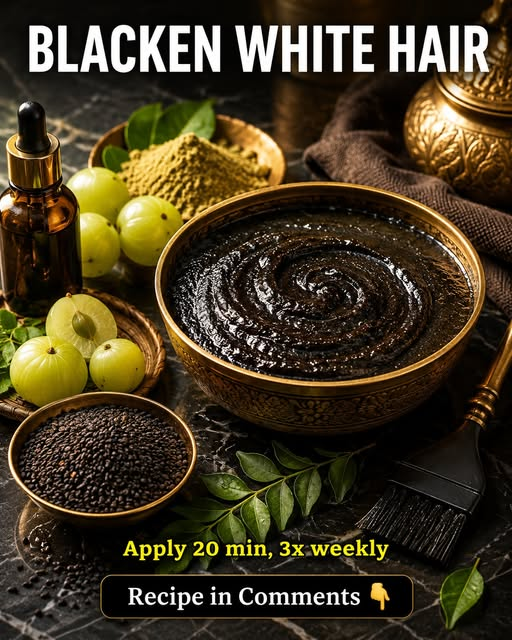
White and grey hair develops when pigment-producing cells inside the hair follicle make less melanin. Age and genetics are the most common causes, while unusually early greying may sometimes be associated with vitamin B12 deficiency, low iron stores, thyroid disorders, oxidative stress or certain autoimmune conditions. Once the pigment-producing stem cells in a follicle are depleted, amla, curry leaves, black sesame, onion juice or herbal oils have not been clinically proven to restart natural pigment production. (PMC)
Natural ingredients can still cover white strands cosmetically. Pure henna deposits a red-orange colour, while plant-derived indigo adds blue pigment. When the two dyes are applied in the correct sequence, they can produce brown, deep brown or near-black results. This changes the colour of the existing hair shaft; it does not reverse the biological greying process. Every mixture must be patch-tested and strand-tested because even botanical dyes can cause irritation or unpredictable colour. (U.S. Food and Drug Administration)
Remedy 1: Two-Step Henna and Indigo Colour for a Normal Scalp
Ingredients and Scientific Benefits
Pure henna powder: 4 tablespoons, providing lawsone pigment that attaches to hair keratin.
Warm water: Approximately ½ cup, releasing the plant pigment and creating a spreadable paste.
Amla powder: 1 teaspoon, supplying tannins and acidity that may make henna appear less orange.
Pure indigo powder: 4 tablespoons, depositing a blue plant pigment over the henna base.
Fine salt: ¼ teaspoon, helping prepare a smooth indigo paste.
Virgin coconut oil: ½ teaspoon, used after colouring to reduce dryness and hair-protein loss.
How the Ingredients Work Scientifically
Henna contains lawsone, a red-orange pigment that bonds with keratin in the hair shaft. Indigo deposits blue colour. A red-orange henna base beneath blue indigo creates a dark brown or near-black visual result. The exact final shade depends on the original hair colour, dye purity, porosity, ratios and application time. Indigo has been considered safe in non-oxidative hair-colouring preparations within evaluated concentration limits, although sensitisation remains possible. (Public Health)
Coconut oil does not restore hair pigment, but laboratory hair-fibre research found that it reduced protein loss from damaged and undamaged hair. It should be used after colouring rather than mixed heavily into the dye because an oily coating may reduce pigment contact with the hair. (PubMed)
Procedure
Mix henna with enough warm water to form a yogurt-like paste. Cover it and let it rest according to the powder’s instructions. Apply it from roots to ends on clean hair, wear gloves and leave it for 60–90 minutes. Rinse thoroughly without applying indigo yet.
Prepare fresh indigo immediately before the second step by combining it with warm water and salt. Apply it over the henna-coloured hair, leave for 45–60 minutes and rinse with water. Once the hair is dry, smooth a very small amount of coconut oil over the lengths.
How Often to Apply
Apply the complete colouring process once, not three times weekly. During the following three to five days, wash gently and avoid harsh clarifying shampoos. Repeat only when new white roots become visible, usually after three to four weeks.
Initial Results
The hair may look deep brown immediately. Indigo commonly darkens further through oxidation during the following 24–48 hours.
Remedy 2: Root-Focused Darkening Paste for a Combination Scalp
Ingredients and Scientific Benefits
Pure henna powder: 2 tablespoons, establishing the warm pigment base.
Pure indigo powder: 3 tablespoons, creating a cooler and darker result.
Amla powder: 1 teaspoon, reducing excessive red warmth.
Warm water: Approximately ⅓ cup, activating the powdered colourants.
Fine salt: ⅛ teaspoon, mixed only into the indigo portion.
Coconut oil: 3–4 drops, applied only to dry ends after rinsing.
How the Ingredients Work Scientifically
A combination scalp can become oily around the crown while the ends remain dry. Applying plant dye only to white roots prevents unnecessary colour buildup and dryness through the lengths. Henna and indigo provide cosmetic coverage, while amla mainly modifies the tone; there is insufficient clinical evidence that amla restores melanin inside grey follicles. Reviews of premature greying have not established amla, curry leaves or similar traditional ingredients as proven repigmentation treatments. (PMC)
Procedure
Prepare and apply the henna-amla paste only to visible white roots. Leave it for approximately one hour and rinse. Mix indigo, salt and warm water immediately before use, then apply it over the same root area for 40–50 minutes.
Rinse thoroughly and apply three or four drops of coconut oil to the dry ends only. Avoid applying oil directly to an already-oily scalp.
How Often to Apply
Use the remedy once. Keep the scalp clean and treat the dry ends gently during the next three to five days. Perform a root touch-up after three to four weeks rather than repeatedly dyeing the full length.
Initial Results
White roots may become brown to black within the first day. The shade generally settles and appears deeper by the second or third day.
Remedy 3: Fresh One-Step Herbal Colour for an Oily Scalp
Ingredients and Scientific Benefits
Pure henna powder: 2 tablespoons, improving colour attachment.
Pure indigo powder: 4 tablespoons, producing a predominantly dark tone.
Warm water: Approximately ½ cup, creating the paste.
Amla powder: ½ teaspoon, balancing the warm henna tone.
Fine salt: ¼ teaspoon, added to the freshly prepared mixture.
Freshly brewed plain black tea: 2 tablespoons, used mainly to adjust consistency and provide a mild temporary stain.
How the Ingredients Work Scientifically
Oily buildup may prevent colour from contacting the hair evenly, so the hair should be washed before application without using conditioner. The higher indigo-to-henna ratio is intended to produce a cooler, darker shade. Black tea may temporarily deepen the appearance of hair because of its tannins, but it has not been clinically proven to reverse grey hair or provide reliable permanent coverage.
A one-step mixture is quicker than separate applications, although resistant white hair may obtain stronger coverage from the two-step method. Plant powders must be purchased from a traceable source because mixtures labelled “black henna” may contain undeclared para-phenylenediamine, or PPD, which can produce serious allergic contact dermatitis. (PMC)
Procedure
Wash the hair with a gentle shampoo and dry it without applying oil or conditioner. Mix henna and amla with warm tea and water. Immediately before application, add the indigo and salt. Apply the fresh paste generously over white strands, cover the hair and leave it for 60–75 minutes. Rinse thoroughly.
How Often to Apply
Apply once and wait at least three weeks before repeating. For the next three to five days, avoid heavy oiling, very hot water and aggressive cleansing.
Initial Results
Some white strands may turn medium or dark brown on the first day. The colour usually deepens during the next one to two days, but very resistant grey hair may require the two-step technique at the next application.
Remedy 4: Dark Colour and Coconut Aftercare for Dry Hair
Ingredients and Scientific Benefits
Pure henna powder: 3 tablespoons, creating the first pigment layer.
Pure indigo powder: 4 tablespoons, darkening the henna-treated hair.
Warm water: Approximately ½ cup, preparing both pastes.
Amla powder: 1 teaspoon, moderating the orange tone.
Fine salt: ¼ teaspoon, mixed into indigo.
Virgin coconut oil: 1 teaspoon, protecting dry hair after colouring.
Aloe vera gel: 1 teaspoon, applied separately as a short hydrating pre-wash treatment when tolerated.
How the Ingredients Work Scientifically
Plant dyes can leave already-dry hair feeling stiff, especially when thick layers are repeatedly applied over the full length. Coconut oil can penetrate the hair fibre and has reduced protein loss and porosity-related damage in hair studies. Aloe gel supplies water and creates temporary softness, but it has no proven ability to restore hair pigment. (PubMed)
Procedure
Follow the two-step henna and indigo method described in Remedy 1. After the final rinse, allow the hair to dry and apply a thin coating of coconut oil to the lengths and ends.
On the following day, mix the aloe gel with half a teaspoon of coconut oil and apply it to the dry lengths for ten minutes before washing. Prepare this treatment freshly and do not store it.
How Often to Apply
Colour once every four to six weeks. Use the aloe-and-coconut aftercare once during the first three to five days and then weekly when it suits the hair.
Initial Results
Colour coverage should appear within one to two days. The hair may feel softer after the conditioning treatment, although severely damaged ends cannot be permanently repaired by oil.
Remedy 5: Reduced-Contact Blend for a Sensitive Scalp
Ingredients and Scientific Benefits
Pure henna powder: 2 tablespoons, producing a reddish-brown base.
Pure indigo powder: 2 tablespoons, darkening the colour.
Amla powder: ½ teaspoon, adjusting the shade.
Warm water: Approximately ⅓ cup, creating a smooth mixture.
Fine salt: One small pinch, added to the indigo.
Virgin coconut oil: 3 drops, applied to the ends after rinsing.
How the Ingredients Work Scientifically
Sensitive skin requires the simplest possible mixture without perfume, essential oils, lemon juice or synthetic black dye. Pure henna is generally different from products sold as “black henna,” which may contain PPD. However, henna and indigo can still cause contact allergy, and European safety assessment has noted that weak sensitisation from indigo cannot be excluded. (U.S. Food and Drug Administration)
Procedure
Perform a patch test according to the supplier’s instructions and a separate strand test at least 48 hours before full application. Do not use the mixture if the scalp is scratched, inflamed, sunburned or affected by eczema.
Mix the ingredients immediately before use and apply them only to a small root section during the first treatment. Leave for 20–30 minutes, rinse carefully and watch for delayed itching, swelling or blistering.
How Often to Apply
Apply once only after successful testing. Observe the scalp for three to five days. Do not repeat more often than every four weeks, and stop permanently if a reaction develops.
Initial Results
A mild brown shade may appear during the first one to three days. Short contact time may not produce black coverage, but it lowers unnecessary exposure while tolerance is being assessed.
Final Tips
Never use an unidentified powder simply labelled “instant black henna.” Avoid products containing PPD, metallic salts or undisclosed ingredients. Wear gloves, protect the eyes, use clean non-metal utensils and follow the supplier’s timing instructions. Hair dye should never be applied to eyelashes or eyebrows. (U.S. Food and Drug Administration)
Do not apply henna or indigo three times weekly. Frequent colouring may dry the hair and repeatedly expose the scalp to potential allergens. A strand test is particularly important for bleached, permed, relaxed or previously chemically coloured hair because the result may be uneven or unexpected.
Diet Plan to Support Normal Hair Pigmentation
Diet cannot turn age-related white strands black, but correcting a genuine deficiency may support normal follicle function and prevent other health complications. Studies of premature greying have reported associations with low vitamin B12, low ferritin and thyroid abnormalities, although an association does not prove that supplements will reverse every case. (PMC)
For breakfast, choose eggs with wholegrain bread, plain yogurt with seeds, or fortified cereal with milk. Vitamin B12 occurs naturally in fish, meat, poultry, eggs and dairy foods; people following a vegan diet require dependable fortified foods or professionally advised supplementation. (Office of Dietary Supplements)
For lunch, eat lentils, chickpeas, beans, chicken or fish with leafy vegetables and wholegrain roti or brown rice. Add guava, citrus fruit, tomatoes or bell peppers to meals containing plant-based iron. Dinner can include fish, eggs, tofu, lean meat, lentils or beans with vegetables.
Include nuts, seeds, mushrooms, chickpeas, whole grains and tofu as dietary copper sources. Black sesame can contribute minerals as part of a balanced diet, but eating it has not been clinically shown to blacken existing white hair. Excessive copper or iron supplementation can be harmful, so supplements should only be taken when deficiency has been confirmed. (Office of Dietary Supplements)
Continue the balanced diet and gentle hair routine for at least eight to twelve weeks, while using plant colour only every three to six weeks. Consult a doctor or dermatologist if greying begins unusually early, progresses suddenly, appears in patches or occurs with hair loss, tiredness, numbness, pale skin, weight changes, skin depigmentation or menstrual problems. Testing may include a blood count, ferritin, vitamin B12 and thyroid function based on the person’s symptoms and medical history.
References for the above remedy
- Kumar AB, Shamim H, Nagaraju U. Premature Graying of Hair: Review with Updates.
https://pmc.ncbi.nlm.nih.gov/articles/PMC6290285/ - Sonthalia S, et al. Demographic Characteristics and Association of Serum Vitamin B12, Ferritin and Thyroid Function with Premature Canities.
https://pmc.ncbi.nlm.nih.gov/articles/PMC5448266/ - Sun Q, et al. Dedifferentiation Maintains Melanocyte Stem Cells in a Dynamic Niche.
https://www.nature.com/articles/s41586-023-05960-6 - U.S. Food and Drug Administration. Hair Dyes: Safety and Patch-Testing Guidance.
https://www.fda.gov/cosmetics/cosmetic-products/hair-dyes - European Commission Scientific Committee on Consumer Safety. Opinion on Indigofera tinctoria for Hair Colouring.
https://health.ec.europa.eu/document/download/22957d7f-574c-4956-a2d4-fb18ee00ac65_en - Al-Suwaidi A, Ahmed H. Determination of Para-Phenylenediamine in Henna Products.
https://pubmed.ncbi.nlm.nih.gov/20617053/ - Rele AS, Mohile RB. Effect of Mineral Oil, Sunflower Oil and Coconut Oil on Prevention of Hair Damage.
https://pubmed.ncbi.nlm.nih.gov/12715094/ - National Institutes of Health, Office of Dietary Supplements. Vitamin B12 Fact Sheet for Health Professionals.
https://ods.od.nih.gov/factsheets/VitaminB12-HealthProfessional/ - National Institutes of Health, Office of Dietary Supplements. Iron Fact Sheet for Health Professionals.
https://ods.od.nih.gov/factsheets/Iron-HealthProfessional/ - National Institutes of Health, Office of Dietary Supplements. Copper Fact Sheet for Health Professionals.
https://ods.od.nih.gov/factsheets/Copper-HealthProfessional/